How to Negotiate Pricing With a Chinese Factory: What Actually Works
How to Negotiate Pricing With a Chinese Factory: What Actually Works
Negotiating with a Chinese factory is not about haggling—it is about engineering the quote. The single most effective lever is not price per unit but total landed cost, which includes tooling amortization, tolerance specifications, surface finish, packaging, and payment terms. Factories in Dongguan, like BQUQ, operate on 8-12% net margins, so a 5% price cut demanded without engineering justification simply gets offset by hidden quality cuts in material grade or inspection frequency.
Section 1: Understand the Factory's Cost Structure Before You Speak
A Chinese CNC machining or stamping factory's quote breaks down roughly as follows: 45-55% raw material, 20-30% labor and overhead, 10-15% tooling depreciation, 5-8% quality control, and 5-10% profit. When you ask for a blanket 10% reduction, the factory has three options: reduce material thickness (fails your spec), reduce QC sampling from AQL 0.65 to 1.5 (invisible until field failure), or shift to a cheaper surface treatment (corrosion risk). None of these are acceptable to a professional engineer.
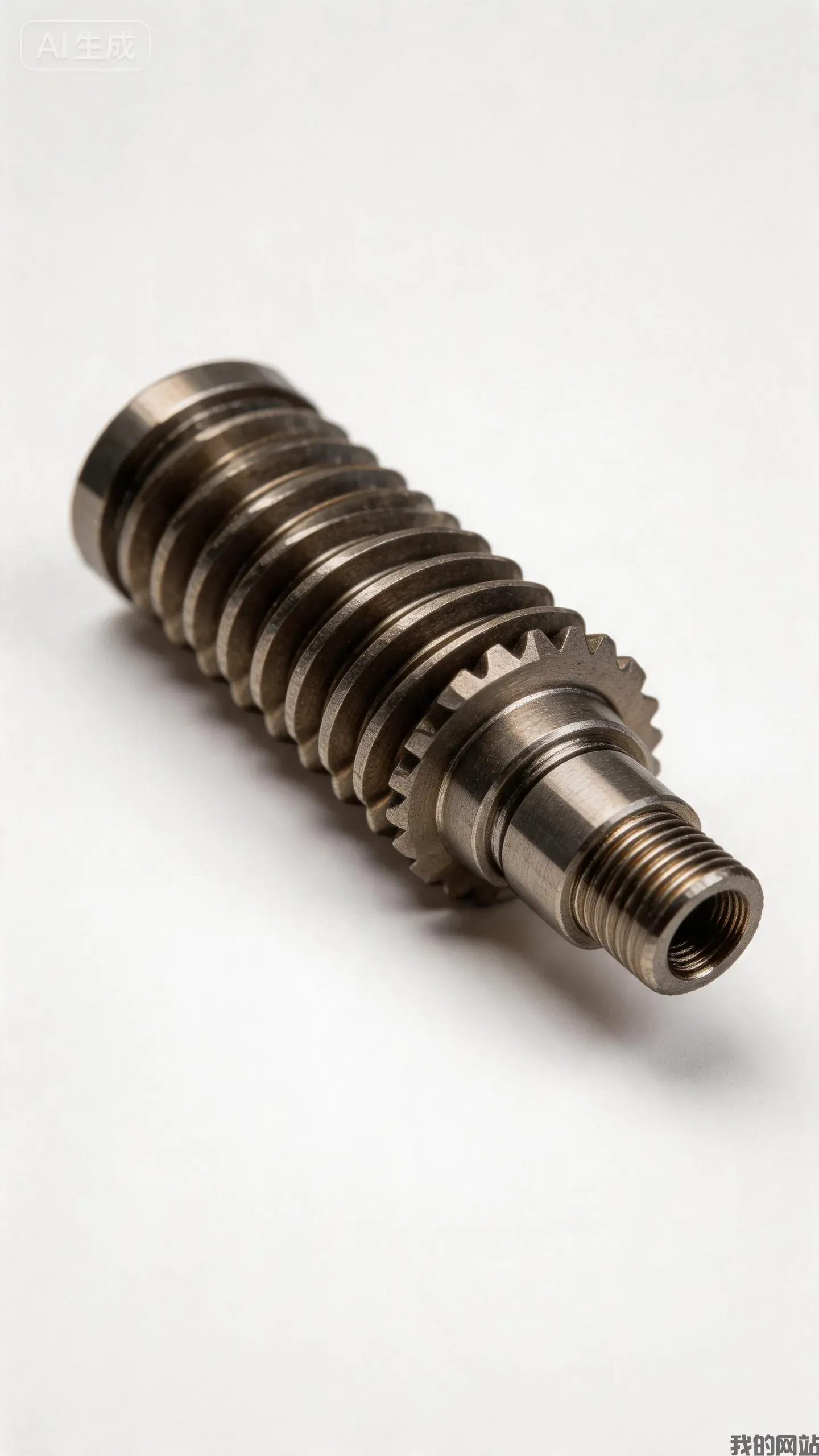
The correct approach is to ask for a cost breakdown line item. If the factory refuses, walk away. At BQUQ, we provide a transparent breakdown for orders above 5,000 pieces. You will find that for a typical aluminum 6061-T6 heat sink, material cost is 48% of the quote. If you can change the alloy to 6063-T5, which has 8% lower thermal conductivity but is 12% cheaper per kg, your cost drops immediately. That is an engineering negotiation, not a price negotiation.
Section 2: Leverage Tolerance and Surface Finish as Price Variables
The most underused lever is tolerance relaxation. A standard CNC machining tolerance is +/- 0.05 mm. Tightening to +/- 0.02 mm increases machining time by 30-40% and scrap rate from 2% to 8%. Loosening to +/- 0.1 mm on non-critical surfaces reduces cost by 15-20%. For metal stamping, a typical progressive die tolerance is +/- 0.1 mm; going to +/- 0.2 mm on bend radii and hole positions can cut die maintenance costs by 25%.

Surface finish is another variable. A standard 3.2 Ra finish on a CNC part costs nothing extra. A 0.8 Ra mirror finish increases cycle time by 20 minutes per part on a 3-axis mill, adding approximately $18 per part at a shop rate of $54/hour. If your part is hidden inside an enclosure, specify 6.3 Ra. For heat sinks, the thermal interface surface (where the CPU mounts) needs 1.6 Ra, but the fin tips can be 6.3 Ra. This dual-spec approach typically yields a 7% total cost reduction.
| Negotiation Variable | Standard Spec | Loosened Spec | Cost Impact | Lead Time Impact | --- | --- | --- | --- | --- | CNC machining tolerance | +/- 0.05 mm | +/- 0.10 mm (non-critical) | -15% to -20% | -10% (faster cycle) | Stamping tolerance | +/- 0.10 mm | +/- 0.20 mm (bend radii) | -10% to -25% | -15% (less die tuning) | Surface finish (CNC) | 3.2 Ra | 6.3 Ra (hidden faces) | -12% to -18% | -20% (fewer polish passes) | Heat sink thermal interface | 1.6 Ra | 3.2 Ra with thermal paste | -5% | -5% | Inspection frequency | AQL 0.65 | AQL 1.0 (non-critical parts) | -3% to -5% | -8% (less QC time) | Payment terms | 50% deposit, 50% before shipment | 30% deposit, 70% net 30 | +2% to +3% (factory cost) | No change |
|---|
Section 3: Use Annual Volume and Blanket Orders, Not One-Time Pricing
A factory prices quotes based on utilization. A single order of 1,000 pieces at $5.00/unit has no scheduling flexibility. A blanket order of 12,000 pieces across 12 monthly releases at $4.20/unit is more attractive because it fills capacity during slow weeks. In Dongguan, where labor costs have risen 6% year-over-year since 2020, factories prioritize predictable utilization over high margin.
Negotiate this way: commit to 12 months of volume in exchange for a price reduction. The factory can then purchase raw material in bulk—aluminum 6061 sheet costs $2.80/kg in 1-ton lots versus $3.20/kg in 200-kg lots. That 12.5% material savings alone justifies a 6-8% price cut. Additionally, ask for a fixed price with a material index adjustment clause. If LME aluminum price moves more than 5%, both parties share the delta. This is standard in European contracts but rarely offered by Chinese factories unless you request it.
Section 4: Negotiate Tooling and NRE as a Separate Line Item
Tooling is where factories hide margin. A progressive stamping die for a small bracket might be quoted at $8,000. The actual manufacturing cost in Dongguan is $4,500 to $5,500. The factory amortizes the tooling into the piece price if you let them. Instead, negotiate tooling as a fixed, upfront cost, then demand a 50% tooling offset credit when you reach 10,000 pieces. For CNC, there is no tooling but there is programming and fixture cost—typically $300 to $800 for a simple part. Pay this separately and negotiate the piece price down by 5-10%.
A specific example from BQUQ: a customer asked for a custom heat sink with 0.5 mm fin thickness. Our initial quote was $6.80/unit with $4,200 tooling. The customer requested tooling paid upfront at $3,600 and a piece price of $6.10. We agreed because the tooling was 3D-printed sand cores, not machined molds—a $600 savings. The customer saved $0.70/unit and we secured a 20,000-piece order. This is a win-win.
Section 5: Offer Faster Payment Terms in Exchange for Lower Price
Cash flow is king for a Chinese factory. The typical payment term is 30% T/T deposit and 70% before shipment. This ties up the factory's working capital for 45-60 days. If you offer 100% T/T in advance for the first three orders, you can negotiate 3-5% off the unit price. After three orders, revert to standard terms. Alternatively, offer a letter of credit (L/C) at sight—this carries bank confirmation costs of about 1.5%, but the factory will discount 2-3% because the risk is removed.
For a $50,000 order, that is a $1,000 to $1,500 savings. Do not offer net 30 or net 60 terms unless you are a Fortune 500 company. Small and mid-sized factories will simply pad the price by 5-8% to cover their financing cost at 8% annual interest from local banks. You pay for it either way.
Section 6: The BQUQ Data-Driven Negotiation Protocol
Based on 20 years of manufacturing in Dongguan, here is the exact sequence that works:
1. Send a fully dimensioned 2D drawing with GD&T callouts. Do not send a 3D PDF only. Factories quote 5-10% higher on ambiguous drawings because they assume rework. 2. Ask for a quote with three options: standard tolerance, relaxed tolerance, and high-volume (10k+). Compare the delta. If the relaxed tolerance is not 10% cheaper, the factory is not serious. 3. Request a DFM (Design for Manufacturing) review. A good factory will identify 2-3 features that can be modified to reduce cost. At BQUQ, we typically find that 15% of quoted parts have a wall thickness that can be increased from 1.0 mm to 1.5 mm, reducing breakage and inspection cost. 4. Negotiate tooling separately, then piece price. Never let them combine. 5. Offer a 12-month blanket order with monthly releases. This is the single strongest lever. 6. Use payment terms as a secondary lever, not primary.
FAQ-Style Tips Engineers Ask
Q: Should I mention competitor quotes? A: Yes, but only as a range, not a specific number. Say "we have quotes from $4.80 to $5.20" and ask them to justify their position. Do not fabricate numbers—factories in Guangdong share pricing data informally.
Q: What is a realistic target reduction? A: 5-10% is realistic without changing specs. 15-20% requires engineering concessions. 30% means the original quote was inflated or the factory is buying the order and will fail you later.
Q: How do I handle a factory that says "no" to every request? A: Walk away and email 3 other factories. Dongguan has over 15,000 machining and stamping shops. The switching cost is your time, not your tooling if you own it.
Q: What about import duties and logistics? A: These are not the factory's problem, but you can negotiate Incoterms. FOB Shenzhen is standard. EXW is 2-3% cheaper but you arrange freight. DDP is 8-10% more expensive but you avoid customs clearance headaches. For a 100 kg heat sink order, DDP adds about $150—negligible compared to a 10% unit price cut.
Conclusion: Negotiate Like an Engineer, Not a Buyer
The most successful negotiations are those where both sides understand the physics and economics of manufacturing. Do not push for price cuts on features you do not need. Instead, relax tolerances, adjust surface finishes, commit to volume, and separate tooling costs. A factory like BQUQ, with 20 years in CNC machining, metal stamping, springs, and heat sinks, will respond to a technically literate buyer with transparent pricing and faster lead times—typically 15-20 days for prototypes and 30-35 days for production runs. We offer a 12-hour quoting service because we know that time is also a cost.
For a detailed cost breakdown on your specific part, send your 2D drawing and target annual volume. Email sc@bquq.com or WhatsApp +86 13713157787. Visit www.bquq.com to see our tolerance capabilities and equipment list. We reply within 12 hours, Beijing time.
Related Articles
- Rail Track Equipment Manufacturing 2025: Safety-Critical Precision and 5 Tolerance Standards
- CNC Precision Turned Parts for Medical Devices: Guide
- 5 Benefits of CNC Precision Turned Parts for Aerospace
Frequently Asked Questions
What is the most effective way to negotiate pricing with a Chinese factory?
Focus on total landed cost rather than unit price. This includes tooling amortization, tolerance specs, surface finish, packaging, and payment terms. Since factories like BQUQ operate on 8-12% net margins, a 5% price cut without engineering justification often leads to hidden quality cuts in material grade or inspection frequency.
How can I reduce costs by adjusting tolerances on CNC machined parts?
Loosening tolerance from +/- 0.05 mm to +/- 0.10 mm on non-critical surfaces reduces cost by 15-20% and speeds up cycle time by 10%. Tightening to +/- 0.02 mm increases machining time by 30-40% and scrap rate from 2% to 8%, so only specify tight tolerances where functionally required.
What surface finish specifications should I use to lower part costs?
Use a standard 3.2 Ra finish for no extra cost. For hidden faces, specify 6.3 Ra to cut costs by 12-18%. For heat sinks, keep 1.6 Ra only on the thermal interface surface and use 6.3 Ra on fin tips, yielding about 7% total cost reduction.
Can changing material grade reduce my heat sink manufacturing costs?
Yes. Switching from aluminum 6061-T6 to 6063-T5 reduces material cost by 12% per kg, though thermal conductivity drops by 8%. Since material is about 48% of a typical heat sink quote, this engineering change can lower your overall cost immediately without compromising function.