How to Select the Right CNC Machine for Your Application?
Selecting the right CNC machine depends on three primary factors: your part geometry, required tolerance, and annual production volume. For 80% of precision manufacturing applications, a 3-axis vertical machining center (VMC) with a spindle speed of 10,000 RPM and a positioning accuracy of ±0.005 mm is the most cost-effective starting point. However, if your parts require complex undercuts or 5-sided machining, you must step up to a 5-axis machine, which increases your hourly rate by 40-60% but eliminates multiple setups.
What Are the Key Differences Between 3-Axis and 5-Axis CNC Machines?
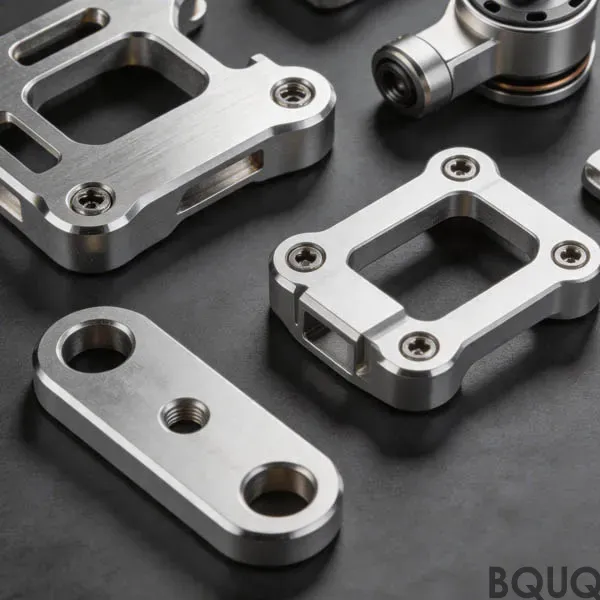
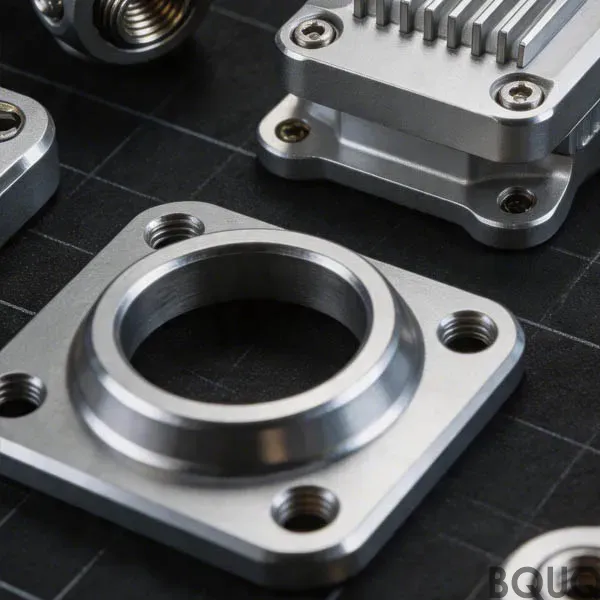
A 3-axis machine moves the cutting tool linearly along the X, Y, and Z axes, making it ideal for prismatic parts like brackets, plates, and housings. A 5-axis machine adds two rotational axes (A and B or A and C), allowing the tool to approach the workpiece from any direction. This capability reduces setup time by up to 70% for complex parts and improves surface finish by using shorter, stiffer cutting tools. For example, a 3-axis machine machining an impeller requires 5 to 8 separate setups with a tolerance drift of ±0.02 mm between operations, while a 5-axis machine completes the same part in one setup with a tolerance of ±0.005 mm.
How Do You Match Machine Size to Your Part Dimensions?
The machine's travel range must exceed your part's maximum dimension by at least 50 mm on each axis to allow for tool clearance and fixture mounting. A typical small VMC has travels of 600 mm x 400 mm x 400 mm, which handles parts up to 550 mm x 350 mm x 350 mm. If your part is larger than 1 meter, you need a gantry-style machine, which costs between $150,000 and $500,000 compared to $50,000 to $120,000 for a standard VMC. For high-volume production of small parts under 100 mm, a Swiss-type lathe with a bar capacity of 32 mm offers cycle times 30% faster than a standard CNC lathe.
Which Spindle Speed and Power Are Required for Your Material?
The spindle speed determines the achievable surface cutting speed, which directly impacts tool life and surface finish. For aluminum alloys, you need a minimum of 10,000 RPM to achieve a surface speed of 500 m/min with a 16 mm end mill. For hardened steel above 45 HRC, a spindle speed of 6,000 RPM with a high-torque motor (20 Nm or more) is more important than maximum RPM. The spindle power should be matched to your material removal rate: a 7.5 kW spindle removes approximately 50 cm³/min of aluminum, while the same spindle removes only 15 cm³/min of stainless steel. If you machine titanium or Inconel, consider a machine with a 15 kW spindle and through-spindle coolant at 70 bar to manage the heat generated at the cutting zone.
How Do Tolerance Requirements Influence Machine Selection?
The machine's positioning accuracy must be at least three times better than the tightest tolerance on your drawing. If your part requires a hole position tolerance of ±0.01 mm, the machine must have a positioning accuracy of ±0.003 mm or better, which is found only on high-end machines with linear glass scales. Standard machines with ballscrew feedback offer an accuracy of ±0.005 mm, which is sufficient for 90% of machining applications. Thermal compensation is critical: a machine without spindle cooling will drift by 0.02 mm over a 4-hour shift as the spindle heats up to 40°C, while a thermally compensated machine maintains ±0.005 mm throughout the day.
What Is the Real Cost Difference Between Machine Types?
The cost per machined part includes machine depreciation, tooling, labor, and overhead. A standard 3-axis VMC has an hourly rate of $50 to $80, while a 5-axis machine runs at $90 to $130 per hour. For a part requiring 30 minutes of machining on a 3-axis with two setups, the cost is $25 to $40 per part. The same part on a 5-axis machine with one setup takes 20 minutes, costing $30 to $43 per part. However, the 5-axis advantage appears when you eliminate fixture costs: a complex fixture for a 3-axis machine costs $1,500 to $5,000, while a simple vice setup on a 5-axis machine costs under $200. For production runs under 500 parts, the 3-axis with simplified fixtures is usually cheaper; above 1,000 parts, the 5-axis reduces cycle time enough to offset its higher hourly rate.
| Machine Type | Hourly Rate (USD) | Positioning Accuracy (mm) | Max Spindle Speed (RPM) | Ideal Part Size (mm) | Typical Lead Time |
| 3-Axis VMC | 50 - 80 | ±0.005 | 10,000 | 550 x 350 x 350 | 5 - 7 days |
| 5-Axis VMC | 90 - 130 | ±0.003 | 15,000 | 800 x 600 x 500 | 7 - 10 days |
| CNC Lathe | 40 - 70 | ±0.008 | 6,000 | Diameter 200 x 400 | 4 - 6 days |
| Swiss-Type Lathe | 60 - 100 | ±0.005 | 12,000 | Diameter 32 x 300 | 5 - 8 days |
| Gantry Mill | 120 - 200 | ±0.010 | 8,000 | 2000 x 1500 x 800 | 10 - 15 days |
Why Is the Control System and Software Compatibility Important?
The CNC control determines the machine's programming flexibility and the complexity of toolpaths it can execute. Fanuc and Siemens controls dominate the market, with Fanuc holding approximately 60% of the global market share. If your engineering team uses CAM software like Mastercam or Fusion 360, ensure the post-processor matches your machine control. A machine with a conversational control allows operators to program simple parts directly at the machine, saving 30 minutes of setup time per job. For 5-axis machines, the control must support RTCP (Rotary Tool Center Point) function; without it, the programmer must manually compensate for tool length in every axis, increasing programming time by 50% and error risk.
When Should You Choose a CNC Machine with Automation Features?
Automation becomes economical when your part cycle time is under 10 minutes and your production volume exceeds 2,000 parts per month. A robotic pallet system with 6 pallets costs $40,000 to $80,000 and allows unattended operation for 8 hours, reducing labor costs by 60%. A simple bar feeder for a CNC lathe costs $15,000 and pays for itself within 18 months if you run batches of 500 parts or more. For high-mix low-volume production, automation is less beneficial; tool and fixture changeover times of 30 minutes or more negate the benefit of unattended machining.
What Are the Most Common Mistakes When Selecting a CNC Machine?
The most frequent error is oversizing the machine for small parts, which increases the hourly rate without improving accuracy. A 5-axis machine does not automatically produce better tolerances than a 3-axis machine; the tolerance depends on the machine's mechanical stiffness and thermal control. Another common mistake is ignoring the machine footprint and power requirements: a typical VMC requires 15 square meters of floor space and a 30 kW electrical supply, while a gantry machine requires 60 square meters and 80 kW. Finally, many buyers focus on the purchase price but ignore the tooling cost; a 5-axis machine requires specialized toolholders costing $150 each, compared to $30 for standard CAT40 holders.
What Is the Best Strategy for a Prototype vs. Production Machine?
For prototypes, select a 3-axis VMC with a tool changer and a probe system; the setup flexibility and quick changeover matter more than spindle speed. For production, choose a machine with a rigid cast iron base and high torque spindle, as these maintain accuracy over long runs. A practical approach is to outsource prototypes to a machine shop with multiple machine types, then purchase a dedicated machine once the design stabilizes and volume is confirmed. This strategy avoids capital investment in the wrong machine and provides real production data for your selection.
FAQ
What Is the Minimum Tolerance a Standard CNC Machine Can Achieve?
A standard 3-axis VMC with good thermal management can hold a tolerance of ±0.02 mm in production and ±0.005 mm under ideal conditions. This is sufficient for most mechanical parts, including bearing housings and precision brackets. For tolerances tighter than ±0.005 mm, you need a jig grinder or a coordinate measuring machine (CMM) to verify the results.
How Long Does It Take to Set Up a CNC Machine for a New Job?
A typical 3-axis setup takes 45 to 90 minutes, including fixture mounting, tool presetting, and program verification. A 5-axis setup takes 2 to 4 hours due to the complexity of rotary axis calibration. Using quick-change tooling and presetting stations can reduce this time by 40%.
Can One CNC Machine Handle Both Aluminum and Titanium?
Yes, but you need a machine with a spindle power of at least 15 kW and a torque of 40 Nm at low RPM. Aluminum requires high spindle speed (10,000+ RPM), while titanium requires high torque at low speed (300-800 RPM). A machine with a gear-driven spindle or a dual-winding motor is better suited for this range than a standard direct-drive spindle.
What Is the Typical Lead Time for a Custom CNC Machine?
A standard 3-axis VMC from a major brand has a lead time of 4 to 8 weeks, while a 5-axis machine takes 12 to 20 weeks. Custom machines with special travels or spindle options may take 6 months or more. If you have an urgent project, consider renting machine time from a local shop while your machine is on order.
How Do You Calculate the Payback Period for a CNC Machine?
Divide the total machine cost (purchase price, installation, tooling) by the monthly savings from reduced outsourcing costs. For example, a $80,000 machine that produces parts costing $40 each in-house versus $60 outsourced, with a volume of 1,000 parts per month, saves $20,000 per month, resulting in a payback period of 4 months. Include maintenance costs of 2% of the machine value per year in your calculation.
Which CNC Machine Is Best for Small Batch Production of 10 to 50 Parts?
A 3-axis VMC with a manual tool changer or a small tool magazine is the most economical choice for small batches. The setup time is the dominant cost, so focus on quick-change workholding and offline programming. Avoid automation, as the setup time for robotic systems exceeds the machining time for such small batches.
What Maintenance Is Required for a CNC Machine to Maintain Accuracy?
Daily tasks include cleaning chips, checking lubrication levels, and verifying coolant concentration. Monthly maintenance includes checking spindle runout (should be under 0.003 mm) and backlash compensation. Annual calibration with a laser interferometer is recommended to verify positioning accuracy and apply compensation values.
Selecting the right CNC machine is a balance of part complexity, tolerance, volume, and budget. A detailed analysis of your current and future parts, along with real cycle time estimates, will guide you to the correct choice. At BQUQ, we operate a fleet of 3-axis and 5-axis CNC machines, along with Swiss-type lathes, to handle parts from prototypes to high-volume production across 20 years of precision manufacturing. Our engineers can review your drawings and recommend the most cost-effective process. Contact us today for a free consultation and a 12-hour quoting turnaround: Email sc@bquq.com, WhatsApp +86 13713157787, or visit www.bquq.com.