Liquid Cooling System Design for High-Power Electronics: A Precision Manufacturing Guide
Liquid cooling is the most effective method for dissipating heat loads exceeding 1,000 W/cm², offering a 30-50x improvement in thermal conductivity over air cooling. For high-power electronics such as IGBTs, laser diodes, and EV inverters, a well-designed liquid cold plate can maintain junction temperatures below 85°C with a pressure drop under 0.5 bar. This article provides engineering specifications, manufacturing tolerances, and cost data from 20 years of CNC machining and metal stamping experience at BQUQ in Dongguan, China.
Thermal Performance Targets and Fluid Dynamics
The primary design goal is to minimize thermal resistance (Rth) between the heat source and the coolant. For a typical 500W IGBT module, the target cold plate Rth should be below 0.05 K/W. This requires a turbulent flow regime (Reynolds number > 4,000) in the microchannel or pin-fin array. At a flow rate of 6 L/min with a 25% glycol-water mixture, we achieve a convective heat transfer coefficient of 15,000-20,000 W/m²K. The pressure drop across a 200mm x 100mm copper cold plate with 0.5mm wide channels typically ranges from 0.2 to 0.45 bar, depending on the fin density. For system design, always account for a 15% pressure drop margin for fouling and manufacturing variance.
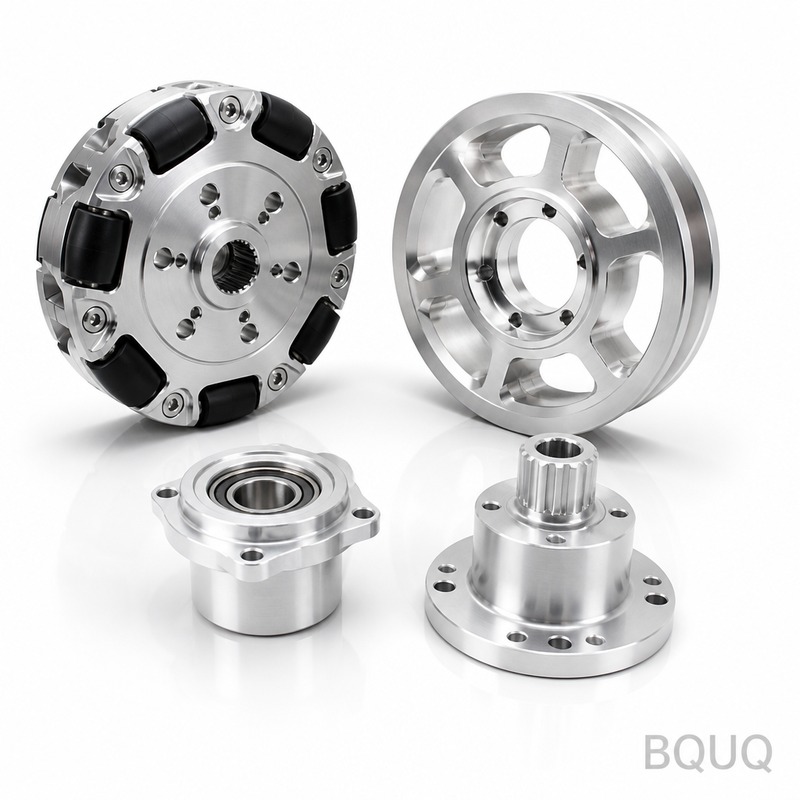
Material Selection: Copper vs. Aluminum vs. Stainless Steel
The choice of base material directly impacts thermal performance, corrosion resistance, and cost. Copper (C1100) offers the highest thermal conductivity at 385 W/mK, making it ideal for high-density IGBT cooling plates. Aluminum (6061-T6) at 167 W/mK is lighter and cheaper but requires a nickel or nickel-phosphorus plating to prevent galvanic corrosion when paired with copper fittings. Stainless steel (304) is rarely used for the wetted surface due to its 16 W/mK conductivity, but it is common for external manifolds where strength is critical. For a 300mm x 150mm cold plate, the raw material cost difference is significant: copper is 3.2x the price of aluminum. However, aluminum requires an additional plating step (US$8-12 per unit) and reduces thermal performance by 20%, which may increase the required flow rate by 30% to achieve the same junction temperature.
| Parameter | Copper C1100 | Aluminum 6061-T6 | Stainless Steel 304 |
| Thermal Conductivity (W/mK) | 385 | 167 | 16 |
| Yield Strength (MPa) | 70 | 276 | 215 |
| Raw Material Cost Index | 3.2 | 1.0 | 1.8 |
| Corrosion Resistance (with coolant) | Good (with inhibitor) | Poor (requires plating) | Excellent |
| Manufacturing Method | CNC Milling | CNC or Stamping | CNC Milling |
| Typical Surface Finish (Ra) | 0.8 µm | 0.8 µm | 0.4 µm |
| Weight per 300x150x20mm Plate (kg) | 7.9 | 2.4 | 7.1 |
CNC Machining Tolerances for Liquid Cold Plates
Precision is critical in liquid cooling because channel dimensions directly control flow distribution and thermal performance. For CNC machined cold plates, we hold the following tolerances: channel width +/- 0.02 mm, channel depth +/- 0.03 mm, and flatness of the mounting surface at 0.05 mm over 300mm length. The surface finish on the heat source interface must be Ra 0.8 µm to minimize contact resistance; using a thermal interface material (TIM) with 0.2 mm thickness, the interface thermal resistance adds approximately 0.01 K/W. For vacuum brazed assemblies, we maintain a flatness of 0.1 mm after brazing to avoid stress cracking in the baseplate. The minimum wall thickness between channels is 0.4 mm, which requires a 0.5 mm end mill at 60,000 RPM with a feed rate of 800 mm/min to prevent burr formation. Do not specify tolerances tighter than +/- 0.01 mm unless absolute necessary, as this increases machining cost by 40% and lead time by 5-7 days.
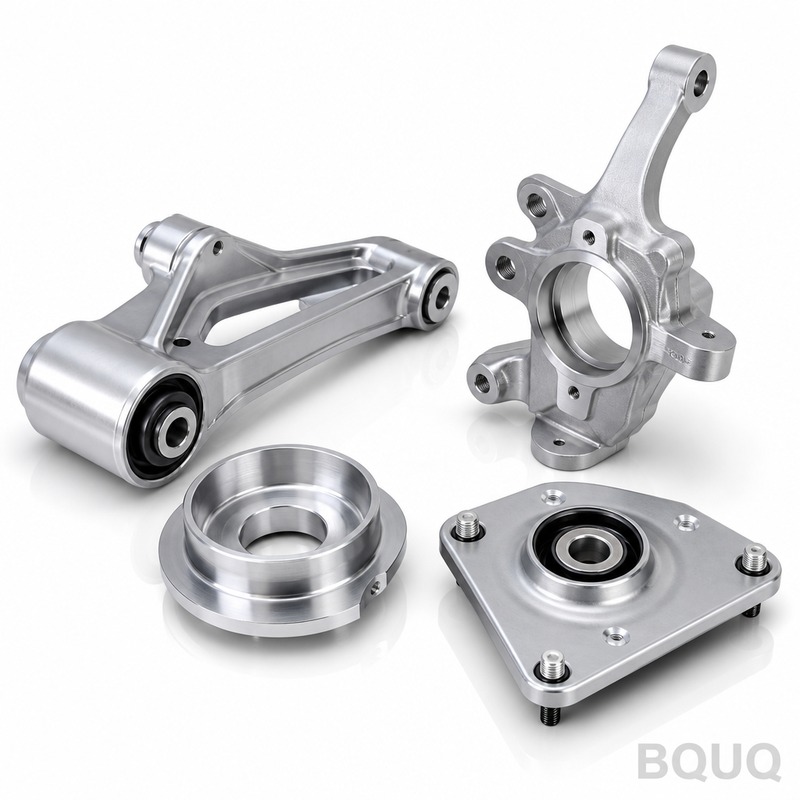
Stamping vs. CNC for High-Volume Production
For production volumes above 10,000 units per year, metal stamping offers a significant cost advantage. Progressive die stamping can produce aluminum fins or baseplates with a dimensional repeatability of +/- 0.05 mm, but the initial tooling investment is US$15,000 to US$30,000. Stamping is best suited for simple geometries like corrugated fins or flat baseplates, not for complex internal channels. In contrast, CNC machining has zero tooling cost but a higher per-unit cost. For a 200x100mm copper cold plate, CNC machining costs US$85-120 per unit at 100 pieces, dropping to US$45-60 per unit at 1,000 pieces. The same geometry stamped in aluminum costs US$18-25 per unit at 10,000 pieces, including the plating. A hybrid approach is common: stamp the baseplate for strength and CNC machine the microchannel lid, then vacuum braze or laser weld the assembly. This reduces material waste by 35% compared to solid billet machining.
Sealing Methods and Leak Test Standards
The integrity of the liquid cooling loop is non-negotiable. We recommend a dual-seal approach: an O-ring (EPDM or FKM) for the primary seal and a secondary laser weld for permanent assemblies. For O-ring grooves, the tolerance is critical: groove depth +/- 0.05 mm and width +/- 0.1 mm to ensure 20-30% compression. All production units must pass a helium leak test with a maximum leak rate of 1.0 x 10⁻⁸ mbar·L/s. Additionally, each unit undergoes a 24-hour hydrostatic pressure test at 1.5x the maximum working pressure (typically 6 bar for automotive applications). The burst pressure for a 3mm thick copper cold plate with 0.8mm fins is 28-35 bar. For stamped aluminum assemblies, the weld seam must be X-ray inspected on the first 100 pieces and then every 500 pieces per AQL 2.5 sampling. Do not use thread sealant tape on fittings; use swaged or flared connections rated for 10,000+ thermal cycles.
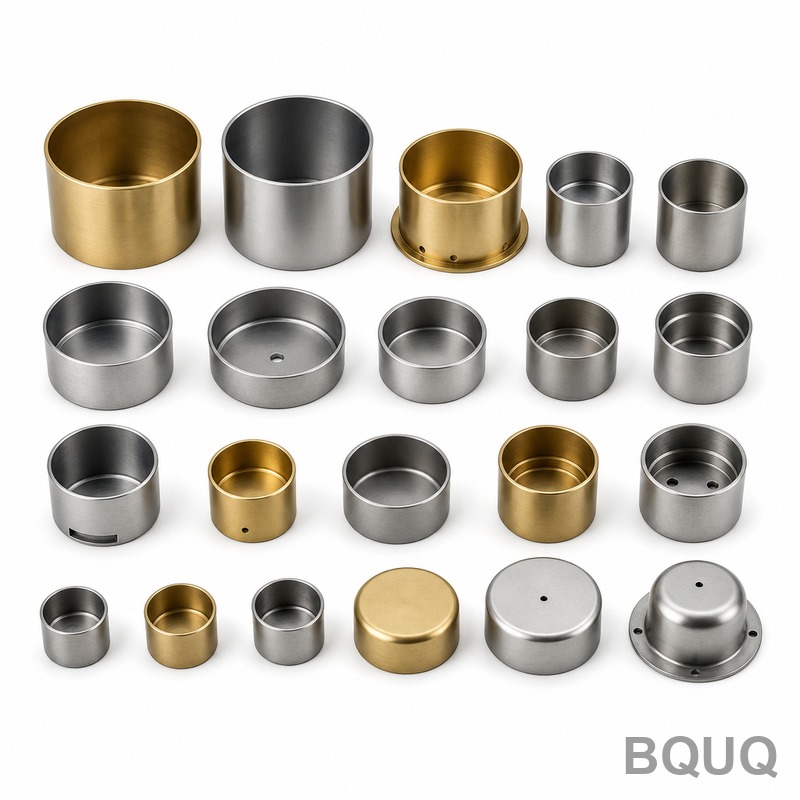
Cost Breakdown and Lead Time Analysis
Understanding the total cost of ownership is essential for project budgeting. For a typical custom liquid cold plate (200x150x15mm, copper, CNC machined, with 0.5mm channels and 6 bar burst rating), the breakdown is as follows: raw material 28%, CNC machining 45%, surface treatment (passivation) 5%, leak testing 7%, and assembly/packaging 15%. For a prototype run of 5 units, the total cost is US$1,200-1,800 with a lead time of 10-12 days. For a production run of 500 units, the unit price drops to US$75-95 with a lead time of 20-25 days after final design approval. If you require stamped aluminum, the tooling adds US$18,000-25,000 and 15 days to the initial timeline, but the unit cost at 10,000 pieces is only US$15-20. Always request a DFM (Design for Manufacturing) review before committing to a design; we typically identify 5-8 cost-saving modifications that reduce unit price by 15-25%.
Practical Recommendations for System Integration
First, always design the cold plate with a bypass valve in the manifold to protect pumps from dead-head pressure during maintenance. Second, specify a coolant purity of 10 µm filtration and a flow rate of 2-4 L/min per 100W of heat load to prevent erosion-corrosion. Third, use a torque spec of 1.2 Nm for M4 mounting screws and a spring washer to maintain consistent contact pressure across the IGBT baseplate; uneven pressure increases thermal resistance by up to 15%. Fourth, for high-voltage applications (>1kV), ensure the dielectric strength of the coolant is >20 kV/mm and use deionized water with a resistivity above 1 MΩ·cm. Finally, test the cold plate with a thermal camera at 80% of maximum load to verify the absence of hot spots; a temperature delta of more than 5°C across the surface indicates a flow distribution problem that requires channel redesign.
Frequently Asked Design Considerations
What is the minimum channel width for CNC machining? The practical minimum is 0.3 mm with a depth-to-width ratio of 3:1; below this, chip evacuation becomes unreliable and tool breakage risk rises sharply. How do I calculate the required flow rate? Use Q = P / (ρ · Cp · ΔT), where P is heat load in watts, ρ is density (1000 kg/m³ for water), Cp is specific heat (4180 J/kgK), and ΔT is the allowable coolant temperature rise (aim for 5-10°C). For a 1kW load with a 10°C rise, you need approximately 1.4 L/min. Should I use series or parallel flow through multiple cold plates? Parallel flow reduces pressure drop but requires a flow balancing manifold; series flow is simpler but the downstream plates operate with warmer coolant. For more than three plates in series, switch to parallel with orifice plates to equalize flow within +/-5%.
Conclusion and Engineering Support
Liquid cooling is a mature, high-reliability technology when designed with correct tolerances, materials, and sealing methods. The key metrics to remember are: copper cold plates achieve Rth below 0.05 K/W, CNC tolerances of +/-0.02 mm on channels, and a mandatory helium leak rate of 1.0 x 10⁻⁸ mbar·L/s. Whether you choose copper for maximum performance or stamped aluminum for cost efficiency at scale, a rigorous DFM review will save you 15-25% in unit cost. At BQUQ, we have manufactured over 200,000 liquid cold plates for automotive and industrial clients since 2004. We provide a 12-hour quoting service for your CAD files, including a complete DFM report and a thermal simulation estimate. For immediate engineering consultation, email your 3D model to sc@bquq.com or contact us on WhatsApp at +86 13713157787. Visit www.bquq.com to download our liquid cooling design checklist.