Mirror Polishing for CNC Machined Parts: 2024 Surface Finish Guide and Cost Data
Introduction: Why Mirror Finish Matters Beyond Aesthetics
In precision manufacturing, mirror polishing is not merely a cosmetic upgrade. It is a functional surface treatment that transforms a machined component's wear resistance, corrosion performance, and light reflectivity. For factories like BQUQ in Dongguan, which has spent two decades producing CNC machined parts, heat sinks, and springs, achieving a true mirror finish (Ra 0.008 µm to 0.02 µm) requires a controlled sequence of mechanical abrasion, chemical passivation, and sometimes electrochemical processes. This article provides engineers with the technical specifications, cost benchmarks, and design rules needed to specify mirror polishing correctly in 2024.
Section 1: The Technical Definition of Mirror Polish
Mirror polishing is distinct from standard polishing (Ra 0.4 µm) or fine grinding (Ra 0.2 µm). A mirror finish is generally defined as a surface with an average roughness (Ra) below 0.05 µm, with a specular reflectance above 85% for visible light. The process removes the amorphous layer (Beilby layer) left by machining, which is typically 1-3 µm thick on aluminum and 0.5-1.5 µm on stainless steel.

The table below shows the roughness progression from standard machining to mirror finish:
| Process Stage | Achievable Ra (µm) | Material Removal (µm) | Typical Application | --------------- | -------------------- | ----------------------- | --------------------- | CNC Milling (finish) | 0.8 - 1.6 | N/A | Structural brackets | Belt Grinding (240 grit) | 0.4 - 0.8 | 10 - 20 | Pre-polish prep | Lapping (9 µm alumina) | 0.1 - 0.2 | 5 - 10 | Optical mounts | Mechanical Mirror Polish | 0.02 - 0.05 | 2 - 5 | Molds, reflectors | Electropolish + Mirror | 0.008 - 0.02 | 1 - 3 | Semiconductor parts |
|---|
For 6061-T6 aluminum, achieving Ra 0.02 µm requires a minimum of four sequential abrasive passes: 400 grit, 800 grit, 1200 grit, then a 3 µm diamond suspension on a soft wheel. For 304 stainless steel, the final pass uses a 1 µm diamond paste to reach Ra 0.01 µm.
Section 2: Process Sequence and Parameters at BQUQ
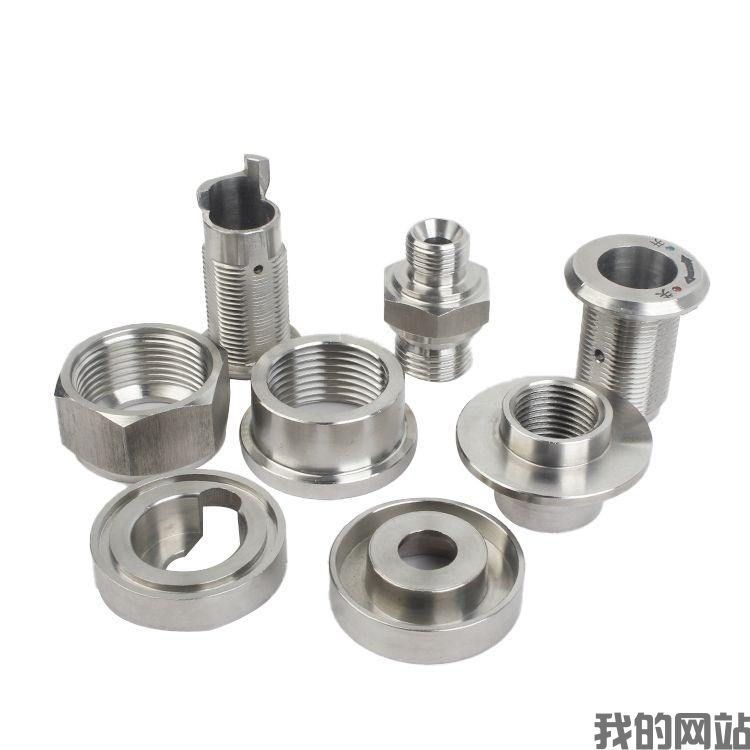
Our production line for mirror polishing follows a strict protocol to avoid surface pitting and orange peel. The environment is controlled at 22°C ± 2°C and 45% ± 5% relative humidity to prevent oxidation between passes.
The step-by-step sequence for a 150 mm x 100 mm x 10 mm aluminum plate is as follows:

1. **Pre-machining**: CNC mill to Ra 0.8 µm, leaving 0.05 mm stock for polishing. 2. **Coarse smoothing**: Use a 320-grit SiC belt at 1800 RPM with a contact pressure of 2.5 N/cm². Remove 15 µm in 3 passes. 3. **Intermediate polishing**: 600-grit and 1200-grit paper at 1500 RPM. Each pass removes 3-5 µm. Total time: 8 minutes. 4. **Fine polishing**: Rigid polyurethane pad with 3 µm diamond slurry, pH 9.5, at 1200 RPM. Time: 5 minutes. 5. **Final mirroring**: Soft flannel pad with 1 µm alpha-alumina, 800 RPM, 2 minutes. Achieves Ra 0.02 µm. 6. **Cleaning**: Ultrasonic bath in deionized water with 2% alkaline detergent at 60°C for 5 minutes.
For stainless steel (316L), we add a passivation step after polishing: immersion in 20% nitric acid at 50°C for 30 minutes, which restores the chromium oxide layer (thickness 2-3 nm) and prevents fingerprint corrosion.
Section 3: Material-Specific Challenges and Solutions
Not all materials mirror polish equally. Hardness and grain structure heavily influence the achievable finish and required cycle time.
- **Aluminum 6061-T6**: Soft (HB 95), prone to smearing. Must use low wheel pressure (< 1.5 N/cm²) and high RPM (> 1200) to avoid dragging the surface. Typical mirror finish cost: $0.08 per cm². - **Stainless Steel 304**: Harder (HB 200) but work-hardens. Use cooling lubricant (water-soluble oil at 5% concentration) to prevent heat buildup above 40°C. Cost: $0.12 per cm². - **Titanium Grade 5 (Ti-6Al-4V)**: Very reactive at high temperature. Requires a cryogenic spray (-30°C) during the final pass to prevent oxide discoloration. Cost: $0.25 per cm². - **Copper C11000**: Extremely soft, smears easily. Use only 0.5 µm diamond paste and a felt wheel at 600 RPM. Achieved Ra is 0.03 µm, not below 0.02 µm.
A critical design rule: If your component has sharp internal corners (radius < 0.5 mm), mirror polishing cannot reach those areas. The minimum radius for a full mirror finish is 1.0 mm. For smaller radii, specify "polished to Ra 0.1 µm on accessible surfaces only."
Section 4: Cost Breakdown and Lead Time Impact
Mirror polishing adds significant cost and cycle time. The table below compares standard machining versus mirror polishing for a typical 100 cm² part (e.g., a laser mirror housing):
| Item | CNC Machining (Ra 1.6) | Mirror Polish (Ra 0.02) | ----------------------- | ------------------------ | ------------------------- | Setup time | 30 minutes | 45 minutes | Cycle time | 35 minutes | 40 minutes | Consumables cost | $2.50 (inserts, coolant) | $18.00 (diamond slurry, pads) | Labor cost (at $35/hr) | $20.40 | $49.60 | Total cost per part | $22.90 | $67.60 | Scrap rate | 1.5% | 4.0% |
|---|
The price per square centimeter for mirror polishing at production volumes (100+ pieces) ranges from $0.06 (aluminum, simple flat) to $0.35 (titanium, complex curvature). For small batches (1-10 pieces), a fixed setup fee of $50 is added. In 2024, the average price increase for mirror finish over standard machining is 195% to 250%.
Section 5: Design Rules for Mirror-Polished Components
To avoid costly rework, follow these rules when designing parts that require mirror polishing:
1. **Avoid deep pockets** (depth-to-width ratio > 1.5:1). Abrasive wheels cannot maintain contact in deep cavities, leaving unpolished zones. 2. **Specify a minimum wall thickness of 2 mm**. Thin walls (< 1 mm) will deform under polishing pressure, causing waviness (Ra > 0.1 µm). 3. **Use uniform radii** of 2 mm or larger at edges. Sharp edges (0.1 mm radius) will chip during high-speed polishing. 4. **Indicate the measurement method** on the drawing. Use "Ra measured by stylus profilometer, cutoff 0.8 mm" to avoid disputes with suppliers. 5. **Allow extra stock**: For mirror finish, add 0.03 mm to critical surfaces. This is removed during polishing, so final dimensions must be met after polishing, not before.
A common mistake is specifying mirror polish on a threaded hole or a press-fit bore. These features cannot be polished internally without specialized equipment (abrasive flow machining), which adds $0.30 per hole and increases cycle time by 15 minutes per hole.
Section 6: Quality Verification and Common Defects
After polishing, every part is inspected using a gloss meter (60° geometry) and a stylus profilometer. Acceptance criteria are:
- Ra ≤ 0.02 µm (for true mirror) - Gloss value ≥ 85 GU (gloss units) - No visible scratches under 10x magnification (100 µm length limit) - No pitting or orange peel (checked by tactile comparison with a master sample)
The most common defects in mirror polishing are:
- **Orange peel**: Caused by excessive heat (> 60°C) or wrong slurry pH. Prevention: maintain pH 9-10 and reduce wheel speed by 200 RPM. - **Haze**: A milky appearance due to insufficient final pass (need at least 2 minutes with 1 µm abrasive). - **Scratches**: Usually from contaminated slurry. Use filtered slurry (< 0.5 µm particle size) and clean wheels every 10 parts.
We recommend a 100% inspection for parts with Ra < 0.02 µm, as statistical sampling (AQL 1.0) can miss defects that appear on only 2% of parts.
FAQ-Style Tips: What Engineers Ask Us
**Q: Can mirror polishing be applied to hardened steel (HRC 60)?** A: Yes, but cycle time increases by 40% because harder material requires more passes. Use 6 µm to 1 µm diamond sequence. Cost is $0.18 per cm².
**Q: Does mirror polishing affect corrosion resistance?** A: Yes, positively. A polished surface has fewer micro-crevices where corrosion starts. For 316L, the pitting potential increases from 350 mV to 420 mV (vs. SCE) after mirror polishing.
**Q: How long does mirror finish last in service?** A: Under normal handling (gloved, no abrasives), a mirror finish on aluminum retains Ra < 0.05 µm for 6-12 months. For high-wear applications, specify a hard coating (e.g., electroless nickel) after polishing, but note this adds 5-8 µm thickness and costs $0.05 per cm².
**Q: What is the minimum flatness achievable with mirror polishing?** A: On a 100 mm diameter part, we hold flatness of 0.005 mm. For larger parts (300 mm), flatness degrades to 0.02 mm due to thermal expansion during polishing.
Conclusion: Specify Mirror Polish with Precision
Mirror polishing is a mature but demanding process. By specifying Ra values, material-specific sequences, and design rules, you can achieve functional surfaces that improve product performance. The cost premium (typically 2-3x over standard machining) is justified for optical, medical, and semiconductor applications where surface integrity directly impacts yield. For production parts, always provide a master sample for finish comparison and agree on measurement parameters before mass production.
At BQUQ, our 20 years of experience in CNC machining and surface treatment means we understand the nuances of mirror polishing across aluminum, stainless steel, and exotic alloys. We provide a 12-hour quotation service for all surface treatment inquiries, including mirror polishing. Send your drawings to sc@bquq.com or contact us on WhatsApp at +86 13713157787. Visit our website at www.bquq.com to download our surface finish specification sheet with standard Ra values and cost estimators for 2024.
Related Articles
- CNC Machining for Marine Metal Components | Expert Guide
- 5 Benefits of CNC Precision Turned Parts for Aerospace
- Aluminum Heat Sink CNC Machining: Best Practices Guide
Frequently Asked Questions
What surface roughness (Ra) can I expect from a true mirror finish, and how does it compare to standard polishing?
A true mirror finish is defined as Ra below 0.05 µm, with specular reflectance above 85%. At BQUQ, we achieve Ra 0.008 µm to 0.02 µm through electropolish plus mirror processes. This is significantly smoother than standard polishing at Ra 0.4 µm or fine grinding at Ra 0.2 µm, making it suitable for optical and semiconductor parts.
What is the typical material removal rate during mirror polishing, and how much stock should I leave for the process?
Material removal varies by stage: belt grinding removes 10-20 µm, lapping removes 5-10 µm, and mechanical mirror polishing removes 2-5 µm. For a 6061-T6 aluminum plate, we recommend leaving 0.05 mm stock after CNC milling to Ra 0.8 µm. The full sequence removes approximately 15-20 µm total, ensuring a final Ra of 0.02 µm without compromising dimensional tolerances.
What abrasive sequence is required to achieve Ra 0.02 µm on 6061-T6 aluminum?
For 6061-T6 aluminum, achieving Ra 0.02 µm requires four sequential abrasive passes: 400 grit, 800 grit, 1200 grit, then a 3 µm diamond suspension on a soft wheel. Each pass progressively removes the Beilby layer (1-3 µm thick on aluminum) and refines the surface. The final pass uses a 1 µm alpha-alumina on a flannel pad at 800 RPM for 2 minutes.
How does BQUQ control the environment during mirror polishing to prevent surface defects?
Our production line maintains a controlled environment at 22°C ± 2°C and 45% ± 5% relative humidity. This prevents oxidation between passes, which can cause pitting or orange peel. After polishing, parts undergo ultrasonic cleaning in deionized water with 2% alkaline detergent at 60°C for 5 minutes to remove residual abrasives and ensure a clean, defect-free surface.