Precision Parts Manufacturing Cost Reduction Strategies for Engineers
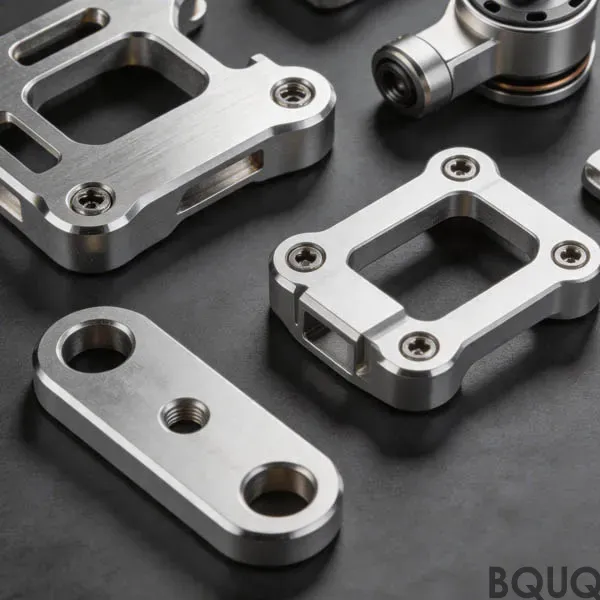
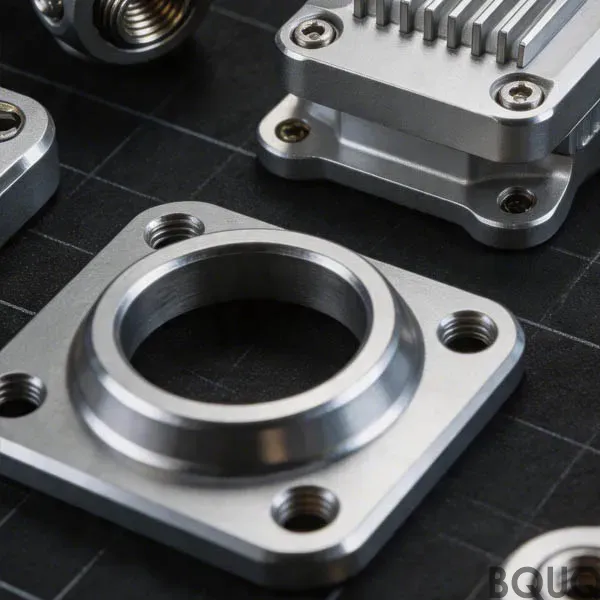
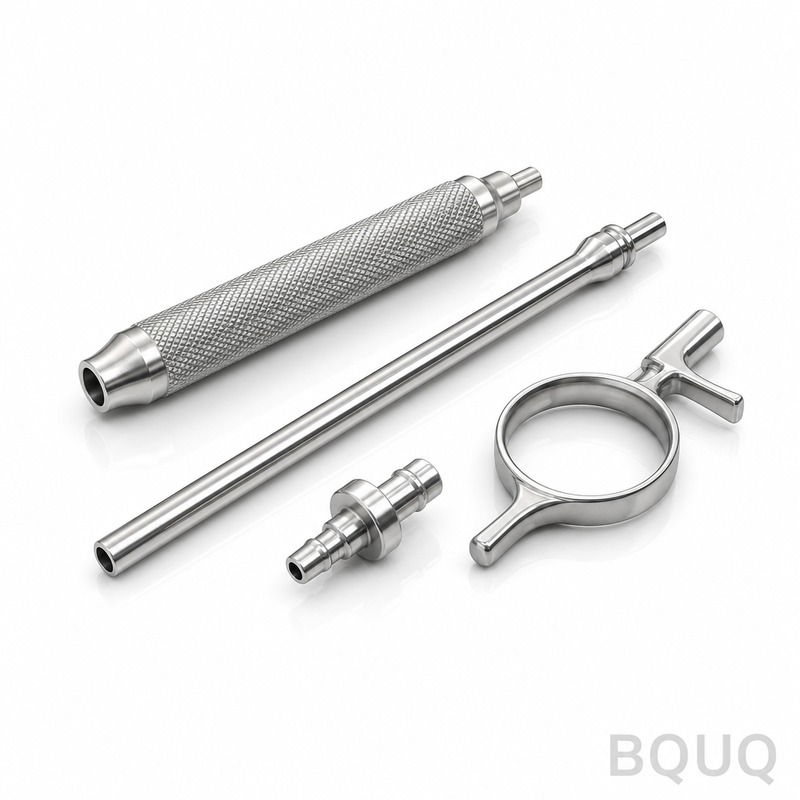
Precision parts manufacturing costs are driven by material selection, tolerance requirements, surface finish, and order quantity. The most effective cost reduction strategy is Design for Manufacturability (DFM) applied during the design phase, which can lower unit costs by 20-40% without compromising functional performance. This article provides specific, actionable strategies based on 20 years of CNC machining and metal stamping experience at BQUQ factory in Dongguan, China.
Cost Breakdown Analysis for Precision Parts
Understanding where your money goes is the first step in reducing costs. For a typical precision-machined part, the cost distribution is as follows:
| Cost Component | Percentage of Total Cost | Typical Range (USD) | Key Variables |
| Material | 25-35% | $2.50 - $15.00 per kg | Raw material grade, bar stock vs. blank |
| Machining Time | 30-45% | $45 - $85 per hour | Spindle speed, feed rate, tool wear |
| Tooling & Setup | 10-15% | $150 - $3,000 per setup | Fixture complexity, CNC programming |
| Surface Treatment | 5-10% | $0.05 - $2.00 per part | Anodizing, plating, passivation |
| Quality Inspection | 5-8% | $0.50 - $5.00 per part | CMM, optical comparator, manual gauging |
| Logistics & Overhead | 8-12% | $0.20 - $3.00 per part | Packaging, freight, administrative |
The largest lever is machining time. For a 6061-T6 aluminum part with a tolerance of ±0.05 mm, reducing machining time from 45 minutes to 30 minutes saves approximately $12.50 per unit at a shop rate of $75/hour. On a 5,000-piece order, this represents $62,500 in savings.
Tolerances and Geometric Dimensioning: The Cost Multiplier
Specifying tighter tolerances than functionally necessary is the most common and expensive mistake in precision part design. The cost relationship is non-linear: tightening a tolerance from ±0.1 mm to ±0.025 mm can increase machining cost by 60-80%. Moving from ±0.025 mm to ±0.005 mm can increase cost by 250-400%.
| Tolerance Specification (mm) | Relative Machining Cost | Typical Process | Inspection Method |
| ±0.100 | 1.0x | Standard CNC milling | Calipers, pin gauges |
| ±0.050 | 1.3x | Precision CNC milling | Micrometer, profilometer |
| ±0.025 | 1.8x | High-precision milling, grinding | CMM (Coordinate Measuring Machine) |
| ±0.010 | 3.0x | Jig grinding, wire EDM | CMM with temperature control |
| ±0.005 | 5.0x | Lapping, honing, ultra-precision machining | Laser interferometer, air gauge |
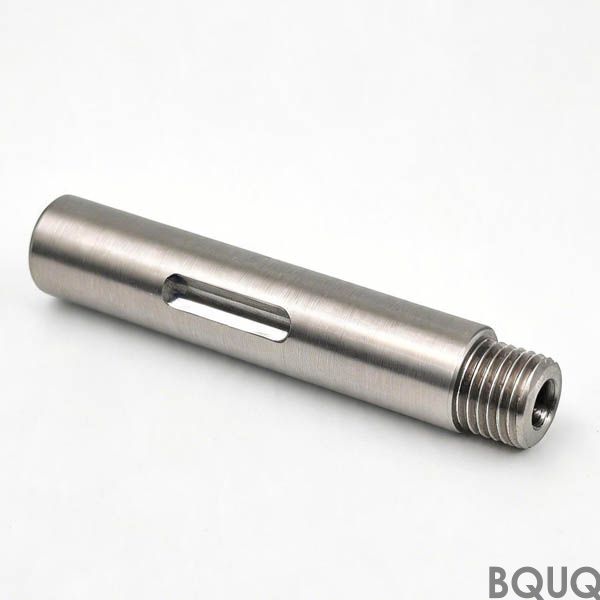
For example, a shaft with a diameter tolerance of ±0.025 mm on a 25 mm diameter costs $18.50 per unit in machining. Relaxing that tolerance to ±0.075 mm, which is still acceptable for a press-fit application, reduces cost to $11.20 per unit. Always ask: does the mating component truly require that fit? Consider using Geometric Dimensioning and Tolerancing (GD&T) to specify position tolerances rather than tight linear dimensions on every feature.
Material Selection: Performance vs. Cost
Material cost is not just the price per kilogram; it also affects machining speed, tool life, and required heat treatment. A cheaper material that is difficult to machine can cost more overall than a premium material that cuts easily.
| Material Grade | Raw Material Cost (USD/kg) | Machinability Rating | Relative Machining Cost | Recommended Application |
| 6061-T6 Aluminum | $3.20 | Excellent | 0.8x | Enclosures, brackets, heat sinks |
| 7075-T6 Aluminum | $5.80 | Good | 1.1x | High-strength aerospace components |
| AISI 12L14 Free-Cutting Steel | $1.90 | Excellent | 1.0x | Shafts, pins, high-volume parts |
| AISI 4140 Alloy Steel | $2.60 | Fair | 1.6x | Gears, heavy-duty components |
| 304 Stainless Steel | $4.50 | Poor | 2.4x | Corrosion-resistant parts |
| 17-4 PH Stainless | $8.20 | Fair | 2.1x | High-strength, corrosion-resistant |
| C36000 Brass | $9.50 | Excellent | 1.2x | Electrical connectors, fittings |
| PEEK (Polyether ether ketone) | $85.00 | Good | 3.5x | High-temperature, low-friction parts |
For a heat sink application requiring high thermal conductivity, 6061-T6 aluminum offers a thermal conductivity of 167 W/m·K at a cost of $3.20/kg. Switching to 1050 aluminum increases conductivity to 222 W/m·K but only costs $3.80/kg, a 19% material cost increase. However, 1050 is softer and gummier, reducing machining speed by 15%, which can negate the material cost benefit. The engineering decision must balance thermal performance, machinability, and total cost.
Design for Manufacturability: Geometry and Feature Reduction
Every sharp internal corner, deep pocket, or small diameter hole adds machining time. A radius at the bottom of a pocket allows a standard end mill to cut at higher speeds, while a square corner requires EDM or a smaller tool with lower rigidity.
Specific DFM rules that reduce cost: - Internal corner radii: Specify a minimum radius of 1.5 mm for pockets deeper than 10 mm. A 3 mm radius allows a 6 mm end mill, which is 2-3 times faster than a 4 mm tool. - Hole depth-to-diameter ratio: Keep holes shallower than 4x diameter. A 5 mm diameter hole that is 30 mm deep requires peck drilling, adding 20-30% cycle time. - Avoid undercuts: Undercuts require special lollipop cutters or EDM. Redesigning to avoid an undercut can save $0.80 - $2.50 per part. - Wall thickness: For CNC machining, maintain a minimum wall thickness of 1.5 mm for aluminum and 2.0 mm for steel. Thinner walls cause vibration and deflection, requiring slower feeds. - Thread depth: Use threads no deeper than 1.5x nominal diameter. A M6 thread (6 mm diameter) should not exceed 9 mm depth; deeper threads require thread milling instead of tapping, doubling the cost.
For metal stamping, the equivalent rules are: use a minimum bend radius of 0.5x material thickness, avoid tight tolerances on hole-to-bend distances, and use standard tooling sizes. A stamped part with a hole diameter of 5.0 mm can be punched, but a 4.8 mm hole requires a special die, adding $400 - $800 in tooling costs.
Batch Size and Production Planning
Order quantity directly influences unit price through setup amortization. For CNC machining, a typical setup takes 1.5 to 3.5 hours, costing $112 to $260 at a rate of $75/hour. For a 100-piece order, setup adds $1.12 to $2.60 per part. For a 1,000-piece order, setup adds only $0.11 to $0.26 per part.
| Order Quantity | Setup Cost per Part (USD) | Machining Cost per Part (USD) | Total Unit Price (USD) | Price per Part Savings |
| 50 | $4.20 | $32.00 | $36.20 | Baseline |
| 100 | $2.10 | $32.00 | $34.10 | 5.8% |
| 250 | $0.84 | $31.50 | $32.34 | 10.7% |
| 500 | $0.42 | $31.00 | $31.42 | 13.2% |
| 1000 | $0.21 | $30.50 | $30.71 | 15.2% |
| 5000 | $0.04 | $29.80 | $29.84 | 17.6% |
The 13-18% savings beyond 500 pieces comes from reduced per-piece handling time and optimized tool paths. For metal stamping, the break-even point is different: tooling costs $800 to $5,000, so volumes above 10,000 pieces are typically required to make stamping more economical than CNC machining.
Practical recommendation: For low-volume precision parts (1-100 pieces), use CNC machining. For high-volume metal parts (10,000+ pieces), convert to stamping. For medium volumes, consider combining multiple parts into a single machined blank that is later separated, reducing setup count.
Surface Finish and Secondary Operations
A surface finish of Ra 1.6 µm (63 microinches) is standard for most precision parts and requires no additional cost. Specifying Ra 0.4 µm (16 microinches) requires either finer machining parameters, grinding, or polishing, adding 15-30% to machining cost.
| Surface Finish (Ra) | Process | Additional Cost per Part (USD) | Typical Application |
| 3.2 µm | Standard CNC milling | $0.00 | Structural components, non-sealing faces |
| 1.6 µm | Fine milling, standard turning | $0.00 | General precision parts |
| 0.8 µm | Precision turning, light grinding | $0.80 - $2.00 | Bearing surfaces, sealing faces |
| 0.4 µm | Grinding, honing | $2.50 - $6.00 | Hydraulic pistons, valve spools |
| 0.2 µm | Lapping, polishing | $8.00 - $15.00 | Optical components, precision shafts |
Secondary operations like anodizing add $0.10 - $0.50 per part for Type II (sulfuric) anodizing and $0.50 - $1.50 for hard anodizing. Electroless nickel plating adds $0.30 - $0.80 per part. These costs are justified for corrosion resistance or wear properties, but avoid specifying them on non-functional surfaces.
FAQ-Style Cost Reduction Tips for Engineers
Q: What is the single fastest way to reduce machining cost? A: Relax tolerances on non-critical features. Identify which dimensions are functional (mating surfaces, bearing journals) and which are cosmetic (outer profiles, non-critical holes). Loosening a cosmetic tolerance from ±0.025 mm to ±0.1 mm can reduce cycle time by 15-20%.
Q: How does part size affect cost? A: A part that fits in a 100x100x50 mm envelope costs 20-30% less than a part at 200x200x100 mm, because of material waste and machine size. A 150x150x75 mm part requires a 4th axis or larger table, increasing setup time by 45 minutes.
Q: Should I use aluminum or steel for a structural bracket? A: If the load is below 50 MPa and stiffness is not critical, 6061-T6 aluminum is 30% cheaper overall due to faster machining and lighter shipping weight. For loads above 100 MPa, AISI 4140 steel is more cost-effective per unit of strength.
Q: What is the minimum wall thickness for a machined pocket? A: For aluminum, keep walls at least 1.2 mm. For steel, use 1.5 mm. Below these values, the wall deflects during machining, requiring slower speeds and causing tolerance failures.
Q: Is it cheaper to buy more parts upfront? A: Generally yes, up to a point. The price break at 500 pieces versus 100 pieces is typically 12-15%. Beyond 2,000 pieces, the savings diminish to 2-3% per additional thousand. Consider a blanket order with staged deliveries to balance inventory costs.
Q: How can I reduce inspection costs? A: Use statistical process control (SPC) sampling instead of 100% inspection for tolerances of ±0.05 mm or looser. For critical dimensions, specify CMM inspection on first article and every 50th piece, rather than every piece.
Conclusion
Manufacturing cost reduction for precision parts requires disciplined engineering decisions. Focus on three areas: relax non-critical tolerances, select materials that balance machinability and performance, and design geometry that allows standard tooling and fast cutting speeds. At BQUQ, we have implemented these strategies to help clients achieve a 20-35% cost reduction on average, without sacrificing functional quality. Our in-house engineers review every drawing before quoting to identify cost-saving modifications that maintain your design intent.
For a complete cost analysis of your current precision parts, send your drawings to our engineering team. We provide a detailed DFM report with cost breakdown and alternative proposals within 12 hours, free of charge. Email: sc@bquq.com or WhatsApp: +86 13713157787. Visit www.bquq.com to download our DFM checklist for engineers.
Related Articles
- How Much Does CNC Machining Cost in 2026? A Complete Pricing Guide
- CNC Turn-Mill Composite Machining, Turn-Mill Machine Tools, One-Time Forming, B-Axis Turn-Mill Center, Multi-Process Integration, Complex Rotary Part Machining, Medical Device Precision Machining
- High-speed machining technology: principles, tool path optimization, and industrial applications