Progressive vs Transfer Stamping: Key Differences Explained
Introduction to Progressive and Transfer Stamping
In metal stamping, two of the most common high-volume production methods are progressive stamping and transfer stamping. Both are used to create complex metal parts from sheet metal coils, but they differ significantly in process, tooling, and application. Understanding these differences is crucial for manufacturers seeking optimal efficiency, cost-effectiveness, and part quality. This article provides a detailed comparison to help you choose the right method for your next project.
What is Progressive Stamping?
Progressive stamping involves feeding a coil of metal strip through a series of stamping stations within a single press. Each station performs a specific operation (cutting, bending, drawing, coining, etc.) as the strip advances. The part remains attached to the carrier strip until the final station, where it is cut free. This method is highly automated and ideal for high-volume production of small to medium-sized parts with consistent geometry.
What is Transfer Stamping?
Transfer stamping uses multiple presses or a single press with multiple stations, but the part is physically moved (transferred) from one station to the next by a mechanical transfer system, often using fingers or rails. Unlike progressive stamping, the part is completely separated from the strip after the first operation and then moved independently. This method is suitable for larger parts, deeper draws, and complex geometries that require more substantial forming.
Key Differences at a Glance
| Feature | Progressive Stamping | Transfer Stamping |
|---|---|---|
| Process Flow | Part remains attached to coil strip until final cut-off | Part is separated after first operation and transferred individually |
| Tooling Cost | Lower to moderate (single die set with multiple stations) | Higher (multiple dies or complex transfer system) |
| Setup Time | Longer (requires precise alignment of all stations) | Moderate (individual dies can be adjusted separately) |
| Production Speed | Very high (up to 2000 strokes per minute) | Moderate (slower due to transfer motions) |
| Part Size | Small to medium (typically under 12 inches) | Medium to large (can exceed 24 inches) |
| Complexity | Limited by strip width; intricate shapes possible but within constraints | Higher complexity; deeper draws, more material flow allowed |
| Material Utilization | High (minimal scrap due to nesting on strip) | Lower to moderate (more scrap from blank separation) |
| Secondary Operations | Often integrated in-die (tapping, marking, etc.) | Often integrated but may require additional stations |
| Typical Applications | Electrical connectors, terminals, brackets, heat sinks | Automotive body panels, cookware, fuel tanks, large enclosures |
Detailed Comparison
Tooling and Setup
Progressive stamping uses a single die set with multiple stations. The entire die must be built and aligned as a unit, which can be time-consuming and costly for complex parts. However, once set up, it runs with minimal intervention. Transfer stamping uses separate dies for each operation, which can be individually maintained and adjusted. The transfer mechanism (mechanical fingers, servo-driven carriers) requires additional upfront investment but offers flexibility for part design changes.
Production Speed
Progressive stamping is typically faster because the coil strip moves continuously through the press at high speeds. Transfer stamping involves picking and placing parts between stations, which slows the cycle. For extremely high volumes (millions of parts), progressive stamping is more cost-effective. For medium volumes or large parts where speed is less critical, transfer stamping can be a better fit.
Part Complexity and Quality
Transfer stamping allows for deeper draws, more complex geometries, and heavier forming because the part is not constrained by the strip. It also enables operations from multiple directions (e.g., side piercing, flanging). Progressive stamping is limited by the width and thickness of the strip, as well as the need to maintain strip continuity. However, for small intricate parts with tight tolerances, progressive stamping excels due to its precise indexing.
Material Utilization
Progressive stamping often achieves higher material utilization (less scrap) by nesting parts closely on the strip. Transfer stamping typically starts with a blanked square or shaped blank, which can generate more scrap. However, if the part requires significant forming, the scrap from progressive stamping may increase due to the need for extra material around bends.
Cost Considerations
For low to medium volumes, transfer stamping can be more economical because individual dies are cheaper to build and modify. For high volumes, progressive stamping's faster cycle times offset its higher die cost. Additionally, progressive stamping requires less floor space and labor because operations are consolidated in one press.
When to Choose Progressive Stamping
High-volume production (millions of parts per year)
Small to medium-sized parts (e.g., connectors, terminals)
Simple to moderate shapes with consistent strip feeding
Tight tolerances and repeatability are critical
Minimal secondary operations needed
When to Choose Transfer Stamping
Large parts (e.g., automotive body panels, appliance shells)
Deep draws or complex geometries requiring multiple forming directions
Medium-volume runs (hundreds of thousands) or frequent design changes
Parts made from thicker or high-strength materials
Integration of assembly or welding in-line
Recommendation
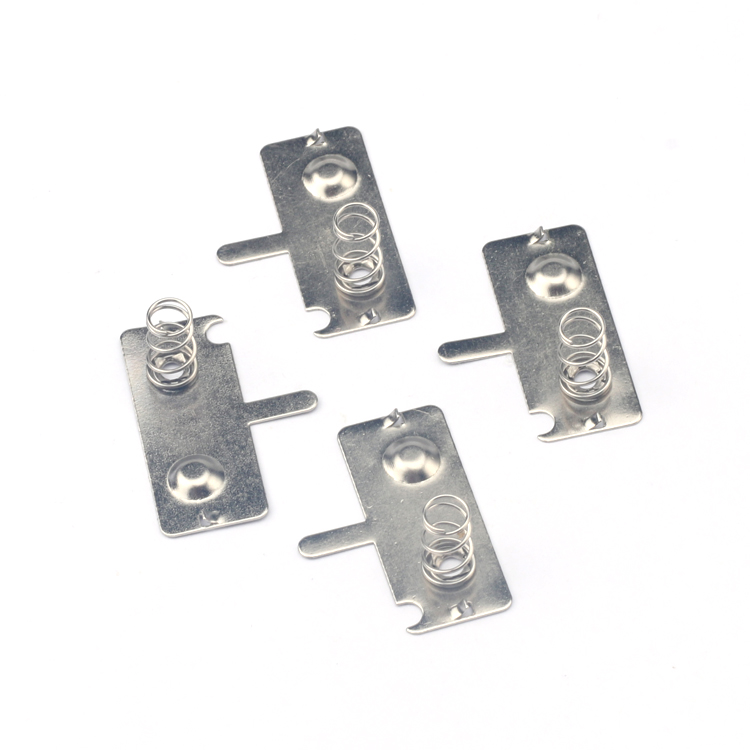
For most manufacturers of metal stamping parts like heat sinks, springs, and shrapnel, progressive stamping is the go-to method due to its speed and efficiency. However, for larger or more complex components, transfer stamping offers the necessary forming capability. At our facility, we specialize in both technologies. We recommend evaluating your part's size, complexity, volume, and material before deciding. Contact our engineering team for a free feasibility study and cost analysis tailored to your project.
Conclusion
Progressive stamping and transfer stamping are both vital metal forming processes, each with distinct advantages. Progressive stamping leads in speed and material efficiency for high-volume, small parts, while transfer stamping excels in versatility and forming depth for larger, complex parts. By understanding their differences, you can optimize your production strategy and achieve the best balance of quality, cost, and lead time.
Frequently Asked Questions
What is the main difference between progressive and transfer stamping?
In progressive stamping, the part remains attached to the coil strip and moves through multiple stations in a single press until the final cut-off. In transfer stamping, the part is completely separated after the first operation and physically moved between stations by a mechanical transfer system, allowing for larger parts and deeper draws.
Which stamping method is faster for high-volume production?
Progressive stamping is faster, with production speeds up to 2000 strokes per minute, because the part stays on the strip and operations are automated. Transfer stamping is slower due to the mechanical transfer motions between stations, making it more suitable for larger or more complex parts rather than maximum speed.
What are the typical part size limits for each method?
Progressive stamping is best for small to medium parts, typically under 12 inches, due to strip width constraints. Transfer stamping handles medium to large parts, which can exceed 24 inches, because the part is independent and not limited by the coil strip.
How do tooling costs compare between progressive and transfer stamping?
Progressive stamping has lower to moderate tooling costs since it uses a single die set with multiple stations. Transfer stamping has higher tooling costs because it requires multiple dies or a complex transfer system. However, transfer stamping offers moderate setup times, as individual dies can be adjusted separately.