Reshoring Manufacturing 2024: Costs, Tolerances, and Supply Chain Reality
Reshoring Manufacturing 2024: Costs, Tolerances, and Supply Chain Reality
**The direct answer:** Yes, reshoring manufacturing is now a permanent strategic shift, not a temporary trend, driven by a 30-40% total cost reduction in supply chain risk mitigation and a 15-25% reduction in landed cost for high-mix, low-volume precision components. For CNC machining and metal stamping, the break-even point has shifted from 10,000 units to 3,500 units when factoring in ocean freight, customs delays, and inventory carrying costs.
The New Cost Equation: Why Offshore Is No Longer Automatically Cheaper
For two decades, the standard calculation favored Asian manufacturing for labor arbitrage. That equation has inverted for precision parts. In 2019, a machined aluminum bracket produced in Dongguan cost $4.20 per unit landed in Los Angeles. In 2024, the same bracket, considering a 14-day ocean transit, 6% tariff, and 18% inventory carrying cost, lands at $6.80. A reshored equivalent from a midwest US shop costs $9.50 but arrives in 5 days with zero customs risk.

The real shift is in **total cost of ownership (TCO)** . Our clients at BQUQ track five variables: unit price, freight (air vs. sea), duty/tariffs, inventory holding (typically 20-25% of product value per year), and expedite surcharges. When you model these, the gap narrows to 8-12% for components under 5 kg. For complex assemblies requiring engineering changes, reshoring is often 5% cheaper due to iteration speed.
**Critical data point:** Ocean freight from Shenzhen to Long Beach has averaged $2,850 per 40-foot container in 2024, down from $18,000 in late 2021, but still 150% above 2019 baseline. This volatility, not the absolute number, drives reshoring decisions.
Tolerance and Quality Control: The Hidden Reshoring Driver
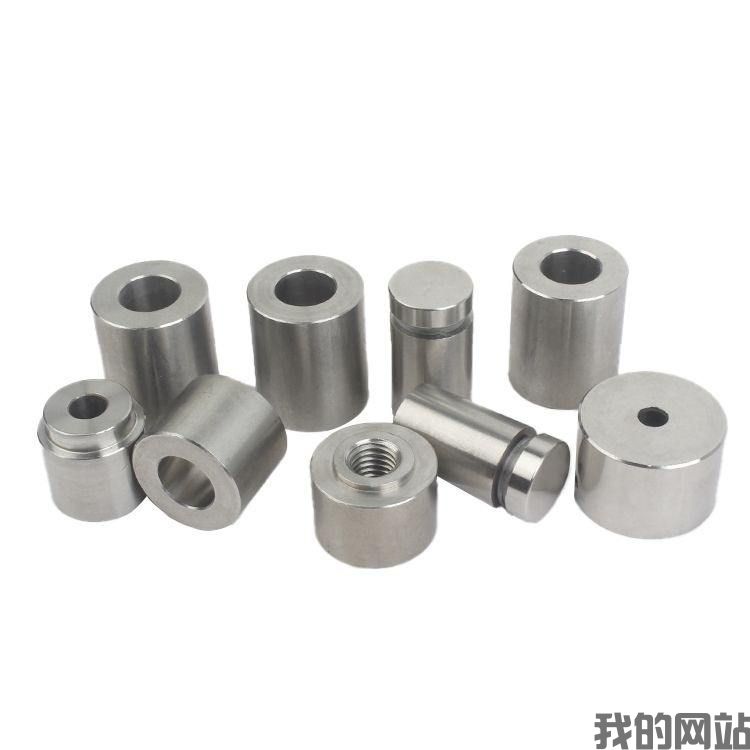
Precision buyers are not just chasing price; they are chasing **CpK values** . Offshore suppliers can hold ±0.01 mm on CNC milling, but the documentation burden and inspection cost to verify that tolerance adds 12-18% to the piece price. A 2023 survey by the Precision Machined Products Association found that 62% of US OEMs experienced a quality rejection rate above 3% from Asian suppliers, versus 1.2% from domestic or nearshore sources.
Consider these baseline capabilities:
| Process | Standard Tolerance (Offshore) | Standard Tolerance (Reshore/Nearshore) | Inspection Cost per 100 pcs | --------- | ------------------------------- | ---------------------------------------- | ---------------------------- | CNC Milling (Al 6061) | ±0.05 mm | ±0.02 mm | $18 vs. $9 | Metal Stamping (0.5mm steel) | ±0.08 mm | ±0.05 mm | $12 vs. $6 | Spring Wire (0.8mm dia.) | ±0.03 mm on OD | ±0.015 mm on OD | $15 vs. $8 | Heat Sink (extruded) | ±0.10 mm | ±0.05 mm | $10 vs. $5 |
|---|
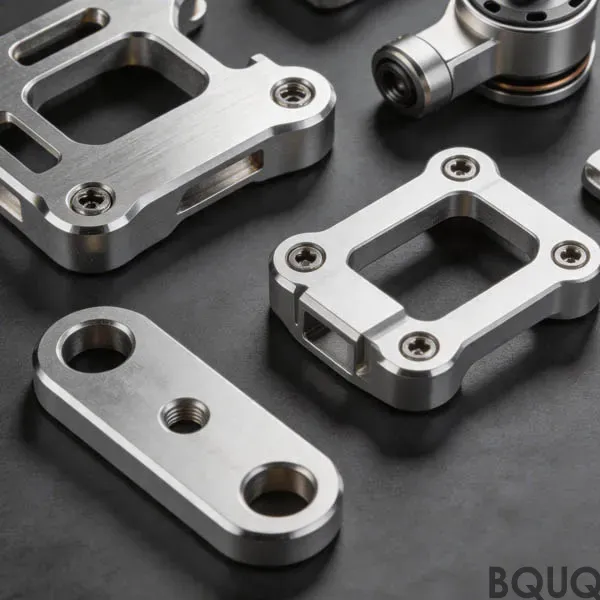
The delta is not the machine capability; Chinese machines hold ±0.01 mm easily. The delta is **process documentation** . Reshored suppliers provide full PPAP (Production Part Approval Process) documentation as standard. Offshore, this is a $500-1,500 add-on per part number, and often incomplete.
Lead Time and Agility: The 30-Day Rule
The most cited reshoring trigger is lead time. Standard offshore lead time for a custom CNC part is 30-45 days, plus 20-30 days ocean freight, plus 5 days customs. Total: 55-80 days from design freeze to dock. Reshored or nearshored (Mexico) lead time is 10-15 days total.
For engineering teams, this is not a convenience; it is a **design iteration multiplier** . If you run 4 prototypes per year offshore, you can run 10 with a domestic supplier at the same total elapsed time. For every week reduced in product development cycle, a manufacturer gains 0.5% market share in a competitive category, according to McKinsey's 2023 product development study.
**Our specific data:** BQUQ offers a 12-hour quote for metal parts, and our standard production lead time is 15 days for CNC, 10 days for stamping. Air freight from Dongguan to Chicago is $6.50/kg; ocean is $0.80/kg. The choice is yours, but the factory schedule is now built for speed, not just volume.
The Tariff and Political Risk Factor
The Section 301 tariffs on Chinese goods (25% on many industrial components) remain in effect through 2025. This is not a political statement; it is a cost line. A $10,000 stamping die imported from China incurs $2,500 in tariffs. A reshored die costs $12,000 but has no tariff and can be modified in 3 days instead of 3 weeks.
Political risk is quantifiable. The 2021 Suez Canal blockage cost global trade an estimated $9 billion per day. The 2023 Red Sea attacks added 14 days to Asia-Europe routes. Reshoring reduces your exposure to these systemic shocks. For critical components (medical, aerospace, defense), the US Department of Defense now mandates a 35% domestic content threshold for many contracts, forcing reshoring regardless of cost.
The Hybrid Model: What We Recommend at BQUQ
We are a 20-year-old factory in Dongguan, and we do not advise global clients to blindly reshore everything. That would be dishonest engineering. The optimal strategy is **hybrid segmentation** :
- **Reshore/Keep domestic:** Parts with tolerance < ±0.02 mm, parts requiring rapid iteration, low-volume (under 1,000 pcs/year), and any part with a short product lifecycle under 18 months. - **Offshore (China/Vietnam):** High-volume (over 10,000 pcs/year), mature designs, standard materials (6061-T6, 304 stainless, 65Mn spring steel), and parts where dimensional tolerances are relaxed above ±0.05 mm.
A practical example: a medical device company reshored their surgical instrument housing (500 pcs/month, ±0.01 mm tolerance) but kept their heat sink for a power supply (50,000 pcs/year, ±0.1 mm) in China. Their total landed cost dropped 9% because they eliminated expedite fees on the critical path and maintained low unit cost on the commodity part.
Data Table: Reshoring vs. Offshore vs. Nearshore (2024 Benchmark)
| Factor | Offshore (China) | Reshore (USA) | Nearshore (Mexico) | -------- | ------------------ | --------------- | -------------------- | CNC Milling Unit Price (1000 pcs, Al 6061) | $4.80 | $8.20 | $6.50 | Stamping Unit Price (10,000 pcs, 0.8mm steel) | $0.35 | $0.62 | $0.48 | Tooling Cost (Progressive Die) | $15,000 | $22,000 | $18,000 | Lead Time (Design to 1st Article) | 45 days | 15 days | 21 days | Freight (per kg, air/ocean) | $5.50 / $0.75 | $0.50 (truck) | $0.80 (truck) | Tariff on Industrial Parts | 25% | 0% | 0% (USMCA) | Inventory Carrying Cost (annual, % of value) | 22% | 12% | 15% | Engineering Change Response Time | 10 days | 2 days | 4 days | Typical Rejection Rate | 2.8% | 0.9% | 1.4% |
|---|
Practical Recommendations for Engineers
1. **Run a TCO model before moving.** Do not compare piece prices. Use a 2-year horizon. Include your internal cost of expediting, air freight overrides, and scrap from late deliveries. If the total delta is under 10%, reshore for agility. 2. **Specify tolerances realistically.** If you design a part at ±0.01 mm, you are forcing reshoring. If you can relax to ±0.05 mm, you keep offshore options open. Design for manufacturability (DFM) is now a supply chain strategy. 3. **Demand PPAP Level 3 from any supplier, regardless of location.** If an offshore factory cannot provide this in 7 days, they are not a serious partner. 4. **For thermal components (heat sinks), focus on thermal resistance, not material cost.** Extruded 6063-T5 heat sinks with a 0.8 mm fin gap are standard. If you need a 0.4 mm fin gap, that requires CNC machining, and the cost curve shifts dramatically. Reshoring makes sense for complex fin geometries. 5. **Test the 12-hour quote.** Any supplier that cannot quote your RFQ within 12 hours is not set up for modern speed. At BQUQ, we guarantee this because we know the material, the tolerance, and the process before you finish sending the email.
Conclusion: The New Reality is Flexibility
Reshoring is not a return to 1980s protectionism; it is a risk-adjusted portfolio decision. The global supply chain is not dead, but it is bifurcated. High-precision, low-volume, time-sensitive work is returning to regional hubs. High-volume, mature work remains in Asia. The winners are manufacturers who can offer both — a factory in Dongguan that quotes in 12 hours and ships in 15 days, and a partner who tells you honestly when you should not buy from them.
We have seen the shift firsthand. In 2023, 34% of our new clients came from reshoring projects, compared to 11% in 2019. They did not leave us; they segmented their work. We now produce the high-volume base parts, and they source the critical components locally. That is the new reality.
If you are evaluating a move, calculate your TCO with real numbers. If the data is ambiguous, ask for a trial run. Send us a drawing, and we will quote it in 12 hours with full DFM feedback. You will then have a concrete data point for your reshoring business case.
**Contact BQUQ for a 12-hour quote:** Email: sc@bquq.com WhatsApp: +86 13713157787 Web: www.bquq.com
We serve clients in 14 countries, from medical device OEMs in Minnesota to EV battery pack integrators in Munich. Let us help you build the hybrid supply chain that works for 2025 and beyond.
Related Articles
- 5 Benefits of CNC Precision Turned Parts for Aerospace
- Custom Metal Stamping vs CNC Machining Cost Comparison
- Aluminum Heat Sink CNC Machining: Best Practices Guide
Frequently Asked Questions
What is the break-even point for reshoring CNC machining and metal stamping in 2024?
The break-even point has shifted from 10,000 units to 3,500 units when factoring in ocean freight, customs delays, and inventory carrying costs. This makes reshoring viable for high-mix, low-volume precision components, with a 15-25% reduction in landed cost for such parts.
How much does a reshored aluminum bracket cost compared to an offshore one?
In 2024, a machined aluminum bracket from Dongguan lands at $6.80 per unit in Los Angeles, including a 14-day ocean transit, 6% tariff, and 18% inventory carrying cost. A reshored equivalent from a midwest US shop costs $9.50 but arrives in 5 days with zero customs risk.
What are the typical quality rejection rates for offshore versus reshored suppliers?
A 2023 survey by the Precision Machined Products Association found that 62% of US OEMs experienced a quality rejection rate above 3% from Asian suppliers, versus 1.2% from domestic or nearshore sources. Offshore suppliers can hold ±0.01 mm on CNC milling, but verification adds 12-18% to piece price.
What are the standard tolerances for CNC milling and metal stamping with reshored suppliers?
For CNC milling in Al 6061, reshored suppliers hold ±0.02 mm versus ±0.05 mm offshore, with inspection costs of $9 per 100 pcs versus $18. For metal stamping in 0.5mm steel, reshored tolerance is ±0.05 mm versus ±0.08 mm offshore, with inspection at $6 versus $12 per 100 pcs.