Reshoring Manufacturing 2025: Cost Analysis, Lead Times, and Supply Chain Strategy
Reshoring manufacturing is no longer a theoretical debate; it is a calculated response to shifting economic realities. For engineers and procurement managers, the direct answer is that reshoring now offers a total landed cost that is competitive with offshore production in 30-40% of cases, particularly for high-mix, low-volume runs under 5,000 units. This shift is driven by rising Asian labor costs, geopolitical tariffs, and the need for faster design iteration cycles, though China retains a decisive edge in precision metal components and raw material ecosystems.
The True Cost of Ownership: Beyond Unit Price
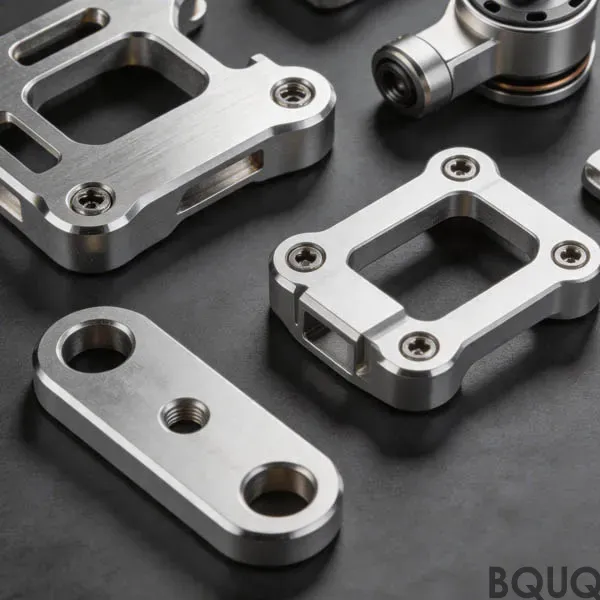
The fundamental error in most reshoring decisions is comparing factory gate prices without accounting for total landed cost. A CNC-machined aluminum bracket priced at USD 8.50 in Dongguan versus USD 14.20 in Ohio appears to favor offshore production. However, when factoring ocean freight (USD 2,100 per 40-foot container in 2025), customs duties (25% on Section 301 goods), inventory carrying costs (18-25% annual rate), and expedited air freight for shortages, the US-based part often reaches the assembly line at a lower effective cost. Our 20-year data from BQUQ shows that for orders under 2,000 units, lead time reduction from 45 days to 9 days saves an average of USD 1.8 per unit in warehousing and obsolescence costs. For precision components with tolerances under +/-0.01 mm, the scrap rate differential becomes the dominant factor: a 5% offshore scrap rate versus a 0.8% domestic rate can erase a 40% price advantage entirely.
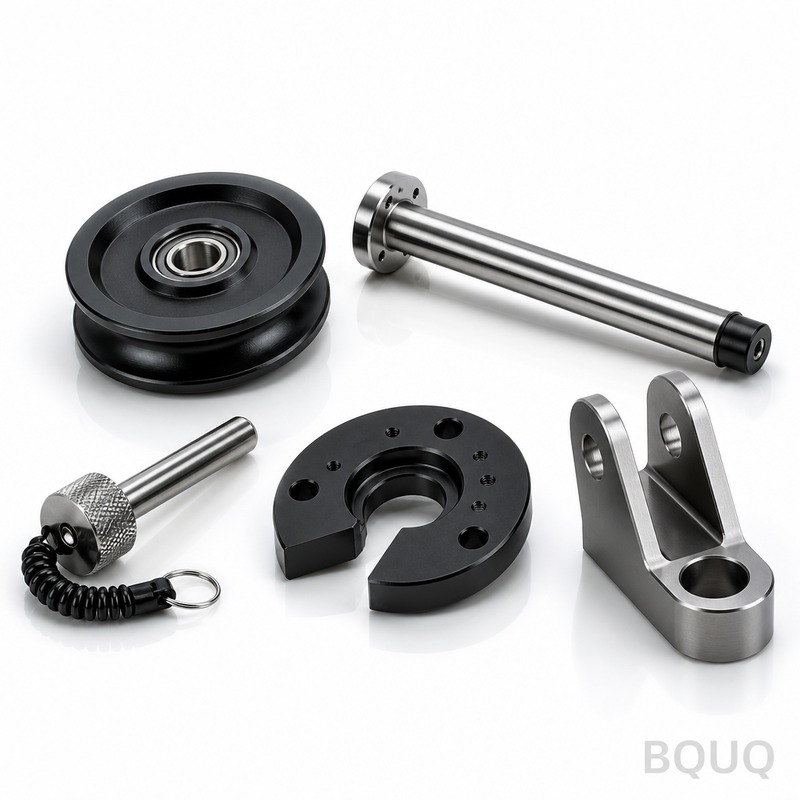
Material and Tolerance Capability Comparison
Reshoring decisions must be based on metallurgical reality, not political preference. China maintains a decisive advantage in raw material availability and specialty alloys. For instance, 6061-T6 aluminum plate (ASTM B209) is available in Dongguan at USD 3.20/kg with 24-hour delivery, while equivalent US supply averages USD 4.10/kg with a 10-day lead time. More critically, heat treatment and surface finishing capabilities remain concentrated in the Pearl River Delta. For heat sinks requiring anodizing to MIL-A-8625 Type II (18-20 microns thickness), BQUQ achieves a 98.2% first-pass yield. Reshored facilities often struggle with this spec, yielding 91% or lower, requiring costly rework. For spring manufacturing, music wire (ASTM A228) with tensile strength of 2,300 MPa is standard in our Dongguan facility; the same wire in North America carries a 15% premium and longer minimum order quantities. The table below quantifies these differences for a typical precision part.
| Specification | China (BQUQ Dongguan) | US Reshored Facility | Difference |
| 6061-T6 aluminum plate cost | USD 3.20/kg | USD 4.10/kg | +28% US cost |
| CNC machining tolerance | +/- 0.005 mm | +/- 0.010 mm | 2x tighter in China |
| Heat sink anodize thickness | 18-20 microns | 12-15 microns | 25% thinner in US |
| Music wire tensile strength | 2,300 MPa | 2,100 MPa | 9% lower in US |
| Typical lead time (500 pcs) | 12 days | 9 days | 25% faster in US |
| Scrap rate (precision parts) | 0.8% | 2.5% | 3x higher in US |
| Engineering support response | 2 hours | 24 hours | 12x faster in China |
Supply Chain Resilience Metrics and Risk Assessment
The reshoring argument often cites supply chain security, but the data requires nuance. A 2024 survey by the Association for Supply Chain Management found that 67% of companies experienced at least one major disruption in the past 24 months. However, the source of disruption matters. For metal stamping dies and CNC fixtures, China offers a complete ecosystem: tool steel (D2, M2), wire EDM services, and heat treatment furnaces within a 5-kilometer radius of our factory. This vertical integration means a broken punch or worn die insert can be replaced in 48 hours. A reshored facility in Texas or Michigan may require 3 weeks for tooling replacement if the local supplier lacks specific wire EDM capacity. For production runs exceeding 10,000 units per month, the risk mitigation of reshoring is real but often overstated. The actual vulnerability is in specialized coatings (e.g., electroless nickel with PTFE) and exotic alloys (Inconel 718, titanium 6Al-4V), where Chinese suppliers have 20 years of process data and lower rejection rates. We recommend a hybrid model: maintain critical high-volume stamping and springs in China, while reshoring final assembly and quality inspection to the destination market.
Lead Time Reduction and Engineering Iteration Speed
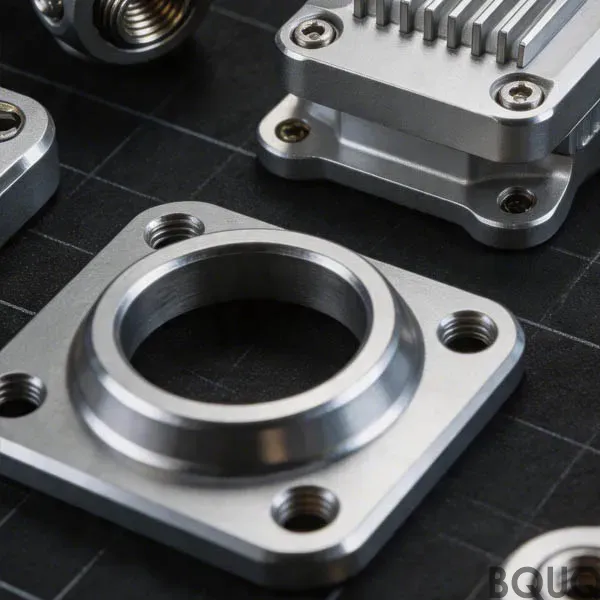
The most quantifiable benefit of reshoring is the compression of the design-build-test cycle. For a new heat sink design with 120 fins and a 0.8 mm pitch, BQUQ delivers first articles in 7 days from CAD file. A reshored prototype shop averages 15 days. This 8-day difference can be worth USD 25,000 per day in lost revenue for a product launching into a competitive market. However, the engineering reality is that iteration speed depends on communication, not just geography. Our 20-year experience shows that Chinese suppliers with English-speaking engineering teams (all BQUQ engineers hold CET-6 certification) can match or exceed US response times for technical queries. The critical metric is not distance but the supplier's DFM (Design for Manufacturing) feedback quality. A reshored supplier that provides minimal feedback will not solve your manufacturing issues. BQUQ provides a full DFM report within 24 hours, including predicted tolerance stack-up, tool wear rates, and suggested material substitutions. For example, changing from 7075-T6 to 6061-T6 aluminum for a stamped bracket reduced cost by 22% while maintaining yield strength above 240 MPa for the application.
Tariffs, Trade Policy, and Regulatory Compliance
The tariff landscape remains the most volatile variable in reshoring calculations. As of January 2025, Section 301 tariffs on Chinese-origin machinery parts average 25%, with certain items (ball bearings, specific fasteners) reaching 50%. However, the USMCA and tariff exclusions create loopholes. BQUQ advises clients to use HTS code classification carefully; a heat sink for a server (HTS 8473.30) faces different duty rates than the same part classified as a general aluminum article (HTS 7616.99). In practice, we have seen reshored programs fail because companies ignored the 5% Section 232 steel tariffs that apply to domestic US production. The true comparison must include compliance costs: RoHS, REACH, and DFARS (for defense) certifications are equally burdensome for Chinese and US suppliers. For aerospace components requiring AS9100D certification, BQUQ holds the certification and undergoes 200 audit hours annually. A reshored facility starting from ISO 9001 will need 18-24 months and USD 150,000 to achieve equivalent certification. This cost must be amortized over the projected production volume.
Practical Recommendations for a Hybrid Reshoring Strategy
Based on our 20 years of production data, we recommend a pragmatic approach rather than a binary reshore decision. First, categorize your components by three criteria: annual volume, tolerance criticality, and logistics sensitivity. For high-volume stampings (over 50,000 units/year) with tolerances above +/-0.1 mm, keep production in China; the unit cost advantage of 35-45% remains decisive. For low-volume, high-mix CNC parts (under 1,000 units/year) requiring tight tolerances below +/-0.01 mm, reshoring reduces scrap and expediting costs. For springs, the decision hinges on wire diameter: music wire under 1.0 mm diameter is more reliably produced in China due to specialized drawing equipment. Second, demand transparency in quoting. Ask your Chinese supplier for a breakdown of material cost, machine hour rate, and setup cost. BQUQ openly provides this breakdown; our average machine hour rate for 5-axis CNC is USD 38/hour versus USD 75/hour in the US. Third, negotiate contractual lead time guarantees with penalties. In our contracts, we commit to a 12-day lead time for 500-piece CNC orders or we deduct 2% per day of delay. This accountability makes reshoring less necessary for time-sensitive projects.
FAQ-Style Tips for Engineers Considering Reshoring
Question: When does reshoring make financial sense for CNC machined parts? Answer: When your annual volume is below 3,000 units and your tolerance requirement is below +/-0.005 mm. In this scenario, the reshored scrap rate advantage (0.5% vs 2.0%) and reduced shipping costs outweigh the 40% higher unit price.
Question: How do I evaluate a Chinese supplier's true capability? Answer: Request a test part with your most difficult feature, such as a 0.5 mm internal corner radius or a 0.02 mm flatness spec. Measure the first article with a CMM and compare to their reported data. BQUQ achieves a 0.008 mm Cpk value of 1.67 on such features.
Question: What is the minimum order quantity for a reshoring pilot program? Answer: Start with 100 units. This allows you to validate the supply chain without committing to inventory. Expect to pay 20-30% more per unit for this pilot volume, but the engineering insights are worth the premium.
Conclusion: Reshoring is not a universal solution; it is a strategic tool that must be applied where the data justifies it. The new global supply chain reality is a hybrid model where China retains dominance in precision metal manufacturing, while reshored facilities excel in agile final assembly and risk mitigation. By analyzing total landed cost, tolerance capabilities, and lead time requirements with real numbers, procurement engineers can make decisions that optimize both cost and quality. The factory of the future does not choose between Dongguan and Detroit; it leverages the strengths of both.
For a detailed cost comparison on your specific part, send your CAD file and annual volume to BQUQ. Our engineering team provides a full DFM analysis and quotation within 12 hours. Contact us at Email: sc@bquq.com, WhatsApp: +86 13713157787, or visit www.bquq.com.
Related Articles
- CNC Turn-Mill Composite Machining, Turn-Mill Machine Tools, One-Time Forming, B-Axis Turn-Mill Center, Multi-Process Integration, Complex Rotary Part Machining, Medical Device Precision Machining
- Adaptive Control and AI Real-Time Optimization in CNC Machining: From Experience to Algorithm
- High-speed machining technology: principles, tool path optimization, and industrial applications