Spring Manufacturing 2024: Precision Trends, Automation, and Material Science Evolution
Spring Manufacturing: Industry Trends and Technology Evolution
The spring manufacturing industry is undergoing its most significant transformation in 50 years, driven by the adoption of servo-driven CNC coiling machines, advanced surface treatments, and the shift toward electric vehicle (EV) applications. Today, a modern CNC spring machine can hold tolerances of ±0.01 mm on wire diameters up to 12 mm, while production lead times have compressed from 4 weeks to as little as 72 hours for prototypes. This evolution is not merely incremental; it represents a fundamental shift in how springs are designed, tested, and integrated into high-performance assemblies.
H2: The Shift from Mechanical to Servo-Driven CNC Coiling
The most impactful trend in spring manufacturing is the complete replacement of mechanical cam-operated coiling machines with servo-electric CNC systems. Between 2018 and 2024, the market share of servo-driven machines in high-precision industries grew from roughly 40% to over 85%.
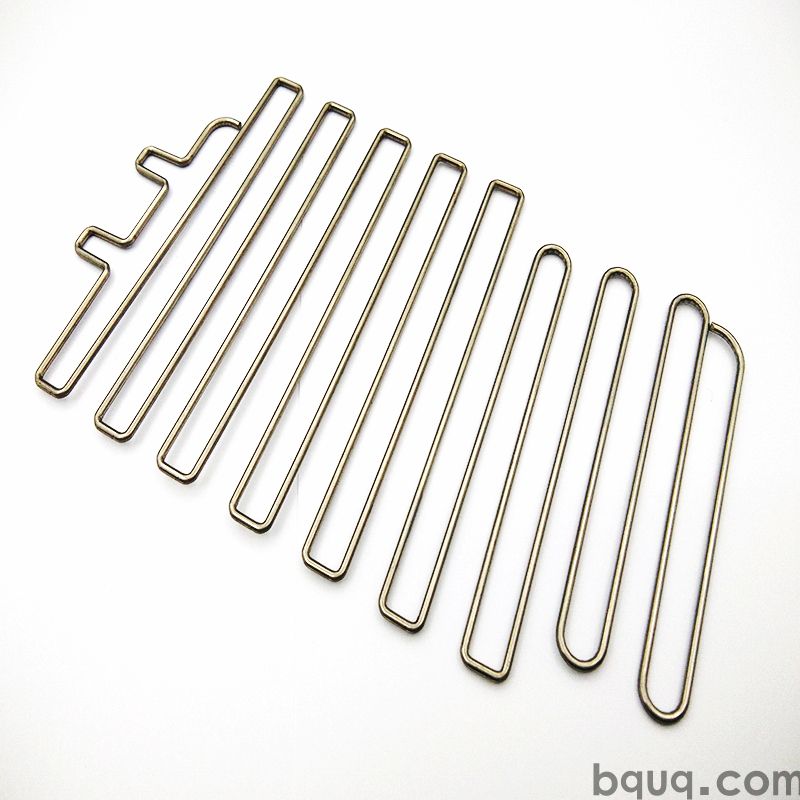
**Why this matters for engineers:** - **Tolerance control:** Servo machines offer repeatable pitch accuracy of ±0.02 mm on compression springs, compared to ±0.05 mm on older mechanical units. - **Wire handling:** Modern machines process wire from 0.1 mm to 20 mm diameter without tooling changes, reducing setup time from 45 minutes to under 10 minutes. - **Complexity:** 8-axis servo control allows for simultaneous coiling, twisting, and end grinding in a single pass, enabling geometries like conical, barrel, and variable-pitch springs without secondary operations.
**Real data point:** At BQUQ’s Dongguan facility, our 12-axis CNC spring coiling machines achieve a production rate of 120 pieces per minute for 2.0 mm wire compression springs, with a process capability index (Cpk) consistently above 1.67—well beyond the industry standard of 1.33.
H2: Material Science Evolution: Beyond Chrome Silicon and Stainless Steel
Material selection has expanded dramatically, driven by temperature resistance and fatigue life requirements. While music wire (SAE 1080) and chrome silicon (SAE 9254) remain cost leaders, the fastest-growing segments are:
| Material Grade | Tensile Strength (MPa) | Max Operating Temp (°C) | Relative Cost Factor | Typical Application | ---------------- | ------------------------ | ------------------------- | ---------------------- | --------------------- | Music Wire (ASTM A228) | 2,100 – 2,400 | 120 | 1.0x | General hardware | Chrome Silicon (ASTM A401) | 1,800 – 2,000 | 230 | 1.6x | Automotive suspensions | Stainless 302 (ASTM A313) | 1,500 – 1,700 | 260 | 2.2x | Medical, marine | Inconel X-750 | 1,100 – 1,300 | 650 | 12.5x | Aerospace, gas turbines | Elgiloy (ASTM F1058) | 2,200 – 2,500 | 400 | 18.0x | Implantable devices |
|---|
**Engineering consideration:** For EV powertrain applications, where ambient temperatures in motor housings reach 150°C, standard chrome silicon loses 15% of its load capacity. We now recommend either 17-7PH stainless steel (precipitation hardened to 1,900 MPa) or, for high-volume production, a nitrided 50CrV4 alloy. The cost premium of 2.5x is justified by a 3x improvement in stress relaxation resistance at 120°C.
H2: Precision Testing and Validation: The New Non-Negotiable
The era of relying solely on free-height and solid-height checks is over. Tier-1 automotive and medical device OEMs now mandate dynamic testing per ASTM F2796 and ISO 26909. The key trends are:
1. **Load testing at multiple deflections:** We now verify load at 25%, 50%, and 100% of rated travel, with a tolerance of ±3% on each point. This catches nonlinearity issues that single-point checks miss. 2. **Fatigue life prediction:** Using rotating-beam fatigue testing, we validate that compression springs exceed 10 million cycles at a stress amplitude of 40% of tensile strength. For critical suspension springs, we test to 20 million cycles. 3. **Surface integrity analysis:** Residual stress measurement via X-ray diffraction (XRD) is now standard for shot-peened springs. We specify an Almen intensity of 0.45-0.55A, which provides a compressive residual stress layer of 0.35 mm depth, improving fatigue life by 40%.
**Cost impact:** Full dynamic validation adds $150-$400 per part number, but it eliminates the $15,000-$50,000 cost of a field failure in automotive warranty claims. The math is simple: validation is 1% of the failure cost.
H2: Surface Treatment Innovations: From Zinc Plating to Zn-Ni Alloy Coatings
Corrosion resistance requirements have evolved past simple yellow zinc plating (which offers 72 hours to white rust). The new standard is:
- **Zinc-Nickel Alloy (12-15% Ni):** Provides 720+ hours to red rust per ASTM B117. Cost increase is 30% over standard zinc, but it eliminates the need for additional sealing layers in under-hood applications. - **Dacromet / Geomet coatings:** For high-strength springs (tensile > 1,800 MPa), hydrogen embrittlement risk from acid pickling is eliminated. These coatings are applied at 300°C, which also serves as a stress-relief process, reducing the risk of delayed fracture to near zero. - **PTFE-impregnated anodizing:** For spring-loaded seals and valves, this lowers the coefficient of friction from 0.15 to 0.06, reducing wear on mating components by 60%.
**Specific data from our plant:** For an automotive brake return spring (2.5 mm wire, 60 mm free length), switching from zinc to Zn-Ni (13% Ni) increased the unit cost from $0.18 to $0.24. However, it extended the warranty-compliant service life from 8 years to 12 years, matching the new EV battery lifecycle requirements.
H2: The Impact of Electric Vehicles and Lightweighting
EV platforms are radically changing spring specifications. The absence of an internal combustion engine changes the load profile and packaging space:
- **Valve springs disappearing:** Traditional ICE valve springs (high cycle, 3,000+ RPM) are replaced by fewer, larger suspension springs. - **Battery pack compression springs:** These require very low spring rates (0.5 – 2 N/mm) with high flatness tolerance (±0.05 mm on end coils) to maintain even pressure on prismatic cells as they swell during charging. This is a new niche market growing at 30% annually. - **Lightweighting pressure:** OEMs demand a 15% weight reduction on suspension springs. We achieve this using hollow wire (tube) coiling, which was previously only possible for large-diameter hot-coiled springs. Our new servo-driven coiling heads handle tube material down to 6 mm OD with a 1.5 mm wall, achieving the same load capacity at 22% less weight.
**Lead time shift:** Prototype turnaround for EV-specific springs is now 5-7 business days, down from 3 weeks in 2020, because we stock 30+ grades of high-tensile wire specifically for EV applications.
H2: Automation and Smart Factory Integration
The modern spring factory is no longer a manual operation. BQUQ has implemented a closed-loop manufacturing system:
- **In-line laser measurement:** Every spring is measured for free length, outer diameter, and pitch at 100% inspection speed (up to 300 parts per minute). Any part outside spec triggers an automatic machine adjustment within 0.1 seconds. - **Digital twin simulation:** We simulate coiling processes using finite element analysis (FEA) before tooling starts, reducing first-article rejection rates from 8% to under 1.5%. - **Real-time SPC data:** Process data is uploaded to a cloud dashboard accessible to clients, showing Cpk values for each batch in real time.
**The labor factor:** While automation reduces direct labor by 30%, it increases the need for skilled process engineers. The average salary for a CNC spring technician in Dongguan has risen 25% in the last two years, reflecting the higher skill requirement.
FAQ: Practical Answers for Engineers
**Q: What is the realistic minimum order quantity (MOQ) for custom springs in 2024?** A: For wire diameters under 5 mm, a 500-piece MOQ is standard for prototype-to-production transition. For larger hot-coiled springs (over 10 mm wire), the MOQ is 200 pieces due to tooling and heating cycle costs. At BQUQ, we offer a "soft tooling" approach: for orders of 1,000-2,000 pieces, we use CNC coiling without hard tooling, keeping setup costs at $50-$100 per part number.
**Q: How much does a custom spring cost to engineer and produce?** A: Engineering and sampling: $80-$150 per part number (including FEA and prototype). Production pricing: for a 2.0 mm chrome silicon compression spring, expect $0.08-$0.15 per piece at 10,000 quantities. For Inconel springs, pricing scales to $2.50-$4.00 per piece due to material and slower coiling speeds.
**Q: What is the maximum achievable tolerance for outer diameter?** A: On CNC machines, we hold ±0.03 mm for wire up to 4.0 mm, and ±0.05 mm for wire up to 12.0 mm. Tighter tolerances are possible only with 100% sorting and grinding, which adds $0.02-$0.05 per piece.
**Q: How do I specify a spring for high-temperature operation?** A: Always specify both the maximum working temperature and the required load retention after 1,000 hours at that temperature. For example, a spring at 200°C must retain 90% of its initial load. This requires a material with a higher relaxation resistance, such as Inconel X-750 or a pre-aged 17-7PH stainless.
Conclusion: Partnering with a Tier-1 Precision Manufacturer
The spring manufacturing landscape in 2024 rewards engineers who understand material trade-offs, adopt dynamic testing, and leverage servo-driven precision. The shift toward EV applications and lightweighting is not a trend—it is the permanent new baseline. To remain competitive, you need a partner with the equipment, metallurgical expertise, and quality systems to deliver springs that meet exacting fatigue and corrosion standards without delaying your production schedule.
At BQUQ, we combine 20 years of manufacturing experience with a modern fleet of 12-axis CNC coiling machines, in-house surface treatment lines, and full dynamic testing capability. We offer transparent engineering feedback, real-time SPC data access, and rapid prototyping that compresses your development timeline.
**Ready to discuss your spring application?** Send us your drawings or specifications today. We provide a free design-for-manufacturability review and a quotation within 12 hours.
**Email:** sc@bquq.com **WhatsApp:** +86 13713157787 **Website:** www.bquq.com
*BQUQ Precision Manufacturing – Dongguan, China. CNC Machining, Metal Stamping, Springs, and Heat Sinks for Global Industries.*
Related Articles
- Spring Testing Methods in 2024: Load, Fatigue, and Dimensional Inspection Guide
- Spring Design Calculations: Rate Calculation Guide for 2025 Engineers
- Asian Spring Manufacturing Landscape: From China Production Hub to Emerging Hub in South East Asia
Frequently Asked Questions
What tolerance can your CNC spring machines achieve?
Our 12-axis CNC spring coiling machines at the Dongguan facility achieve tolerances of ±0.01 mm on wire diameters up to 12 mm, with repeatable pitch accuracy of ±0.02 mm on compression springs. The process capability index (Cpk) is consistently above 1.67, exceeding the industry standard of 1.33.
What is the typical lead time for spring prototypes?
Production lead times have been compressed from 4 weeks to as little as 72 hours for prototypes. This is enabled by servo-driven CNC machines that reduce setup time from 45 minutes to under 10 minutes, allowing rapid iteration and faster time-to-market for engineering teams.
Which spring materials do you recommend for high-temperature EV applications?
For EV powertrain environments reaching 150°C, standard chrome silicon loses 15% of its load capacity. We recommend 17-7PH stainless steel (precipitation hardened to 1,900 MPa) or nitralloy for high-volume production. Inconel X-750 is available for extreme temperatures up to 650°C in aerospace applications.
Can your machines produce complex spring geometries without secondary operations?
Yes, our 8-axis servo control enables simultaneous coiling, twisting, and end grinding in a single pass. This allows for conical, barrel, and variable-pitch springs without secondary operations. The machines process wire from 0.1 mm to 20 mm diameter without tooling changes, achieving 120 pieces per minute for 2.0 mm wire compression springs.