Stamping vs Laser Cutting: Which Sheet Metal Process Should You Choose?
For production volumes above 1,000 units, stamping is the superior choice, delivering per-part costs as low as USD 0.05 and tolerances of ±0.05 mm. For low volumes, prototyping, or complex geometries with quick turnaround, laser cutting offers flexibility with zero tooling cost and tolerances of ±0.10 mm. The decision hinges on your annual quantity, required tolerance, and material thickness.
What Are the Core Differences Between Stamping and Laser Cutting?
Stamping is a mechanical process that uses a die and press to deform or shear sheet metal. It is a high-speed, high-volume operation where the tooling cost (typically USD 3,000 to USD 80,000) is amortized over thousands of parts. Laser cutting is a thermal process that uses a focused fiber or CO2 beam to melt and vaporize metal along a programmed path. It requires no physical tooling, making setup costs near zero, but the cutting speed is slower than stamping for repetitive parts.
The fundamental trade-off is capital investment versus per-part cost. Stamping invests heavily upfront to achieve cycle times of 20 to 60 strokes per minute. Laser cutting spends little upfront but consumes 5 to 15 kW of electricity per hour and cuts at speeds of 1 to 20 meters per minute, depending on thickness. For a 2 mm thick mild steel part, a stamping press can produce 40 parts per minute, while a 6 kW fiber laser cuts the same profile in approximately 12 seconds per part.
How Do Production Volumes Affect the Cost per Part?
Volume is the single largest deciding factor. For a typical bracket measuring 100 mm by 50 mm in 2 mm mild steel, the cost breakdown is stark. Stamping tooling for a simple blanking die costs around USD 8,000. At 1,000 parts, the tooling amortization alone is USD 8.00 per part, making stamping prohibitively expensive. At 50,000 parts, the amortization drops to USD 0.16 per part, and the material utilization rate of 85% to 95% further reduces costs.
Laser cutting has no tooling amortization, so the cost per part is flat, typically USD 1.50 to USD 3.00 per part for the same geometry, depending on cutting time and gas consumption. The break-even point is generally between 2,000 and 5,000 parts. Below 2,000, laser cutting is always cheaper. Above 5,000, stamping becomes 40% to 70% cheaper per part. For volumes exceeding 100,000, stamping costs can drop to USD 0.10 to USD 0.30 per part, a cost level laser cutting can never reach.
What Tolerances Can Each Process Achieve?
Stamping offers superior dimensional consistency because the die geometry is fixed. For standard blanking and piercing, tolerances of ±0.10 mm are routine, and precision stamping can achieve ±0.05 mm. The process also produces a shear edge with a characteristic burnish zone, which is acceptable for most structural applications. Laser cutting achieves a tolerance of ±0.10 mm for material up to 6 mm thick, but this can degrade to ±0.30 mm for thicker plates due to thermal distortion and kerf width variation.
The surface finish also differs. Stamping leaves a smooth, work-hardened edge on the sheared portion, with a slight burr of 0.02 to 0.05 mm that may require deburring. Laser cutting produces a slightly rough, striated edge with a heat-affected zone (HAZ) of 0.20 to 0.50 mm on the cut edge. For parts requiring tight fits or welding, the HAZ from laser cutting can cause localized hardness changes, while stamping retains the base material properties throughout.
Which Material Thicknesses Are Suitable for Stamping vs Laser Cutting?
Stamping is optimal for thin to medium sheets, typically 0.1 mm to 6.0 mm for most applications. Progressive dies handle thin materials like 0.15 mm shims exceptionally well, with tolerances of ±0.02 mm achievable. Above 6.0 mm, stamping becomes impractical because the required press tonnage increases exponentially; a 10 mm thick steel plate needs over 200 tons of force per meter of cut length. Laser cutting excels in this range, handling materials up to 25 mm in mild steel and 20 mm in stainless steel with ease.
For thick plates above 6 mm, laser cutting is the only viable option among these two processes. The thermal cutting speed for 10 mm mild steel is about 2.5 meters per minute with a 6 kW laser, and the kerf width is 0.3 to 0.5 mm. Stamping cannot economically cut thick plates due to die wear and press capacity limits. However, for thin materials under 0.5 mm, laser cutting risks warping due to heat input, making stamping the recommended choice.
How Do Tooling Costs and Lead Times Compare?
Stamping tooling is the primary barrier to entry. A simple blanking die costs USD 3,000 to USD 10,000 and takes 2 to 4 weeks to manufacture. A progressive die for complex parts with multiple bends and holes costs USD 20,000 to USD 80,000 and requires 6 to 10 weeks. Tooling life is substantial, with carbide dies lasting 1,000,000 strokes and steel dies lasting 200,000 to 500,000 strokes. Laser cutting has zero tooling cost and can start production within 24 hours of receiving a CAD file.
The lead time difference is critical for product development. A prototype batch of 50 laser-cut parts can ship in 3 to 5 days. The same quantity via stamping would require waiting for tooling fabrication, pushing delivery to 4 to 6 weeks. For production runs, stamping has a faster cycle time per part, but the initial tooling wait must be factored into the project schedule. We recommend laser cutting for initial design validation, then transitioning to stamping once the design is frozen and volumes are confirmed.
Why Does Part Complexity Favor One Process Over the Other?
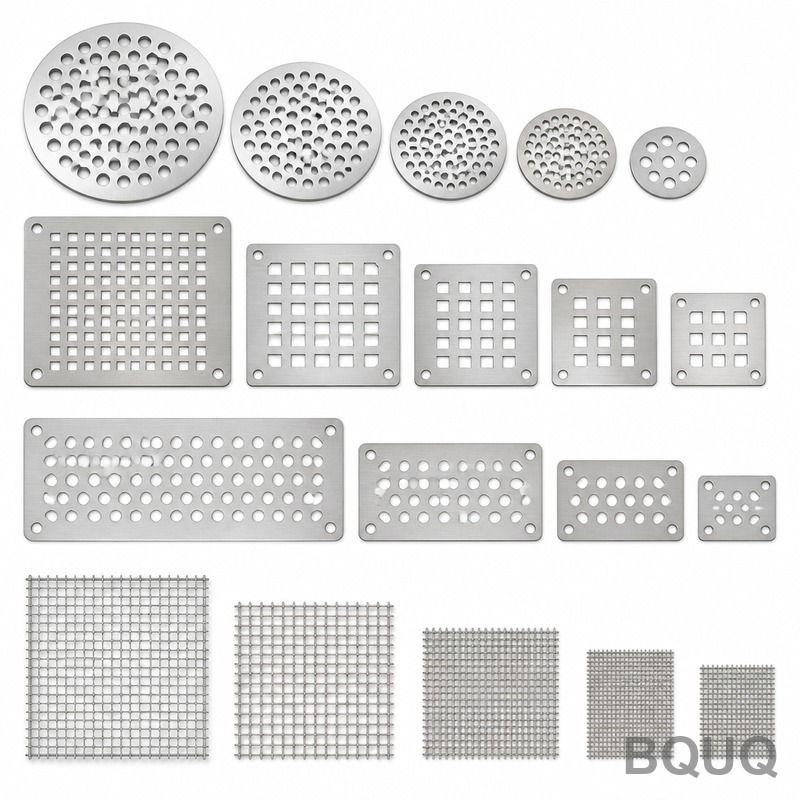
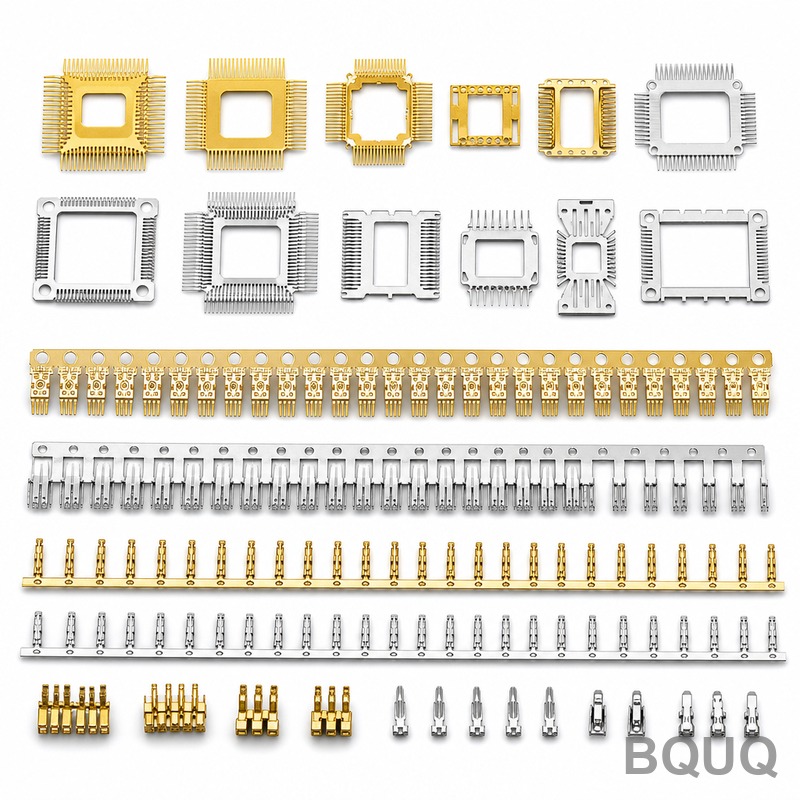
Laser cutting handles complex 2D geometries without additional cost. Holes, slots, and intricate contours are cut in the same pass, and the programming time is minimal. Stamping, however, can produce complex parts with bends, forms, and embossing in a single press stroke using a progressive die. The die must be designed with all features in mind, and each additional feature increases tooling cost by 10% to 20%. For a part with 10 or more holes and cutouts, laser cutting is often cheaper for the first 5,000 parts.
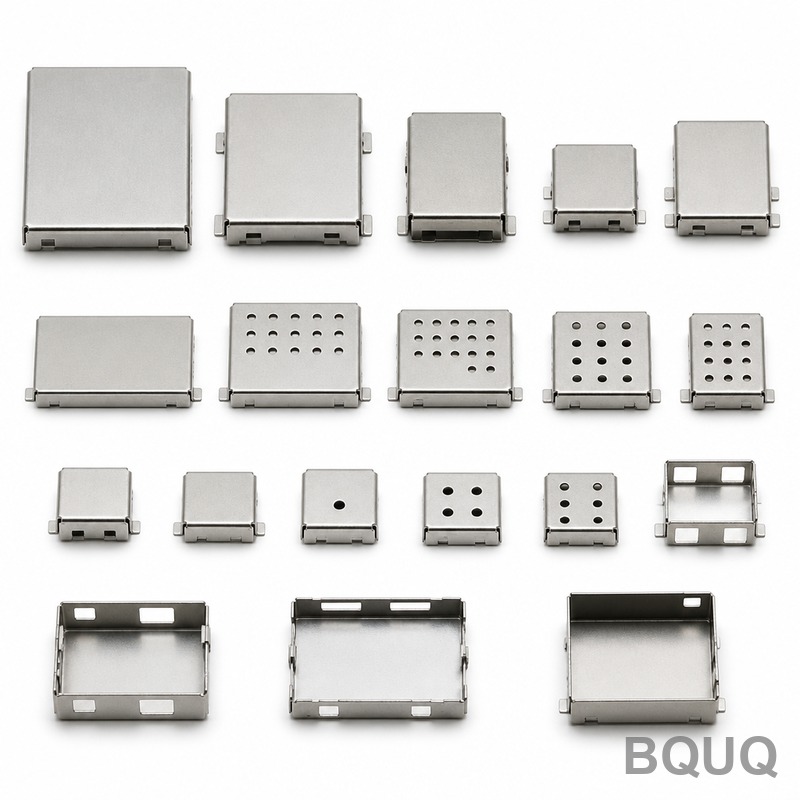
Stamping excels at parts requiring 3D forms, such as drawn cups, ribs, and flanges. These features are impossible with flat laser cutting. For example, a heat sink with folded fins can be stamped in one operation, while laser cutting would produce only the flat blank, requiring secondary bending. The rule of thumb is: if the part is flat with complex cutouts, choose laser cutting. If the part requires bending, forming, or high-volume consistency, choose stamping.
Which Process Offers Better Material Utilization and Scrap Rates?
| Parameter | Stamping | Laser Cutting |
| Material utilization | 85% to 95% with nested strip layout | 70% to 85% with nesting software |
| Scrap rate | 5% to 15% | 15% to 30% |
| Cycle time (100mm x 50mm part, 2mm steel) | 1.5 seconds per part | 12 seconds per part |
| Tooling cost | USD 3,000 to USD 80,000 | USD 0 |
| Tolerance | ±0.05 to ±0.10 mm | ±0.10 to ±0.30 mm |
| Minimum quantity for cost parity | Above 5,000 units | Below 2,000 units |
Stamping achieves higher material utilization because the strip layout can nest parts tightly with minimal spacing, typically 1.5 to 3 mm between parts. Laser cutting requires a kerf width of 0.2 to 0.5 mm, plus a minimum part spacing of 2 to 5 mm to avoid heat-affected zone overlap. For expensive materials like stainless steel or aluminum, the 10% to 15% material savings from stamping can justify the tooling investment even at moderate volumes.
What Are the Practical Recommendations for an Engineer?
Start with laser cutting if your annual volume is below 2,000 parts, your design is still evolving, or your material thickness exceeds 6 mm. Use stamping if your volume exceeds 5,000 parts per year, you need tolerances tighter than ±0.10 mm, or your part requires bends and forms. For parts in the 2,000 to 5,000 range, calculate the total cost including tooling amortization, material waste, and secondary operations. Always request quotes for both processes, as the exact geometry and material grade can shift the break-even point by 20% to 30%.
In our 20 years of manufacturing heat sinks, springs, and metal stampings in Dongguan, we have observed that most clients transition to stamping after their product reaches market acceptance. The initial laser-cut prototypes are invaluable for fit testing, while the final stamped parts deliver the cost structure needed for profitable mass production. For mixed low and high volume needs, we recommend a hybrid approach: laser cutting for spare parts and stamping for the main production run.
What Is the Cost Difference for a Typical Heat Sink Bracket?
For a 1.5 mm thick aluminum heat sink bracket, 80 mm by 40 mm, with four mounting holes and two bent flanges, the comparison is instructive. Laser cutting produces the flat blank at USD 1.80 per part, but the flanges require a secondary bending operation at USD 0.40 per part, totaling USD 2.20. Stamping with a compound die produces the complete part with bends in one stroke at a tooling cost of USD 12,000. At 3,000 parts, the stamped cost is USD 4.00 per part (including tooling amortization of USD 4.00), while laser plus bending is USD 2.20. At 10,000 parts, stamping drops to USD 1.20 per part, beating laser cutting by nearly 50%.
Can Stamping and Laser Cutting Be Used Together?
Yes, combining both processes is often the most cost-effective strategy. A common approach is to use laser cutting for the outer profile and large cutouts, then use stamping for precise holes and forms that require tight tolerances. This hybrid method reduces tooling complexity and cost while maintaining the accuracy of stamped features. Another approach is to laser cut prototypes for fit validation, then invest in stamping tooling for mass production once the design is finalized.
The practical limit is that stamping dies can incorporate laser-cut blanks as input material, but the reverse is not efficient. For parts with a complex outer edge and simple internal holes, a laser-cut blank fed into a small stamping press for hole piercing is a proven method. This combination typically saves 15% to 25% compared to full stamping tooling, while maintaining a tolerance of ±0.05 mm on the pierced holes.
How Do Material Properties Affect the Process Choice?
Material hardness and formability are critical. Stamping requires materials with sufficient ductility to bend or draw without cracking, such as mild steel (yield strength 250 MPa), aluminum 5052, or brass. High-strength steels above 600 MPa yield strength are stampable but cause accelerated die wear. Laser cutting has no such limitation; it cuts any electrically conductive material, including hardened steel, titanium, and Inconel. However, laser cutting of reflective materials like copper or aluminum above 6 mm requires specialized fiber lasers with 8 kW or more power.
Thermal effects also matter. Laser cutting of stainless steel creates a heat-affected zone that can reduce corrosion resistance at the edge. This can be mitigated with nitrogen assist gas, which adds 20% to 30% to the gas cost. Stamping produces a clean shear edge with no thermal damage, preserving the material's corrosion resistance. For food-grade or medical components where edge integrity is critical, stamping is the preferred choice despite higher tooling costs.
What Are the Minimum Order Quantities and Setup Times?
Laser cutting has a minimum order quantity of 1 piece, with setup time under 30 minutes. The machine can switch between different part geometries and materials without tooling changes, making it ideal for just-in-time manufacturing. Stamping has a minimum practical quantity of 500 to 1,000 parts to justify tooling amortization, and setup time for die installation is 1 to 2 hours. Changeover between different dies in a press takes 30 to 60 minutes, which is a significant cost for small batches.
For urgent orders, laser cutting can deliver parts within 24 to 48 hours. Stamping requires the tooling to be manufactured first, which adds 2 to 10 weeks regardless of order size. In our factory, we maintain a stock of common die sets for standard shapes to reduce this lead time, but custom tooling always requires the full fabrication period.
FAQ
What Is the Break-Even Volume Between Stamping and Laser Cutting?
The break-even point is typically between 2,000 and 5,000 parts, depending on part complexity and material. For simple flat parts, the break-even is around 3,000 parts. For parts requiring bends, the break-even shifts lower, around 2,000 parts, because stamping eliminates secondary bending operations.
Which Process Is Better for Prototyping?
Laser cutting is always better for prototyping due to zero tooling cost and 24-hour turnaround. You can iterate on the design without incurring additional costs. Stamp only after the design is finalized and production volumes are confirmed.
Can Laser Cutting Replace Stamping for High Volumes?
No, laser cutting cannot match stamping's speed or per-part cost at high volumes. A stamping press produces 40 parts per minute versus a laser producing 5 parts per minute for the same geometry. The cost per part for stamping at 100,000 units is 10 to 20 times lower than laser cutting.
What Is the Maximum Thickness for Stamping?
Stamping is practical up to 6 mm for mild steel and 4 mm for stainless steel. Above these thicknesses, the required press tonnage and die wear become excessive. Laser cutting handles up to 25 mm mild steel and 20 mm stainless steel.
How Long Does Stamping Tooling Last?
Tooling life depends on material and die material. Standard steel dies last 200,000 to 500,000 strokes. Carbide dies last over 1,000,000 strokes. For abrasive materials like galvanized steel, tool life can reduce by 30% to 50%.
Does Laser Cutting Cause Thermal Distortion?
Yes, laser cutting creates a heat-affected zone of 0.2 to 0.5 mm, which can cause warping in thin materials under 0.5 mm. Stamping causes no thermal distortion. For thin parts requiring flatness, stamping is the safer choice.
Which Process Produces Better Edge Quality?
Stamping produces a clean shear edge with a slight burr of 0.02 to 0.05 mm. Laser cutting produces a striated edge with a roughness of Ra 3.2 to 6.3 micrometers. For visible or sealing surfaces, stamping edges are generally superior.
At BQUQ, we offer both stamping and laser cutting services with 20 years of manufacturing experience in CNC machining, metal stamping, springs, and heat sinks. Our engineers will review your drawings and recommend the most cost-effective process based on your volume and tolerance requirements. We provide a 12-hour quoting service for all inquiries, ensuring you get accurate pricing and lead times quickly. Send your 2D or 3D files to sc@bquq.com or contact us via WhatsApp at +86 13713157787. Visit www.bquq.com to learn more about our manufacturing capabilities.