Vapor Chamber vs Heat Pipe vs Solid Heat Sink: What Is the Difference?
The direct answer is that a solid heat sink spreads heat through passive conduction, a heat pipe transfers heat via phase change in one direction, and a vapor chamber does the same but in two dimensions across a large surface area. Specifically, a solid aluminum heat sink has a thermal conductivity of 150-200 W/m·K, a copper heat pipe can achieve an effective conductivity of 5,000-10,000 W/m·K, and a vapor chamber can spread 200-400 W/cm² across its base. Your choice depends on your heat flux density, spatial constraints, and cost ceiling, as a solid heat sink costs $1-5, a heat pipe assembly costs $5-15, and a vapor chamber module costs $10-30 per unit at volume.
How Does Heat Transfer Physics Differ Across These Three Technologies?
The fundamental difference lies in the mechanism of thermal transport. A solid heat sink relies solely on Fourier's law of conduction, where heat flows from the hot source to the fins through the material's atomic lattice vibrations. This limits the effective thermal conductivity to the intrinsic material property, which is 150-200 W/m·K for aluminum 6063 and 380-400 W/m·K for pure copper.
Heat pipes and vapor chambers both use a sealed container with a working fluid (usually water or ammonia) and a wick structure. When heat is applied to the evaporator section, the liquid vaporizes, absorbing latent heat. The vapor travels rapidly to the condenser section, where it releases heat and condenses back to liquid, which returns via capillary action through the wick. This two-phase cycle creates an apparent thermal conductivity that is 10-50 times higher than solid copper, reaching effective values of 5,000-20,000 W/m·K.
The critical difference between a heat pipe and a vapor chamber is dimensionality. A heat pipe is a one-dimensional device, typically cylindrical, transferring heat from point A to point B. A vapor chamber is essentially a flattened heat pipe that operates in two dimensions, spreading heat uniformly across a large planar base. This makes vapor chambers superior for spreading concentrated heat from a small die (e.g., 10x10 mm) to a large fin array (e.g., 100x100 mm).
What Are the Specific Thermal Performance Limits of Each Solution?
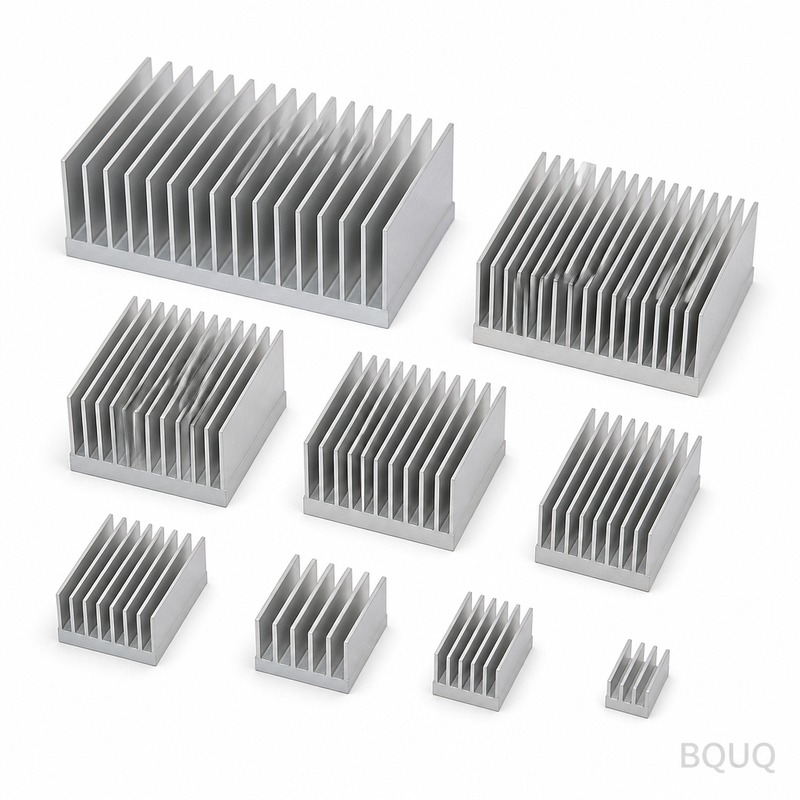
The thermal resistance (θ) is the most important metric for engineers. For a typical 80x80x40 mm aluminum heat sink with natural convection, the total thermal resistance is approximately 2.5-4.0 °C/W. Adding a heat pipe can reduce this to 0.5-1.0 °C/W, while a vapor chamber with the same external dimensions can achieve 0.3-0.6 °C/W.
Heat flux density is the deciding factor. Solid heat sinks fail above 50-100 W/cm² because the spreading resistance from a 10x10 mm die to a larger base causes a temperature spike at the source. Heat pipes handle up to 200-300 W/cm² at the evaporator but suffer from a 5-15 °C temperature drop between the evaporator and condenser. Vapor chambers excel at 300-500 W/cm² and maintain a temperature gradient of only 2-5 °C across the entire base surface.
Maximum heat transport capacity (Q_max) also varies. A standard 6 mm diameter copper heat pipe can transfer 30-60 W, while an 8 mm pipe handles 60-100 W. A 90x90x3 mm vapor chamber can transport 200-400 W, making it the preferred choice for high-power CPUs, GPUs, and laser diodes.
Which Application Scenarios Favor Each Technology?
For LED lighting, automotive ECUs, and low-power consumer electronics under 50 W, a solid aluminum heat sink remains the most cost-effective solution. The thermal performance is adequate, and there are no reliability concerns regarding fluid leakage or wick dry-out.
Heat pipes are ideal for laptop cooling and thin-profile devices where heat must be moved from a central CPU to a side-mounted fin stack. A typical laptop uses 2-3 heat pipes of 3-5 mm diameter, each transferring 15-40 W over a distance of 100-200 mm. Heat pipes are also preferred for server heat sinks where the fins are mounted vertically and heat needs to be lifted against gravity.
Vapor chambers are the standard for high-end GPUs, data center CPUs (300-400 W TDP), and 5G base station power amplifiers. They are also used in high-brightness LED projectors and medical laser equipment where the heat source is small but the heat flux exceeds 200 W/cm². If your device has a base area larger than 60x60 mm and a concentrated heat source, a vapor chamber will outperform a heat pipe because it spreads heat before reaching the fins.
How Much Does Each Solution Cost Per Unit and in Tooling?
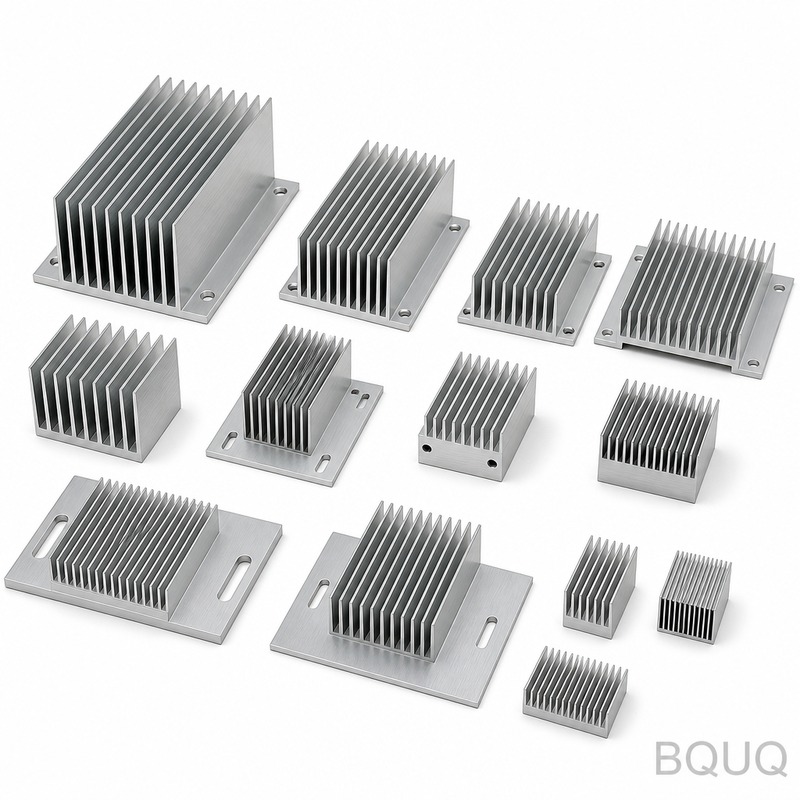
Cost is a primary differentiator. A solid aluminum extrusion heat sink costs $0.50-3.00 per unit at 10,000 pieces, with tooling of $2,000-5,000. A die-cast aluminum heatsink costs $1.50-5.00 per unit with tooling of $10,000-30,000.
A copper heat pipe costs $1.00-3.00 per pipe, depending on diameter and length. A heat pipe assembly (pipe plus aluminum fins and base) costs $5-15 per unit, with tooling for the fin stack at $3,000-8,000. The heat pipe itself requires no tooling, only a sintering process that is already standardized.
Vapor chambers are the most expensive. A standard 80x80x3 mm copper vapor chamber costs $8-20 per unit, and a custom shape with integrated fins costs $15-35 per unit. Tooling for vapor chamber manufacturing (fixtures and welding jigs) runs $5,000-15,000. The high cost comes from the vacuum brazing, copper powder sintering, and leak testing processes, which take 2-3 times longer than heat pipe manufacturing.
What Are the Reliability and Lifespan Differences?
Solid heat sinks have infinite lifespan with zero failure modes other than corrosion or mechanical damage. They are 100% reliable and require no maintenance.
Heat pipes have a design life of 10-15 years when operating below 70% of Q_max. The failure mode is wick dry-out, where the capillary pressure can no longer return the liquid to the evaporator. This occurs if the heat pipe is bent beyond a 30-degree radius, operated against gravity with the evaporator above the condenser, or subjected to temperatures exceeding 120 °C for extended periods. The working fluid (water) can also generate non-condensable gases over time, reducing performance by 5-15% after 5 years.
Vapor chambers share the same failure modes but are more robust because the flat form factor allows for a larger wick cross-section. However, they are more sensitive to mechanical pressure. Mounting pressure should not exceed 50 psi, and the base should not be flexed more than 0.1 mm. At proper operating conditions, vapor chambers also last 10-15 years, but a single manufacturing defect in the vacuum seal will cause complete failure, which is why BQUQ conducts 100% helium leak testing on every unit.
Which Solution Offers the Best Weight and Space Efficiency?
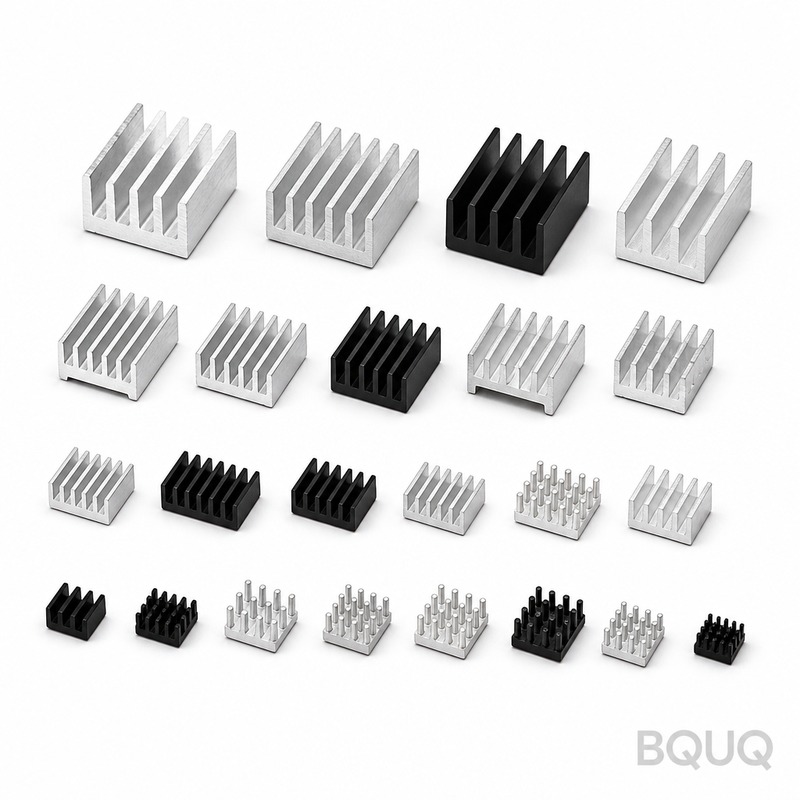
For weight-sensitive applications like aerospace and portable electronics, solid aluminum has a density of 2.7 g/cm³, while copper heat pipes and vapor chambers have a density of 8.9 g/cm³. However, because heat pipes and vapor chambers conduct heat so efficiently, the total fin mass can be reduced by 30-50% compared to a pure solid heat sink.
A typical comparison: to cool a 150 W processor with a 70 °C junction limit at 40 °C ambient, you need a solid aluminum heat sink weighing 400-600 grams. A heat pipe solution with the same performance weighs 250-350 grams. A vapor chamber solution weighs 200-300 grams. The vapor chamber's advantage comes from its ability to use a thinner base (2-4 mm) while still achieving uniform temperature, whereas a solid base would need to be 8-15 mm thick.
Can Vapor Chambers and Heat Pipes Be Combined with Solid Heat Sinks?
Yes, hybrid designs are common and often optimal. The most typical configuration is a vapor chamber base bonded to an aluminum fin stack, or heat pipes embedded in an aluminum base with fins attached. These hybrids leverage the spreading capability of two-phase devices with the low cost and low weight of aluminum fins.
For example, BQUQ manufactures a hybrid solution for a 400 W IGBT module: a 100x100x4 mm copper vapor chamber soldered to a 40 mm tall aluminum fin array. This achieves a thermal resistance of 0.15 °C/W, which is impossible with a pure aluminum design. The hybrid approach also reduces the total cost by 20-30% compared to an all-copper solid solution, because the fins are aluminum rather than copper.
However, you must consider the interface resistance. A solder joint between the vapor chamber and fins adds 0.05-0.10 °C/W of resistance. Using a thermal interface material (TIM) instead of solder adds 0.10-0.20 °C/W. For optimal performance, specify a reflow-soldered or vacuum-brazed interface rather than a screwed or clipped assembly.
| Parameter | Solid Aluminum Heat Sink | Copper Heat Pipe | Vapor Chamber |
| Effective Thermal Conductivity (W/m·K) | 150-200 | 5,000-10,000 | 10,000-20,000 |
| Max Heat Flux at Source (W/cm²) | 50-100 | 200-300 | 300-500 |
| Thermal Resistance Range (°C/W) | 2.5-4.0 | 0.5-1.0 | 0.3-0.6 |
| Max Heat Transport (W) | N/A (limited by size) | 30-100 per pipe | 200-400 per unit |
| Unit Cost at 10k pcs (USD) | 0.50-5.00 | 5.00-15.00 (assembly) | 10.00-30.00 |
| Tooling Cost (USD) | 2,000-30,000 | 3,000-8,000 | 5,000-15,000 |
| Weight for 150W Cooling (grams) | 400-600 | 250-350 | 200-300 |
| Typical Lifespan (years) | 20+ | 10-15 | 10-15 |
| Bend Radius Limitation | None | 3x pipe diameter | None (flat) |
How Do I Choose Between a Heat Pipe and a Vapor Chamber for My Design?
Choose a heat pipe if your heat source and sink are separated by more than 50 mm and you need to move heat in one direction. Choose a vapor chamber if your heat source is concentrated (less than 20x20 mm) and you have a large base area of at least 60x60 mm to spread the heat across before reaching the fins.
What Is the Maximum Operating Temperature for These Devices?
Standard copper-water heat pipes and vapor chambers operate from 10 °C to 120 °C. For higher temperatures, you need specialized working fluids: ammonia for -60 °C to 100 °C, methanol for -40 °C to 120 °C, or a water-ethanol mixture. For 120-300 °C, use a copper-water device with a higher internal pressure rating, or switch to a stainless steel heat pipe with a synthetic fluid.
Do Heat Pipes Work Against Gravity?
A standard heat pipe with a sintered wick can operate against gravity (evaporator below condenser) but with a 10-20% reduction in Q_max. If the evaporator is above the condenser, the capillary wick must be strong enough to lift the liquid against gravity, which reduces capacity by 50-70%. For vertical orientations, use a heat pipe with a grooved wick or a "thermosiphon" design that does not rely on capillary action.
How Is Thermal Resistance Measured for a Vapor Chamber?
Thermal resistance is measured by mounting a calibrated heat source on the center of the vapor chamber base and measuring the temperature difference between the source and the top surface of the opposite side. The formula is θ = (T_source - T_surface) / P, where P is the input power in watts. A good vapor chamber will have a resistance of 0.05-0.15 °C/W for a 30x30 mm source on a 100x100 mm base.
Can I Use a Solid Heat Sink for a 300 W CPU?
Technically yes, but the heat sink would need to be enormous, weighing over 1.5 kg with a volume of over 1,000 cm³, and it would still have a high spreading resistance. A 300 W CPU requires a heat flux of 200-300 W/cm² on a 20x20 mm die, which exceeds the spreading capability of solid copper. You must use a vapor chamber or multiple heat pipes for this application.
What Is the Lead Time for Custom Vapor Chamber Manufacturing?
Standard vapor chambers are available in 2-3 weeks from BQUQ. Custom sizes and shapes require 4-6 weeks for tooling fabrication and first article approval. Production quantities of 1,000-10,000 pieces typically ship within 2 weeks after PPAP approval. Heat pipes are faster, at 1-2 weeks for standard sizes and 3-4 weeks for custom diameters and lengths.
Which Surface Treatment Improves Heat Sink Performance?
For solid heat sinks, a black anodized coating (aluminum) or nickel plating (copper) increases the emissivity from 0.1 to 0.85, improving radiative heat transfer by 20-30% in natural convection applications. For heat pipes and vapor chambers, the surface treatment is less critical because the primary heat transfer is through the fins, but a nickel or gold plating is recommended to prevent corrosion in humid environments.
In conclusion, the engineering decision is clear: use solid heat sinks for low-power, cost-sensitive designs under 50 W; use heat pipes for linear heat transfer over distance; and use vapor chambers for high-density, planar heat spreading above 150 W. Your choice should be driven by the heat flux at the source, the available base area, and your production budget. At BQUQ, we have manufactured all three technologies for over 20 years and can guide you through the selection process. For a specific recommendation, send us your thermal load, maximum allowable temperature, and mechanical envelope. We will provide a thermal simulation and a detailed cost breakdown within 12 hours. Contact us at sc@bquq.com or WhatsApp +86 13713157787, or visit www.bquq.com.
Related Articles
- Stamped Metal vs Die Cast Heat Sinks: Cost & Quality Comparison
- New energy vehicle IGBT heat dissipation, heat sink reliability engineering, heat pipe and temperature plate integrated heat sink, surface treatment and heat radiation enhancement: anodic oxidation, black coating and micro-nano structure, graphene/3D printing/intelligent thermal management: 2030 heat sink technology roadmap
- Hardware heat sink reconstruction under liquid-cooled penetration of AI server: cold plate, microchannel and two-phase flow