What Aerospace Spring Alloys Withstand the Highest Temperatures?
The direct answer is that nickel-based superalloys, specifically Inconel 718 and Inconel X-750, are the industry standard for aerospace springs operating above 400°C, with Inconel X-750 capable of sustaining service up to 650°C and Waspaloy up to 730°C. For lower-temperature applications between 150°C and 400°C, precipitation-hardening stainless steels like 17-7 PH and A286 are preferred due to their superior corrosion resistance and lower material cost. The selection ultimately depends on the exact operating temperature, stress relaxation requirements, and the supply chain lead time, as nickel-based alloys typically require 8-12 weeks for raw material procurement versus 2-4 weeks for stainless steel.
How Do High Temperatures Affect Spring Performance and Material Selection?
Elevated temperatures accelerate stress relaxation, which is the gradual loss of spring force under constant deflection. At 200°C, standard music wire (ASTM A228) loses 20% of its load within 100 hours, while at 400°C, it loses over 50% within the same period. Engineering design for aerospace applications typically limits stress relaxation to less than 5% over the service life, which forces the use of alloys with high recrystallization temperatures and stable precipitates. For example, Inconel X-750 retains 90% of its room-temperature yield strength at 540°C, whereas 17-7 PH stainless retains only 70% at the same temperature. The material's creep resistance, oxidation resistance, and thermal expansion coefficient (around 13.0 ppm/°C for Inconel 718 versus 10.3 ppm/°C for 17-7 PH) also dictate the maximum allowable operating stress and the need for thermal compensation in spring design.
What Are the Primary Alloy Options for Aerospace Springs?
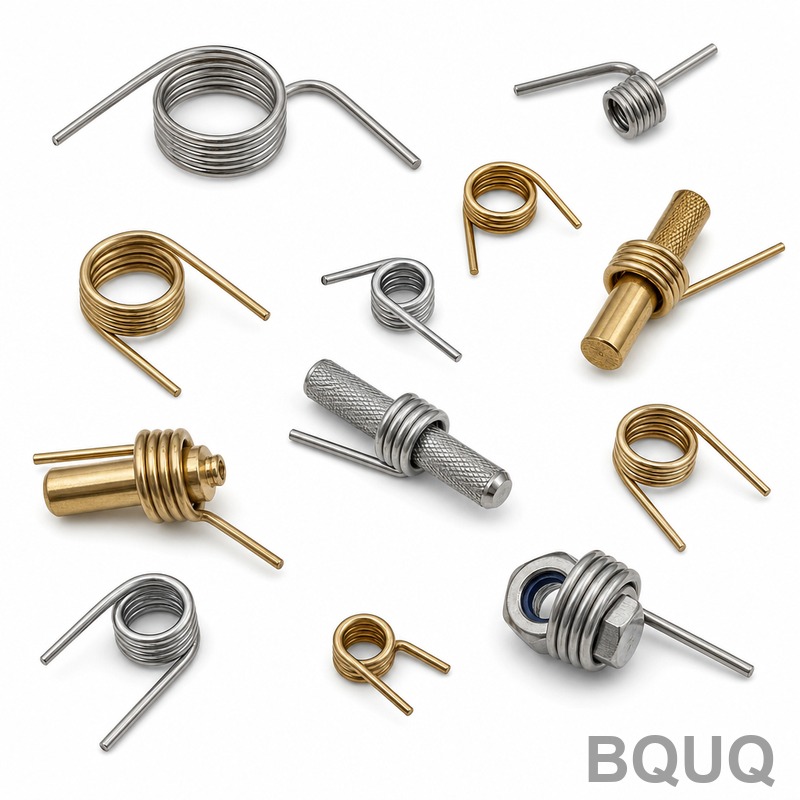
The aerospace industry uses four main alloy families, each with distinct temperature ceilings and mechanical properties. The table below provides a direct comparison of the most common spring alloys with their maximum continuous service temperatures and typical tensile strengths.
| Alloy | Max Continuous Temp (°C) | Tensile Strength (MPa) | Stress Relaxation at Max Temp | Relative Cost Factor | Typical Lead Time |
| Inconel X-750 | 650 | 1200-1400 | <5% at 650°C per 100h | 8-10x | 10-12 weeks |
| Inconel 718 | 650 | 1350-1500 | <5% at 650°C per 100h | 7-9x | 10-12 weeks |
| Waspaloy | 730 | 1100-1300 | <5% at 730°C per 100h | 12-15x | 14-16 weeks |
| A286 (UNS S66286) | 540 | 900-1100 | 5-7% at 540°C per 100h | 3-4x | 4-6 weeks |
| 17-7 PH Stainless | 400 | 1400-1600 | 5-7% at 400°C per 100h | 2-3x | 3-4 weeks |
| Elgiloy (Co-Ni) | 400 | 1800-2100 | 3% at 400°C per 100h | 5-6x | 8-10 weeks |
Inconel 718 is the most common choice for jet engine components because it offers a balance of high tensile strength (up to 1500 MPa) and good weldability. Waspaloy, while more expensive and with a longer lead time, is specified for turbine blades and seals that see sustained temperatures above 650°C. For actuators and landing gear springs where temperatures stay below 400°C, 17-7 PH is often selected due to its high strength-to-cost ratio and availability.
Why Is Supply Chain Stability Critical for Nickel-Based Alloys?
The supply chain for nickel-based superalloys is concentrated in a few global producers, with over 70% of raw Inconel billet coming from three mills in the United States and two in Europe. This creates vulnerability to geopolitical disruptions, trade tariffs, and energy price fluctuations, which can extend lead times from a standard 8 weeks to 20 weeks during peak demand cycles. Additionally, nickel prices have historically fluctuated between $15,000 and $40,000 per metric ton within a single year, directly impacting the material cost premium of 8-10x over standard spring steel. Aerospace manufacturers mitigate this risk by placing annual blanket orders with approved mills, which secures raw material allocation but requires committed volume forecasts 6-12 months in advance. BQUQ, as a contract manufacturer, maintains a buffer stock of Inconel 718 and 17-7 PH wire in common diameters (0.5 mm to 12 mm) to reduce customer lead times to 4-6 weeks for prototype quantities.
How Does the Manufacturing Process Differ for High-Temperature Alloys?
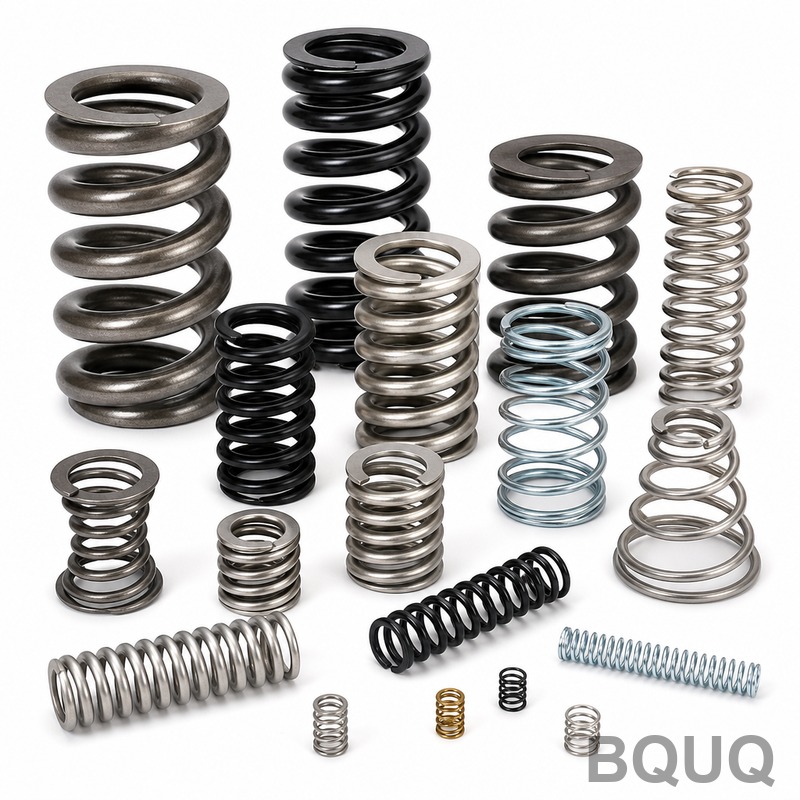
Spring coiling of nickel-based alloys requires significantly higher process temperatures and forces compared to conventional steel. While music wire can be cold coiled at room temperature, Inconel 718 must be coiled at 300-400°C to prevent cracking, and Waspaloy requires hot coiling at 800-900°C. After coiling, all precipitation-hardened alloys undergo a three-step heat treatment: solution annealing (980°C for Inconel 718), quenching, and aging (720°C for 8 hours followed by furnace cooling). The hardness target for aerospace springs is typically 40-48 HRC for Inconel 718, compared to 44-50 HRC for 17-7 PH. Shot peening is mandatory for fatigue life enhancement, with an intensity of 0.008-0.012 A (Almen scale) to induce compressive residual stresses of 600-800 MPa on the surface. Dimensional tolerances for aerospace springs are stricter than commercial grades, typically ±0.05 mm on outer diameter and ±2% on free length for coils up to 50 mm OD.
Which Quality Certifications and Testing Are Required for Aerospace Springs?
Aerospace spring suppliers must comply with AS9100D quality management systems and often require NADCAP accreditation for heat treatment and non-destructive testing. The mandatory testing regimen includes tensile testing (ASTM E8), hardness verification (ASTM E18), and stress relaxation testing per ASTM E328. For critical applications, 100% inspection is required using coordinate measuring machines (CMM) for geometry and eddy current testing for surface defects. Material traceability is non-negotiable; each spring must be traceable to a specific heat lot of raw material, with certificates of conformance (C of C) and material test reports (MTR) provided. The first article inspection (FAI) per AS9102 must be completed and approved before production runs, documenting all dimensions, materials, and processes. BQUQ maintains AS9100D certification and performs in-house stress relaxation testing up to 700°C to verify material performance before shipping.
When Should You Choose Inconel 718 Over 17-7 PH Stainless Steel?
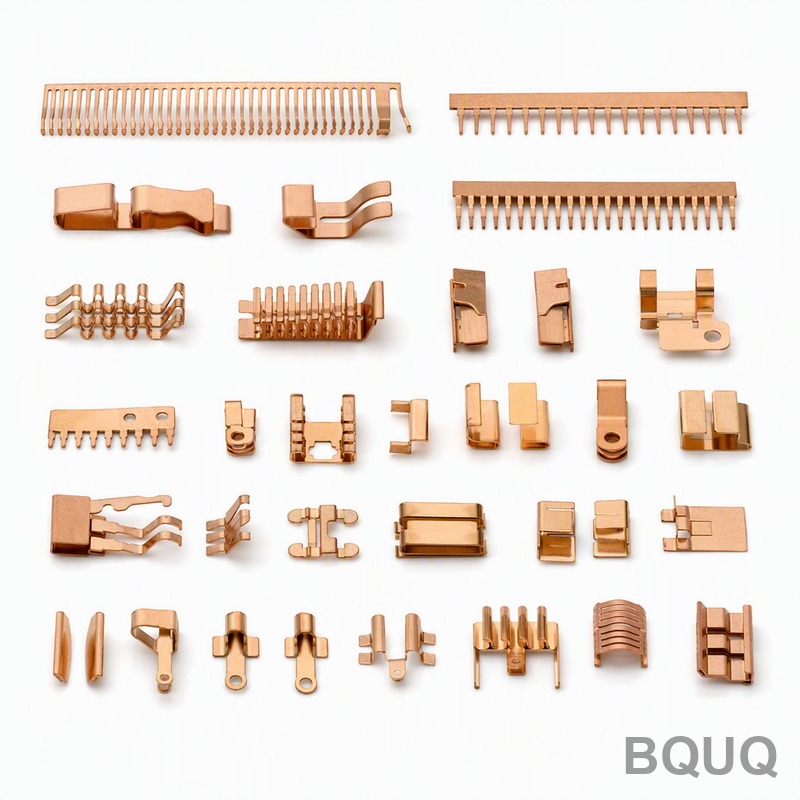
The decision between Inconel 718 and 17-7 PH is primarily driven by operating temperature and cost per part. Choose Inconel 718 when the spring will see sustained temperatures above 400°C, such as in engine bleed air systems, turbine seals, or exhaust nozzle actuators. Choose 17-7 PH when temperatures remain below 400°C, such as in hydraulic accumulators, landing gear locks, or cabin pressure relief valves, as it offers a 30-40% cost reduction and a 50% faster lead time. A critical secondary factor is the coefficient of thermal expansion matching with the mating component; Inconel 718's lower expansion rate is preferred when assembled with titanium or nickel housings. For applications above 650°C, Waspaloy is the only option, despite its 12-15x cost multiplier, because Inconel 718 begins to lose precipitate strength and oxidize rapidly beyond that threshold.
What Is the Typical Cost Range for Aerospace-Grade Springs?
The unit price for a custom aerospace spring varies dramatically based on material, size, and quantity. A small compression spring (10 mm OD, 0.8 mm wire) in 17-7 PH costs approximately $15-25 per piece at 500 pieces, while the same spring in Inconel 718 costs $45-70 per piece. For larger springs (50 mm OD, 6 mm wire), prices range from $80-150 for 17-7 PH and $250-400 for Inconel 718. Tooling costs are generally low for springs, ranging from $500 to $2,000 for a custom coiling mandrel, unless a custom grinding fixture is required, which adds $1,000-3,000. High-temperature testing, including stress relaxation verification, adds $500-1,500 per lot. For quantities below 100 pieces, expect a 50-100% price premium due to setup and qualification overhead.
What Are the Common Failure Modes of Aerospace Springs at High Temperatures?
The most frequent failure mode is stress relaxation, which results in loss of preload and subsequent component vibration or leakage. The second most common mode is oxidation and intergranular corrosion, which initiates at temperatures above 500°C and reduces the effective cross-section. For springs operating in cyclic conditions, thermal fatigue cracking can occur at the inner fiber of the coil, especially when temperature fluctuates rapidly between 200°C and 600°C. To mitigate these failures, engineers specify a maximum operating stress of 40-50% of the material's yield strength at temperature, rather than at room temperature. Surface treatments such as aluminum diffusion coatings or chromium plating are applied for oxidation resistance above 600°C, though these add 2-3 weeks to lead time.
Conclusion
Selecting the correct aerospace spring alloy requires a precise analysis of maximum operating temperature, allowable stress relaxation, and supply chain constraints. For temperatures below 400°C, 17-7 PH stainless steel offers the best balance of strength, cost, and availability. Above 400°C, Inconel 718 is the workhorse material, while Waspaloy is reserved for extreme turbine applications above 650°C. Always verify material traceability, AS9100 compliance, and thermal testing data before committing to production. The cost difference between alloys is substantial, but it is insignificant compared to the cost of an in-service failure in a flight-critical system.
FAQ
What Is the Maximum Operating Temperature for Standard Spring Steel?
Standard oil-tempered chrome silicon steel can operate up to 200°C, while chrome vanadium steel reaches 220°C. Beyond these temperatures, stress relaxation accelerates exponentially, and permanent set occurs within hours. For any application above 220°C, a precipitation-hardened stainless steel or nickel alloy is mandatory.
Can Titanium Alloys Be Used for High-Temperature Springs?
Yes, Ti-3Al-8V-6Cr-4Zr-4Mo (Beta-C) titanium can operate up to 315°C, offering excellent strength-to-weight ratio. However, titanium has poor wear resistance and is prone to galling, requiring surface treatments. It is used primarily in weight-critical aerospace applications where temperatures stay below 300°C.
How Long Does It Take to Manufacture a Custom Aerospace Spring?
For 17-7 PH stainless, the typical lead time is 3-4 weeks including material procurement and heat treatment. For Inconel 718, expect 6-8 weeks, and for Waspaloy, 10-12 weeks. At BQUQ, prototype springs with available raw material can be delivered in 5-7 business days.
What Is the Difference Between Cold Coiling and Hot Coiling?
Cold coiling is performed at room temperature and is suitable for wire up to 10 mm diameter in stainless steel and low-alloy steels. Hot coiling at 800-900°C is required for nickel-based alloys and wire larger than 12 mm to prevent work hardening cracks. Hot coiling requires specialized equipment and adds 2-3 days to the manufacturing cycle.
Are Aerospace Springs Always Made from Round Wire?
No, rectangular wire is often used for power springs and constant-force springs in actuators. Rectangular wire sections offer higher load capacity in limited radial space but are more expensive to produce. For high-temperature applications, rectangular Inconel wire is available but has a 6-8 week lead time.
How Do You Verify Stress Relaxation Resistance?
Stress relaxation testing per ASTM E328 involves loading a spring to a fixed deflection, exposing it to the service temperature for 100 hours, and measuring the load loss. Acceptance criteria for aerospace springs are typically less than 5% load loss at maximum temperature. Accelerated testing at 50°C above service temperature is sometimes used to shorten the test cycle.
What Diameter Range Is Available for High-Temperature Spring Wire?
For Inconel 718 and 17-7 PH, wire diameters range from 0.2 mm to 12.7 mm as standard stock. Larger diameters up to 25 mm are available on special order with extended lead times. The wire tolerance for aerospace grade is typically ±0.01 mm for diameters under 3 mm.
| For a rapid quotation on your aerospace spring project, including material selection and thermal verification, contact BQUQ today. Our engineering team responds within 12 hours with a detailed quote and feasibility review. Email: sc@bquq.com | WhatsApp: +86 13713157787 | www.bquq.com. |