What Are Precision Springs for AI Data Centers and Why Do They Matter?
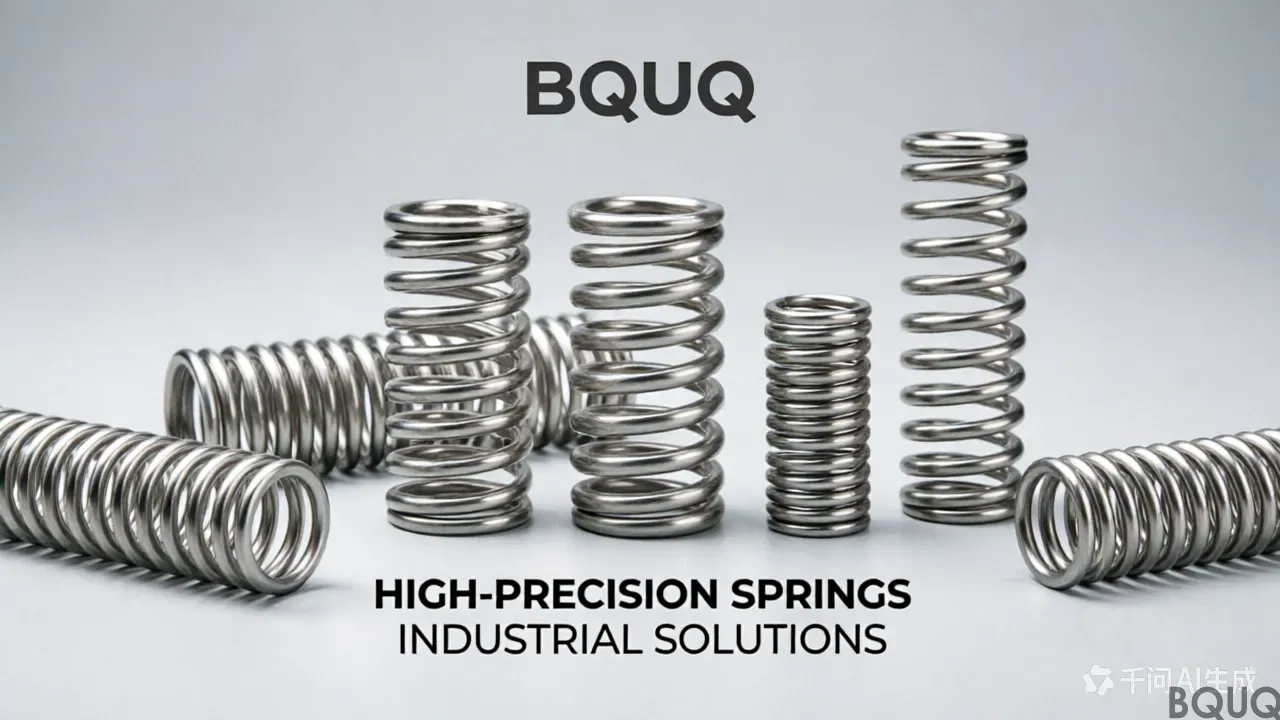
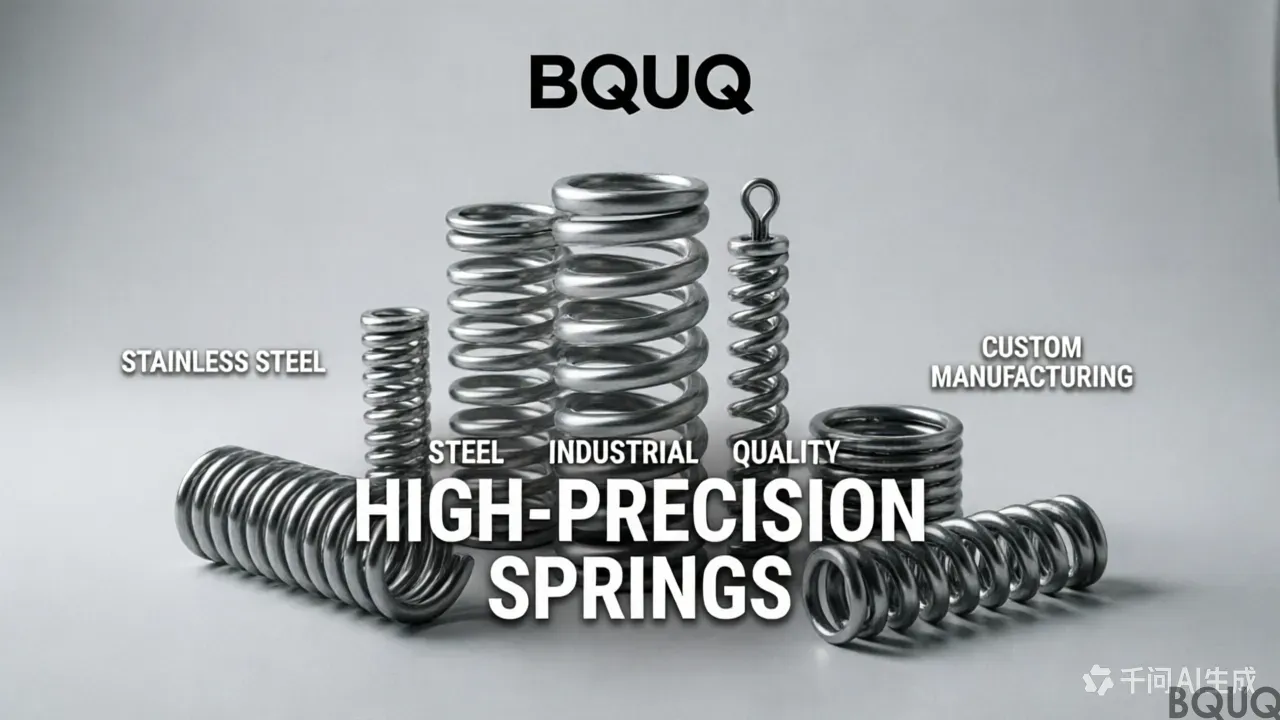
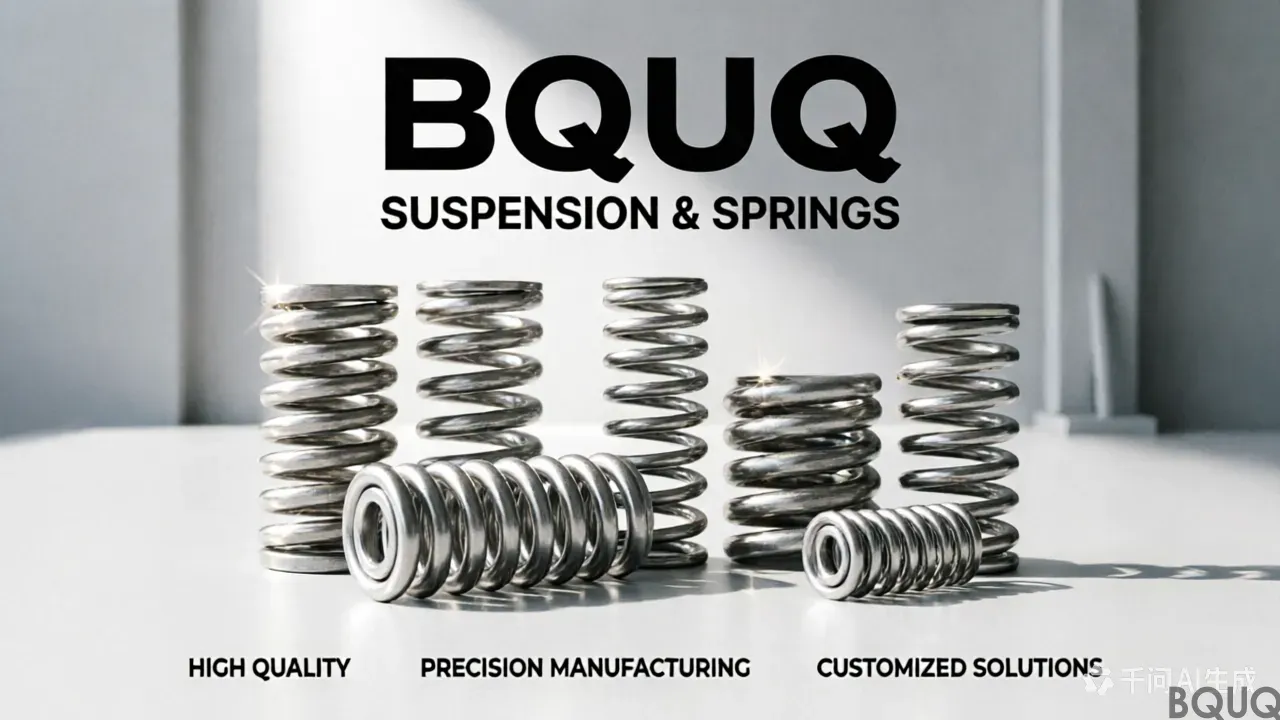
Precision springs for AI data centers are high-tolerance mechanical components—typically compression, extension, or torsion springs—manufactured to withstand extreme thermal cycling, vibration, and continuous operation in server racks, liquid cooling systems, and power delivery units. These springs are not ordinary hardware; they require tolerances of ±0.01 mm, operating temperatures from -40°C to 200°C, and fatigue life exceeding 10 million cycles to ensure data center uptime. As AI workloads drive rack densities from 10 kW to over 100 kW per rack, precision springs have become a critical niche for thermal management, electrical contact pressure, and vibration damping.
What Specific Functions Do Precision Springs Perform in AI Data Centers?
Precision springs in AI data centers serve three primary functions: thermal interface pressure control, electrical contact retention, and mechanical vibration isolation. In liquid cooling systems, compression springs maintain constant pressure on cold plates against GPUs, ensuring thermal transfer efficiency of 95% or higher. For power distribution, springs in connectors and busbars provide 15-30 N of contact force to prevent arcing and voltage drop, critical at currents up to 1000 A. Vibration damping springs in server chassis reduce harmonic resonance below 20 Hz, protecting sensitive AI accelerators.
How Do AI Data Center Springs Differ from Standard Industrial Springs?
Standard industrial springs typically have tolerances of ±0.5 mm and a fatigue life of 100,000 cycles, while AI data center springs demand far more rigorous specifications. The key differences include material grade (stainless steel 17-7PH or Inconel X-750 instead of carbon steel), surface finish (Ra 0.4 µm vs. Ra 1.6 µm), and 100% inspection with CMM (coordinate measuring machine) verification. For example, a compression spring in a GPU cold plate must maintain a load of 25 N ± 0.5 N over 10 million cycles at 85°C, whereas a standard spring would relax by 15% within 500,000 cycles. Additionally, AI data center springs require certification to UL 94 V-0 for flammability and RoHS compliance for lead-free solder contact.
What Are the Critical Tolerances and Material Specifications?
For precision springs in AI data centers, the critical tolerances are outer diameter ±0.01 mm, free length ±0.05 mm, and load at a specified height ±1% of nominal. The material must have a minimum tensile strength of 1,500 MPa for spring wire diameters between 0.1 mm and 2.0 mm. Common materials include:
- Stainless steel 302 (ASTM A313): for general server applications, cost-effective, operating range -40°C to 150°C
- Stainless steel 17-7PH (ASTM A693): for high-temperature liquid cooling, operating range -40°C to 200°C, superior relaxation resistance
- Inconel X-750: for extreme environments near power modules, operating range -200°C to 350°C, but 5 times the cost of stainless steel
The surface finish must be free of defects, with shot peening to induce compressive residual stress of 400-600 MPa, increasing fatigue life by 30-40%. Passivation per ASTM A967 is mandatory to prevent corrosion in humid data center environments.
How Much Does Tooling and Prototyping Cost for AI Data Center Springs?
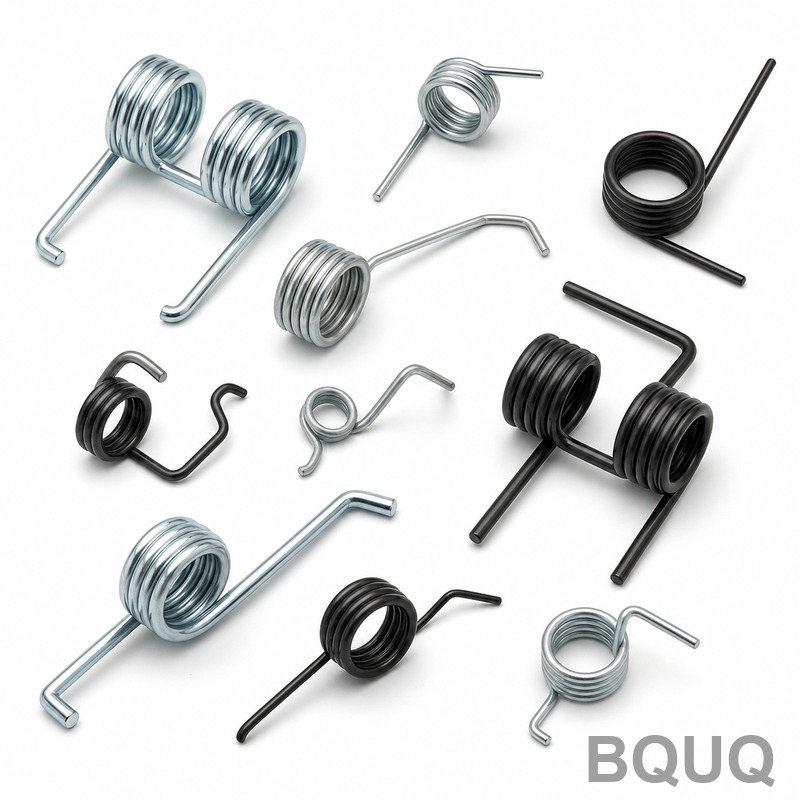
Tooling costs for precision springs depend on wire diameter and complexity. For a simple compression spring with wire diameter 0.5 mm, tooling costs range from $800 to $1,500, with a lead time of 2-3 weeks. For a complex torsion spring with multiple coils and custom ends, tooling can reach $3,000 to $5,000, with a lead time of 4-6 weeks. Prototyping with 3D-printed or CNC-machined samples costs $150-$400 per piece, with a 5-day turnaround. However, for AI data center applications, we recommend investing in production tooling upfront because validation testing (10 million cycle fatigue testing) takes 6-8 weeks, and tooling modifications after validation are costly.
What Production Volumes and Lead Times Are Typical for This Niche?
Typical production volumes for AI data center precision springs range from 5,000 to 100,000 pieces per order, depending on server generation ramp-up. For a new server platform, initial orders are often 10,000-20,000 pieces for pilot production, followed by 50,000-100,000 pieces for mass deployment. Lead times are 2-3 weeks for tooling, 1-2 weeks for first articles, and 3-4 weeks for production after approval. For high-volume orders exceeding 100,000 pieces, we recommend a safety stock of 10% to cover supply chain disruptions. The table below summarizes typical pricing and lead times.
| Spring Type | Wire Diameter (mm) | Tooling Cost (USD) | Unit Price (USD/pc) | Production Lead Time (weeks) |
| Compression spring, GPU cold plate | 0.5 | 1,200 | 0.35 | 3 |
| Compression spring, power connector | 1.0 | 1,800 | 0.60 | 3 |
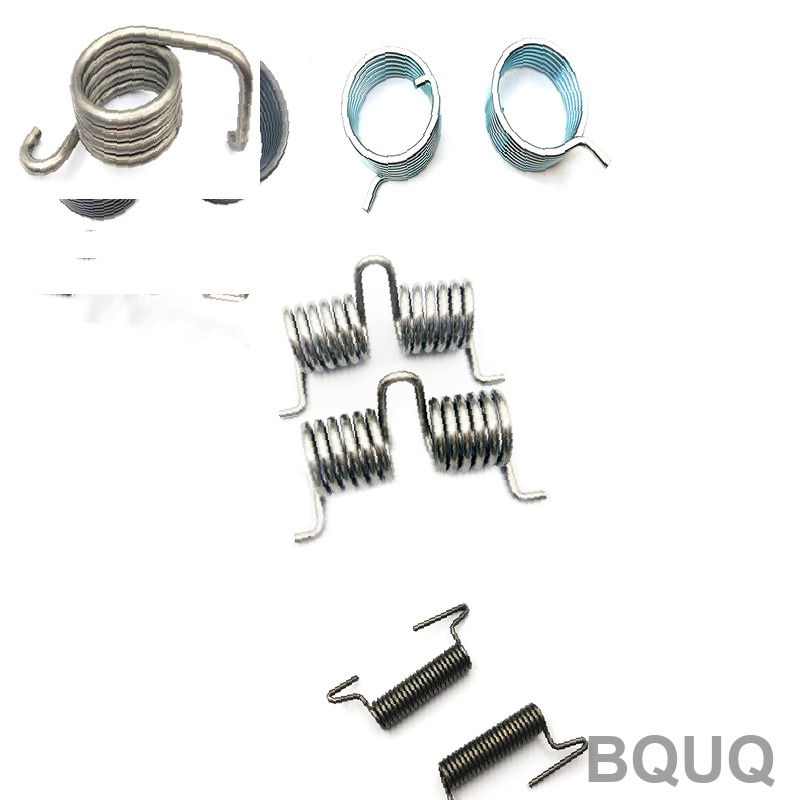
| Torsion spring, latch mechanism | 0.8 | 3,500 | 1.20 | 5 |
| Extension spring, cable management | 0.3 | 900 | 0.25 | 2 |
| Wave spring, bearing preload | 0.2 | 2,500 | 0.90 | 4 |
| Conical spring, vibration isolation | 1.5 | 4,200 | 2.50 | 6 |
Why Is Fatigue Life Testing Essential for AI Data Center Springs?
Fatigue life testing is essential because AI data center springs operate in a high-cycle, high-temperature environment where failure causes catastrophic downtime. A server fan or pump operates at 3,000-7,000 RPM, meaning a spring subjected to vibration cycles 10 million times in just 24-48 hours of continuous operation. Without testing, a spring might fail due to fretting wear or stress relaxation, leading to thermal runaway in a GPU or electrical arcing in a power connector. We conduct fatigue testing using a high-speed spring tester at 100 Hz, monitoring load drop over time. The acceptance criterion is a maximum load drop of 3% after 10 million cycles at maximum operating temperature. For liquid cooling systems, we also perform thermal cycling tests from -40°C to 85°C with 500 cycles, ensuring no dimensional change greater than 0.02 mm.
Which Quality Certifications and Inspection Methods Are Required?
For AI data center applications, springs must meet ISO 9001:2015 for quality management and IATF 16949 if used in automotive-derived server components. Inspection methods include 100% dimensional measurement using optical comparators and CMMs, with a measurement system analysis (GR&R) of less than 10%. Material certification per EN 10204 3.1 is mandatory, providing traceability of chemical composition and mechanical properties. For critical springs, we perform X-ray inspection to detect internal cracks, and magnetic particle inspection for surface defects. Additionally, each lot must include a certificate of conformance with actual load test data at specified heights, not just nominal values. We recommend requiring a process capability index (Cpk) of at least 1.33 for all critical dimensions.
Can Springs Be Customized for Specific AI Server Architectures?
Yes, precision springs can be fully customized for specific AI server architectures, including NVIDIA GB200 NVL72 racks, liquid-cooled chassis, and high-density storage arrays. Customization options include special end configurations (closed and ground, plain ends, or reduced OD ends), variable pitch for progressive load, and multi-start coils for higher force density. For example, in a 100 kW liquid-cooled rack, we manufactured a customized conical spring with a load of 50 N at 10 mm height and 80 N at 5 mm height, providing progressive compression for thermal expansion compensation. We also offer surface treatments such as electroless nickel plating (5-8 µm thickness) for corrosion resistance in coolant environments, or PTFE coating for low friction in sliding applications. The design process uses FEA (finite element analysis) to simulate stress distribution, with a safety factor of 1.5 against yielding.
FAQ Section
What Is the Typical Failure Rate for Precision Springs in AI Data Centers?
The typical failure rate for properly specified and tested precision springs is less than 0.1% per year, or 100 parts per million (ppm). This is achieved through 100% inspection and fatigue testing, which we perform on every production lot. Without such testing, failure rates can rise to 1-2% per year, leading to costly server downtime.
How Do I Specify a Spring for a Liquid Cooling System?
Specify the operating temperature range (e.g., -40°C to 85°C), the required load at two different heights (e.g., 20 N at 10 mm, 30 N at 8 mm), and the coolant type (e.g., propylene glycol). Include the maximum allowable stress relaxation of 3% after 10 million cycles. Provide the spring rate in N/mm and the solid height limit.
What Is the Minimum Order Quantity for Custom Precision Springs?
The minimum order quantity for custom precision springs is typically 5,000 pieces for production, with a prototype run of 50-100 pieces for validation. For smaller quantities, we recommend using standard off-the-shelf springs if dimensions allow. We can accommodate pilot runs of 1,000 pieces but at a 50% higher unit price.
How Long Does a Spring Last in Continuous Server Operation?
A spring designed for 10 million cycles lasts approximately 1,000 hours at 3,000 RPM, but most applications have lower duty cycles. For continuous operation at 100% duty cycle, we recommend specifying 50 million cycles and using shot-peened Inconel X-750. The actual service life is also affected by temperature; every 10°C increase above 85°C halves the fatigue life.
Can Springs Be Supplied with Full Traceability for Regulatory Compliance?
Yes, we supply springs with full traceability including material heat number, production batch, inspection results, and heat treatment parameters. This meets the requirements of AS9100 for aerospace and UL for safety certification. Each pallet is labeled with a unique lot number, and we retain samples for 10 years.
What Is the Cost Difference Between Stainless Steel and Inconel Springs?
Stainless steel 302 springs cost approximately $0.30-$0.60 per piece, while Inconel X-750 springs cost $1.50-$3.00 per piece, a 5-fold increase. However, Inconel is only necessary for temperatures above 200°C or in corrosive coolants. For most AI data center applications, 17-7PH stainless steel at $0.50-$1.00 per piece offers the best value.
How Do I Choose Between Coil Springs and Wave Springs for My Design?
Choose coil springs when you need high force in a small diameter, and wave springs when you need low force with minimal axial space. Wave springs have a lower spring rate and are better for preload applications where space is limited. Coil springs offer higher load capacity and are easier to source with tighter tolerances.
In conclusion, precision springs are a small but critical component in AI data centers, directly impacting thermal management, power reliability, and vibration control. BQUQ, with 20 years of experience in CNC machining and metal stamping, has the engineering expertise and manufacturing capability to produce these springs with tolerances of ±0.01 mm and fatigue life of 10 million cycles. We provide free design review, FEA simulation, and material selection consultation. For a 12-hour quotation on your precision spring requirements, contact us at sc@bquq.com or WhatsApp +86 13713157787. Visit www.bquq.com for more information on our spring manufacturing and quality testing capabilities.