What Are the Main Types of Household and Furniture Springs?
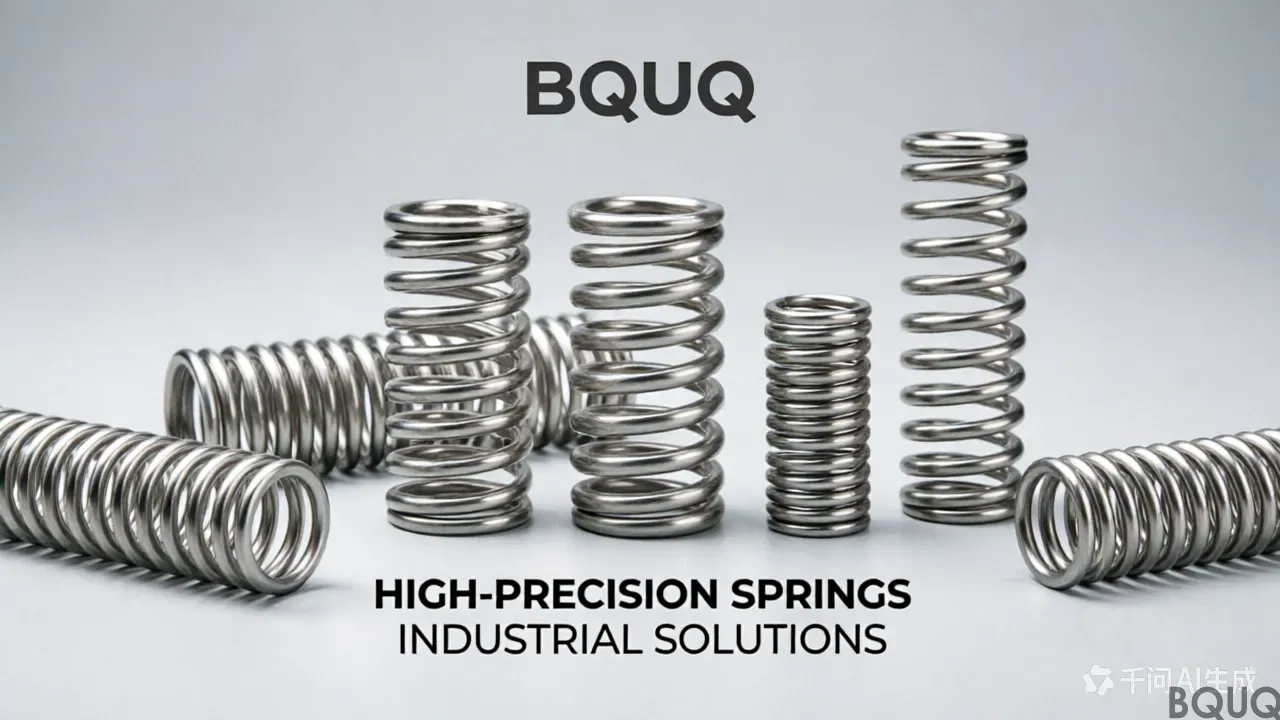
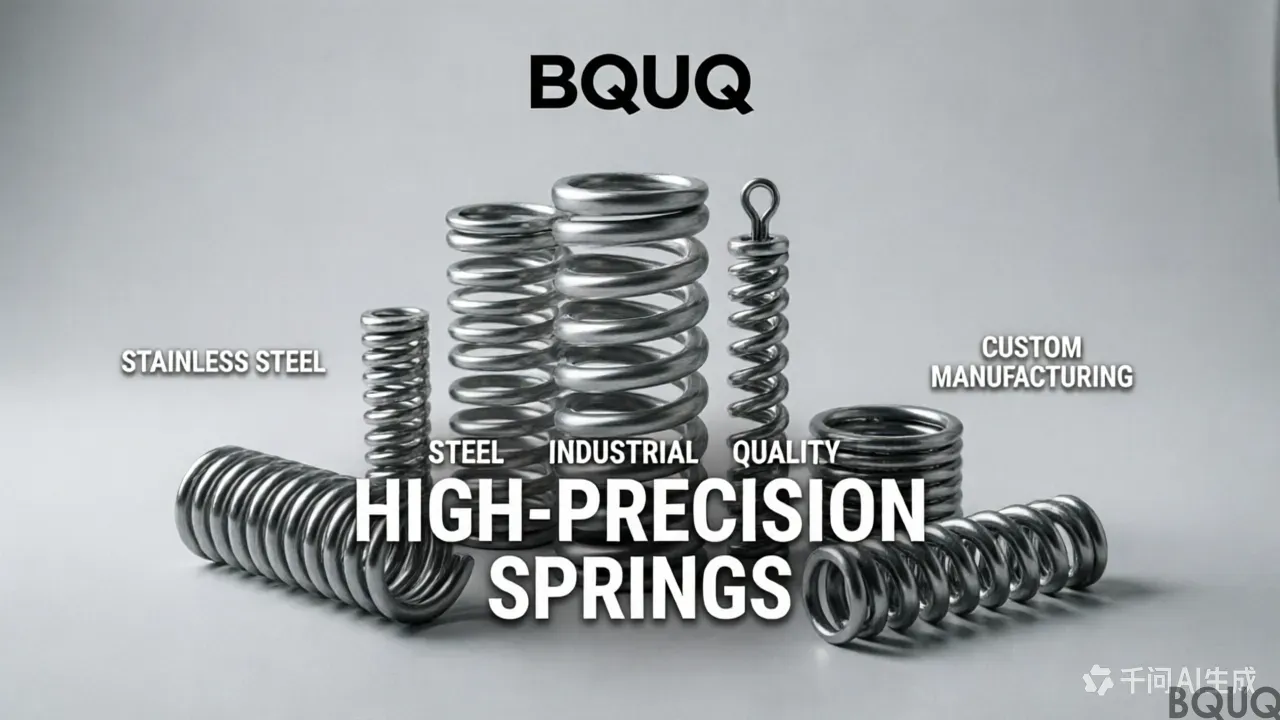
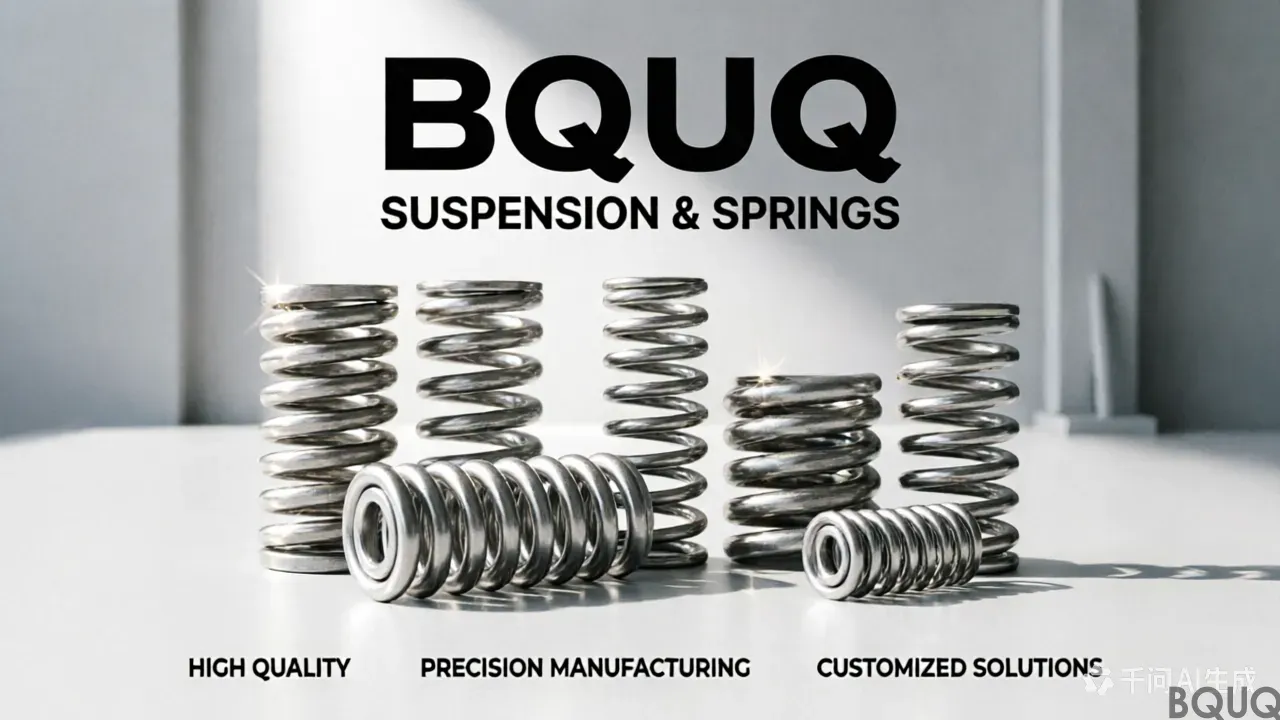
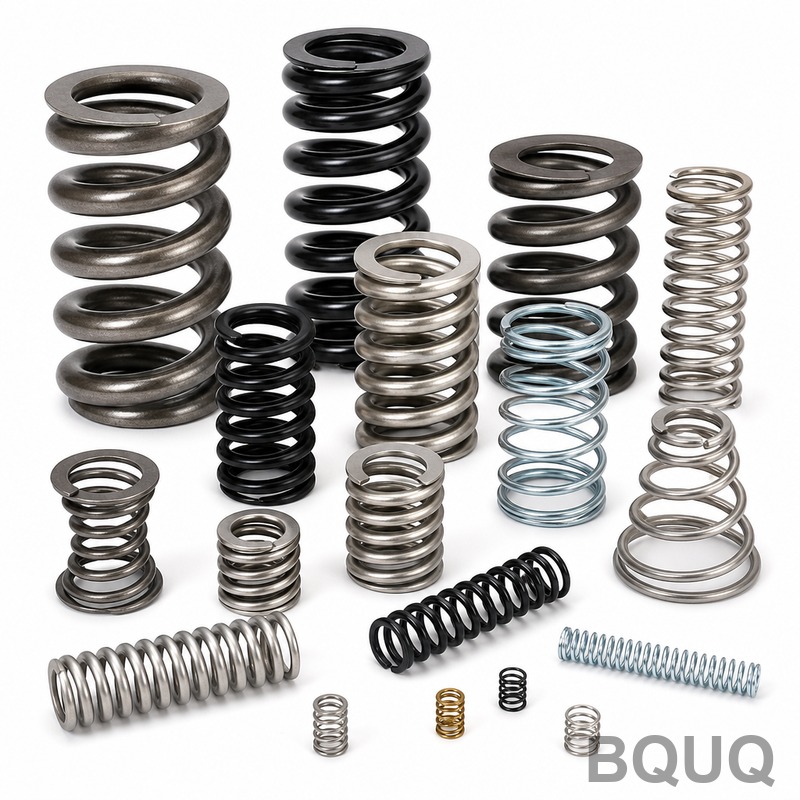
The household and furniture spring market is a high-volume, low-margin sector driven by durability, fatigue life, and consistent compression rates, not exotic materials. The main types are coil springs (compression, extension, torsion), leaf springs, and wireform clips, with 302 stainless steel and 65Mn carbon steel dominating material selection for their balance of cost and elastic limit. For OEMs, the critical differentiators are wire diameter (0.3 mm to 6.0 mm), load tolerances (±5%), and cycle life (typically 50,000 to 200,000 cycles), all of which dictate whether a sofa cushion lasts 5 years or collapses in 18 months.
How Do Compression Springs Differ from Extension Springs in Furniture Applications?
Compression springs are designed to resist axial pushing forces and are the backbone of seat cushions, recliner mechanisms, and mattress support cores. They operate in a free state and compress under load, with a typical solid height calculation that prevents coil bind; for a furniture-grade spring, the free length to solid height ratio should not exceed 3:1 to avoid buckling. Extension springs, conversely, absorb and store energy by resisting pulling forces, commonly found in screen door hinges, fold-out sofa mechanisms, and adjustable headrests. They have an initial tension of 1 to 3 pounds force and require end hooks (German loops or cross-over loops) that are stress-relieved to prevent premature fracture at the hook transition zone.
What Materials Are Best for High-Fatigue Furniture Springs?
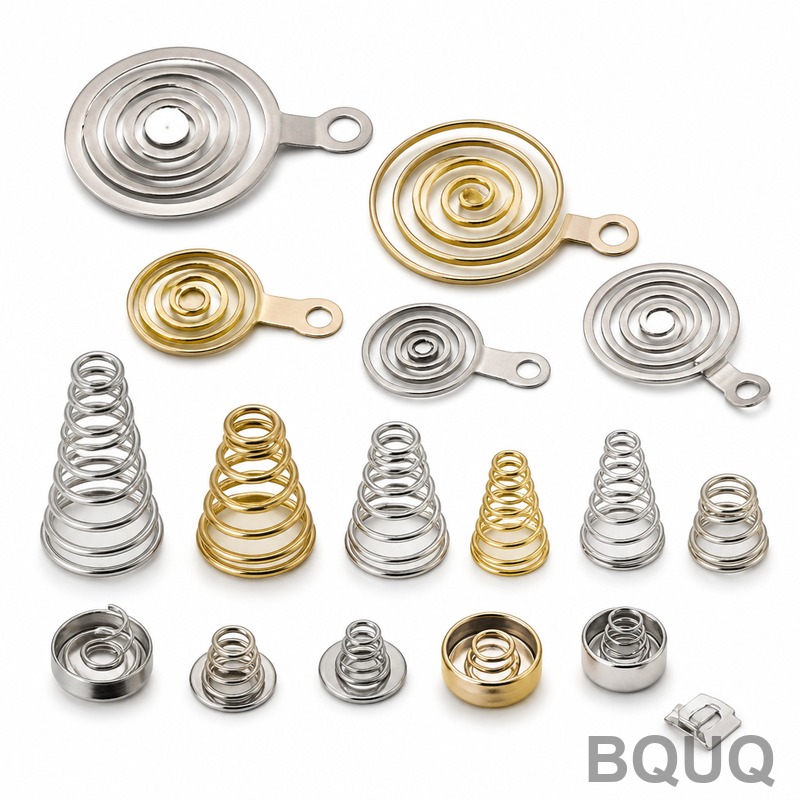
For furniture springs, the choice is almost exclusively between oil-tempered chrome silicon (ASTM A401) and 302 stainless steel (ASTM A313). Chrome silicon offers the highest fatigue life for heavy-duty recliner springs, with a tensile strength of 1,900 to 2,100 MPa and an operating temperature range of -40°C to 200°C, but it requires a protective coating (zinc or powder coat) to prevent rust. For indoor furniture with corrosion risk (humidity, coastal environments), 302 stainless steel is preferred, providing 1,200 to 1,500 MPa tensile strength and excellent corrosion resistance without post-plating costs, though its price per kilogram is 3.5 to 4 times higher than carbon steel. Music wire (ASTM A228) is used for cheap, low-cycle springs in disposable furniture but fails above 10,000 cycles, making it unsuitable for load-bearing applications like recliner footrests.
Which Spring Types Are Used in Recliners and Sofa Mechanisms?
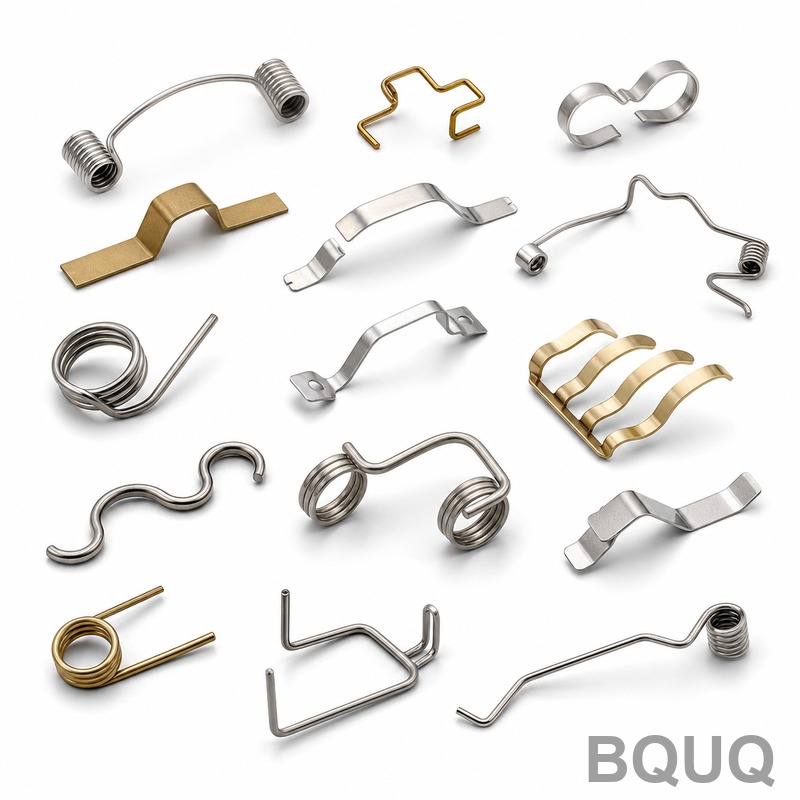
Recliner mechanisms rely on two primary spring types: torsion springs for the footrest and backrest pivot points, and extension springs for the release handle return. Torsion springs in this application typically have a wire diameter of 2.5 mm to 4.0 mm, with a rate of 0.5 to 2.5 N-mm per degree, and must maintain torque consistency over 100,000 cycles to prevent seat sag. Sofa seat cushions often use continuous coil springs (Marshall coils) with a diameter of 60 mm to 75 mm, pre-compressed to 40% of free height, providing a soft initial feel with progressive firmness. In contrast, pocket coil units for mattresses use 1.4 mm to 2.0 mm wire, with each coil independently wrapped in non-woven fabric to isolate motion transfer; the spring count typically ranges from 660 to 1,000 per queen mattress.
How Much Does Tooling Cost for Custom Furniture Springs?
Tooling costs for custom springs vary dramatically based on wire diameter and machine type: a CNC coiler for 0.5 mm to 3.0 mm wire costs $800 to $2,500 in tooling, while a heavy-duty coiler for 3.0 mm to 6.0 mm wire requires $3,000 to $6,000 in tooling due to larger mandrels and cutoff dies. For torsion springs with complex leg bends, additional forming fixtures add $500 to $1,500 per bend configuration. However, the per-part price is remarkably low: a standard 2.0 mm compression spring (50 mm free length) costs $0.03 to $0.08 per piece at 10,000-unit volumes, dropping to $0.015 to $0.04 at 100,000 units. The real cost driver is secondary operations—stress relieving (heat treat) adds $0.01 per part, and shot peening adds $0.03 per part, but both are mandatory for springs exceeding 100,000-cycle requirements.
What Tolerances Are Achievable for Furniture Spring Dimensions?
Precision tolerances for furniture springs are governed by DIN 2095 for cold-coiled compression springs and DIN 2098 for extension springs. For wire diameters under 3.0 mm, the free length tolerance is ±1.5% or ±0.5 mm, whichever is greater, while the outside diameter tolerance is ±1.0% or ±0.2 mm. For example, a 2.0 mm wire spring with 50 mm free length must be within 49.25 mm to 50.75 mm; our BQUQ production line achieves ±0.3 mm consistently using CNC coiling with laser measurement feedback. Load tolerance is tighter: at a specified deflection, the load must be within ±5% of the nominal value, verified on a digital force tester with 0.1 N resolution. Surface finish requirements include no visible cracks, with a maximum decarburization depth of 0.05 mm for carbon steel, checked via micro-section analysis.
| Spring Type | Wire Diameter (mm) | Typical Free Length (mm) | Load Tolerance | Cycle Life | Price per 1,000 pcs (USD) |
| Compression (Seat) | 2.0 - 3.5 | 40 - 150 | ±5% | 100,000 | 30 - 85 |
| Extension (Recliner) | 1.2 - 2.5 | 50 - 200 | ±7% | 50,000 | 25 - 60 |
| Torsion (Footrest) | 2.5 - 4.0 | Arm length 30-80 | ±5% torque | 100,000 | 50 - 120 |
| Pocket Coil (Mattress) | 1.4 - 2.0 | 100 - 200 | ±3% rate | 200,000 | 15 - 40 |
| Wireform Clip (Frame) | 1.0 - 3.0 | 20 - 100 | ±0.5 mm | 20,000 | 10 - 25 |
Why Do Furniture Springs Fail Prematurely and How Can You Prevent It?
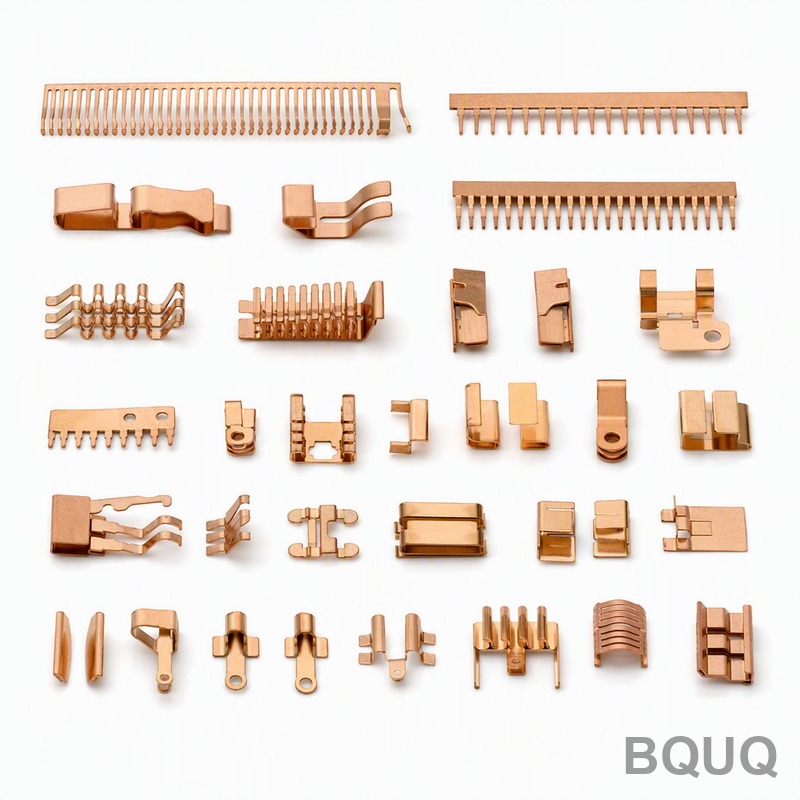
The most common failure mode is fatigue fracture at the inner surface of the coil, caused by tensile stress concentration during compression; this accounts for 70% of warranty claims. Prevention requires shot peening (introducing compressive residual stress) and setting (pre-compressing to solid height) to increase fatigue life by 30% to 50%. The second failure cause is corrosion pitting from humidity, which reduces fatigue strength by up to 50%; using 302 stainless steel or applying an epoxy coating eliminates this. Third, incorrect end coil design—open ends not ground flat—causes off-axis loading, leading to buckling; grinding the ends to achieve a 90° flat surface (flatness within 0.1 mm) is mandatory for springs with a free length to diameter ratio above 2.5.
When Should You Specify Stainless Steel Over Carbon Steel for Furniture Springs?
Specify 302 stainless steel when the furniture will be used outdoors, in kitchens (grease exposure), or in coastal regions with salt air, where carbon steel would fail from corrosion within 12 months. Specify carbon steel (65Mn or chrome silicon) when the application is indoors, the spring is fully enclosed in foam (reducing moisture access), and cost is the primary driver; a carbon steel spring is 60% cheaper than stainless for the same dimensions. For luxury furniture with a 10-year warranty, always choose chrome silicon with a zinc-nickel coating (salt spray resistance of 200 hours), as it provides the best fatigue life per dollar. Additionally, if the spring operates near a heat source (e.g., a motorized recliner with an electric actuator), stainless steel is required for temperatures above 150°C, where carbon steel begins to relax and lose its set.
FAQ
What Is the Minimum Order Quantity for Custom Furniture Springs?
For standard catalog springs, MOQ is 500 pieces, but for custom tooling, we require 2,000 pieces to amortize tooling costs ($800 to $2,500). For prototype validation, we offer 50-piece samples at a 3x unit price premium, typically delivered in 5 working days.
How Long Does Spring Tooling and Production Take?
Tooling fabrication takes 7 to 10 days for CNC coiler setups, and first article inspection (FAI) reports are issued within 2 days after tooling completion. Production lead time is 10 to 15 working days for 10,000 pieces, including stress relieving and surface coating.
Can Furniture Springs Be Made to Match a Specific Load-Deflection Curve?
Yes, we use finite element analysis (FEA) to design springs with a custom rate curve, including progressive rate springs that increase stiffness under higher loads. We achieve this by varying coil pitch or wire diameter along the spring length, with a tolerance of ±3% on the rate at any specified deflection point.
What Testing Standards Apply to Household Furniture Springs?
The primary standards are ASTM A125 (heat-treated steel coil springs) and BS EN 16955 (furniture seating springs). We conduct a 100,000-cycle fatigue test at 80% of maximum deflection, checking for a load loss of less than 5% at the end of the test.
How Do You Ensure Spring Consistency Across High-Volume Production Runs?
We use automated CNC coilers with real-time diameter feedback (laser micrometer) and 100% load testing on a sample basis of 0.5% per batch. Statistical process control (SPC) tracks wire diameter and free length, with a process capability index (Cpk) target of 1.33 or higher.
Are There Eco-Friendly Options for Spring Surface Coating?
Yes, we offer trivalent chromium passivation (RoHS compliant) and zinc-free organic coatings that meet REACH regulations. For fully biodegradable options, we can apply a thin phosphate coating, though this reduces salt spray resistance to 48 hours, suitable for indoor use only.
Which Spring Design Parameters Are Most Critical for a Sofa Seat?
The critical parameters are the spring rate (N/mm), the pre-load at installation, and the solid height. The spring rate must match the foam density; for a 30 kg/m³ foam, use a spring rate of 2.5 to 3.5 N/mm, and for 40 kg/m³ foam, use 4.0 to 5.0 N/mm to avoid a "bottoming out" feel.
Conclusion
The household and furniture spring market rewards engineering precision over material novelty; choosing the correct wire material, coil geometry, and surface treatment determines whether a product survives its warranty period. By understanding the specific load, cycle, and environmental requirements of your furniture design, you can reduce warranty costs by 20% to 30% and improve customer satisfaction scores. For a detailed design review of your spring application, our engineering team provides a 12-hour quoting service with DFM feedback. Contact us at sc@bquq.com or WhatsApp +86 13713157787, or visit www.bquq.com to upload your CAD files for an instant feasibility assessment.
Related Articles
- Spring Design Calculations for Dynamic Response: A 2025 Engineering Reference Guide
- Spring manufacturing technology innovation: CNC numerical control coil spring and cutting-edge breakthrough in camless forming
- Spring forming machine market: growth opportunities in the transformation of smart manufacturing