What Are the Most Common Surface Treatment Processes for Machined Components?
The most common surface treatment processes for machined components are anodizing (Type II and Type III), electroplating (zinc, nickel, and chrome), powder coating, and passivation for stainless steel. These processes are selected based on the base material, the required hardness, corrosion resistance, aesthetic goals, and the component’s operating environment, with anodizing and hard coat offering the best wear resistance for aluminum while zinc plating is the most cost-effective option for steel. For a typical CNC machined part, surface treatment adds 5% to 15% to the unit cost and 1 to 3 days to the lead time.
How Do Anodizing and Hard Coat Anodizing Differ in Performance and Cost?
Anodizing is an electrochemical process that converts the aluminum surface into a durable, porous aluminum oxide layer. Type II (sulfuric anodizing) produces a layer of 5 to 25 microns, which is ideal for painting adhesion, dyeing, and moderate corrosion resistance, costing roughly $0.50 to $1.50 per square foot. Type III (hard coat anodizing) creates a much denser layer of 25 to 75 microns, achieving a surface hardness of 60 to 70 HRC (Rockwell C), which is comparable to case-hardened steel; this process costs $2.00 to $4.50 per square foot. The key difference for engineers is that hard coat anodizing reduces fatigue strength by about 10% to 15% on thin-walled parts, so it is not recommended for components under cyclic loading unless the design accounts for this loss.
Which Surface Treatment Provides the Best Corrosion Resistance for Steel Components?
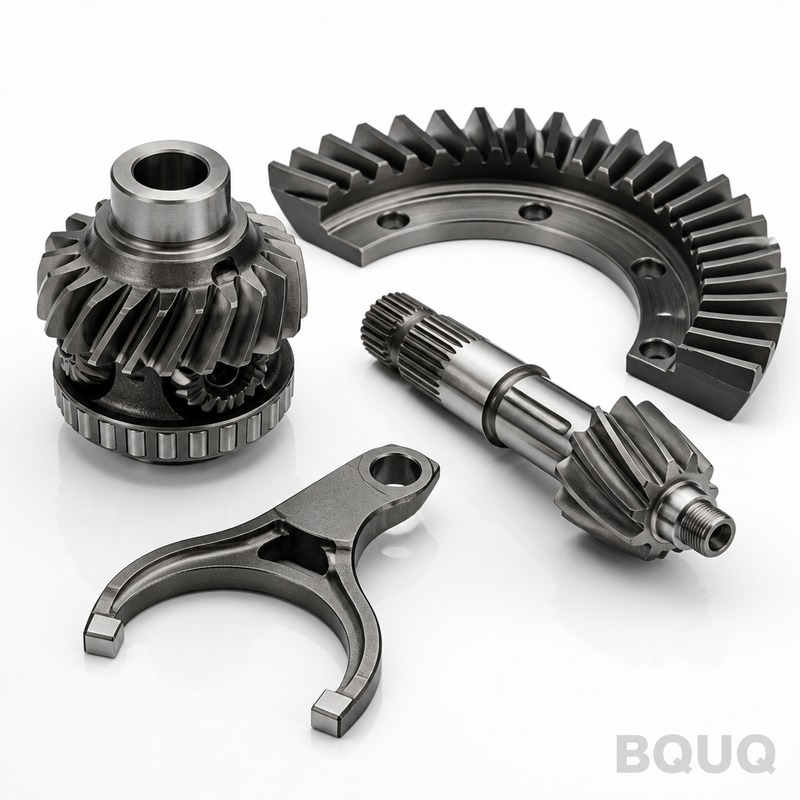
For carbon steel and low-alloy steel, zinc plating (electrogalvanizing) with a clear or yellow chromate conversion coating is the industry standard, providing 96 to 240 hours of salt spray resistance (ASTM B117) at a thickness of 5 to 12 microns. For higher performance, electroless nickel plating (mid-phosphorus, 7-9% P) offers a uniform coating of 12 to 50 microns that achieves 500 to 1,000 hours of salt spray resistance, making it the preferred choice for hydraulic components and valve bodies. If the component is made of stainless steel (304 or 316), passivation with nitric acid (20-40% concentration at 50-60°C) is the only necessary treatment, removing free iron and increasing the natural chromium oxide layer, which yields over 1,000 hours of salt spray resistance without changing the part’s dimensions.
What Is the Maximum Operating Temperature for Common Surface Coatings?
The thermal limit of a surface treatment is often the limiting factor in high-temperature applications such as engine parts and heat sinks. Powder coating (polyester or epoxy) degrades above 200°C, becoming brittle and losing adhesion, while liquid paint fails above 150°C. Hard coat anodizing withstands continuous service up to 400°C, and electroless nickel maintains its hardness up to 400°C, though its corrosion resistance drops significantly above 300°C. For extreme environments, zinc flake coating (e.g., Dacromet) withstands 300°C continuous and 540°C peak, and black oxide (magnetite layer) is stable up to 400°C but offers only 24 to 48 hours of salt spray protection.
How Does Surface Roughness Change After Different Treatments?
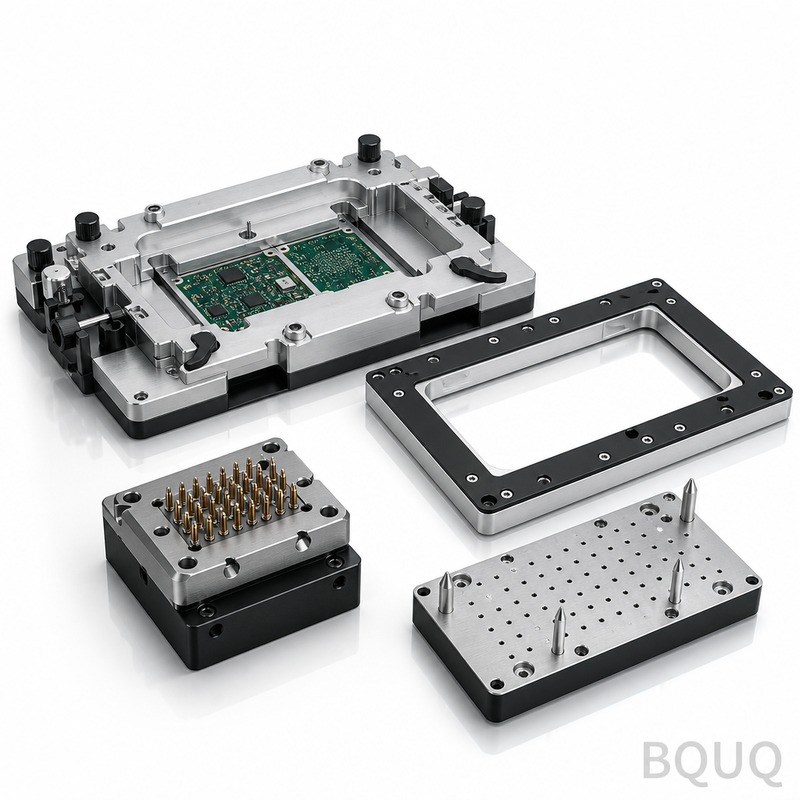
Surface treatment can either smooth or roughen a machined surface, and this must be accounted for in sealing and bearing applications. Anodizing and electroless nickel plating are conformal, meaning they replicate the underlying surface roughness; a machined surface of Ra 0.8 µm will remain at Ra 0.8 to 1.0 µm after treatment. In contrast, electroplating (zinc or chrome) tends to build up on sharp edges and high points, increasing Ra by 0.2 to 0.5 µm, and powder coating always increases roughness to Ra 2.0 to 4.0 µm due to the thick (60-120 µm) polymer layer. Hard coat anodizing typically increases surface roughness by 0.2 to 0.4 µm because the oxide growth is slightly porous and non-uniform, so honing or lapping is required if the final Ra must be below 0.4 µm.
Which Surface Treatments Are Suitable for Copper, Brass, and Bronze Alloys?
Copper alloys require specialized treatments because standard steel and aluminum processes will not work. The most common finishes for brass and bronze are electroplating with nickel (5-20 microns) followed by chrome (0.5-2 microns) for decorative and wear purposes, or simply clear lacquer (e.g., acrylic or polyurethane) to prevent tarnishing. For electrical contacts, immersion silver or tin plating (1-5 microns) is applied to maintain low contact resistance, while blackening (oxidizing) is used for optical components to reduce reflectivity. Note that anodizing does not work on copper alloys, and passivation is not applicable; the cost for nickel and chrome plating on brass runs $1.50 to $3.00 per square foot, which is higher than steel plating due to the need for a copper strike layer (2-3 microns) to ensure adhesion.
How Much Time Does Surface Treatment Add to the Production Lead Time?
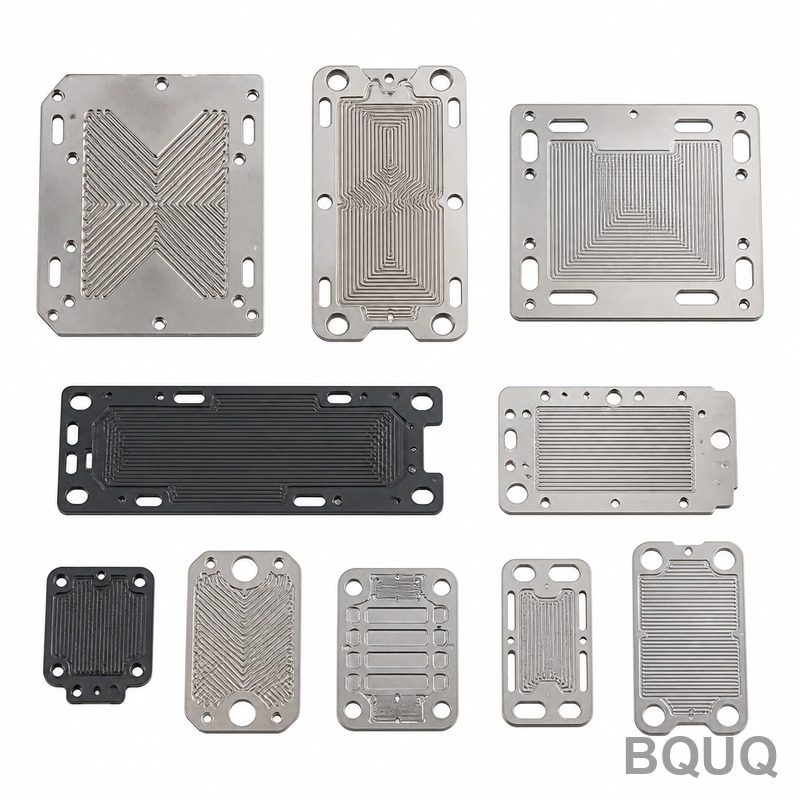
The total lead time for surface treatment depends on the process, the batch size, and whether the supplier is in-house or outsourced. For CNC machined parts, standard anodizing and zinc plating add 1 to 2 business days, while hard coat anodizing, electroless nickel, and chrome plating add 2 to 4 days due to longer bath times and pre-treatment requirements. Powder coating adds 2 to 3 days because of the curing cycle (10-20 minutes at 180-200°C) and masking preparation, and passivation is the fastest, adding only 0.5 to 1 day. At BQUQ, we recommend planning for a 3-day buffer in the overall schedule if the part requires multiple treatments, such as hard coat anodizing followed by Teflon impregnation, which is common for high-wear sliding components.
What Are the Hidden Costs and Quality Risks in Surface Treatment?
The most significant hidden cost is masking: if a part has threaded holes, precision bores, or mating surfaces that must remain uncoated, the labor for manual masking can exceed the cost of the treatment itself, often adding $1.00 to $5.00 per part. Another risk is hydrogen embrittlement, which affects high-strength steel (above 40 HRC) during electroplating; this requires a post-bake at 190-220°C for 4 to 24 hours, adding cost and time. Dimensional changes are also critical: hard coat anodizing grows the part by 50% of the coating thickness (e.g., a 50-micron coating adds 25 microns per surface), and electroless nickel adds the full coating thickness, so pre-machining tolerances must be adjusted accordingly.
| Process | Typical Thickness (µm) | Hardness (HV) | Salt Spray Resistance (hours) | Max Temp (°C) | Relative Cost (USD/sq ft) | Lead Time (days) |
| Type II Anodizing | 5-25 | 300-400 HV | 336-500 | 150-200 | $0.50 - $1.50 | 1-2 |
| Hard Coat Anodizing | 25-75 | 400-600 HV | 500-1,000 | 400 | $2.00 - $4.50 | 2-3 |
| Zinc Plating (Clear) | 5-12 | 70-120 HV | 96-240 | 120 | $0.30 - $0.80 | 1-2 |
| Electroless Nickel (Mid-P) | 12-50 | 500-700 HV | 500-1,000 | 300-400 | $1.50 - $3.50 | 2-4 |
| Powder Coating | 60-120 | 15-20 HV (polymer) | 500-1,000 | 150-200 | $1.00 - $2.50 | 2-3 |
| Passivation (Stainless) | 0-0.1 (oxide) | N/A | >1,000 | 400 | $0.10 - $0.30 | 0.5-1 |
| Black Oxide | 0.5-2 | 300-400 HV | 24-48 | 400 | $0.20 - $0.50 | 1-2 |
How Do You Select the Right Surface Treatment for a New Machined Component?
The selection process begins with three questions: what is the base material, what is the failure mode you are preventing (corrosion, wear, or galling), and what is the dimensional tolerance of the critical features? For aluminum parts, choose Type II anodizing for aesthetics and corrosion, hard coat for wear, and chromate conversion (alodine) if you need electrical conductivity and a thin (0.5-2 µm) coating that does not affect tolerances. For steel, use zinc plating for indoor applications, electroless nickel for chemical resistance and uniformity, and powder coating for outdoor enclosures where impact resistance is needed. Finally, always verify the coating thickness on threaded features, as ISO 965 specifies that external threads may require pre-plating undersizing to maintain fit after plating.
What Are the Common Defects in Surface Treatment and How Can They Be Prevented?
The most frequent defects are pitting (caused by contaminated cleaning baths), poor adhesion (due to insufficient degreasing or oxide removal), and white rust on zinc-plated parts (caused by inadequate chromate passivation). Dye bleeding or uneven color in anodizing is usually a result of poor racking or excessive current density, which can be prevented by maintaining a current density of 1.5-2.5 A/dm² and a bath temperature of 18-22°C. To avoid these issues, request a first-article inspection (FAI) from your supplier, including a salt spray test report, coating thickness measurement (using eddy current or X-ray fluorescence), and a visual check for edge build-up.
FAQ
Does Surface Treatment Affect the Fatigue Strength of Machined Parts?
Yes, most surface treatments reduce fatigue strength because they introduce micro-cracks or residual tensile stress. Hard coat anodizing reduces fatigue strength by 10-15% on aluminum, while shot peening before plating can restore or even improve fatigue life by 20-30%.
Can You Machine a Part After Surface Treatment?
Machining after surface treatment is possible but not recommended except for grinding or lapping to achieve tight tolerances on hard coatings. Grinding of hard coat anodizing (with diamond wheels) is common for bearing surfaces, but you must avoid cutting through the coating, as this creates a galvanic corrosion cell.
Which Surface Treatment Is Best for Heat Sinks?
For aluminum heat sinks, the best treatment is Type II anodizing in black, which increases the emissivity from 0.05 (bare aluminum) to 0.85, improving radiative heat transfer by 10-15%. Avoid powder coating on heat sinks because the thick polymer layer acts as a thermal insulator, reducing overall heat dissipation.
How Do You Specify Surface Treatment on an Engineering Drawing?
Use a callout that includes the process, thickness, and any masking requirements, such as "Hard Coat Anodize per MIL-A-8625 Type III, 50 µm minimum, mask all threaded holes." You must also specify the base material condition (e.g., 6061-T6) and the acceptable surface roughness after coating.
Is Passivation Necessary for Newly Machined Stainless Steel Parts?
Yes, passivation is necessary because machining introduces free iron and tool residue that can cause localized corrosion (pitting) even on 316 stainless steel. The standard process is immersion in 20-40% nitric acid at 50-60°C for 30-60 minutes, followed by a thorough rinse; this does not change dimensions.
What Is the Difference Between Clear and Yellow Zinc Plating?
Clear zinc plating uses a trivalent or hexavalent chromate that is colorless, providing 96-120 hours of salt spray resistance, while yellow (gold) zinc plating uses a hexavalent chromate that adds 120-240 hours of protection. Yellow zinc is more corrosion-resistant but contains hexavalent chrome, which is restricted by RoHS for some applications.
How Quickly Can I Get a Prototype with Surface Treatment?
At BQUQ, we can deliver CNC machined prototypes with standard surface treatment (anodizing or zinc plating) in 5-7 business days, including 1-2 days for the coating. For rush orders, we offer same-day processing for passivation and 48-hour expedited anodizing at a 20% surcharge.
Conclusion
Selecting the right surface treatment requires balancing corrosion resistance, hardness, dimensional tolerances, and cost, with anodizing and electroless nickel being the most versatile for aluminum and steel, respectively. Always specify the coating thickness and masking requirements on your drawing, and request a salt spray test report for any part that will face outdoor or harsh environments. For a reliable quote with accurate surface treatment pricing and lead times, contact BQUQ today.
We provide free engineering review of your surface treatment specifications and 12-hour quoting on all CNC machining and surface treatment projects. Email us at sc@bquq.com, reach us on WhatsApp at +86 13713157787, or visit www.bquq.com to upload your CAD files and receive a DFM report with coating recommendations.
Related Articles
- CNC Turn-Mill Composite Machining, Turn-Mill Machine Tools, One-Time Forming, B-Axis Turn-Mill Center, Multi-Process Integration, Complex Rotary Part Machining, Medical Device Precision Machining
- Adaptive Control and AI Real-Time Optimization in CNC Machining: From Experience to Algorithm
- Analysis of the core technology of five-axis linkage machining: from motion to high-precision curved surface manufacturing