What Is 5-Axis CNC Machining and When Do You Really Need It?
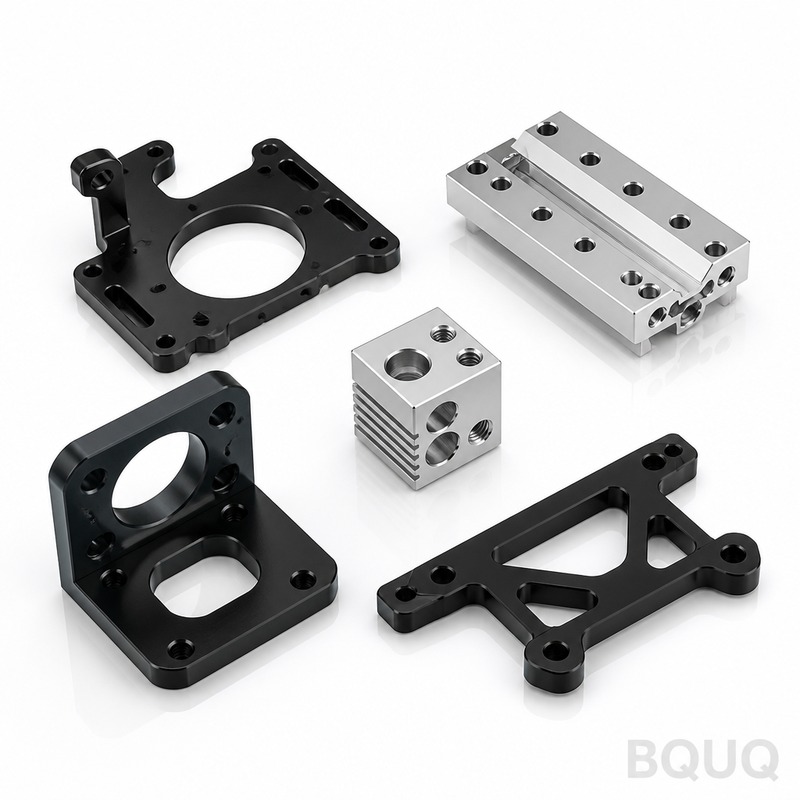
5-axis CNC machining is a subtractive manufacturing process where the cutting tool and the workpiece move simultaneously across five different axes, enabling the tool to approach the part from any direction without manual repositioning. You really need it when your part features complex undercuts, deep cavities, or critical compound angles that cannot be achieved with standard 3-axis or even 4-axis machines, and when your tolerance requirements exceed ±0.05 mm on multi-sided geometries. For manufacturers like BQUQ in Dongguan, 5-axis machining is the difference between producing a one-piece aerospace impeller in 2 hours versus welding three separate components with inherent structural weak points.
What Exactly Are the Five Axes in 5-Axis CNC Machining?
The five axes consist of the three linear axes (X, Y, Z) that define the tool tip position, plus two rotational axes (typically A and B, or B and C) that rotate the workpiece or the spindle head. The linear axes move the tool along length, width, and depth, while the rotational axes tilt the part to expose hidden faces. In a typical trunnion-style machine, the A-axis rotates around the X-axis (±120 degrees) and the C-axis rotates around the Z-axis (360 degrees continuous). The simultaneous interpolation of all five axes allows for continuous tool contact with complex freeform surfaces, which is why this process is standard for turbine blades, medical implants, and mold inserts.
How Does 5-Axis Machining Differ from 3-Axis and 3+2 Machining?
3-axis machining uses only X, Y, and Z linear movements, requiring the operator to manually re-clamp the workpiece for every new face, which introduces cumulative positioning errors. 3+2 machining, also called positional 5-axis, locks the two rotational axes at a fixed angle and then performs standard 3-axis cutting, which is effective for drilling angled holes but cannot cut curved surfaces in one pass. True simultaneous 5-axis machining moves all five axes at once, which reduces cycle time by up to 70% compared to multi-setup 3-axis and eliminates re-clamping errors entirely. For example, a complex aluminum housing that takes 45 minutes on a 3-axis with four setups can be completed in 18 minutes on a simultaneous 5-axis machine with one setup.
When Do You Really Need 5-Axis Machining Instead of 3-Axis?
You genuinely need 5-axis machining when your part geometry violates the "2.5D rule," meaning you have features on multiple planes that are not perpendicular to the primary axis. Specific indicators include undercuts greater than 45 degrees, deep pockets with a depth-to-diameter ratio exceeding 4:1, and surfaces requiring a constant tool angle to avoid tool deflection. You also need it when your drawing specifies a surface finish of Ra 0.4 µm or better on a contoured surface, because shorter rigid tools used in 5-axis reduce vibration and chatter marks. If your part can be machined with standard end mills on two or three perpendicular setups and your tolerance is ±0.1 mm, then 3-axis is the cost-effective choice.
Which Industries and Parts Benefit Most from 5-Axis Machining?
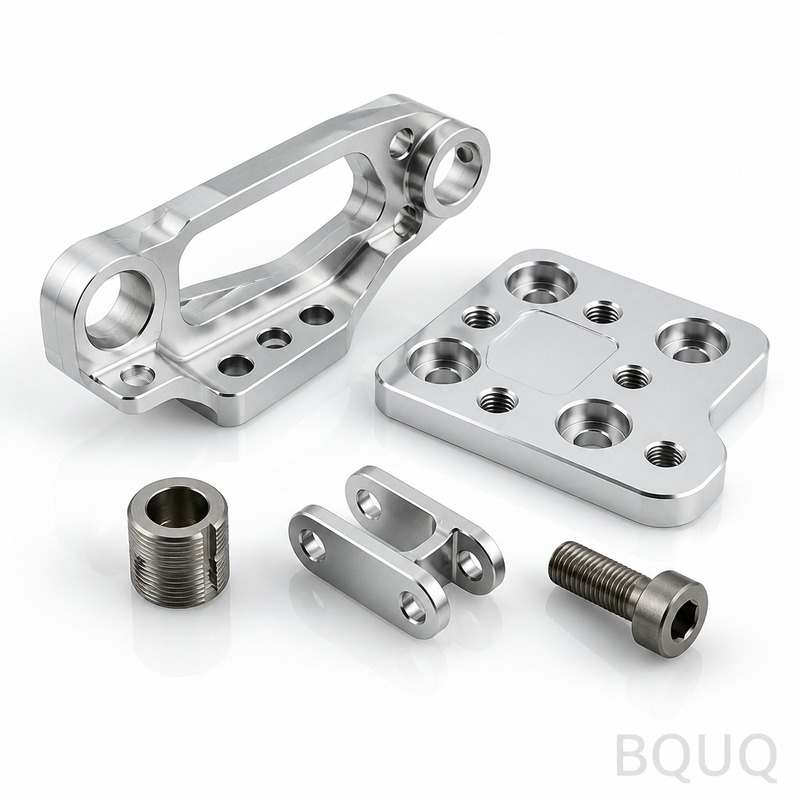
The aerospace industry is the largest user, accounting for roughly 40% of 5-axis machine installations, because components like blisks, impellers, and structural frames require complex airflow surfaces. The medical sector uses 5-axis for titanium and cobalt-chrome implants such as hip stems and spinal cages, where the surface geometry must match a patient's anatomy exactly. The mold and die industry relies on 5-axis to machine hardened steel (up to HRC 62) with complex cooling channels and parting lines, achieving tolerances of ±0.01 mm on cavity details. Additionally, the automotive racing sector uses 5-axis for intake manifolds and turbocharger housings, where a single-piece design improves flow dynamics and reduces weight by 15-20%.
How Much Does 5-Axis Machining Cost Compared to 3-Axis?
The hourly machine rate for a 5-axis CNC is typically RMB 300-600 (USD 42-84) in China, compared to RMB 150-250 (USD 21-35) for a 3-axis machine, reflecting higher depreciation, maintenance, and programming complexity. However, the total part cost can be lower for complex geometries because you eliminate fixture costs, secondary operations, and inspection time. A simple bracket with one drilled hole will cost 2-3 times more on 5-axis, but a complex impeller that requires 8 hours of 3-axis work plus welding will cost 40% less on 5-axis due to reduced labor and scrap. Tooling cost for a 5-axis program is also higher, with CAM software licenses and post-processor development adding RMB 10,000-30,000 to the initial setup.
What Tolerances and Surface Finishes Can 5-Axis Machining Achieve?
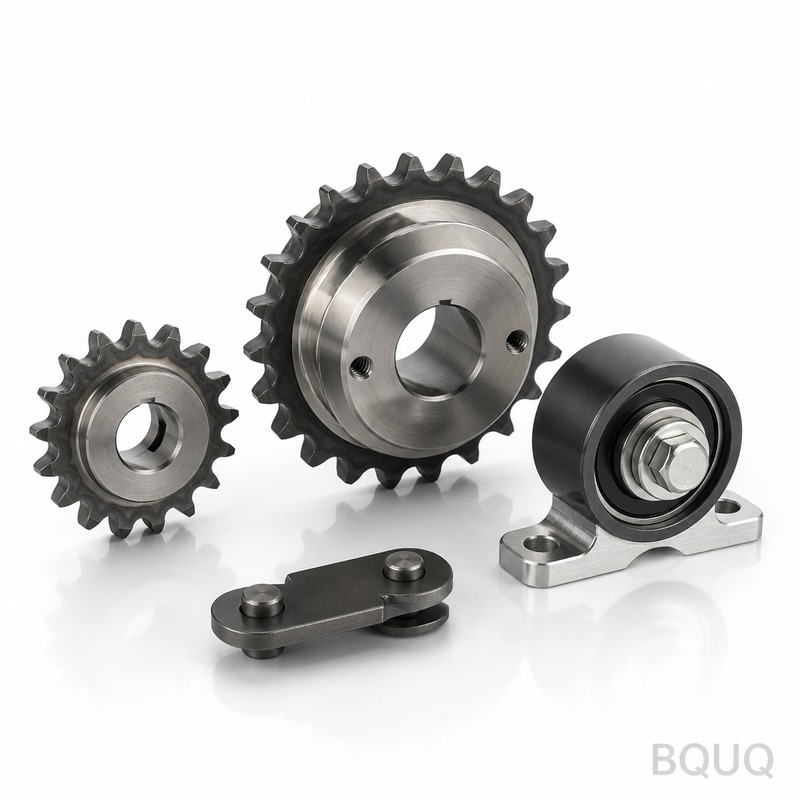
A well-calibrated 5-axis machine can hold a positioning tolerance of ±0.005 mm and a repeatability of ±0.002 mm on linear axes, while rotational axes typically achieve ±0.001 degrees. In practice, BQUQ guarantees ±0.01 mm on machined features for most alloys, and ±0.02 mm on complex freeform surfaces where tool deflection and thermal growth are factors. Surface finish can reach Ra 0.2 µm with a ball nose end mill at high spindle speeds, though Ra 0.8 µm is the standard economic finish for production parts. The key advantage of 5-axis is that it maintains these tolerances across the entire part in a single setup, whereas 3-axis accumulated errors from multiple clamping often exceed ±0.05 mm.
How Should You Choose Between 5-Axis and Alternative Manufacturing Methods?
If your production volume is under 100 parts and the geometry is complex, 5-axis machining is superior to investment casting or metal injection molding, which have high tooling costs (RMB 50,000-200,000) and longer lead times (4-8 weeks). For volumes above 1,000 parts with simpler geometry, consider stamping or die casting, which can reduce per-unit cost below RMB 5, but require a minimum order quantity to amortize tooling. If your material is a heat sink with many fine fins, a specialized 5-axis machine with a high-speed spindle (30,000 RPM) can cut fins as thin as 0.3 mm with a depth of 25 mm, which is impossible on a 3-axis. The decision matrix below provides a quick reference for typical scenarios.
| Part Characteristic | 3-Axis CNC | 5-Axis CNC | Recommended Process |
| Max part size (cube) | 800 mm | 600 mm | 3-Axis for larger |
| Tolerance on complex surfaces | ±0.05 mm | ±0.01 mm | 5-Axis |
| Number of setups required | 3-6 | 1 | 5-Axis for >3 setups |
| Cost per hour (RMB) | 150-250 | 300-600 | 3-Axis for simple parts |
| Surface finish Ra (µm) | 0.8 | 0.2 | 5-Axis for mirror finish |
| Typical lead time (days) | 3-5 | 5-7 | 3-Axis for urgent |
| Undercut angle capability | < 30 deg | > 90 deg | 5-Axis mandatory |
How Does BQUQ Ensure Quality in 5-Axis Machining?
BQUQ operates a fleet of 5-axis machines including DMG MORI and Mazak, all with thermal compensation systems that maintain accuracy across 8-hour shifts. We use in-process probing to verify critical dimensions every 10 parts, and final inspection with a CMM (coordinate measuring machine) reports a full dimensional certificate within ±0.005 mm accuracy. Our programmers use Siemens NX CAM with verified post-processors, and we run a trial cut on aluminum or wax before machining expensive titanium or Inconel to validate the toolpath. For medical and aerospace clients, we provide full material traceability (EN 10204 3.1) and surface finish reports using a profilometer.
What Are the Limitations and Risks of 5-Axis Machining?
The primary limitation is the machine's working envelope, which is often smaller than a 3-axis machine of the same price, typically capping at 600 mm x 500 mm x 400 mm for a standard trunnion model. Programming complexity is a real risk, as a single error in the post-processor can crash the tool into the table, causing RMB 50,000-100,000 in damage; this is why BQUQ verifies every new program with a dry run and a plastic test block. Chip evacuation can be problematic in deep cavities, requiring high-pressure coolant systems (60 bar) to prevent chip re-cutting that degrades surface finish. Finally, the cost of a 5-axis machine is 2-3 times higher than a 3-axis, so the investment only pays off if you have a consistent flow of complex work.
FAQ
How long does a typical 5-axis machining cycle take for a complex part?
A complex part like a titanium impeller with 20 blades takes 4-6 hours of machining time, while a simpler aluminum mold insert takes 1-2 hours. The cycle time is 30-50% shorter than 3-axis with multiple setups because you eliminate clamping time and tool change overhead. For production runs, BQUQ optimizes feed rates and tool paths to reduce cycle time without sacrificing tolerance.
Can 5-axis machining be used for prototyping as well as production?
Yes, 5-axis is excellent for prototyping because it creates a full-featured part in one setup, allowing you to validate form, fit, and function without waiting for multiple operations. It is common to machine 1-20 prototype parts in aluminum or plastic before committing to mass production. The higher hourly rate is justified by the speed of iteration and the accuracy of the prototype compared to the final part.
What materials are suitable for 5-axis CNC machining?
Almost any machinable material works, including aluminum 6061-T6, stainless steel 304/316, titanium Ti-6Al-4V, Inconel 718, PEEK, and hardened tool steel up to HRC 62. The machine's rigidity and spindle power (typically 15-30 kW) determine the maximum cutting depth and speed for each material. For heat-sensitive materials like titanium, BQUQ uses cryogenic cooling or high-pressure coolant to prevent work hardening.
How do I send a part drawing for a 5-axis machining quote?
Send your 3D model in STEP, IGES, or native CAD format (SolidWorks, UG/NX) along with a 2D drawing specifying critical tolerances and surface finishes. BQUQ's engineering team reviews the file within 4 hours and provides a DFM (Design for Manufacturing) feedback if any features are problematic. If you only have a sample part, we can reverse-engineer it with a 3D scanner to create a CAD model.
What is the minimum order quantity for 5-axis CNC parts?
There is no minimum order quantity; BQUQ accepts one-off prototypes and production runs of 1,000+ parts with the same quality standard. For low volumes, the main cost driver is programming and setup, which is quoted separately as a one-time fee. For high volumes, we implement automated pallet changers to reduce idle time and lower the per-part cost by up to 20%.
How does 5-axis machining affect the mechanical properties of a part?
Machining does not alter the bulk material properties like tensile strength or hardness, but it improves fatigue life by eliminating stress concentrations from welded joints or mechanical fasteners. The continuous cutting action leaves a uniform residual stress pattern, which reduces distortion compared to multi-setup machining. For aerospace applications, a one-piece 5-axis machined part can have 30% higher fatigue strength than a welded assembly.
What is the typical lead time for a 5-axis CNC order from BQUQ?
Standard lead time is 5-7 business days for aluminum parts and 7-10 days for titanium or stainless steel, including material procurement and final inspection. For urgent orders, we offer a 48-hour rapid service at a 20% surcharge, provided the material is in stock. All orders include a free DHL or FedEx shipping quote to your destination.
5-axis CNC machining is not a luxury; it is a necessity for a specific class of parts that demand geometric complexity, tight tolerances, and single-setup accuracy. At BQUQ, we combine 20 years of manufacturing experience with modern 5-axis equipment to deliver parts that meet aerospace, medical, and automotive standards. If you have a complex part that challenges your current supplier, send us your drawing for a free engineering review. We provide a 12-hour quoting service with detailed DFM feedback, and you can reach us at sc@bquq.com or WhatsApp +86 13713157787. Visit www.bquq.com to see our capabilities and request a quote today.
Related Articles
- How Much Does CNC Machining Cost in 2026? A Complete Pricing Guide
- CNC Turn-Mill Composite Machining, Turn-Mill Machine Tools, One-Time Forming, B-Axis Turn-Mill Center, Multi-Process Integration, Complex Rotary Part Machining, Medical Device Precision Machining
- Analysis of the core technology of five-axis linkage machining: from motion to high-precision curved surface manufacturing