What Is CNC Machining Lead Time and How Can You Shorten It?
CNC machining lead time is the total elapsed time from order confirmation to part delivery, typically ranging from 3 to 15 business days for standard prototypes and 2 to 6 weeks for production runs at BQUQ. The most significant factors influencing this timeline are part complexity, material availability, surface finish requirements, and current shop capacity. You can shorten lead time by simplifying designs, selecting in-stock materials, reducing required tolerances, and requesting expedited processing, which BQUQ routinely offers at a 20-30% surcharge for 24-48 hour turnaround on simple parts.
What Is the Typical CNC Machining Lead Time for Prototypes and Production Runs?
For standard CNC machining prototypes, BQUQ quotes a lead time of 3 to 5 business days, while complex multi-axis parts may require 7 to 10 business days. Production runs of 100 to 1,000 parts typically ship within 10 to 15 business days, and high-volume orders exceeding 5,000 parts can extend to 20 to 30 business days, depending on material sourcing and machine availability. Expedited services are available, with simple 2-axis parts achieving a 24-hour turnaround, but this is subject to confirmed machine capacity and a 30% rush fee.
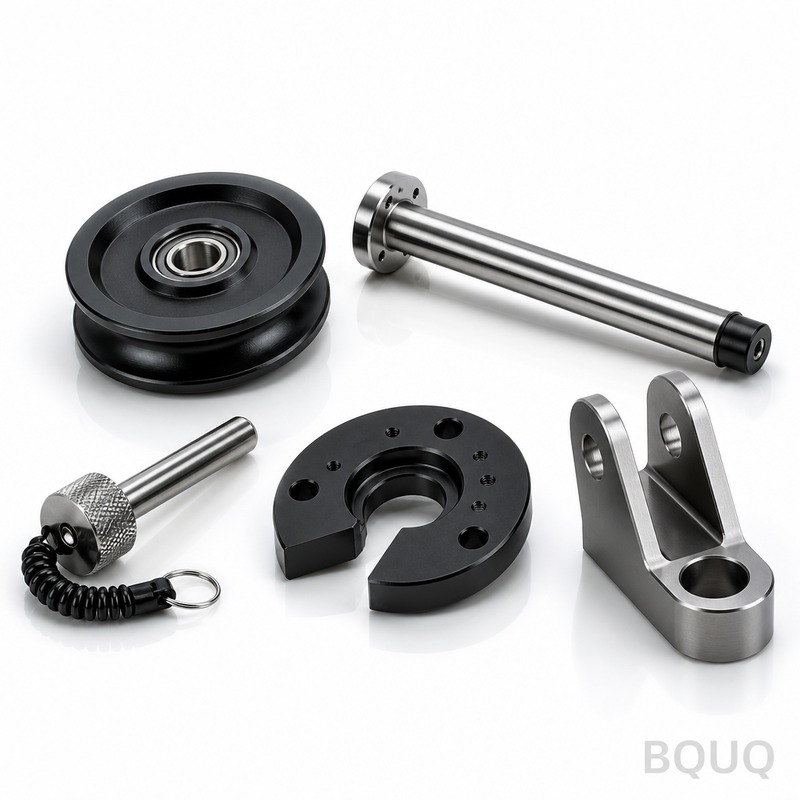
How Does Part Complexity Affect CNC Machining Lead Time?
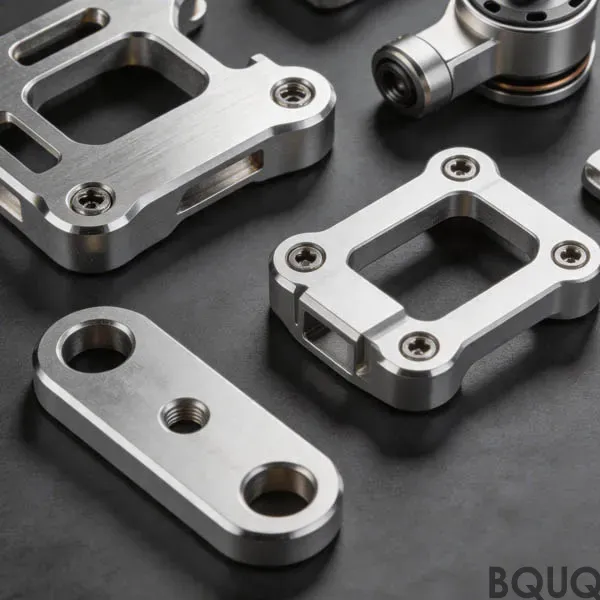
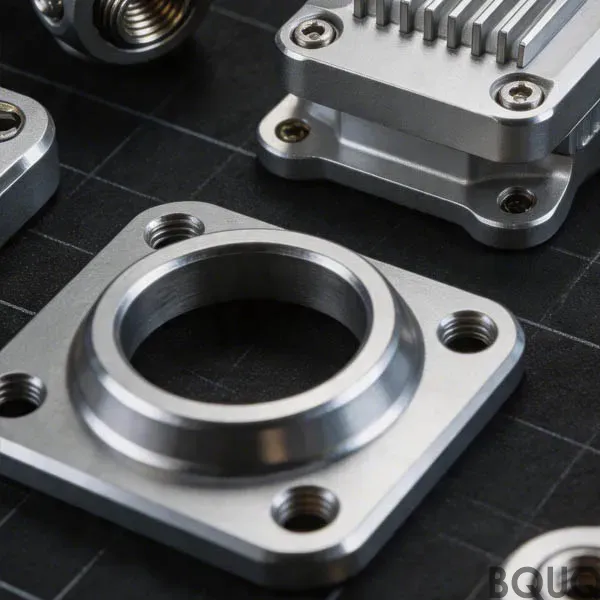
Part complexity directly impacts machining time, toolpath programming, and setup, which collectively determine lead time. A simple rectangular bracket with six drilled holes requires roughly 15 minutes of machine time, whereas a 5-axis impeller with 40 curved blades can consume 8 to 12 hours of continuous cutting. Each additional axis of operation, deep cavity, thin wall, or tight internal corner increases programming time by 2 to 6 hours and may require custom tooling, adding 2 to 4 days to the schedule.
Which Material Choices Reduce or Extend CNC Machining Lead Time?
Material availability is a primary driver of lead time, with aluminum 6061-T6 and 7075-T6 being the fastest options since BQUQ maintains a 2,000 kg inventory of these alloys in common bar and plate sizes. Stainless steel 304 and 316, brass C360, and POM (acetal) are also stocked and can begin machining within 24 hours of order confirmation. Exotic materials such as titanium 6Al-4V, Inconel 718, and PEEK require special ordering with 5 to 10 business days of supplier lead time, plus slower cutting speeds that increase machine time by 40-60% compared to aluminum.
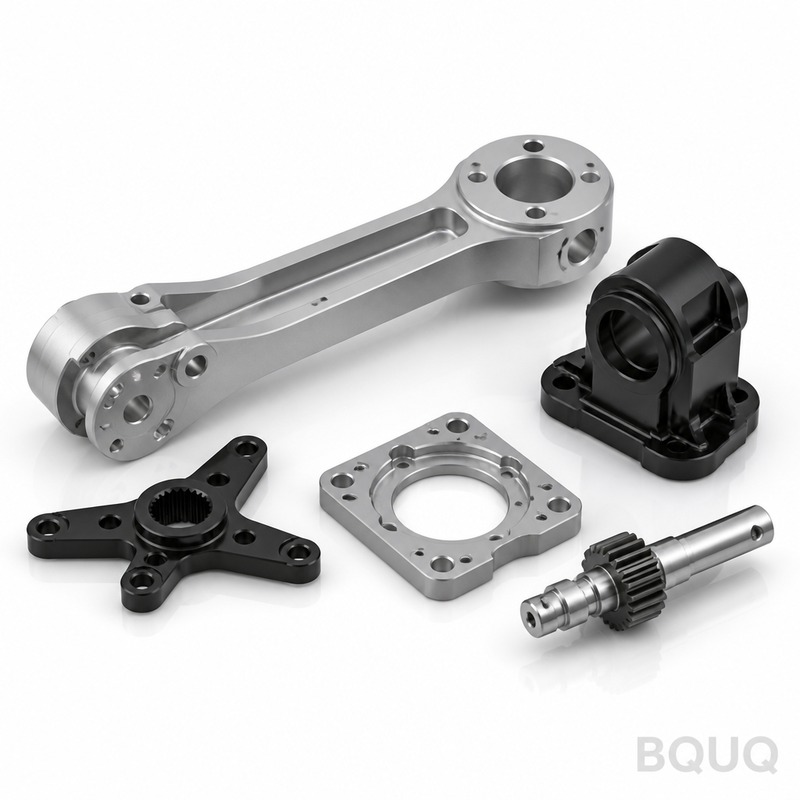
Why Does Surface Finish and Secondary Processing Add Days to the Schedule?
Secondary operations, including anodizing, powder coating, and passivation, are batch processes that add 3 to 5 business days to a CNC machining lead time because they are performed by partner facilities with fixed weekly schedules. A standard machined finish (Ra 3.2 µm) requires no extra time, while a fine finish of Ra 0.4 µm demands additional polishing passes that extend machine time by 20-30%. Hard anodizing to MIL-A-8625 Type III, for example, adds 4 business days minimum, and if you require a specific color match, an additional 1 to 2 days for sample approval is typical.
How Much Does Tooling and Fixture Development Impact the Overall Timeline?
Custom fixtures and tooling can add 3 to 7 business days to the initial CNC machining lead time, but this investment reduces per-part cycle time by 15-25% for subsequent production orders. For a simple vise-based setup, no custom tooling is needed, and machining can start immediately. For complex geometries requiring a vacuum fixture or 5-axis tombstone, BQUQ designs and fabricates the fixture in 2 to 4 days, with a typical fixture cost of $100 to $500 per operation.
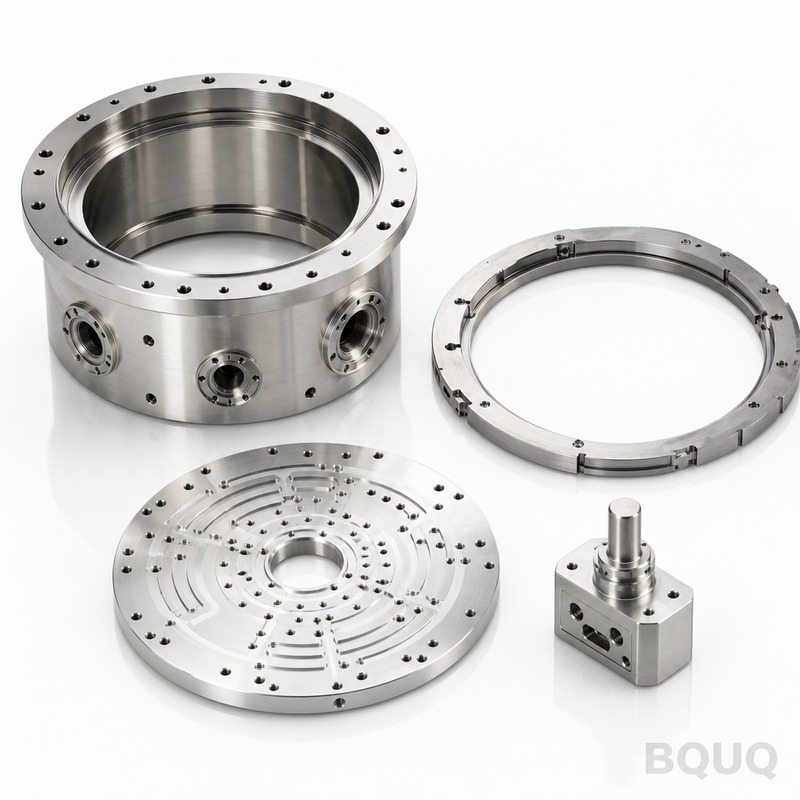
What Role Does Shop Capacity and Order Queue Play in Delivery Dates?
Current machine utilization is the most variable factor, with BQUQ operating 24 CNC machines, including 12 3-axis mills, 6 5-axis machines, and 6 CNC lathes. When shop utilization is below 60%, standard lead times apply; however, during peak periods at 85-95% utilization, quoted lead times may extend by 3 to 5 business days. To mitigate this, BQUQ reserves 15% of daily machine capacity for expedited orders, and you can check real-time capacity by requesting a quote, which is typically returned within 12 hours.
How Can You Shorten CNC Machining Lead Time in Practice?
The most effective way to shorten CNC machining lead time is to design for manufacturability, specifically by reducing the number of setups and avoiding deep pockets with high aspect ratios. For instance, specifying a standard 6 mm end mill radius instead of a 1 mm radius for internal corners can reduce machining time by 35% because larger tools remove material faster. Additionally, combining multiple part features into a single operation, selecting stocked materials, and limiting tolerance requirements to ±0.125 mm instead of ±0.025 mm can cut both programming and inspection time by 20-40%.
| Factor | Standard Lead Time | Expedited Lead Time | Cost Impact |
| Prototype (1-10 parts, simple geometry) | 3-5 business days | 24-48 hours | +30% surcharge |
| Production (100-1,000 parts) | 10-15 business days | 5-7 business days | +20% surcharge |
| Material (Aluminum 6061, stocked) | 0 days (immediate) | 0 days | No premium |
| Material (Titanium, special order) | 5-10 business days | 2-3 business days | +15-25% material cost |
| Surface finish (Machined Ra 3.2 µm) | 0 additional days | 0 days | No premium |
| Surface finish (Hard anodize Type III) | 4-5 business days | 2-3 business days | +$0.50-$1.00 per part |
| Custom fixture required | 3-7 business days | 1-2 business days | $100-$500 fixture cost |
| Tolerance ±0.025 mm (tight) | +1-2 days inspection | +0.5 days | +10-15% machining cost |
What Are the Common Hidden Delays in CNC Machining Quoting?
Hidden delays frequently occur during the quoting and design-for-manufacturability review phase, which takes 4 to 12 hours for standard parts but can stretch to 2 days for complex 5-axis geometries. Missing or incomplete 2D drawings with GD&T callouts often require a clarification email cycle that adds 1 to 2 business days. To avoid this, provide a full 3D STEP file plus a PDF drawing with critical tolerances, thread specifications, and surface finish requirements clearly marked.
How Does Order Quantity Influence Total Lead Time for CNC Machining?
Order quantity affects lead time non-linearly, as the first article setup takes 1 to 3 hours, while each subsequent part adds only 5 to 15 minutes of machine time. For a simple part with a 10-minute cycle time, 100 parts require approximately 17 hours of machine time, while 1,000 parts require 167 hours, pushing delivery from 5 to 15 business days on a single machine. Splitting a large order into smaller batches of 200 parts each can reduce the first-article risk and allow initial delivery in 5 days, with subsequent batches shipping weekly.
What Is the Fastest Way to Get a CNC Machining Quote and Start Production?
The fastest way to obtain a quote and initiate CNC machining is to upload a 3D model in STEP or IGES format through the BQUQ website, which triggers an automated manufacturability analysis within 1 hour. A dedicated engineer reviews the file, provides DFM feedback, and issues a formal quotation including lead time within 12 hours on business days. Once you approve the quote and issue a purchase order, material cutting begins the same day for stocked materials, and you will receive a first-article inspection report with a CMM certificate within 48 hours of part completion.
FAQ
What Is the Absolute Minimum CNC Machining Lead Time for a Simple Part?
The absolute minimum is 24 hours for a simple 2-axis or 3-axis part with standard tolerances, stocked aluminum, and no secondary operations. This requires expedited processing, which incurs a 30% surcharge and is subject to available machine capacity at the time of order. BQUQ ships such parts via overnight courier, so total door-to-door time is typically 2 to 3 days.
Can I Reduce Lead Time by Supplying My Own Material?
Yes, supplying your own material can reduce lead time by 5 to 10 business days if you have the raw stock in the correct size and grade, as it eliminates supplier procurement time. However, BQUQ must verify the material certificate for traceability and machinability, which adds 2 to 4 hours to the setup process. This option is most effective for exotic alloys like Inconel or titanium that have long supplier lead times.
Which CNC Machining Tolerance Should I Specify to Avoid Unnecessary Delays?
Standard machining tolerance of ±0.125 mm (0.005 in) is the default and adds no extra time or cost. Specifying a tighter tolerance of ±0.025 mm (0.001 in) increases inspection time by 1 to 2 days and machining cost by 10-15% due to slower feed rates and additional measurement steps. Only use tight tolerances on critical mating surfaces, not on cosmetic or clearance features.
How Does Seasonal Demand Affect CNC Machining Lead Times?
Lead times typically extend by 20-30% during Q4 (October to December) due to year-end project deadlines and during Chinese New Year shutdown, which closes factories for 7 to 15 days in January or February. To avoid delays, plan production orders at least 4 to 6 weeks in advance during these periods. BQUQ maintains a published holiday schedule and will advise you of any impact on your specific order.
When Should I Use 5-Axis Machining to Save Overall Lead Time?
Use 5-axis machining when a part requires multiple setups on a 3-axis machine, as each additional setup adds 1 to 2 hours of labor and increases the risk of tolerance stack-up. A 5-axis machine can complete a complex part in one or two setups, reducing total machining time by 30-50% and overall lead time by 2 to 4 days. However, for simple prismatic parts, a 3-axis mill is faster and more cost-effective.
Can Design Changes After Order Placement Delay My Delivery?
Design changes after order confirmation can delay delivery by 2 to 5 business days, depending on whether toolpaths and fixtures have already been created. If the change is made within 24 hours of confirmation and before material cutting, there is typically no delay. Changes requiring new tooling or re-programming after machining has started will incur additional charges and a revised lead time.
How Do I Prioritize Between Cost, Quality, and Lead Time in CNC Machining?
For prototype validation, prioritize lead time and accept standard tolerances to get parts in 3 to 5 days. For production, prioritize quality and cost, planning for 10 to 15 business days to allow for proper inspection and secondary finishing. BQUQ can provide a tiered quotation showing cost and lead time for standard, expedited, and premium services so you can make an informed trade-off.
In summary, CNC machining lead time at BQUQ ranges from 24 hours to 30 business days, driven by part complexity, material choice, surface finish, tooling needs, and shop capacity. By stocking common materials, simplifying designs, specifying standard tolerances, and planning around seasonal peaks, you can reliably reduce delivery time by 20-40%. For a precise quote with lead time confirmation, contact BQUQ, where a dedicated engineer will respond within 12 hours. Email your drawings to sc@bquq.com or message us on WhatsApp at +86 13713157787, and visit www.bquq.com for instant quoting and DFM analysis.
Related Articles
- CNC Turn-Mill Composite Machining, Turn-Mill Machine Tools, One-Time Forming, B-Axis Turn-Mill Center, Multi-Process Integration, Complex Rotary Part Machining, Medical Device Precision Machining
- Digital twin-driven CNC machining: from simulation to closed-loop process optimization
- Analysis of the core technology of five-axis linkage machining: from motion to high-precision curved surface manufacturing