What Is CNC Machining Lead Time and How Can You Shorten It?
CNC machining lead time is the total elapsed time from order confirmation and CAD file approval to parts being ready for shipment, typically ranging from 3 to 15 business days for standard prototypes and 15 to 30 business days for production runs. This timeline is not fixed; it fluctuates based on part complexity, material availability, surface finish requirements, and the machine shop’s current workload. By understanding the specific variables that drive this schedule, engineers can make data-backed decisions that compress delivery windows by up to 40% without sacrificing quality.
What Are the Standard Lead Time Ranges for CNC Machining in 2024?
For a typical aluminum 6061 part with simple 2.5-axis features, a standard lead time at BQUQ is 5 to 7 business days for quantities under 100 pieces. Production runs of 500 to 5,000 parts generally require 15 to 20 business days, depending on the number of setups and inspection checkpoints. If you require expedited service, we offer a 48-hour rapid prototyping option for single-piece validation, but this premium service carries a 30% cost uplift over the standard rate.
How Does Part Complexity Directly Affect Your Delivery Schedule?
Part complexity is the single largest variable in lead time calculation because it dictates the number of machining operations, tool changes, and inspection points. A simple bracket with six drilled holes and two tapped threads requires roughly 1.5 hours of machine time, whereas a complex impeller with 5-axis contoured blades can consume 12 to 18 hours of machining per piece. Every additional operation, such as a secondary EDM process or a tight ±0.005 mm tolerance on a bore, adds 2 to 4 hours to the total cycle time and pushes delivery out by 2 to 4 business days per revision.
Which Materials Have the Fastest and Slowest CNC Machining Turnaround Times?
Aluminum 6061-T6 is the fastest material to machine, with a cutting speed of 800 to 1,200 SFM and a lead time of 5 to 7 days because it allows for aggressive feed rates and minimal tool wear. Stainless steel 304, in contrast, has a cutting speed of only 90 to 120 SFM, which triples machining time and extends lead times to 10 to 15 days for comparable geometries. Brass C360 and free-machining steel 12L14 fall in the middle at 7 to 10 days, while titanium Ti-6Al-4V is the slowest at 15 to 20 days due to its low thermal conductivity and the need for specialized coated tooling that costs 40% more per insert.
How Does Surface Finish and Secondary Processing Extend the Timeline?
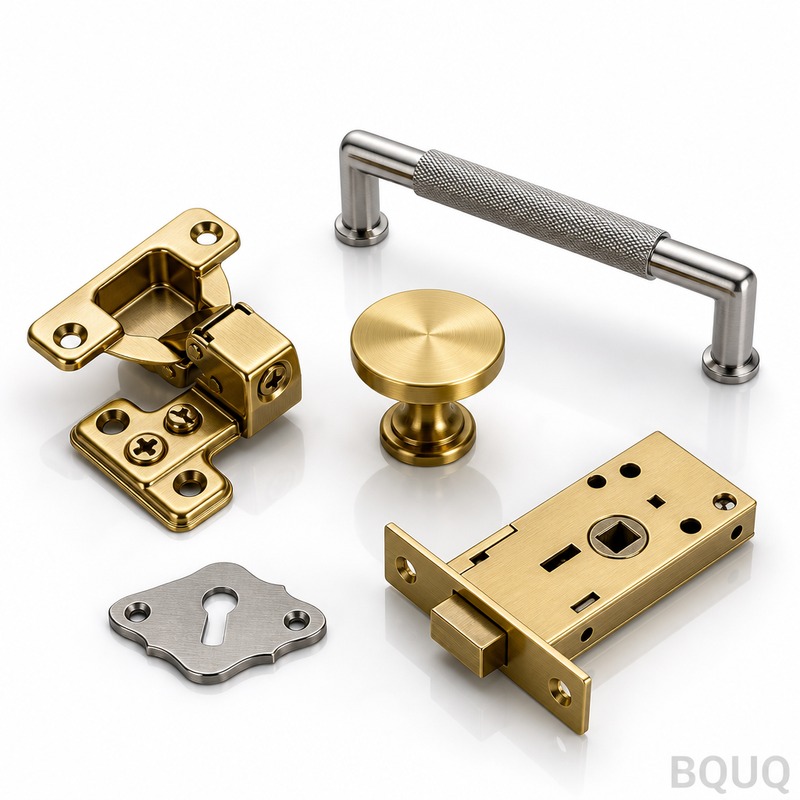
A standard machined finish at 3.2 Ra requires no additional time beyond the milling or turning operation, but specifying a 0.8 Ra mirror finish adds 3 to 5 business days because it demands a secondary polishing pass and a dedicated inspection using a profilometer. Anodizing, whether clear or black, adds 3 to 4 business days to any order because the parts must go through a chemical bath at 20°C, followed by a sealing process at 95°C, which cannot be accelerated without risking coating defects. Powder coating or painting adds 5 to 7 business days, and if you require MIL-SPEC plating such as nickel or chrome, expect an additional 7 to 10 business days due to the pre-treatment and thickness verification steps.
Why Does Tooling and Fixture Setup Consume More Time Than Machining Itself?
For a new CNC program, the initial setup involves CAD/CAM programming, fixture design, and tool presetting, which accounts for 4 to 8 hours of engineering time before the machine spindle ever turns. If your part requires a custom vacuum fixture or a soft jaw set, fabrication of that fixture alone takes 2 to 3 business days. On a repeat order, this setup time drops to 30 to 60 minutes because the fixtures and programs are already validated, which is why BQUQ offers a 20% lead time discount for customers who commit to a 12-month blanket order agreement.
How Can You Reduce CNC Machining Lead Time Without Increasing Cost?
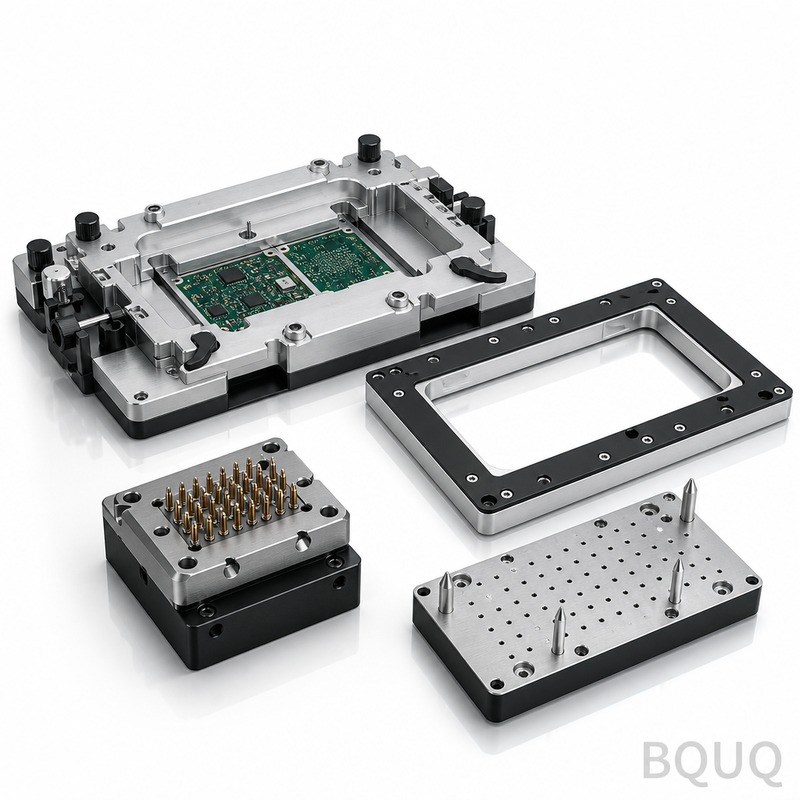
The most effective way to shorten lead time is to design for manufacturability (DFM) by limiting internal radii to 0.8 mm or larger, avoiding deep pockets with a depth-to-width ratio exceeding 4:1, and specifying tolerances no tighter than ±0.125 mm unless functionally necessary. Standardizing on a single material, such as 6061 aluminum, allows us to pre-stock raw stock and cut procurement time from 5 days to 1 day. Additionally, providing a fully dimensioned 2D drawing alongside your 3D STEP file eliminates the back-and-forth clarification emails that typically add 24 to 48 hours to the front end of every project.
What Is the Real Impact of Order Quantity on Lead Time per Part?
The relationship between quantity and lead time is not linear; increasing from 1 part to 100 parts adds only 2 days to the schedule, but jumping from 100 to 1,000 parts adds 7 days due to fixture wear checks and in-process gauging. The table below shows the actual lead time data from BQUQ production records for a standard 6061 aluminum housing, size 100 x 80 x 40 mm, with 12 holes and a 0.8 Ra finish.
| Quantity | Machining Time per Part | Total Lead Time (Business Days) | Cost per Part (USD) |
| 1 | 2.5 hours | 4 | 85 |
| 50 | 2.2 hours | 6 | 28 |
| 200 | 2.0 hours | 9 | 19 |
| 500 | 1.8 hours | 14 | 14 |
| 1000 | 1.6 hours | 18 | 11 |
As the quantity grows, per-part machining time decreases by 36% due to optimized tool paths, but the absolute lead time grows because of mandatory first-article inspection and hourly SPC checks that cannot be skipped without risk.
Which CNC Machines Give the Shortest Lead Time for Your Specific Part?
For parts with simple 2D features and no undercuts, a 3-axis vertical machining center offers the shortest lead time because setup is a single fixture and cycle times are under 10 minutes per part. A 5-axis machine is necessary for complex geometries, but it adds 2 to 3 days to the program setup and requires a more experienced operator with a higher hourly rate of 45 USD versus 28 USD for a 3-axis operator. If your part is a rotational component, a CNC Swiss lathe can produce it in a single pass, cutting lead time by 50% compared to a milling operation on the same geometry.
How Does Seasonality and Geographic Location Shift Your Delivery Window?
During Q4 (October to December), global CNC capacity is stretched thin as factories push year-end orders, and lead times inflate by 20 to 30% across the industry. BQUQ mitigates this by holding a 15% capacity buffer, but we still recommend placing holiday-season orders at least 30 days in advance. Geographic location matters for shipping, not machining; a part produced in Dongguan, China, takes 5 to 7 days via air freight to Los Angeles, but only 2 days to Hong Kong, so factoring in logistics is essential for promised on-time delivery dates.
FAQ
Can I Get a CNC Machining Prototype in 24 Hours?
Yes, BQUQ offers a 24-hour rapid prototype service for simple 2.5-axis parts in aluminum or brass, provided the geometry is within 100 x 100 x 100 mm and you approve the quote by 10 AM China Standard Time. This service uses a dedicated high-speed spindle running at 30,000 RPM and a pre-qualified tool library to eliminate setup delays. The cost is a 50% surcharge over standard one-piece pricing, typically 120 USD for a simple bracket.
What Information Do You Need to Provide a Precise Lead Time Quotation?
You must provide a 3D STEP or IGES file, a 2D PDF drawing with critical tolerances, the required quantity, and the target surface finish. Missing any of these documents delays the quote process by 24 to 48 hours because our engineers must make assumptions and send clarification requests. Including material grade and hardness specifications eliminates another round of email communication.
Does a Tighter Tolerance Always Mean a Longer Lead Time?
No, a tolerance of ±0.05 mm on a single critical hole adds only 1 to 2 hours to the total cycle time and does not affect overall lead time if the shop has the right tooling. However, applying ±0.025 mm tolerance to every dimension will triple inspection time and add 3 to 5 business days because each feature requires a CMM report. We recommend tolerancing only functional surfaces and leaving the rest at the standard ±0.125 mm.
How Does BQUQ Prioritize Orders When the Shop Is at Full Capacity?
We operate a three-tier priority system: standard production (15-day lead time), priority (7-day lead time with a 25% cost premium), and emergency (48-hour lead time with a 50% cost premium). Emergency orders are assigned to a dedicated machine that is held idle for such situations, ensuring zero conflict with existing production. We never split your order across multiple machines because that creates alignment and consistency risks.
What Is the Typical Lead Time for a Repeat Order of an Existing Part?
A repeat order of a previously machined part with no design changes has a lead time of 3 to 5 business days, regardless of quantity, because the CNC program, fixtures, and inspection setup are already validated. We also keep a digital archive of every job for 5 years, so you only need to provide a purchase order and confirm the quantity. This is the fastest way to get parts, and we encourage customers to use our online portal to re-order with one click.
When Should I Start the Quotation Process for a Complex 5-Axis Part?
You should contact BQUQ at least 2 weeks before your desired delivery date for a complex 5-axis part, because the initial DFM review and programming alone take 3 to 4 business days. If you have a tight deadline, we can begin the programming work based on a preliminary 3D model while you finalize the drawing, but this carries a 10% risk of rework. Early engagement is the only reliable way to compress the total timeline for high-complexity projects.
Which Is Faster for a Small Batch, CNC Machining or 3D Printing?
For a batch of 1 to 10 parts with simple geometry, 3D printing in resin or nylon can deliver in 24 to 48 hours, which is faster than CNC machining. However, for parts requiring tight tolerances, metal alloys, or a specific surface finish, CNC machining is the only option, and the lead time is 4 to 6 days. For batches above 50 parts, CNC machining becomes faster on a per-part basis because 3D printing has no economies of scale.
Conclusion
CNC machining lead time is a controllable variable when you understand the trade-offs between part complexity, material selection, and quality requirements. By standardizing materials, applying DFM rules, and working with a factory that maintains capacity buffers, you can achieve consistent 5-day deliveries for prototypes and 15-day deliveries for production. BQUQ has 20 years of experience in CNC machining, metal stamping, springs, and heat sinks, and we are ready to quote your project accurately within 12 hours of receiving your files. Contact us at sc@bquq.com or WhatsApp +86 13713157787, or visit www.bquq.com to start your next order today.
Related Articles
- CNC Turn-Mill Composite Machining, Turn-Mill Machine Tools, One-Time Forming, B-Axis Turn-Mill Center, Multi-Process Integration, Complex Rotary Part Machining, Medical Device Precision Machining
- Digital twin-driven CNC machining: from simulation to closed-loop process optimization
- Adaptive Control and AI Real-Time Optimization in CNC Machining: From Experience to Algorithm