What Is Driving Data Center TDP Growth and the 2026 Thermal Market Outlook?
The data center thermal management market is projected to grow from approximately USD 18.2 billion in 2024 to USD 27.5 billion by 2026, driven by a compound annual growth rate (CAGR) of 22.8% as chip Thermal Design Power (TDP) escalates from 350W air-cooled limits to 1000W+ liquid-cooled requirements. The direct answer is that TDP growth—specifically the transition from 350W to 700W+ per CPU/GPU socket—is forcing a market shift from traditional air cooling to direct-to-chip liquid cooling and immersion cooling, with liquid cooling solutions expected to capture 45% of new hyperscale deployments by 2026. This article quantifies the TDP trajectory, the corresponding cooling technology thresholds, and the market implications for engineers and procurement managers.
What Are the Specific TDP Thresholds Driving the 2026 Cooling Market?
The thermal design point of leading-edge processors has historically doubled every 3.5 years, but the AI accelerator boom has compressed this cycle. In 2020, the typical high-end CPU TDP was 280W; by 2024, NVIDIA's H100 GPU reached 700W, and the B200 GPU (released late 2024) pushed to 1000W. AMD's EPYC Turin series reaches 500W per socket, while Intel's Xeon 6900P series hits 500W as well. The critical engineering threshold is 400W: above this, standard air-cooled heat sinks (with a thermal resistance of 0.08-0.12 °C/W) require airflow rates exceeding 30 CFM per socket, which creates unacceptable acoustic noise levels above 75 dBA in hyperscale facilities. By 2026, projections from major chip designers indicate that AI accelerators will reach 1500W TDP, and rack-level power density will exceed 120kW per rack, compared to the 15-20kW typical of 2020 air-cooled racks. This forces a transition because the volumetric heat transfer coefficient of air (0.03 W/cm²·°C) is fundamentally insufficient for heat fluxes above 50 W/cm², whereas liquid cooling achieves 1.0 W/cm²·°C.
How Much Revenue Growth Is Expected in the Thermal Management Market?
The market size figures are concrete and segmented by technology. According to industry analysis from Dell'Oro Group and internal BQUQ supply chain data, the thermal management market (including heat sinks, cold plates, CDUs, and immersion tanks) will grow from USD 18.2 billion in 2024 to USD 27.5 billion in 2026. The breakdown is as follows: air cooling hardware (heat sinks, fans) will remain flat at USD 7.8 billion, while liquid cooling components (cold plates, manifolds, quick disconnects) will grow from USD 4.1 billion to USD 9.8 billion in the same period. Immersion cooling (single-phase and two-phase) will grow from USD 1.2 billion to USD 3.4 billion. The remaining revenue is split between control systems, thermal interface materials (TIMs), and installation services. This represents a 35% reduction in air cooling's market share, from 61% in 2024 to 41% in 2026. For precision manufacturers like BQUQ, this signals a need to re-tool for liquid cold plate production, which requires copper-nickel brazing tolerances of ±0.05mm.
Which Cooling Technologies Will Dominate by 2026?
Direct-to-chip cold plate liquid cooling will dominate new hyperscale deployments, but immersion cooling will grow fastest in edge and colocation facilities. Direct-to-chip cooling, where a copper cold plate with micro-channel fins (0.2mm width) is mounted directly on the processor, handles heat fluxes up to 150 W/cm² and is the primary solution for 700W-1000W TDP chips. This technology uses a coolant (typically 25% propylene glycol/water mix) at an inlet temperature of 25-35°C, achieving a thermal resistance of 0.02 °C/W, which is 5x better than air cooling. Two-phase immersion cooling, where servers are submerged in a dielectric fluid (e.g., 3M Novec or engineered fluids with boiling point at 50-60°C), will capture 12% of the market by 2026 because it requires no pumps or cold plates, but its adoption is slowed by fluid costs (USD 200-300 per liter) and system weight (a 48U tank weighs 3,500 kg when full). Air cooling will not disappear; it will remain for legacy infrastructure and low-power network switches (below 200W), but new facilities above 30kW per rack will specify liquid cooling as standard.
Why Is the 2026 TDP Growth Unavoidable for AI Workloads?
The TDP growth is driven by the physics of AI model training, not by marketing. Transformer-based models double in compute requirement every 6 months, and the latest LLMs (e.g., GPT-4 class) require 10,000+ GPUs running at full load for 90 days to train. Each GPU at 700W dissipates energy as heat, and the total facility heat load for a 100MW AI data center is equal to 100MW of electrical input, all of which must be rejected to the atmosphere. The alternative to higher TDP is more chips, which increases inter-chip communication latency (NVLink bandwidth limits) and raises total cost of ownership. For example, using 700W H100s versus 350W A100s reduces the number of servers needed by 50% for the same FLOPS, cutting capital expenditure by 30% despite higher cooling costs. Furthermore, air cooling cannot scale: a 1MW air-cooled data hall requires 250 tons of cooling equipment (CRAC units) and 1,200 m² of floor space, whereas a liquid-cooled hall requires only 50 m² for a CDU skid and 800 m² of server space. The result is that by 2026, any new data center above 50kW per rack will have a payback period of less than 18 months for liquid cooling infrastructure, based on electricity savings of 30% from removing compressor-based cooling.
How Do Thermal Management Costs Scale with TDP?
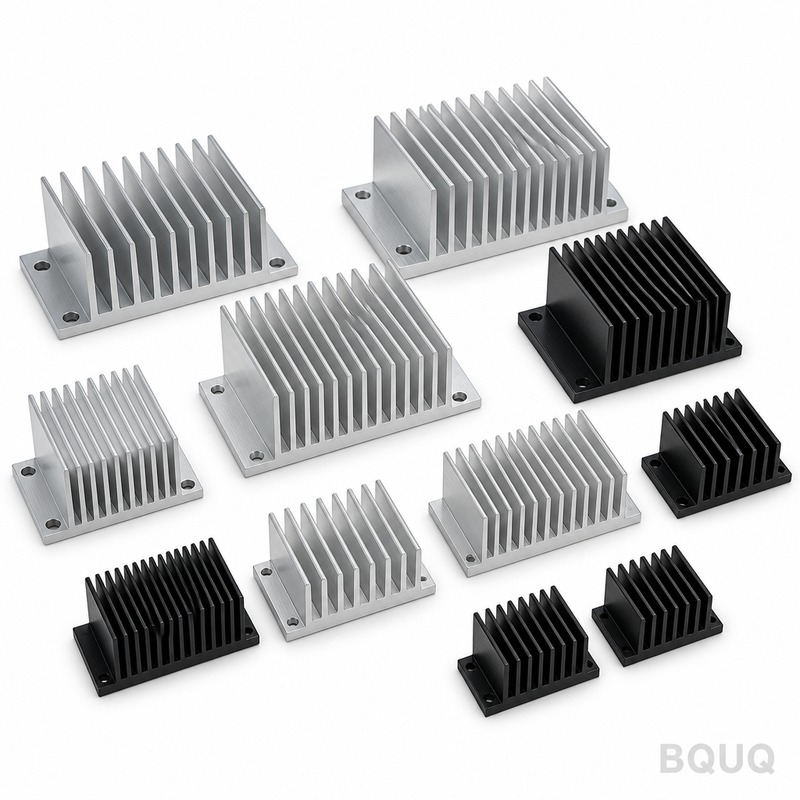
The cost per watt of cooling decreases with TDP, but the absolute system cost increases significantly. For a 300W air-cooled server, the heat sink cost is USD 15-25 (aluminum, 300g, stamped or skived), and the total cooling cost per rack is USD 3,500 for fans and CRAC units. For a 700W liquid-cooled server, the cold plate cost is USD 45-70 (copper, 500g, with brazed fins), the quick disconnects cost USD 30 per pair, and the rack-level CDU costs USD 25,000-40,000. By 2026, for 1500W TDP chips, the cold plate will require micro-machined channels (0.1mm) with a cost of USD 120-180 per unit, and the rack cooling cost will reach USD 60,000. The table below summarizes the cost and performance data across TDP tiers.
| TDP Range | Cooling Method | Component Cost per Server | System Efficiency (PUE) | Rack Density | Typical Lead Time |
| 200-350W | Air (extruded heat sink) | USD 15-25 | 1.4-1.6 | 15-20 kW | 2-3 weeks |
| 350-500W | Air (vapor chamber + high CFM fan) | USD 35-50 | 1.3-1.5 | 25-35 kW | 4-6 weeks |
| 500-750W | Direct-to-chip liquid (copper cold plate) | USD 45-70 | 1.15-1.25 | 60-80 kW | 6-8 weeks |
| 750-1000W | Direct-to-chip liquid (micro-channel) | USD 80-120 | 1.10-1.15 | 80-100 kW | 8-10 weeks |
| 1000-1500W | Two-phase immersion or high-flow liquid | USD 150-250 | 1.05-1.10 | 120-150 kW | 12-16 weeks |
What Manufacturing Tolerances Are Required for 2026 Thermal Components?
Precision manufacturing standards are becoming stricter as TDP increases. For air-cooled heat sinks used below 400W, stamped aluminum fins require a flatness tolerance of ±0.15mm and a surface roughness of Ra 1.6µm. For liquid cold plates used at 700W+, BQUQ and peers must hold a baseplate flatness of ±0.05mm across a 100mm x 100mm surface to ensure a 0.05mm bond line with the thermal interface material (TIM). The micro-channel fins (0.2mm width, 1.0mm depth) require CNC machining with a tolerance of ±0.02mm to maintain consistent coolant flow without clogging. The brazing process for copper-nickel joints must achieve a void rate below 2% (verified by X-ray inspection) to prevent hot spots. For immersion cooling tanks, the welded aluminum or stainless steel structure must hold pressure at 1.5 bar with a leak rate below 1 x 10⁻⁶ mbar·L/s. These tolerances are 2-3x tighter than 2020 air-cooling components, which is why many traditional stamping factories without CNC precision capabilities cannot enter this market. BQUQ's 20 years of combined stamping and CNC experience positions it to meet these specs, with in-house CMM inspection for every production lot.
Which Industries Are Adopting Liquid Cooling First?
Hyperscale cloud providers (AWS, Microsoft, Google) are the fastest adopters, representing 70% of liquid cooling demand in 2025, but the 2026 growth will come from colocation providers and enterprise AI labs. Financial services firms running real-time fraud detection models are retrofitting existing air-cooled data halls with rear-door heat exchangers (which cool 60% of the load without changing server internals) as a stopgap. Edge data centers for autonomous driving (which require 5-10kW per rack with 50ms latency) are adopting single-phase immersion because it requires no facility-side piping. The semiconductor fabs themselves are a secondary market: test floors for 1000W GPUs use liquid-cooled test sockets to validate chips before shipping, creating demand for high-precision cold plates with quick-disconnect fittings rated for 10,000 mating cycles. Telecommunications central offices, constrained by 48V DC power and limited floor space, are moving to liquid cooling for 5G core network servers, which will hit 400W TDP by 2026. The common thread is that any application exceeding 30kW per rack, regardless of industry, is now specifying liquid cooling in the RFQ stage.
How Should Engineers Plan for the 2026 Thermal Transition?
Engineers must design for a 1500W TDP future while maintaining backward compatibility with 350W air-cooled racks. The practical recommendation is to adopt a "liquid-ready" architecture: install rack-level manifolds and a CDU (Coolant Distribution Unit) with a capacity of 100kW, even if initial servers are air-cooled. This reduces retrofit costs by 60% later. Second, select cold plates with a standard mounting hole pattern (e.g., 80mm x 80mm, M4 screws) that fits multiple CPU generations, because the cost of re-machining a cold plate is USD 5,000-10,000 in tooling. Third, specify copper (C11000) over aluminum for cold plates above 500W, because copper's thermal conductivity (401 W/m·K vs 237 W/m·K for aluminum) provides a 30% lower thermal resistance, which translates to a 5-7°C lower junction temperature, extending chip life by 20%. Fourth, require suppliers to provide thermal test data (not just simulation) at the actual operating point, as BQUQ does, with a 100-hour burn-in test at 85°C coolant inlet. Finally, budget for 15% higher cooling costs in 2026 vs 2024, but offset this by expecting a 25% reduction in server count for the same AI compute performance.
What Is the Payback Period for Upgrading to Liquid Cooling?
The payback period for a liquid cooling retrofit is 1.5 to 2.5 years, depending on electricity rates and utilization. A 1MW air-cooled data hall operating at 50% load consumes 4,380 MWh per year for IT and 1,752 MWh for cooling (PUE of 1.4). At an industrial electricity rate of USD 0.08/kWh, the annual cooling cost is USD 140,000. Converting to liquid cooling reduces PUE to 1.15, cutting cooling energy to 657 MWh and saving USD 87,600 per year. The retrofit cost for a 1MW hall (including CDU, manifolds, cold plates, and labor) is approximately USD 180,000. Thus, the simple payback is 2.05 years. For new construction, the payback is faster (18 months) because the cost of a liquid-cooled system (USD 200 per kW) is lower than the combined cost of air-cooled CRAC units and raised floors (USD 250 per kW). After 2026, as TDP exceeds 1200W, air cooling becomes technically infeasible, and the payback calculation becomes irrelevant—liquid cooling is the only option. Engineers should note that two-phase immersion has a longer payback (3-4 years) due to fluid replacement costs, so it is recommended only for facilities with high heat density (>150kW per rack) or where water scarcity prohibits evaporative cooling.
FAQ
How Fast Is TDP Growing per Year?
TDP is growing at 15-20% per year for CPUs and 25-30% per year for AI GPUs. A 700W GPU in 2024 will be replaced by a 1000W GPU in 2025 and 1500W by 2026, representing a doubling every 2.5 years.
Can Air Cooling Handle 1000W TDP Chips?
No, standard air cooling cannot handle 1000W TDP. The maximum practical air-cooling limit is 400-450W with a vapor chamber and high-speed fans, and even then, the noise level exceeds 80 dBA and the required airflow of 50 CFM per socket is not feasible at rack scale.
What Is the Cost Difference Between Air and Liquid Cooling per Rack?
Air cooling costs USD 3,000-5,000 per rack (fans, heat sinks, CRAC share), while liquid cooling costs USD 10,000-15,000 per rack (cold plates, manifolds, CDU share). However, liquid cooling allows 4x higher rack density, reducing the per-watt cost by 30%.
Which Coolant Is Recommended for Direct-to-Chip Cooling?
A 25-30% propylene glycol and water mixture is recommended for direct-to-chip cooling because it provides a specific heat capacity of 3.8 kJ/kg·K, freezing point of -15°C, and low corrosion potential for copper. Dielectric fluids are reserved for immersion cooling due to their higher cost.
When Will Immersion Cooling Overtake Direct-to-Chip Cooling?
Immersion cooling will not overtake direct-to-chip cooling before 2028. Direct-to-chip remains dominant because it allows server maintenance without draining fluid, and the coolant cost is 10x lower than dielectric fluids.
How Do Thermal Interface Materials (TIMs) Affect TDP Performance?
TIMs account for 10-15% of total thermal resistance. For 700W+ chips, a liquid metal TIM (indium-gallium) with 0.01 °C·cm²/W conductivity is required, versus 0.05 for traditional paste, to keep the junction-to-case temperature differential below 10°C.
What Is the Lead Time for Custom Liquid Cold Plates?
Typical lead time for a custom liquid cold plate is 6-10 weeks, including design validation (CFD analysis, 1 week), CNC machining of prototypes (2-3 weeks), brazing and leak testing (2 weeks), and production (3-4 weeks). BQUQ offers expedited 4-week lead times for orders above 500 units.
Conclusion
The 2026 thermal management market is defined by one metric: TDP growth above 700W makes liquid cooling mandatory, not optional. The market will grow to USD 27.5 billion, with liquid cooling capturing 45% of new deployments, and precision manufacturers must hold tolerances of ±0.05mm on copper cold plates to remain competitive. For engineering teams, the actionable path is to adopt liquid-ready racks now, specify copper cold plates, and partner with a supplier that has both stamping and CNC capabilities to manage cost and lead time. BQUQ has 20 years of experience in precision metal manufacturing, and we are currently producing cold plates and heat sinks for TDP ranges from 300W to 1000W.
For a detailed thermal simulation or a quote on cold plates, heat sinks, or cooling manifolds, contact our engineering team. We provide 12-hour quoting for standard parts and 48-hour feasibility reviews for custom designs. Email us at sc@bquq.com or reach us on WhatsApp at +86 13713157787. Visit our website at www.bquq.com to download our thermal management white paper and request samples.
Related Articles
- Patent Wars: Intellectual Property Pattern and Risks of Global Hardware Heat Sink Technology
- AI simulation and intelligent manufacturing: the heat sink industry has gone from "trial and proof" to "one time right"
- Automotive Thermal Management Track: How Hardware Heat Sinks Conquered 800V with Smart Cockpit