What Is the Cheapest Material for CNC Machining?
The cheapest material for CNC machining is aluminum 6061-T651, with raw material costs typically ranging from $2.50 to $4.00 per kilogram and total machined part costs starting at $5.00 per piece for simple geometries. For applications where aluminum is unsuitable due to strength or wear requirements, cold-rolled steel (CRS) 1018 is the next most economical option at $1.20 to $2.00 per kilogram, though machining time and tool wear increase overall costs by 20-30% compared to aluminum. The total cost of a CNC machined part is driven less by raw material price and more by machining time, so the cheapest material is the one that machines fastest while meeting your performance specifications.
How Does Raw Material Price Compare Across Common CNC Machining Materials?
Raw material cost is the first filter, but it is not the deciding factor. As of 2025 pricing from major suppliers (McMaster-Carr, OnlineMetals, and Asian mills), the per-kilogram costs for standard stock forms are as follows: aluminum 6061-T651 at $2.50-$4.00, aluminum 7075-T651 at $5.00-$7.50, cold-rolled steel 1018 at $1.20-$2.00, stainless steel 304 at $3.50-$5.50, brass C36000 at $8.00-$12.00, and acetal (POM) at $3.00-$5.00. On a pure material basis, carbon steel is the cheapest, but this advantage disappears when you factor in chip removal rates, tool wear, and surface finishing requirements. For high-volume production, a 20% difference in raw material price is negligible compared to a 50% difference in cycle time.
Why Is Aluminum 6061-T651 the Overall Cheapest Material When Machining?
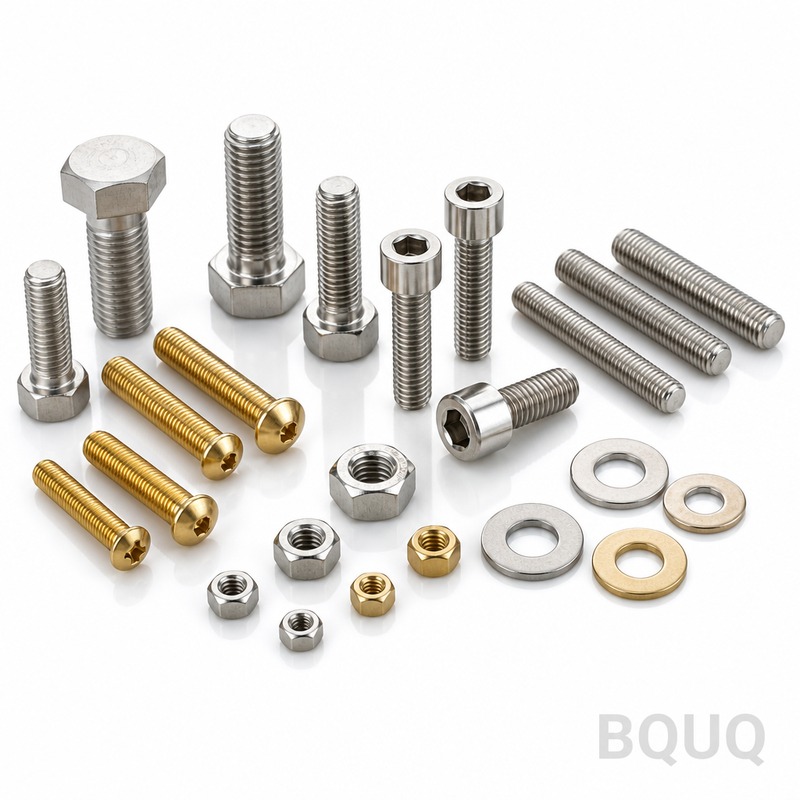
Aluminum 6061-T651 is the cheapest material for CNC machining because it offers an optimal balance of machinability rating, thermal conductivity, and dimensional stability. Its machinability rating is 180% relative to AISI 1212 steel (the 100% baseline), which means cutting speeds can reach 300-600 meters per minute with carbide tooling, reducing cycle times by 30-50% compared to steel. The thermal conductivity of 6061 is 167 W/m·K, allowing heat to dissipate quickly from the cutting zone, which increases tool life to 45-60 minutes per insert edge and permits dry machining in many cases. Additionally, 6061-T651 is readily available in all standard shapes (round bar, square bar, plate, and custom extrusions) with a dimensional tolerance of +/-0.05 mm for standard machining, which is sufficient for 80% of mechanical applications. The material is also fully recyclable, and scrap value (approximately $1.00-$1.50/kg) partially offsets material costs in high-volume production.
Which Materials Should You Avoid if Cost Is the Primary Constraint?
You should avoid stainless steel 304/316, titanium Ti-6Al-4V, and Inconel 718 if cost is your primary constraint, as their machinability ratings are 45%, 22%, and 10% respectively, causing machining time to increase by 2-5 times compared to aluminum. For example, machining a simple 50mm x 50mm x 10mm bracket in aluminum takes 8 minutes at a cost of $12.00 total, while the same bracket in stainless steel 304 takes 20 minutes at a cost of $28.00, and in Inconel 718 it takes 45 minutes at $85.00. The raw material cost for these metals is only 1.5-3 times higher than aluminum, but the machining labor at $60-$80 per hour (typical for Dongguan CNC shops in 2025) dominates the final price. Additionally, these materials require specialized coolant systems, lower feed rates (0.05-0.15 mm/tooth vs. 0.20-0.40 mm/tooth for aluminum), and more frequent tool changes, adding 15-20% in tooling consumables.
When Does a More Expensive Material Become the Cheaper Choice?
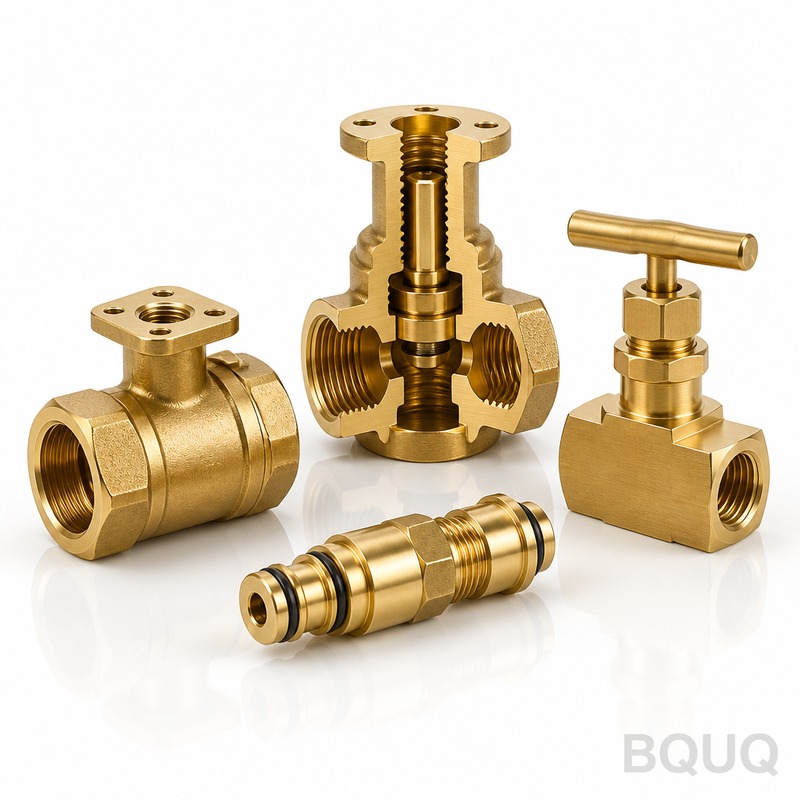
A more expensive material becomes the cheaper choice when post-machining operations such as anodizing, plating, heat treatment, or secondary assembly would exceed the material cost difference. For instance, if you choose aluminum 6061 for a shaft application that requires a hardness above HRC 60, you would need hard anodizing at $0.50-$1.00 per part plus a 2-day lead time, whereas switching to pre-hardened steel 4140 (HRC 28-32) at $3.00/kg eliminates that operation entirely. Similarly, for parts that must withstand operating temperatures above 150°C, aluminum loses strength (yield drops from 276 MPa to 120 MPa), so acetal (POM) or PEEK would fail or creep, and a stainless steel 304 part becomes the cost-optimal choice despite higher machining costs. Always calculate the total landed cost: raw material + machining time + post-processing + scrap/rework rate + logistics, not just the material price per kilogram.
How Much Does Tooling and Setup Cost Affect Material Selection?
Tooling and setup costs affect material selection by adding a fixed cost of $50-$150 per job for standard 3-axis CNC work, which includes CNC programming ($30-$80 per hour), fixture design ($20-$50), and machine setup ($40-$60 per hour). For prototype runs (1-10 pieces), this fixed cost is spread over fewer parts, so material price per piece is less relevant; a $5.00/kg material difference only changes total cost by $0.50-$2.00 per piece. For production runs (100-1000 pieces), the setup cost per piece drops to $0.50-$1.50, and the material cost becomes a larger fraction (30-50%) of total cost, making aluminum 6061 the default choice unless design requirements dictate otherwise. Additionally, material hardness affects tooling wear: machining aluminum typically consumes 1-2 carbide inserts per 100 parts, while stainless steel consumes 5-8 inserts, adding $15-$25 per 100 parts in tooling cost.
What Is the Real Cost Breakdown for a Typical CNC Machined Part?
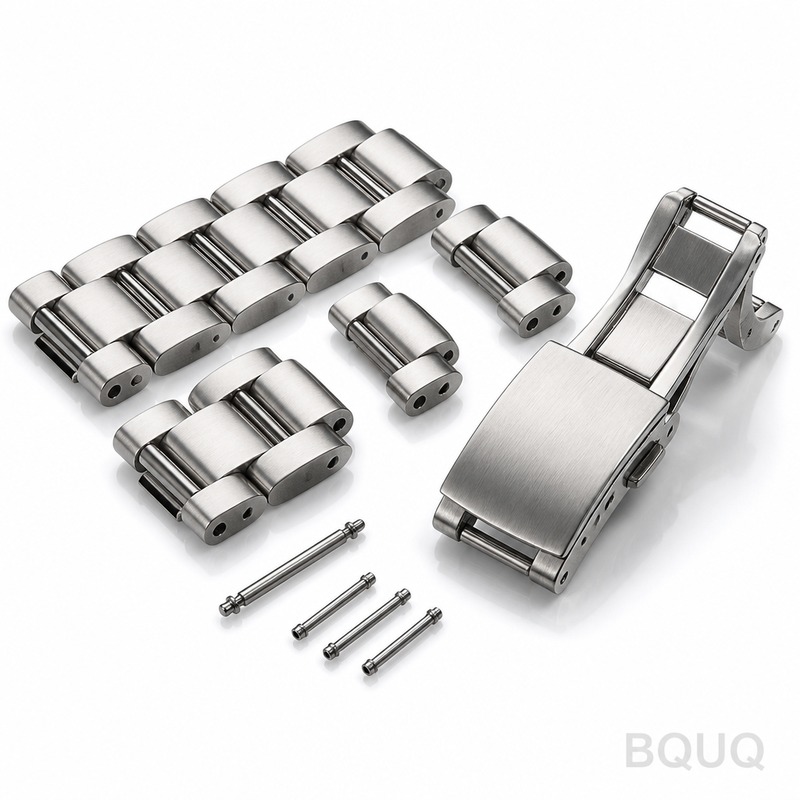
The real cost breakdown for a typical CNC machined part (e.g., a 40mm x 40mm x 20mm aluminum 6061 bracket, quantity 500) is as follows: raw material at $0.80 per piece (0.2 kg), machining time at 6 minutes per piece at $60/hour shop rate equals $6.00, setup amortized at $0.30 per piece, and deburring/inspection at $0.50 per piece, totaling $7.60 per piece. The same part in cold-rolled steel 1018 would be $0.40 for material but 10 minutes of machining at $8.00, totaling $9.20 per piece, a 21% increase. For a high-volume production of 10,000 pieces, the aluminum price drops to $6.80 per piece due to reduced setup amortization and optimized toolpaths, while steel remains $8.50 per piece. The table below summarizes the comparative costs for a standard part at 500-piece quantity.
| Material | Raw Material Cost per kg (USD) | Machinability Rating (% of 1212 Steel) | Typical Cycle Time for 40mm Bracket (min) | Total Cost per Part at 500 pcs (USD) | Surface Finish Achievable (Ra, um) |
| Aluminum 6061-T651 | 2.50 - 4.00 | 180% | 6 | 7.60 | 0.8 - 1.6 |
| Cold-Rolled Steel 1018 | 1.20 - 2.00 | 70% | 10 | 9.20 | 1.6 - 3.2 |
| Stainless Steel 304 | 3.50 - 5.50 | 45% | 20 | 18.50 | 1.6 - 3.2 |
| Brass C36000 | 8.00 - 12.00 | 200% | 5 | 11.80 | 0.4 - 0.8 |
| Acetal (POM) | 3.00 - 5.00 | 200% | 5 | 8.40 | 0.4 - 0.8 |
| Titanium Ti-6Al-4V | 25.00 - 35.00 | 22% | 45 | 52.00 | 1.6 - 3.2 |
How Can You Reduce Machining Costs Regardless of Material Choice?
You can reduce machining costs by up to 40% through design for manufacturability (DFM) practices: specify tolerances no tighter than +/-0.1 mm unless functionally required, avoid deep pockets (depth-to-width ratio above 3:1), and eliminate sharp internal corners which require slow feed rates and small end mills. Using standard stock sizes (e.g., 25mm, 50mm, 75mm diameter bars) minimizes material waste and saw cutting time, while designing parts that can be machined in one setup by keeping all features on one side reduces fixture costs by 30%. For quantities above 200 pieces, consider converting to a near-net-shape process like die casting or metal stamping for aluminum, which reduces machining time to under 1 minute per part, but note that tooling costs $3,000-$15,000 and lead times are 4-8 weeks. Additionally, grouping multiple parts into one larger blank (nested machining) reduces cycle time by 15-25% because tool changes and rapid traverses are shared across parts.
FAQ Section
Can Plastic Be Cheaper Than Aluminum for CNC Machining?
Yes, acetal (POM) can be slightly cheaper than aluminum in total cost because its machinability rating is 200% and it can be cut at 600-900 meters per minute with no coolant required, reducing cycle time by 20%. However, acetal has a maximum service temperature of 90°C and a tensile strength of 70 MPa (vs. 276 MPa for aluminum), so it is only cost-effective for non-load-bearing, low-temperature parts.
What Is the Cheapest Steel for CNC Machining?
Cold-rolled steel 1018 is the cheapest steel for CNC machining at $1.20-$2.00 per kilogram, but its machinability rating of 70% means cycle times are 40% longer than aluminum. If you need better machinability in steel, choose 12L14 leaded steel at $2.50-$3.50/kg, which has a 160% machinability rating and cuts nearly as fast as aluminum.
Does Material Hardness Affect CNC Machining Cost?
Yes, material hardness directly affects cost because harder materials require slower spindle speeds (e.g., 100-200 RPM for hardened steel vs. 800-1200 RPM for aluminum) and more expensive tooling (CBN or ceramic inserts at $10-$30 each vs. $3-$8 carbide). A material with hardness above HRC 40 will increase machining time by 2-3 times and tooling cost by 50-100%, making it the most significant cost driver after geometry.
What Is the Minimum Order Quantity for Cheap CNC Machining?
The minimum order quantity (MOQ) is typically 1 piece for prototype CNC machining, but the per-piece cost at MOQ 1 is 5-10 times higher than at MOQ 500 due to setup amortization. For the lowest cost per piece, order at least 200-500 pieces, as this allows the setup cost of $50-$150 to be spread across enough parts to become negligible (below $1.00 per piece).
Are There Hidden Costs When Choosing the Cheapest Material?
Yes, hidden costs include scrap rate (aluminum has a 2-3% scrap rate vs. 5-8% for steel due to burr formation), surface finishing (anodizing aluminum adds $0.50-$2.00 per part, while steel requires plating or painting at $1.00-$3.00), and shipping weight (aluminum is 2.9 g/cm3 vs. steel at 7.85 g/cm3, so steel parts cost 2-3 times more to ship internationally). Always request a total landed cost quotation that includes freight and duties when comparing materials.
Can I Use Recycled or Scrap Material to Reduce Cost?
Using recycled aluminum billet can reduce raw material cost by 10-15%, but it introduces risks of inconsistent alloy composition and porosity, which can increase scrap rate and machining issues. For critical applications requiring certification (e.g., aerospace or medical), recycled material without full traceability is not recommended, as it may fail quality audits.
When Is It Worth Paying More for Aluminum 7075 Instead of 6061?
Aluminum 7075-T651 is worth paying 2 times more when your part requires a yield strength above 450 MPa (vs. 276 MPa for 6061) or higher fatigue resistance, typically for aerospace brackets, race car components, or high-load structural parts. However, 7075 is more difficult to anodize and has lower corrosion resistance, so for most industrial applications, 6061 is the cost-optimal choice.
In conclusion, aluminum 6061-T651 is the cheapest material for CNC machining in the majority of applications because its high machinability and low material cost result in the lowest total manufactured cost per part. For high-temperature, high-wear, or high-strength requirements, switch to cold-rolled steel 1018 for economy or stainless steel 304 when corrosion resistance is mandatory, accepting a 20-50% cost increase. Perform a total cost analysis including machining time, tooling, post-processing, and logistics before finalizing your material selection.
For a precise quotation on your specific part geometry, BQUQ provides 12-hour quoting with DFM feedback from our 20-year-experience engineering team in Dongguan. Send your 3D drawings and quantities to sc@bquq.com or contact us on WhatsApp at +86 13713157787, or visit www.bquq.com for our full CNC machining, metal stamping, and heat sink manufacturing capabilities.