What Is the Difference Between 3-Axis, 4-Axis and 5-Axis CNC Machining?
The primary difference lies in the number of axes of motion: 3-axis machines move the cutting tool linearly along X, Y, and Z planes, 4-axis adds a rotating A-axis (around X) or B-axis (around Y), and 5-axis adds two rotational axes, typically allowing the tool or workpiece to tilt and rotate simultaneously. In practical terms, a 3-axis machine can only cut from a fixed orientation (usually straight down), a 4-axis can rotate the part to present new faces for machining without resetting, and a 5-axis can orient the tool at virtually any angle to reach complex undercuts and sculpted surfaces. For a factory like BQUQ with 20 years in CNC machining, the choice dictates your part geometry, tolerance capabilities, surface finish, and unit cost.
What Exactly Does Each Axis Number Mean in Terms of Motion?
A 3-axis CNC machine (typically a vertical machining center) operates on three linear axes: X (left-right), Y (front-back), and Z (up-down). The cutting tool moves in these three directions while the workpiece remains stationary on the table. This setup is ideal for flat surfaces, simple pockets, drilled holes, and 2.5D features. However, it cannot machine the underside of a part or angled sidewalls without repositioning the workpiece manually.
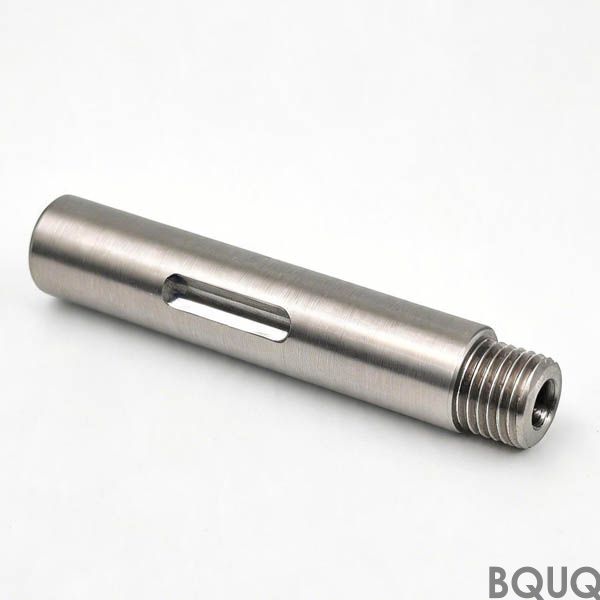
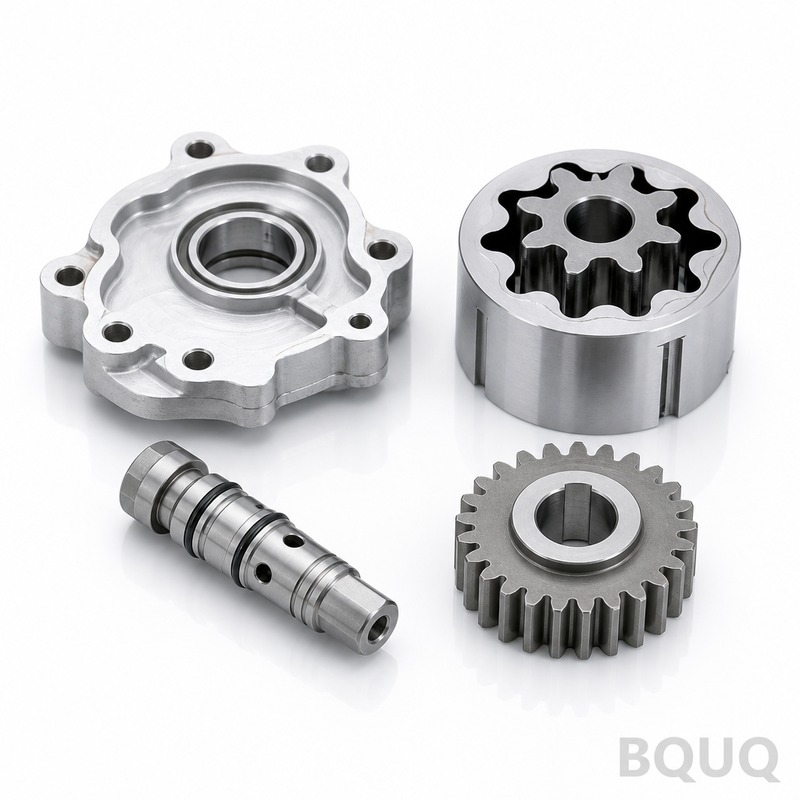
A 4-axis machine adds one rotational axis, usually the A-axis (rotation around the X-axis) or the B-axis (rotation around the Y-axis). This allows the workpiece to rotate, letting the tool reach multiple faces of the part in a single setup. Common applications include machining cylindrical parts, gear teeth, and features on the side of a block. The fourth axis significantly reduces setup time compared to flipping the part manually on a 3-axis machine.
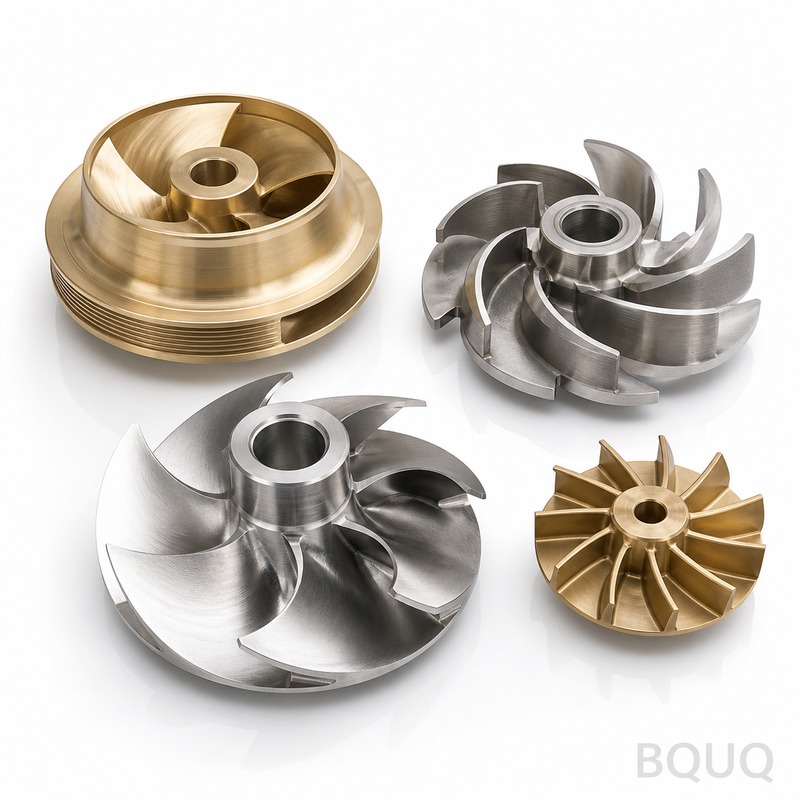
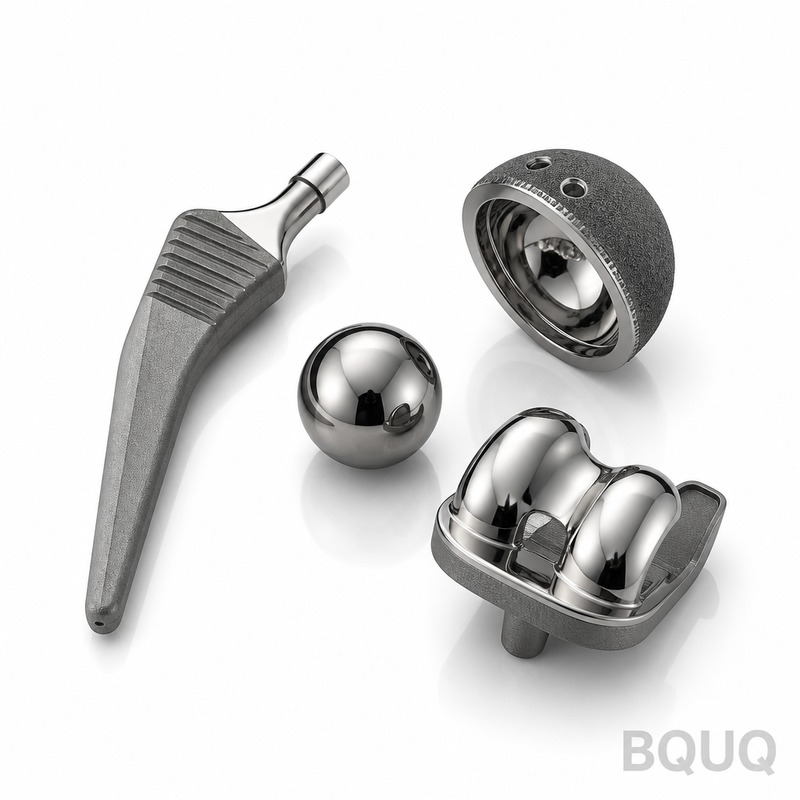
A 5-axis machine adds two rotational axes, typically the A-axis and the C-axis (rotation around the Z-axis). This provides the ability to tilt the tool or the workpiece in two directions simultaneously. True 5-axis machining (simultaneous or full 5-axis) allows the tool to maintain a constant tangential relationship to the cutting surface, enabling the production of complex contoured parts like turbine blades, impellers, and medical implants. There is also 3+2 machining, which uses the two rotational axes to lock the part into a fixed tilted position before standard 3-axis machining.
How Does Part Geometry Determine the Minimum Number of Axes Required?
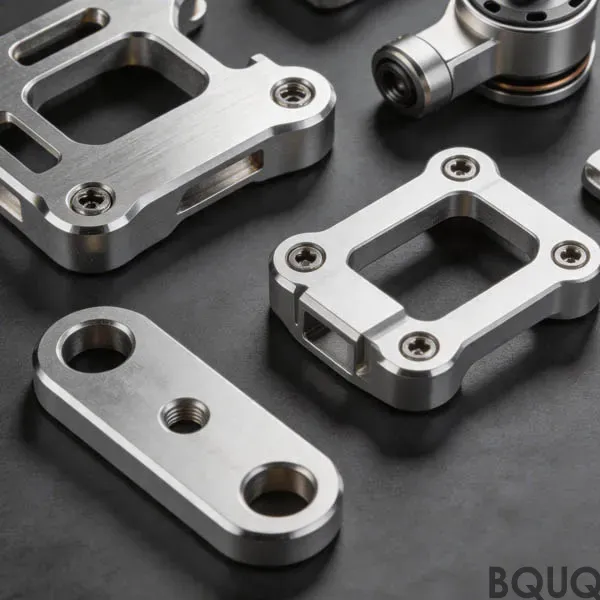
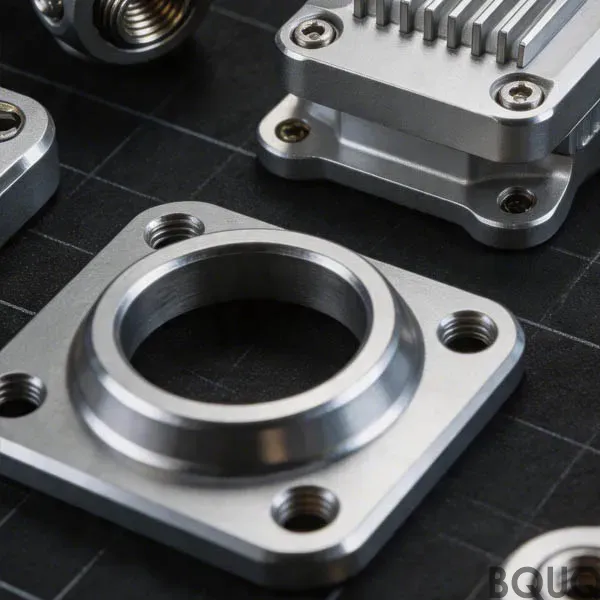
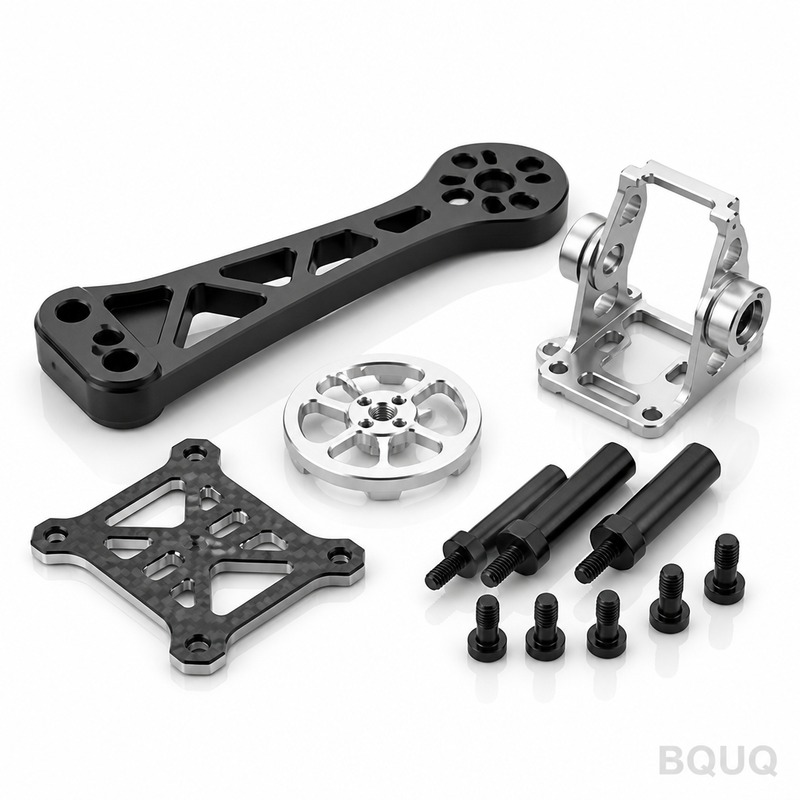
If your part is a simple block, bracket, or plate with drilled holes and flat pockets, a 3-axis machine is almost always sufficient and the most economical. For parts that require features on multiple faces, like a manifold or a connector housing, a 4-axis machine is often the best choice because it allows you to machine five out of six sides in one setup, leaving only the bottom face unfinished. If the part has undercuts, angled holes, complex contours, or freeform surfaces, you will need at least a 5-axis machine. For example, a prosthetic knee joint or a mold cavity for a car bumper cannot be machined on a 3-axis without multiple complex fixtures and manual repositioning, which is time-consuming and error-prone.
What Tolerances Can Each Axis Configuration Achieve?
Tolerance capability is not strictly defined by the number of axes but by the machine's precision, rigidity, and thermal stability. However, as a rule of thumb, more axes introduce more variables and potential for cumulative error if not calibrated correctly. A high-quality 3-axis machining center can hold a positional tolerance of ±0.005 mm (0.0002 inches) and a repeatability of ±0.0025 mm. A 4-axis machine with a quality rotary table typically holds ±0.01 mm on the rotational axis, which translates to arc accuracy of roughly ±0.005 mm on a 50 mm radius. A 5-axis machine, if calibrated with a ballbar and laser interferometer, can achieve the same linear tolerances as a 3-axis, but the rotational accuracy is critical; a slight error in the trunnion angle can amplify over the part length. At BQUQ, we quote standard machining tolerances at ±0.01 mm for all axis configurations, but we can hold ±0.005 mm on critical features for 3-axis and 4-axis parts, and ±0.008 mm for 5-axis parts, provided the material is stable and the ambient temperature is controlled.
Why Does 5-Axis Machining Cost More per Hour Than 3-Axis?
The primary cost driver is the machine tool itself. A new, reliable 3-axis vertical machining center from a top-tier brand costs between $60,000 and $120,000. A 4-axis machine with a built-in rotary table costs approximately 20-30% more, ranging from $80,000 to $150,000. A 5-axis machine, especially a full simultaneous trunnion-style model, starts at $200,000 and can easily exceed $500,000 for large-format or high-speed models. This higher capital cost translates directly into a higher shop rate. In our facility in Dongguan, the average CNC machining hourly rate is $45-60 for 3-axis, $60-75 for 4-axis, and $85-120 for 5-axis. Additionally, 5-axis requires more skilled programmers and operators, and CAM software for 5-axis simultaneous toolpaths is significantly more expensive, adding to the overall cost.
Which Industries Require 5-Axis Machining Over 3-Axis or 4-Axis?
Aerospace is the largest driver for 5-axis machining because components like turbine blades, structural bulkheads, and landing gear parts have complex aerodynamic curves and require high-strength materials like titanium and Inconel, which are difficult to machine. The medical industry requires 5-axis for orthopedic implants (hip stems, knee replacements) and surgical instruments that have freeform anatomical shapes. The automotive industry uses 5-axis for prototype and low-volume production of engine blocks with angled cylinders, turbocharger housings, and complex mold dies for body panels. In contrast, the electronics industry primarily uses 3-axis and 4-axis for heat sinks, frames, and connectors, because these parts are prismatic and cost-sensitive. At BQUQ, we produce high-volume heat sinks and metal stampings on 3-axis and 4-axis machines, while reserving our 5-axis capacity for complex prototypes and mold making.
When Should You Choose 3+2 Machining Instead of Full 5-Axis?
3+2 machining, also known as positional 5-axis, uses the two rotational axes to tilt the workpiece to a fixed angle and then performs standard 3-axis cutting. You should choose 3+2 when the part has multiple flat or angled faces that need machining but does not require continuous, curving tool paths. This strategy is faster and more rigid than full 5-axis because the tool is always vertical relative to the cutting face, allowing for shorter, stiffer tools and higher metal removal rates. Full 5-axis (simultaneous) is necessary only when the surface itself is curved and the tool must maintain a constant angle to the material to achieve the correct finish, such as on a turbine blade. For example, a hydraulic valve body with ports at 30, 45, and 60 degrees is perfect for 3+2, while a prosthetic socket requires full 5-axis.
How Do Setup Time and Lead Times Compare Across the Three?
Setup time is a critical factor in total cost. On a 3-axis machine, a part with six faces requires at least three to four setups, involving vices, fixtures, and manual probing, which can take 2-4 hours per setup. A 4-axis machine can machine five faces in one setup, reducing setup time to about 1 hour. A 5-axis machine, particularly with a trunnion table, can machine all six faces in a single setup in many cases, with setup times under 30 minutes. This reduction leads to faster lead times and better accuracy, as the part is not re-referenced. For a typical precision component, a 3-axis job might have a 2-week lead time, a 4-axis job 10 days, and a 5-axis job 7 days, assuming the programming is already verified. However, programming time for 5-axis is longer initially; a simple part might take 2 hours to program on 3-axis but 8 hours on 5-axis.
What Are the Practical Cost Differences for a Standard Part?
To illustrate the cost difference, consider a 100 mm x 100 mm x 50 mm aluminum block requiring 20 drilled holes, one pocket, and two angled faces. The table below shows estimated unit costs for a batch of 100 pieces, including setup and programming amortization, at BQUQ's standard rates.
| Axis Configuration | Machine Hourly Rate (USD) | Setup Time (Hours) | Cycle Time per Part (Minutes) | Estimated Unit Cost (USD) | Typical Lead Time (Days) |
| 3-Axis | $50 | 4 | 12 | $14.50 | 10 |
| 4-Axis | $65 | 1.5 | 9 | $15.80 | 8 |
| 5-Axis (3+2) | $95 | 0.5 | 6 | $18.20 | 6 |
| 5-Axis (Full) | $120 | 0.5 | 4 | $22.50 | 5 |
As the data shows, the 5-axis machine has a lower cycle time but a higher hourly rate, resulting in a higher unit cost for this relatively simple part. For a complex part with contoured surfaces, the 5-axis would be cheaper because it would be impossible or require excessive manual work on a 3-axis machine.
FAQ
Can a 3-Axis Machine Be Retrofitted to a 4-Axis?
Yes, a 3-axis machine can be retrofitted with a bolt-on rotary table (A-axis) and a fourth-axis drive kit, costing between $10,000 and $25,000 depending on table size (e.g., 150 mm to 300 mm chuck). This upgrade requires a CNC controller that supports a fourth axis, which many modern controllers already do. However, the machine's Z-axis travel and spindle clearance may limit the size of the rotatable part.
What Is the Maximum Part Size for a 5-Axis Machine?
Typical 5-axis vertical machining centers have a working envelope of about 500 mm x 400 mm x 400 mm (X, Y, Z) with a rotary table diameter of 250-320 mm. For larger parts, horizontal 5-axis machines or gantry-type machines are used, which can handle parts up to 2000 mm in length, but the machine cost increases exponentially. At BQUQ, our standard 5-axis capacity is up to 600 mm x 500 mm x 400 mm.
How Does Tool Deflection Affect Tolerance on a 5-Axis Machine?
Tool deflection is more critical on 5-axis machines because the tool is often angled, increasing the effective overhang and bending moment. For example, a 6 mm end mill extended 30 mm will deflect approximately 0.02 mm under a 200 N cutting force, which can be reduced by using shorter tools or reducing radial depth of cut. In 5-axis finishing passes, we typically reduce feed rates by 20-30% compared to 3-axis to maintain the same surface finish.
Which Axis Configuration Is Best for High-Volume Production?
For high-volume production of simple parts, a 3-axis machine is best because it has the lowest hourly rate and the fastest spindle acceleration for simple vertical operations. For high-volume production of parts with features on multiple sides, a 4-axis machine is often more efficient because it eliminates manual indexing, reducing labor cost and human error. Full 5-axis is rarely used for high-volume production unless the part geometry is impossible to make otherwise, due to the high machine rate.
Can 5-Axis Machining Improve Surface Finish Compared to 3-Axis?
Yes, 5-axis machining can significantly improve surface finish because the tool can be tilted to maintain a constant cutting speed and effective rake angle. For example, a ball nose cutter on a 3-axis machine has a zero cutting speed at the center point, causing material rubbing; on a 5-axis, the tool is tilted to use the side of the ball, achieving a finish of Ra 0.2 µm versus Ra 0.8 µm on 3-axis. This is why 5-axis is preferred for mold polishing and optical components.
What Are the Main Disadvantages of 4-Axis Machining?
The main disadvantage is that the part cannot be machined on the face that is clamped to the rotary table, so that face requires a second operation if it has features. Additionally, the rotary table adds height to the work envelope, reducing the maximum part height that can be machined. The rotary axis also requires periodic calibration and can introduce chatter if the part is not balanced.
Conclusion
Choosing between 3-axis, 4-axis, and 5-axis CNC machining is a decision based on part geometry, required tolerances, production volume, and budget. For flat and simple parts, 3-axis is the most cost-effective. For parts with multiple faces, 4-axis reduces setups and improves accuracy. For complex contours and undercuts, 5-axis is not just an option but a necessity. At BQUQ, we operate all three configurations and can guide you to the most efficient manufacturing strategy for your specific component. We provide 12-hour quoting for your drawings and parts, ensuring you get an accurate cost breakdown and lead time immediately. For a free consultation, email us at sc@bquq.com, contact us on WhatsApp at +86 13713157787, or visit our website at www.bquq.com.