What Is the Difference Between CNC Turning and CNC Milling? Process Selection Guide
CNC turning and CNC milling are the two most common subtractive manufacturing processes, and the primary difference lies in their kinematics: in turning, the workpiece rotates against a stationary cutting tool, while in milling, the cutting tool rotates against a stationary (or slowly moving) workpiece. This fundamental distinction dictates that turning is optimal for cylindrical, symmetrical parts (like shafts and bushings) with tolerances down to ±0.005 mm, whereas milling excels at producing prismatic, complex geometries (like brackets and housings) with tolerances of ±0.01 mm. For a factory engineer, the selection is not about which is "better" but which process matches your part's rotational symmetry, feature complexity, and required production volume.
How Do the Cutting Mechanics Differ Between Turning and Milling?
In CNC turning, the workpiece is chucked into a spindle and rotates at a controlled RPM (typically 1,000 to 6,000 RPM for aluminum), while a single-point cutting tool moves linearly along two axes (X and Z) to remove material. This continuous cutting action produces a helical tool path that results in excellent surface finish (Ra 0.4 to 0.8 µm) and high concentricity because the part is machined in a single setup without re-clamping. In contrast, CNC milling uses a multi-point rotating cutter (end mill, face mill, or drill) that moves across a stationary workpiece along three or more axes (X, Y, Z, plus optional A and B rotary axes). The cutting is intermittent, with each tooth entering and exiting the material, which creates a characteristic scalloped surface finish (typically Ra 1.6 to 3.2 µm) and generates greater cutting forces that require more rigid fixturing.
The chip formation also differs significantly. In turning, the cutting speed is constant across the diameter because the workpiece surface speed is directly tied to the spindle RPM and part radius. In milling, the chip thickness varies from zero to maximum as each flute rotates, which can cause work hardening on stainless steels and requires careful feed-per-tooth calculations (typically 0.05 to 0.15 mm/tooth for aluminum). This difference in mechanics affects tool wear: turning inserts last longer (approximately 30 to 45 minutes of cutting time per edge on hardened steel) because of continuous heat dissipation, while milling cutters wear unevenly due to thermal cycling and impact loading.
What Geometries Are Best Suited for CNC Turning Versus Milling?
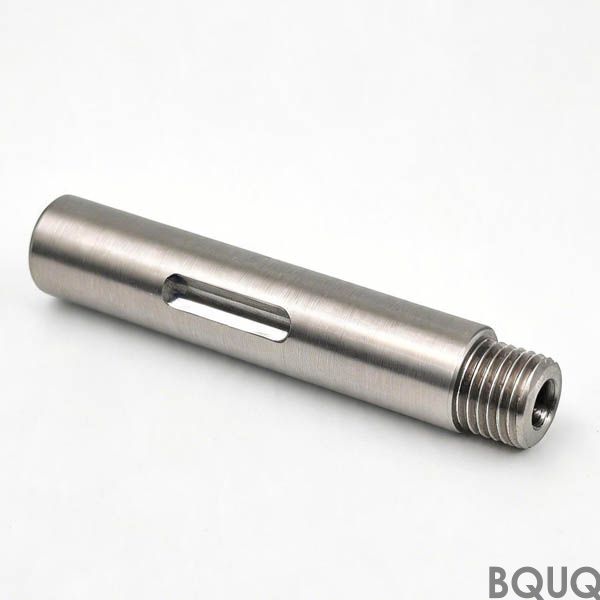
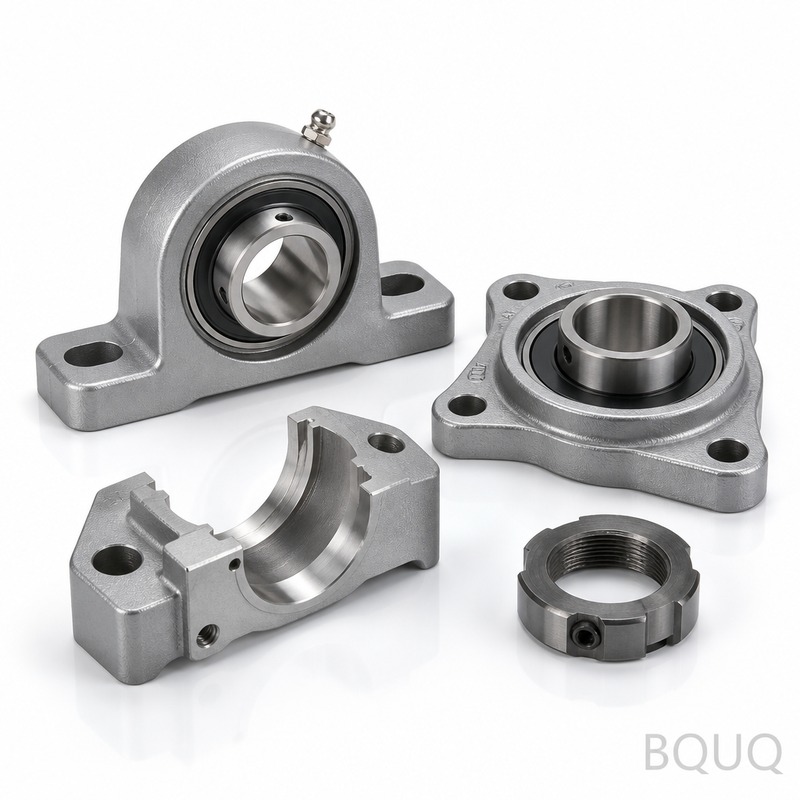
CNC turning is the clear choice for any part with rotational symmetry, meaning the geometry is identical around a central axis. This includes shafts, pins, rollers, pulleys, bushings, and threaded fasteners. Modern CNC lathes with live tooling can also perform off-center drilling, milling, and tapping in a single setup, enabling complex parts like hydraulic valve bodies or motor shafts with keyways to be completed without transfer to a second machine. However, turning cannot efficiently produce non-cylindrical features such as square pockets, deep slots on flat surfaces, or complex 3D contoured cavities.
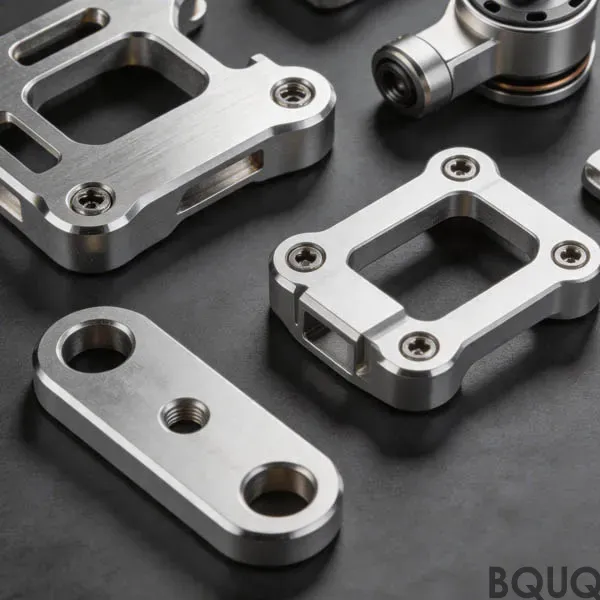
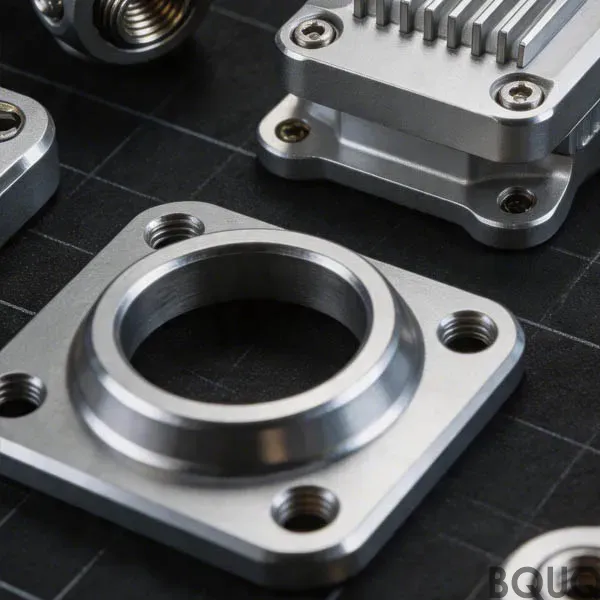
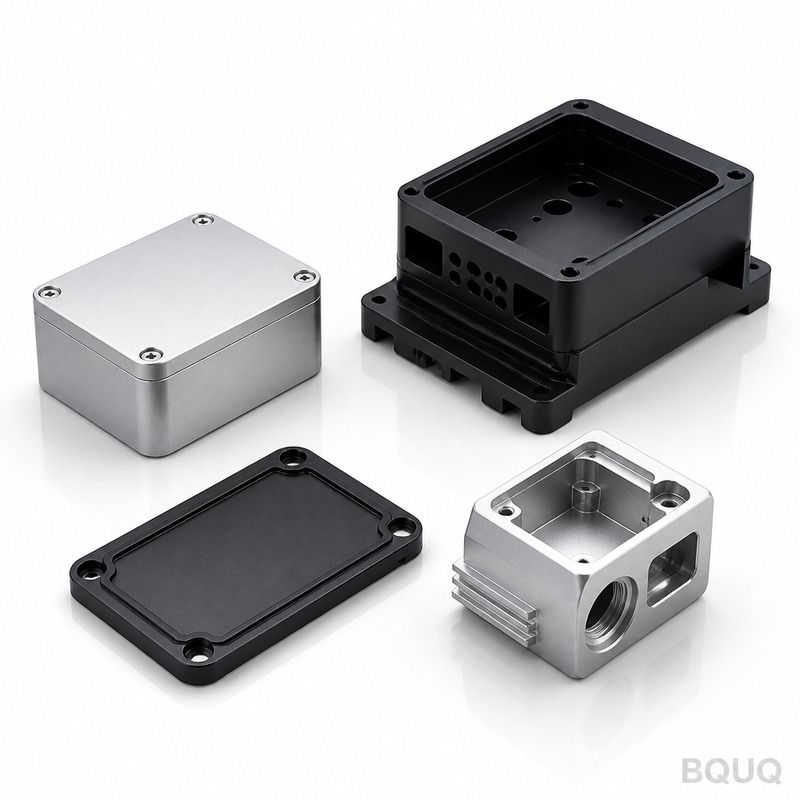
CNC milling is mandatory for prismatic parts defined by flat surfaces, square corners, pockets, bosses, and complex freeform contours. Examples include gear housings, heat sink bases, machine frames, and mold inserts. A 3-axis mill can handle flat parts with 2.5D features, while 5-axis milling can produce undercuts and compound-angle surfaces that are impossible on a lathe. The practical rule of thumb: if you can spin the part in a chuck and every feature is concentric to the spindle axis, choose turning. If the part has multiple flat faces, holes on different planes, or requires a rectangular footprint, choose milling.
Which Process Achieves Better Tolerances and Surface Finishes?
CNC turning generally achieves tighter tolerances and finer surface finishes than milling due to the continuous cutting action and the inherent rigidity of a spinning workpiece against a fixed tool. A precision CNC lathe can hold a dimensional tolerance of ±0.005 mm (0.0002 inches) on diameters and ±0.013 mm on lengths, with a surface finish of Ra 0.2 µm achievable with a wiper insert and proper coolant. Hard turning (of materials over 45 HRC) can replace grinding for many applications, holding roundness within 0.002 mm.
CNC milling, while still precise, typically holds tolerances of ±0.013 mm to ±0.025 mm (0.0005 to 0.001 inches) on machined features, with surface finishes of Ra 0.8 µm to 1.6 µm under standard conditions. The limitation is caused by tool deflection (a 10 mm end mill can deflect 0.02 mm under a 200 N radial load) and the intermittent cutting nature that induces micro-vibration. For high-precision milling of aluminum, using a high-speed spindle (20,000 RPM) and climb milling can achieve Ra 0.4 µm, but this requires careful tool balancing and minimum-quantity lubrication. The table below summarizes the key process capabilities.
| Process Parameter | CNC Turning | CNC Milling |
| Typical Tolerance | ±0.005 mm | ±0.013 mm |
| Surface Finish (Ra) | 0.2 to 0.8 µm | 0.8 to 3.2 µm |
| Part Size Range | Ø1 mm to Ø500 mm | 10 mm to 2000 mm |
| Spindle Speed | 1,000 to 6,000 RPM | 8,000 to 20,000 RPM |
| Tool Cost per Part | Low (single insert) | High (multiple cutters) |
| Setup Time | 15 to 30 minutes | 30 to 90 minutes |
| Cycle Time (simple part) | 30 to 90 seconds | 2 to 5 minutes |
How Does Material Selection Affect the Choice Between Turning and Milling?
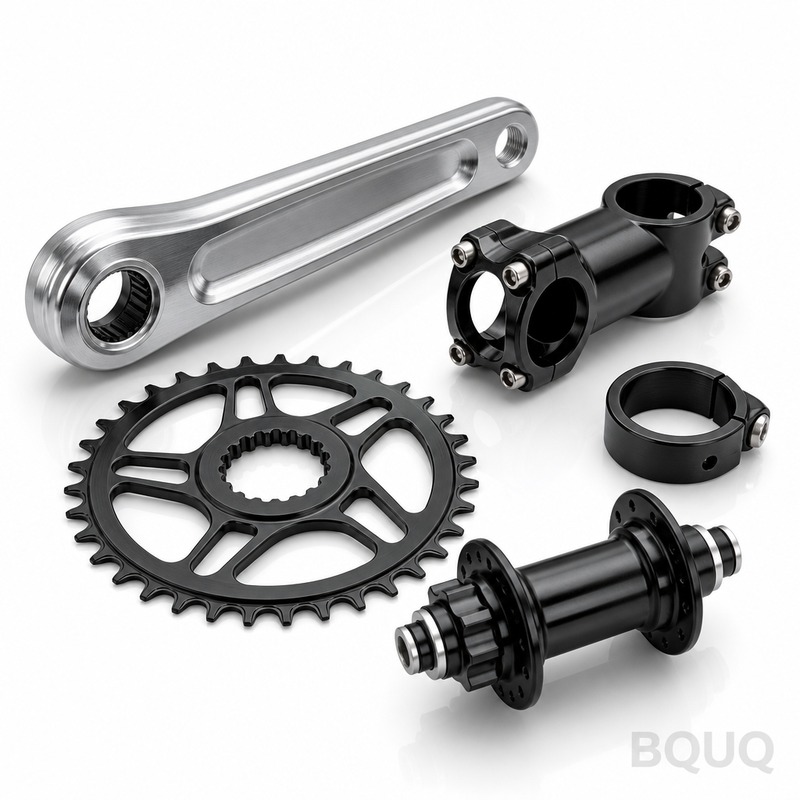
Material properties significantly influence process selection because of how they interact with the cutting mechanics. For turning, materials with good machinability ratings (like 1215 steel, 6061-T6 aluminum, and free-cutting brass) are ideal because the continuous chip flow reduces tool wear and prevents built-up edge. For example, turning 6061-T6 aluminum at 180 m/min surface speed produces a mirror finish with a standard carbide insert, and cycle times are 20% faster than milling the same material due to the higher metal removal rate (up to 40 cm³/min).
For milling, the material's hardness and work-hardening tendency are critical. Stainless steels (304/316) are problematic in milling because they strain-harden rapidly, causing edge build-up and premature tool failure; this is why we recommend turning 316 stainless steel with a 0.8 mm nose radius insert rather than milling it, unless a 5-axis machine with high-pressure coolant is available. Titanium (Ti-6Al-4V) is another case: milling requires low speeds (30 to 50 m/min) and high feed rates to avoid heat-induced tool failure, while turning can run slightly faster due to better heat dissipation into the chip. For materials over 45 HRC (like hardened die steel), milling requires ceramic or CBN inserts at high speeds, while turning can use CBN wiper inserts to achieve grinding-level finishes directly.
When Should You Choose CNC Turning Over CNC Milling for Cost Efficiency?
You should select CNC turning when the part geometry has a length-to-diameter ratio under 10:1 and requires high-volume production, because a CNC lathe can produce a simple bushing in 45 seconds versus 3 minutes on a mill, which translates to a 75% reduction in cycle time. For batches of 1,000 pieces, the per-part cost difference is substantial: turning a Ø20 mm steel pin costs approximately $0.35 per part including tooling, while milling the same pin from a square bar costs $1.20 per part due to longer cycle time and higher tool consumption. Additionally, turning generates a continuous chip that is easier to recycle, and the machine uses less power (approximately 7.5 kW for a Ø50 mm part versus 15 kW for milling) because the material removal is more efficient.
However, turning becomes less economical when the part requires secondary operations (like cross holes or flats) that cannot be done with live tooling. In that case, the cost of a second setup on a mill adds $8 to $15 per part in labor and transfer time. Our engineering recommendation is to use a turn-mill center (a lathe with milling capability) for parts with up to 80% rotational symmetry, as this reduces total cost by 30% compared to two separate machines. For purely prismatic parts, milling is always the cost leader because a single 3-axis operation can complete the part without needing a lathe at all.
Why Does Part Volume Influence the Selection of Turning or Milling?
Part volume determines whether the upfront tooling and programming costs are justified. CNC turning has lower setup costs (typically $150 to $300 for a standard collet and insert) and faster programming for simple cylindrical parts, making it ideal for low-volume prototypes (10 to 50 pieces) where the unit cost remains under $5. For high-volume production (above 5,000 pieces), turning with a bar feeder can run unattended, achieving a cycle time of 20 seconds per part, which is critical for automotive fasteners or connector housings.
Milling, on the other hand, has higher setup costs ($300 to $800 for a vice, workholding, and multiple end mills) and programming time (2 to 4 hours for a complex part), but the cost per part decreases dramatically with volume because the tooling is amortized. For a batch of 500 parts, milling a complex bracket costs $4.50 per part, but for 5,000 parts, the cost drops to $1.80 per part due to optimized tool paths and bulk material discounts. The crossover point is usually around 100 to 200 parts: below this, turning is cheaper for cylindrical parts; above this, the faster cycle times of dedicated processes dominate. For mixed geometries, we recommend a cost analysis using the formula: Total Cost = Setup Cost + (Cycle Time × Hourly Rate) + Tooling Cost per Part, where our hourly rate is $75 for turning and $95 for milling in Dongguan.
FAQ
Can a CNC turning center perform milling operations?
Yes, modern CNC turning centers with live tooling (also called turn-mill machines) can perform milling, drilling, and tapping operations on the rotating part. The live tooling spindle runs at up to 6,000 RPM and can machine flats, hexagons, and cross holes in the same setup, reducing total cycle time and eliminating re-clamping errors.
Which process is faster for producing a simple shaft?
CNC turning is significantly faster for a simple shaft, with a cycle time of 30 to 60 seconds including facing, turning, and parting-off, versus 2 to 4 minutes on a mill. The continuous cutting action and single setup on a lathe also improve concentricity and reduce the risk of dimensional drift.
What is the maximum part size for CNC turning?
Our CNC lathes can handle parts up to Ø500 mm in diameter and 1000 mm in length, with a maximum swing over the bed of 550 mm. For larger diameters above 500 mm, we recommend vertical turning centers (VTL) or switching to milling, which can accommodate parts up to 2000 mm in a single setup.
How do I decide between turning and milling for a part with a keyway?
If the keyway is on the outer diameter of a shaft, use a turn-mill center with live tooling to machine the keyway in the same setup as turning, which maintains concentricity. If the keyway is on an internal bore, milling is required because a lathe cannot access the internal surface with a rotating cutter.
Which process produces less material waste?
CNC turning produces less waste for cylindrical parts because the starting stock is a bar with a diameter close to the final part diameter, and the chips are uniform and easy to recycle. Milling from a rectangular block can waste up to 60% of the material, especially for complex pockets, unless you use near-net-shape casting or forging.
Can both processes achieve the same surface finish?
No, turning generally achieves a finer surface finish (Ra 0.2 µm) than milling (Ra 0.8 µm minimum in standard practice) due to the continuous cutting action and the use of wiper inserts. For a mirror finish below Ra 0.1 µm, turning followed by a light polish is more reliable than milling, which leaves scallop marks.
What is the typical lead time for a prototype in either process?
For a simple cylindrical prototype, CNC turning can deliver parts in 24 to 48 hours, while a complex milled part may require 3 to 5 days due to programming and fixturing. At BQUQ, we offer 12-hour quoting and can start production immediately after approval, with standard lead times of 5 to 7 business days for both processes.
Conclusion
The difference between CNC turning and CNC milling is fundamentally about geometry: choose turning for rotational symmetry, tighter tolerances (±0.005 mm), and lower per-part cost at high volumes; choose milling for prismatic features, complex 3D contours, and parts that require multiple flat faces. Our engineers at BQUQ have 20 years of experience in both processes, and we routinely combine them on turn-mill centers to optimize cycle times and cost. If you are uncertain which process suits your part, send us your 3D model and we will provide a process recommendation within 12 hours, without obligation.
For a free quote and engineering consultation, contact us at Email: sc@bquq.com, WhatsApp: +86 13713157787, or visit www.bquq.com.