What Makes Valve Springs the Precision Engine Component Behind Performance?
Valve springs are precision engine components that control the valve train's ability to follow the camshaft profile at high RPM, and their failure directly causes catastrophic engine damage. A typical performance valve spring operates at 600-900 N of seat load, withstands 8,000-12,000 RPM cycling, and must maintain consistent force within ±2% over millions of cycles. The engineering behind these coiled steel components determines whether an engine revs cleanly to its redline or suffers valve float and piston contact.
What Are the Core Functional Requirements of Valve Springs?
Valve springs must perform three simultaneous functions: close the valve completely at rest, control valve motion during lift, and prevent valve float at maximum engine speed. The spring must exert enough force to overcome the inertia of the valve, retainer, and lifter assembly, which can weigh 80-120 grams in a typical DOHC setup. At 10,000 RPM, the valve accelerates at over 100 G, requiring spring loads of 300-450 N at maximum lift. The spring also must resist surge, which is the natural harmonic vibration that occurs when the spring's natural frequency aligns with the camshaft's actuation frequency. Engineers calculate spring surge frequency using the formula f = (d / (π × D² × N)) × √(G / (2 × ρ)), where d is wire diameter, D is mean coil diameter, N is active coils, G is shear modulus, and ρ is material density.
How Are Valve Springs Manufactured to Achieve Precision Tolerances?
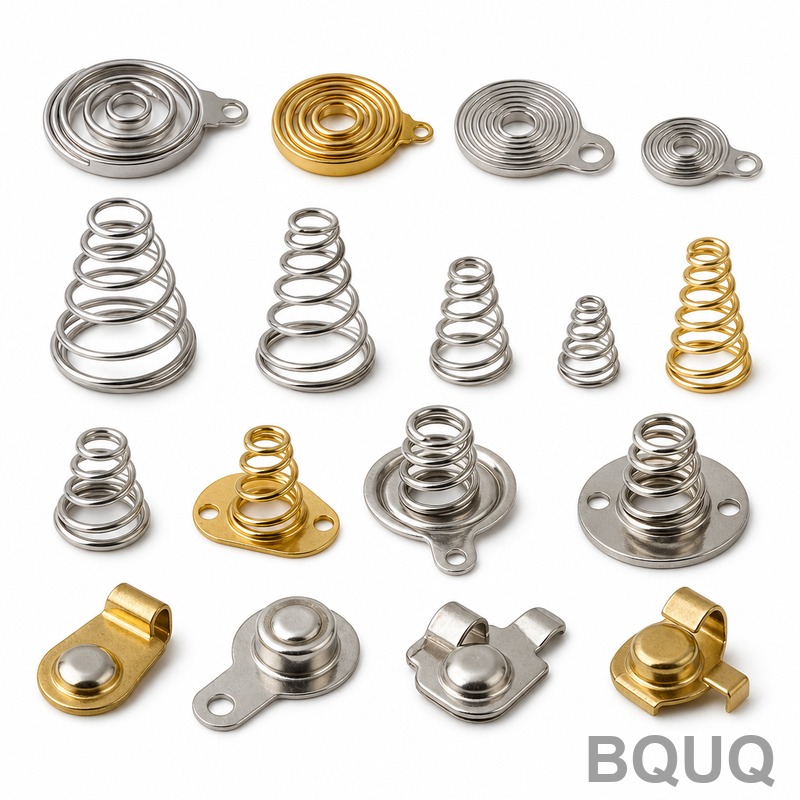
Valve spring manufacturing begins with oil-tempered chrome silicon or chrome vanadium wire, drawn to exact diameters of 3.0-6.0 mm with tolerances of ±0.01 mm. The wire is wound on CNC coiling machines at speeds of 30-60 parts per minute, with the coiling mandrel temperature controlled to ±2 °C to ensure consistent coil spacing. After coiling, springs undergo stress-relief tempering at 350-420 °C for 20-30 minutes to remove residual stress from the forming process. The next critical step is shot peening, where glass beads or steel shot are blasted at the spring surface to induce compressive residual stress of 600-900 MPa, which extends fatigue life by 300-500%. Precision grinding of the end coils achieves flatness of 0.05 mm or better, and total spring height is held to ±0.25 mm. Finally, each spring is set to a specific free length and load-tested on CNC load testers that verify force at specified heights within ±2% accuracy.
Which Materials Deliver the Best Performance and Fatigue Life?
Chrome silicon alloy steel (SAE 9254) is the industry standard for high-performance valve springs, offering a tensile strength of 1,800-2,000 MPa and operating temperature capability up to 220 °C. Chrome vanadium steel (SAE 6150) provides superior fatigue resistance for extreme-duty applications, with a slightly lower tensile strength of 1,700-1,900 MPa but better toughness. For racing engines exceeding 12,000 RPM, aerospace-grade materials such as Inconel X-750 or MP35N are used, which maintain strength at temperatures above 350 °C but cost 10-20 times more than steel. The material selection directly affects the spring's maximum allowable stress, which for chrome silicon is typically limited to 45-50% of tensile strength in dynamic applications. Premium springs also receive a black oxide or zinc nickel coating that provides corrosion resistance and reduces friction between coils by 10-15%.
How Does Spring Rate Affect Engine Performance and Power Output?
Spring rate, measured in N/mm, determines how much force increases per millimeter of compression, and it directly influences valve control and parasitic power loss. A typical OEM valve spring has a rate of 30-40 N/mm, while performance springs range from 50-80 N/mm, and racing springs can exceed 100 N/mm. Higher spring rates allow higher RPM capability but increase camshaft and lifter wear, requiring hardened components and reducing overall engine efficiency. The spring rate must be matched to the camshaft profile: aggressive lift profiles with high acceleration rates require stiffer springs to maintain follower contact. Engineers use valve train dynamics software to simulate spring force versus required force at every crank angle degree, ensuring a minimum safety margin of 20-30% above the required force. For a typical 2.0L performance engine, increasing spring rate from 35 N/mm to 55 N/mm can extend the usable RPM range from 7,500 to 8,800 RPM, but costs approximately 2-3 horsepower in parasitic friction loss.
What Are the Common Failure Modes and How Can They Be Prevented?
The most common valve spring failure is fatigue fracture, which occurs when surface cracks propagate under cyclic loading, typically after 50-100 million cycles in high-performance applications. Valve float is a functional failure where the spring cannot keep the valve follower in contact with the cam lobe, causing loss of power and potential piston-to-valve contact. Spring surge causes uneven coil spacing at high RPM, leading to premature wear and reduced valve control, often detected as a "buzzing" sound above 6,000 RPM. To prevent these failures, manufacturers use residual stress measurement on shot-peened surfaces, magnetic particle inspection for surface cracks, and 100% load testing of every production spring. The following table compares typical specifications for OEM, performance, and racing valve springs:
| Specification | OEM Spring | Performance Spring | Racing Spring |
| Wire Diameter (mm) | 3.5-4.0 | 4.0-5.0 | 5.0-6.0 |
| Free Length (mm) | 45-50 | 45-55 | 40-50 |
| Spring Rate (N/mm) | 30-40 | 50-70 | 70-110 |
| Seat Load (N) | 200-300 | 350-500 | 500-900 |
| Max Lift Load (N) | 450-650 | 700-1,000 | 1,100-1,500 |
| Max RPM Capability | 6,500-7,500 | 7,500-9,000 | 9,000-12,000+ |
| Operating Temp Max (°C) | 180 | 220 | 350 |
| Fatigue Life (cycles) | 100 million | 50 million | 20 million |
| Typical Cost per Unit (USD) | 2-5 | 8-15 | 25-60 |
Why Is Spring Surge Critical for High-RPM Reliability?
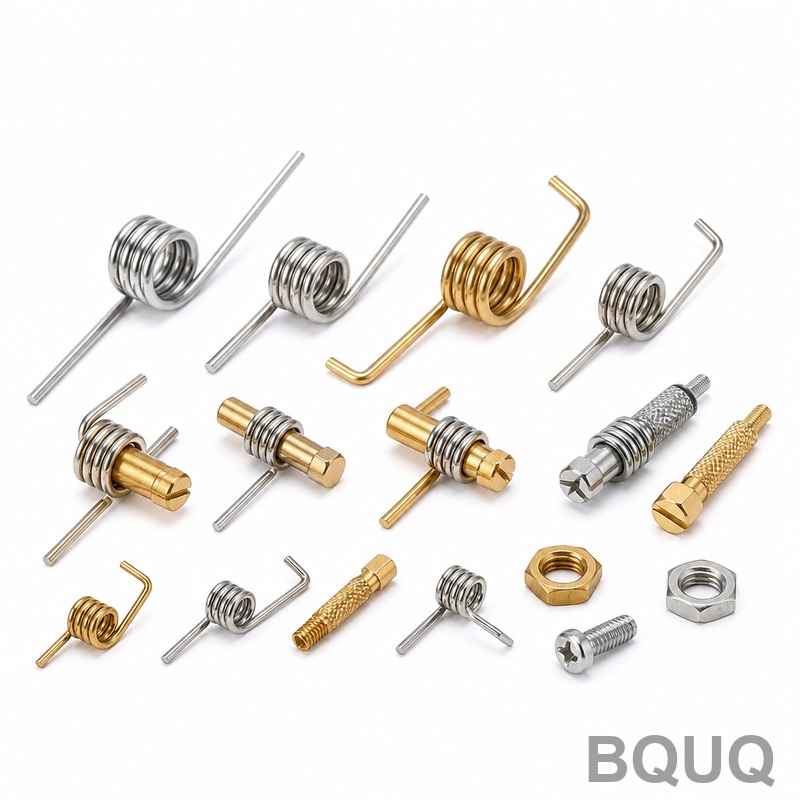
Spring surge occurs when the natural frequency of the valve spring coincides with the harmonic multiples of the camshaft rotation frequency, causing the coils to oscillate and lose control of the valve. The natural frequency of a typical valve spring ranges from 450-650 Hz, which corresponds to engine speeds of 6,000-9,000 RPM for a four-cylinder engine with a four-stroke cycle. When surge occurs, the effective spring force at the valve can drop by 30-50%, leading to valve float and potential component damage. Engineers mitigate surge by using springs with unequal pitch (progressive rate), installing flat or conical springs that have non-linear frequency characteristics, or adding internal dampers such as a second smaller spring. Modern performance valve springs are designed with a spring index (mean coil diameter divided by wire diameter) of 5-7, which optimizes the balance between stress distribution and natural frequency.
Can Valve Springs Be Upgraded Without Other Engine Modifications?
Upgrading valve springs alone is possible for mild performance gains, but it requires careful consideration of the entire valve train system. A stiffer spring increases camshaft lobe wear, so hardened camshafts or roller followers are recommended for spring rates above 60 N/mm. The increased seat load also accelerates valve seat recession, particularly on aluminum cylinder heads without hardened valve seats. For most naturally aspirated engines, upgrading from OEM to performance springs with a 20-30% higher rate provides a safe RPM increase of 500-1,000 RPM without other modifications. However, for turbocharged or supercharged engines, spring upgrades should be accompanied by upgraded retainers, keepers, and valve stem seals to handle the increased loads. A typical upgrade package including springs, titanium retainers, and hardened keepers costs $200-400 for a four-cylinder engine, with installation labor adding another $300-600.
FAQ
What Is the Difference Between Single, Dual, and Beehive Valve Springs?
Single springs are the most common and economical, using one coil spring per valve. Dual springs use an inner and outer spring with opposite winding directions, providing higher total force and built-in surge damping, while beehive springs taper the coil diameter from bottom to top, reducing mass and improving surge characteristics at high RPM.
How Often Should Valve Springs Be Replaced in a Performance Engine?
Performance valve springs should be inspected every 20,000-30,000 miles and replaced every 50,000-60,000 miles for street-driven performance cars. Racing engines require spring replacement every 100-200 hours of operation, as fatigue life decreases significantly at higher loads and temperatures. Always measure spring free length and seat load at inspection to detect early fatigue.
What Is the Maximum Operating Temperature for Steel Valve Springs?
Standard chrome silicon steel valve springs can operate continuously at temperatures up to 220 °C, while chrome vanadium steel handles up to 250 °C. Above these temperatures, the material begins to lose its temper, resulting in reduced spring force and premature failure. For exhaust valves or turbocharged applications where temperatures exceed 250 °C, Inconel or MP35N springs are required.
How Do I Choose the Right Spring Rate for My Camshaft?
Select a spring rate that provides at least 25-30% more force than the calculated required force at maximum valve lift and RPM. Consult the camshaft manufacturer's recommended spring specifications, as aggressive cam profiles with high acceleration rates require stiffer springs. Use valve train dynamics software or empirical testing to verify the spring's ability to control the valve at all RPM points.
Can Valve Springs Cause Valve Seat Recession?
Yes, higher spring seat loads increase the contact pressure between the valve face and seat, accelerating wear and recession, particularly in aluminum heads without hardened inserts. Performance springs with seat loads above 400 N should use hardened valve seats and premium valve materials to prevent recession. Regular valve clearance checks will detect early signs of recession before catastrophic failure occurs.
What Is the Typical Lead Time for Custom Valve Springs?
Custom valve spring manufacturing from BQUQ typically requires 15-25 days for tooling and production, with sample delivery in 7-10 days for prototypes. Production quantities of 1,000-10,000 pieces can be delivered in 3-4 weeks including material sourcing and heat treatment. For urgent requirements, expedited production is available with a 5-7 day lead time at a 15-20% surcharge.
Conclusion
Valve springs are precision components where material science, manufacturing accuracy, and dynamic engineering converge to determine engine performance and reliability. The selection of material, spring rate, and manufacturing process must be matched to the specific camshaft profile, engine RPM range, and operating conditions to achieve optimal valve control. At BQUQ, our 20 years of experience in precision manufacturing ensures that every valve spring we produce meets exacting tolerances for load, dimensions, and fatigue life. We provide free engineering consultation and can recommend the optimal spring specification for your application. For a 12-hour quote on custom valve springs or other precision components, contact us at sc@bquq.com, WhatsApp +86 13713157787, or visit www.bquq.com.