What Materials Can Be Metal Stamped? A Complete Guide for Engineers
What Materials Can Be Metal Stamped? A Complete Guide for Engineers
Metal stamping is a high-speed, high-volume manufacturing process that can form, blank, bend, and coin a wide range of metals. Directly answering the question: the most common materials are low-carbon steel, stainless steel, aluminum, copper, brass, and specialty alloys such as Inconel and titanium. However, the true selection criteria depend on tensile strength, elongation percentage, thickness, and required tolerance—not just the metal name. This guide provides a technical breakdown of stampable materials, their real-world limits, and cost implications based on 20 years of CNC machining and stamping experience at BQUQ.
H2: The Core Material Categories for Metal Stamping
Metal stamping works best with ductile materials that can undergo plastic deformation without cracking. In production at BQUQ, we categorize stampable materials into four groups:
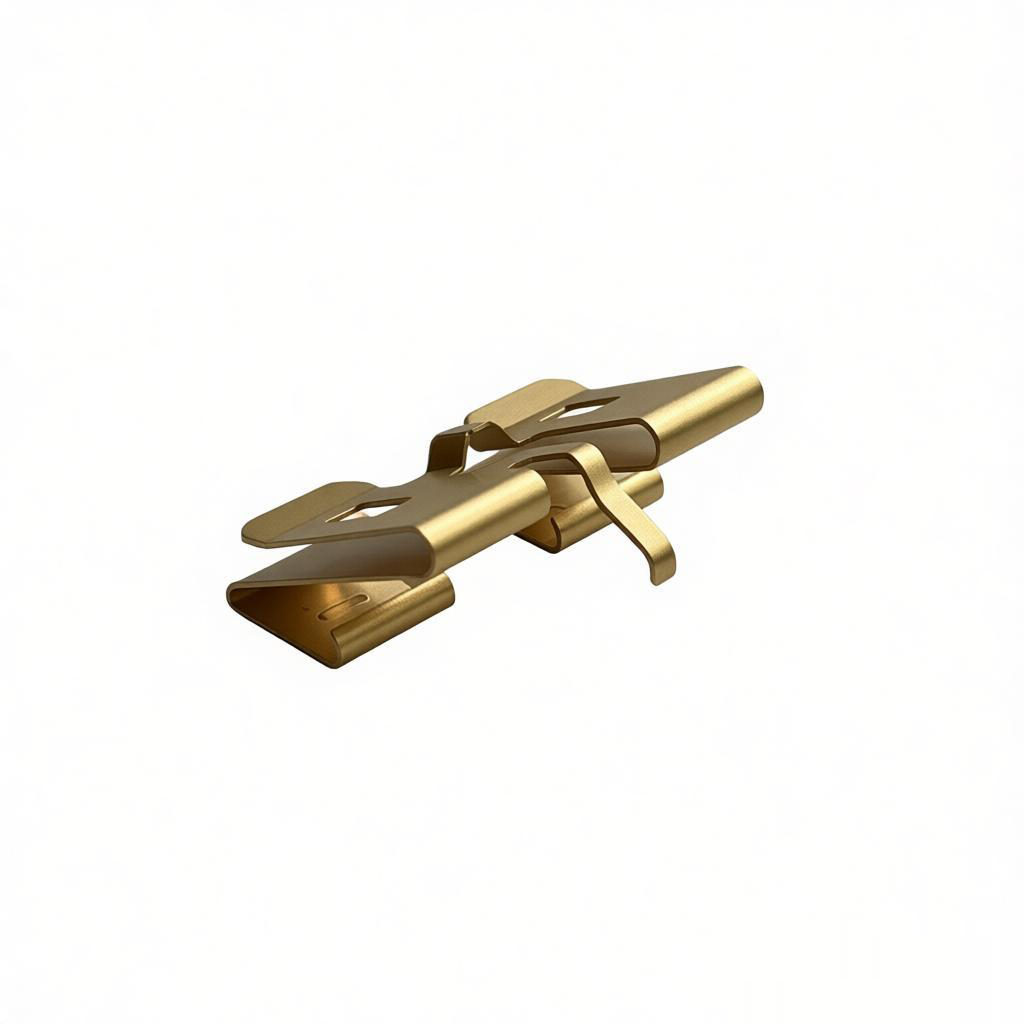
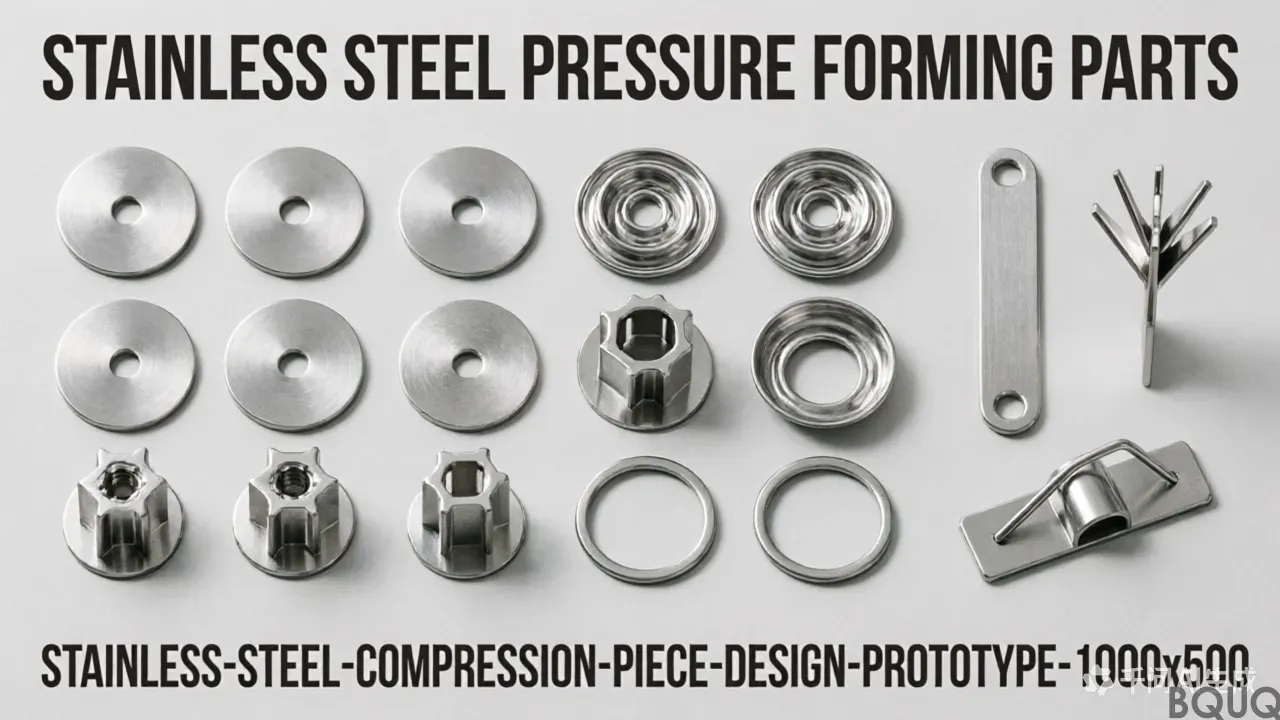
1. **Steels (Carbon and Alloy)** – The backbone of the industry. Low-carbon steel (e.g., DC01, SPCC) dominates due to its formability and low cost. High-carbon steels (e.g., 1075) are used for springs but require precise heat treatment after stamping. 2. **Stainless Steels** – Austenitic (304, 316) offers excellent corrosion resistance but work-hardens quickly. Ferritic (430) and martensitic (420) are less formable but stronger after hardening. 3. **Non-Ferrous Metals** – Aluminum (5052, 6061), copper (C11000), and brass (C26000) are highly conductive and lightweight. Aluminum 5052-H32 is our go-to for heat sink fins due to its balance of strength and thermal conductivity (167 W/m·K). 4. **High-Temperature and Specialty Alloys** – Inconel 625, titanium Grade 2, and molybdenum are stamped for aerospace and medical parts. These require slower press speeds (15-20 strokes per minute vs. 60-100 for steel) and specialized lubrication to prevent galling.
The table below lists actual stampable materials with their typical thickness ranges and achievable tolerances at BQUQ:
| Material | Common Grades | Thickness Range (mm) | Stamping Tolerance (±mm) | Typical Tensile Strength (MPa) | Relative Cost per kg (vs. SPCC) | Max Operating Temp (°C) | ---------- | --------------- | ---------------------- | --------------------------- | -------------------------------- | -------------------------------- | -------------------------- | Low-Carbon Steel | SPCC, DC01, 1008 | 0.3 - 6.0 | 0.05 | 280 - 410 | 1.0 | 200 (painted) | Stainless Steel 304 | 304, 316L | 0.2 - 3.0 | 0.08 | 515 - 720 | 2.8 | 870 (intermittent) | Aluminum 5052 | 5052-H32, 6061-T6 | 0.3 - 5.0 | 0.08 | 220 - 310 | 1.5 | 150 (structural) | Copper C11000 | C11000, C10200 | 0.1 - 3.0 | 0.04 | 220 - 350 | 3.5 | 200 (oxidized) | Brass C26000 | C26000, C27200 | 0.1 - 2.5 | 0.04 | 340 - 450 | 2.2 | 130 (annealed) | Inconel 625 | 625, 718 | 0.2 - 2.0 | 0.12 | 760 - 1030 | 12.0 | 980 | Titanium Grade 2 | Gr2, Gr5 (Ti-6Al-4V) | 0.3 - 2.5 | 0.10 | 345 - 895 | 15.0 | 400 (continuous) |
|---|
H2: How Material Properties Affect Stamping Tolerances and Tool Life
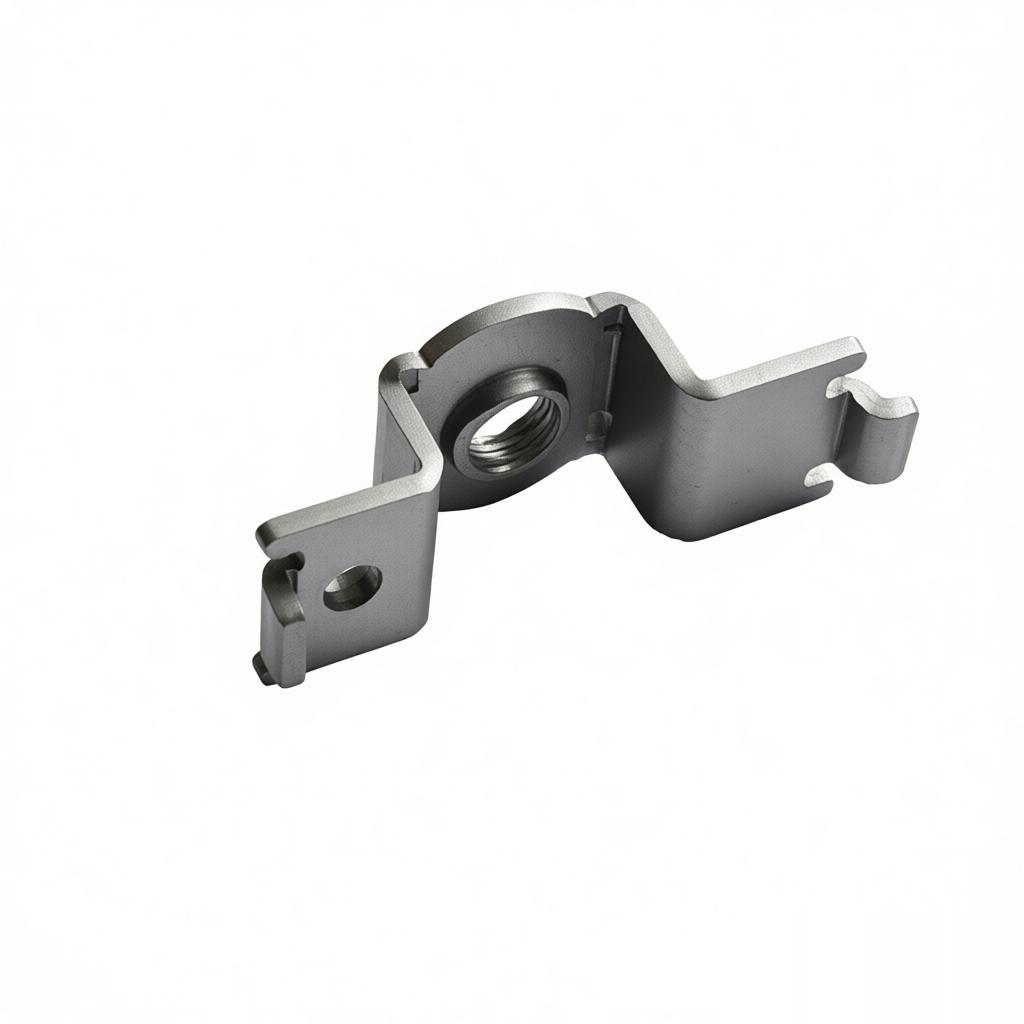
Tolerance is not a fixed number; it is a function of material springback and tool wear. For example, low-carbon steel SPCC (0.8 mm thick) has a springback factor of roughly 0.5-1.5 degrees for a 90-degree bend, which we compensate for by overbending the die by 1-2 degrees. In contrast, high-strength steel (e.g., DP780) has a springback of 3-5 degrees, requiring either coining (additional stamping force) or a multi-step forming operation.
Tool life is directly proportional to material abrasiveness. At BQUQ, we use D2 tool steel for stamping aluminum and copper, achieving 500,000+ strokes before regrinding. For stainless steel 304, we switch to powdered metallurgy high-speed steel (e.g., ASP2023) and see tool life drop to 150,000 strokes. The cost per stamped part increases by 0.02-0.05 USD for stainless compared to low-carbon steel, purely due to tool maintenance.
H2: Formability Limits: Bend Radii, Hole Sizes, and Elongation
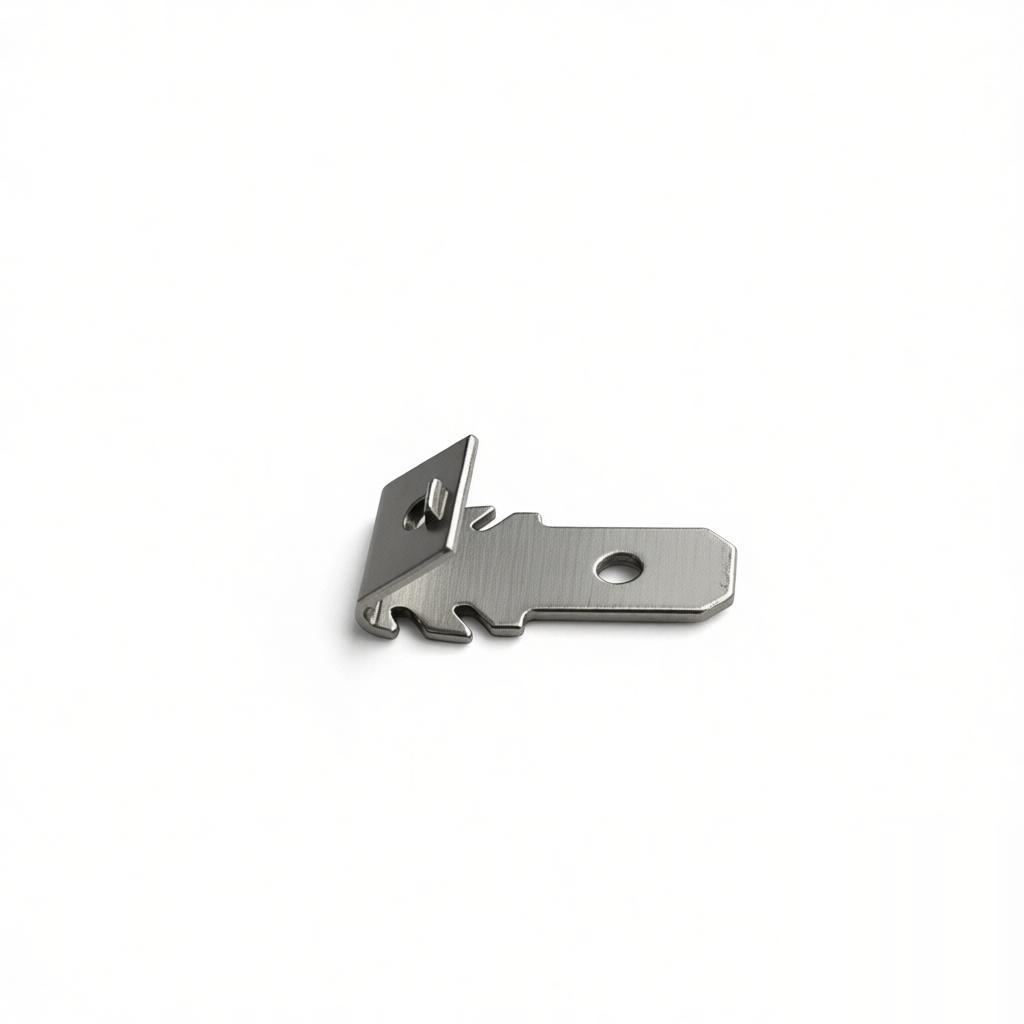
The minimum bend radius is a critical constraint. For low-carbon steel, the rule is 0.5x material thickness. For aluminum 5052, it increases to 1.0x thickness; for titanium Grade 5, it jumps to 2.5x thickness. Beyond these limits, micro-cracks appear on the outer surface, which we detect via 10x magnification during PPAP.
Minimum hole diameter in stamping is 1.2x material thickness for steel and copper, but 1.5x for aluminum and 2.0x for titanium. For example, in a 2.0 mm thick aluminum heat sink, the smallest stamped hole we recommend is 3.0 mm. Smaller holes require laser cutting as a secondary operation, adding 0.05 USD per hole at 10,000+ quantities.
Elongation at break is the best predictor of stampability: - Low-carbon steel: 28-38% elongation – excellent for deep drawing. - Stainless 304: 40-50% elongation – good, but work-hardening requires more press tonnage. - Aluminum 5052: 12-20% elongation – moderate; avoid sharp radii. - Brass C26000: 46% elongation – excellent for intricate components like electrical contacts.
H2: Cost and Lead Time Comparison Across Stamping Materials
Material cost is only 30-40% of the total part cost; the rest is tooling amortization, press time, and secondary finishing. At BQUQ, a typical progressive die for a 50 mm x 50 mm bracket costs: - Low-carbon steel: Tooling 3,500-5,000 USD, lead time 3-4 weeks. - Stainless steel 304: Tooling 4,500-6,000 USD, lead time 4-5 weeks (harder to machine die details). - Aluminum 5052: Tooling 3,000-4,500 USD, lead time 3 weeks (softer on tools). - Inconel 625: Tooling 8,000-12,000 USD, lead time 6-8 weeks (requires carbide dies and slower machining).
Production lead time for 10,000 pieces: - Steel and aluminum: 5-7 working days. - Stainless: 7-10 working days (slower press speed, 40-60 SPM). - Titanium/Inconel: 12-15 working days (15-25 SPM, frequent lubrication checks).
H2: Surface Finishing Compatibility by Material
The choice of material dictates what finishing is possible without compromising mechanical properties.
| Material | Available Finishes at BQUQ | Corrosion Resistance (Salt Spray Test) | Notes | ---------- | ---------------------------- | ---------------------------------------- | ------- | Low-Carbon Steel | Zinc plating (clear/yellow), powder coating, e-coating | 72-120 hours (zinc) | Must be plated or painted immediately to prevent rust | Stainless 304 | Bead blasting, electropolishing, passivation | 500+ hours (as-is) | No coating needed; electropolishing improves fatigue life | Aluminum 5052 | Clear anodize (Type II), hard anodize (Type III), chromate conversion | 336 hours (anodized) | Anodize thickness 8-25 microns; hard anodize reduces fatigue strength by 10% | Copper | Nickel plating, tin plating, bright dip | 48 hours (as-is) | Tin plating required for soldering applications | Brass | Nickel plating, antique bronze finish | 72 hours (as-is) | Avoid high-temperature finishes (above 130°C) to prevent dezincification |
|---|
H2: Practical Recommendations for Material Selection in Stamping
For engineers designing stamped parts, follow these rules based on our 20 years of production data:
1. **Choose the cheapest material that meets functional requirements, not the cheapest per kilogram.** For example, aluminum 5052 costs 1.5x steel, but if you avoid secondary plating costs and reduce part weight by 60%, the total cost is often 20-30% lower. 2. **Avoid titanium and Inconel unless you need extreme temperature resistance (above 400°C) or biocompatibility.** Their stamping cost per part is 8-15x higher than steel due to slow press speeds and short tool life. 3. **Specify tolerances no tighter than necessary.** A stamping tolerance of ±0.05 mm is standard; going to ±0.02 mm requires precision dies that cost 40% more and extend lead time by 2 weeks. 4. **For springs, use high-carbon steel (e.g., 65Mn or 1075) with a hardness of HRC 44-48 after heat treatment.** Do not use stainless 304 for springs unless corrosion is critical; its lower elastic limit means you need a thicker gauge, negating the material benefit. 5. **Prototype in low-carbon steel before committing to aluminum or stainless.** Steel is the most forgiving for die tryout, and you can validate geometry before spending on expensive alloy-specific tooling.
H2: FAQ-Style Tips for Metal Stamping Materials
**Q: Can you stamp galvanized steel?** Yes, but we recommend against it for precision parts. The zinc coating (typically 10-15 microns) flakes off at bend edges, causing die wear and poor weldability. Use low-carbon steel and post-stamp zinc plating instead.
**Q: What is the maximum thickness for metal stamping?** For progressive stamping, 6.0 mm for steel and 5.0 mm for aluminum is practical. Beyond that, we recommend CNC machining or stamping with a hydraulic press (up to 10 mm) but note that tolerance widens to ±0.15 mm and press tonnage exceeds 400 tons.
**Q: How do I prevent cracking in aluminum stamping?** Use 5052-H32 instead of 6061-T6 for complex bends. The H32 temper has 12% elongation vs. 10% for T6. Also, increase the bend radius to 1.5x thickness and apply a light mineral oil lubricant (e.g., viscosity 20 cSt at 40°C) rather than dry forming.
**Q: Is brass or beryllium copper better for electrical contacts?** Beryllium copper (C17200) has 3x the fatigue strength of brass and maintains conductivity at 22% IACS. However, it is 5x more expensive and requires heat treatment after stamping. Use brass C26000 for non-fatigue applications; use BeCu only for spring-loaded contacts in connectors.
H2: Conclusion and Next Steps
The correct material for metal stamping is determined by a matrix of mechanical properties, thermal requirements, cost per part, and secondary finishing. Low-carbon steel remains the default for structural parts, while aluminum 5052 is optimal for heat dissipation and weight reduction. Stainless steel 304 is chosen for corrosion, and specialty alloys like Inconel are reserved for extreme environments. By matching the material to the tolerance and formability limits outlined above, you can reduce tooling costs by up to 40% and cut production lead time by 2-3 weeks.
For a definitive answer on your specific part geometry, send us your 2D drawing or 3D model. Our engineering team at BQUQ will provide a free DFM (Design for Manufacturing) analysis and a firm quote within 12 hours.
**Contact BQUQ:** - Email: sc@bquq.com - WhatsApp/WeChat: +86 13713157787 - Website: www.bquq.com
We have stamped over 50 million parts in the last 20 years. Let us use that experience for your next project.
Related Articles
- 5 Effective Burr Removal Techniques for Stamped Parts
- Stamping Lubricant Selection 2024: Balancing Die Life, Part Quality, and Environmental Compliance
- 5 Proven Ways to Reduce Cost in Metal Stamping Parts
Frequently Asked Questions
What is the most common material used for metal stamping and why?
Low-carbon steel, such as SPCC, DC01, or 1008, is the most common due to its excellent formability and low cost. It has a tensile strength of 280-410 MPa, supports thicknesses from 0.3 to 6.0 mm, and achieves a stamping tolerance of ±0.05 mm. Its relative cost per kg is 1.0, the baseline for comparison.
Can you stamp high-temperature alloys like Inconel or titanium, and what are the trade-offs?
Yes, Inconel 625 and titanium Grade 2 are stampable for aerospace and medical parts. However, they require slower press speeds of 15-20 strokes per minute versus 60-100 for steel, and specialized lubrication to prevent galling. Inconel 625 achieves a tolerance of ±0.12 mm, while titanium Grade 2 achieves ±0.10 mm, with costs up to 15 times that of SPCC.
What tolerance can I expect for aluminum stamping, and which grade is best for heat sinks?
Aluminum 5052-H32 and 6061-T6 can be stamped to a tolerance of ±0.08 mm, with thicknesses from 0.3 to 5.0 mm. For heat sink fins, 5052-H32 is recommended due to its balance of strength and thermal conductivity of 167 W/m·K. Its tensile strength ranges from 220-310 MPa, and it costs about 1.5 times more than low-carbon steel.
How does material choice affect stamping tolerance and tool life?
Tolerance is not fixed; it depends on material springback and ductility. For example, copper C11000 achieves a tight tolerance of ±0.04 mm, while stainless steel 304 achieves ±0.08 mm due to work-hardening. Higher-strength materials like Inconel 625 reduce tool life and require slower speeds, increasing overall cost and production time.