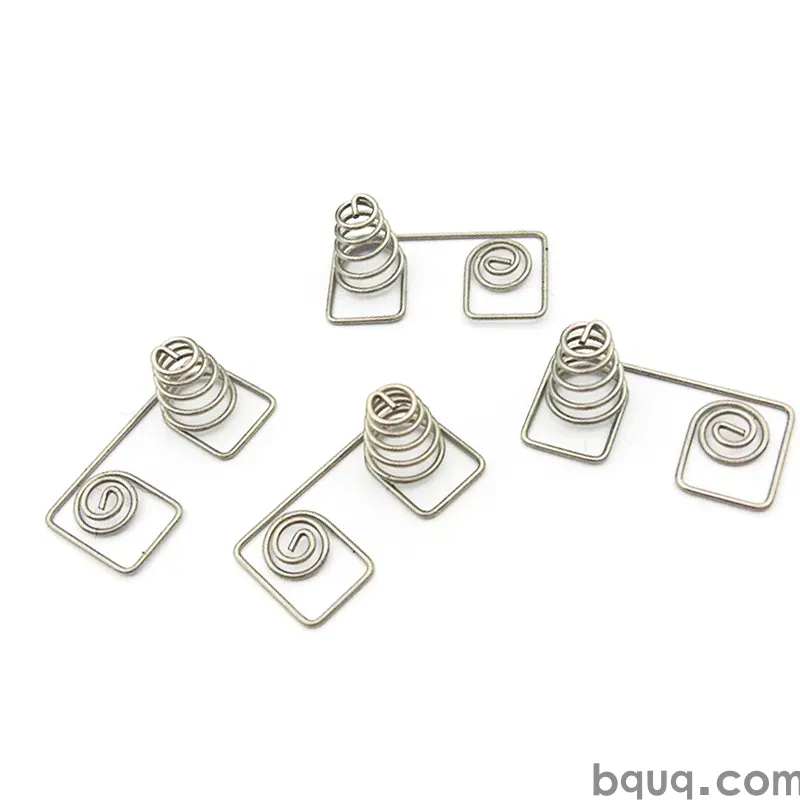
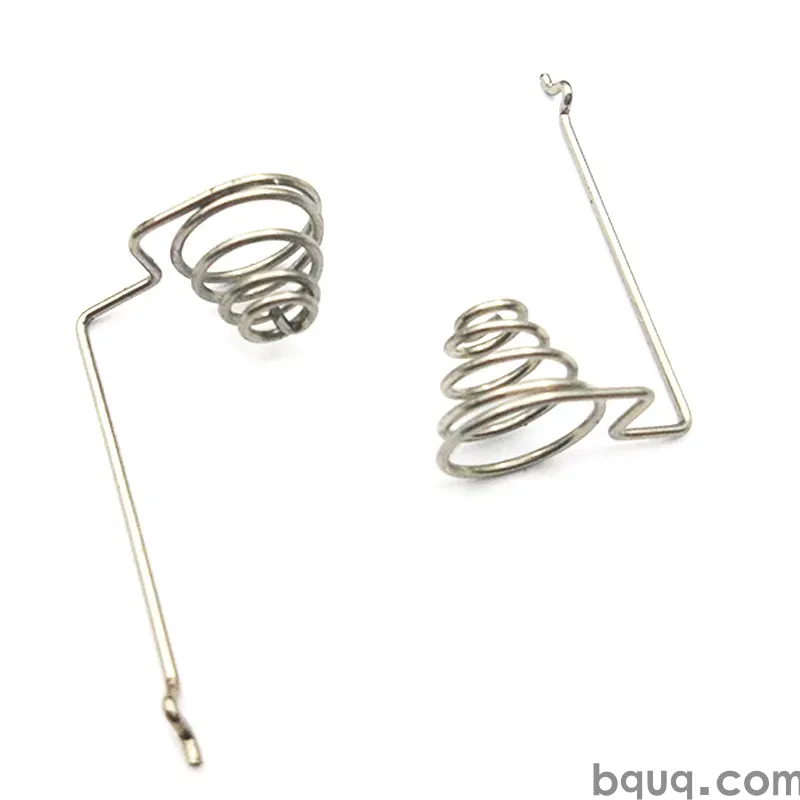
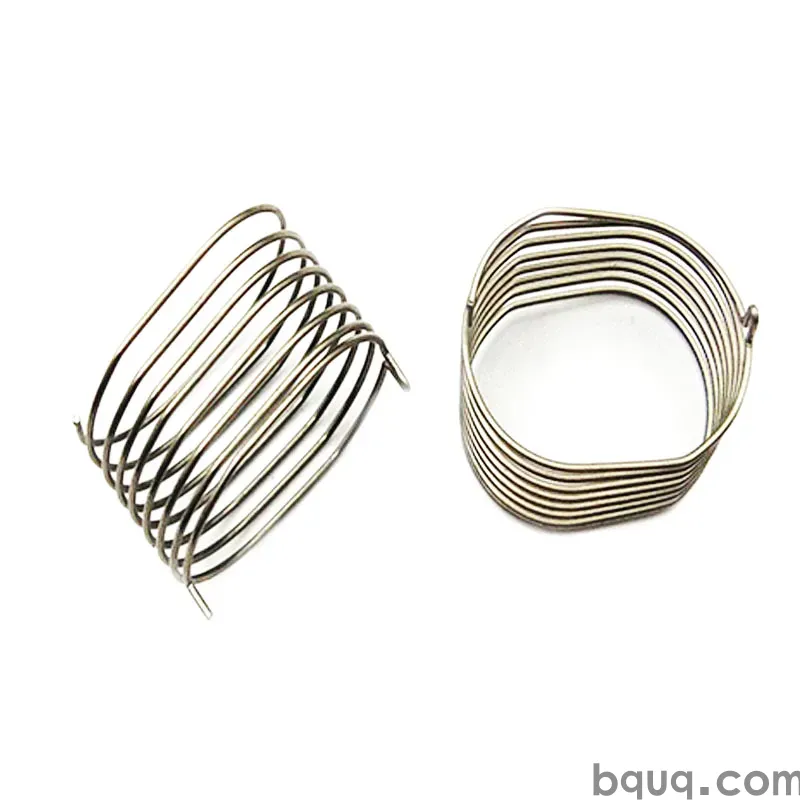
Hardware stamping for home appliances from BQUQ, an ISO9001 Dongguan source factory: brackets, hinges, clips and enclosures. Quote in 12 hours.
Hardware Stamping for Home Appliances: What Gets Stamped and Why
Short answer: nearly every structural and mechanical metal part inside a home appliance is stamped — door hinges and latches, mounting brackets, motor and compressor supports, control-box enclosures, terminal and switch contacts, clips, and springs. Appliance volumes (typically 50,000 to several million parts a year per model) match progressive stamping economics perfectly, and the materials are almost always coated or plateable steel: SECC/SGCC galvanized for brackets and enclosures, spring steel for clips and latches, brass or copper alloys for electrical contacts, and stainless or aluminum where heat or food contact demands it. Forming tolerances of ±0.1 mm are normal, ±0.05 mm is achievable, and parts land at cents each once the die exists.
If you open a washing machine, refrigerator, dishwasher, microwave or oven, the metal you see is overwhelmingly stamping output. This guide explains what gets stamped, which steel grade and coating belongs where, and why stamping — not machining or casting — is the default process for appliance hardware at volume.
What Gets Stamped Inside an Appliance
The list is longer than most buyers expect. Structural parts dominate by weight: the chassis brackets, motor mounts, hinge plates, and control-box enclosures. Then come the functional small parts: door latches and catches, spring clips, heating-element retainers, terminals, switch blades, and grounding tabs. Even hermetic compressor terminals — the sealed electrical feedthroughs on the compressor body — start as stamped pins and shells assembled into glass-to-metal seals.
| Appliance area | Typical stamped parts | Typical material |
|---|---|---|
| Washing machine | Drum support brackets, counterweight clamps, hinge plates, motor mounts | SECC/SGCC steel, some stainless |
| Refrigerator | Door hinges, hinge pins, gasket retainers, compressor brackets, shelf supports | Galvanized steel, spring steel |
| Dishwasher | Rack clips, spray-arm retainers, heating element brackets, latch assemblies | Stainless 430/304, spring steel |
| Microwave/oven | Door interlocks, cavity brackets, turntable motor mounts, terminal blocks | Galvanized steel, brass contacts |
| General electronics | PCB mounting brackets, earth-ground terminals, EMI cans, connectors | Steel, brass, bronze |
The "why" is volume plus geometry. Appliance hardware is thin (0.4–2.5 mm), full of holes and bends, and needed in quantities where die amortization is trivial. A progressive die running at 100–400 strokes per minute produces these parts for fractions of a cent to a few cents of material and press time. Compare that with machining each bracket from plate, and the cost gap is one to two orders of magnitude at appliance volumes.
Materials: Steel Grades, Coatings and the Corrosion Question
Material selection for appliance stampings is a triangle of strength, corrosion behavior, and cost. Cold-rolled steel (SPCC/DC01) is the cheapest but rusts, so it is used only where it is painted or plated and protected from moisture. Galvanized (SECC electro-galvanized, SGCC hot-dip) is the appliance default for interior brackets because the zinc coating survives normal indoor humidity without extra finishing. Stainless 430 or 304 appears where water, food, or heat rules out coated carbon steel — dishwasher interiors, oven parts, ice maker components. Aluminum shows up when weight matters, and spring steel (such as SK5 or 301 stainless) is reserved for clips and latches that must flex.
| Material | Indicative cost vs SPCC | Typical appliance use | Corrosion behavior |
|---|---|---|---|
| SPCC/DC01 cold-rolled | 1.0× | Painted structural parts | Rusts bare, fine painted |
| SECC/SGCC galvanized | 1.1–1.3× | Brackets, enclosures, mounts | Good indoors |
| Spring steel SK5/CK67 | 1.3–1.8× | Clips, latches, catches | Rusts, needs coating |
| Stainless 430 | 2.5–3.5× | Dishwasher, oven parts | Good, mild magnetism |
| Stainless 304 | 3.5–5× | Food contact, wet zones | Excellent |
| Aluminum 5052 | 2–3× | Lightweight trays, shields | Good, anodizable |
A common sourcing mistake is specifying stainless everywhere because "appliances get wet." Stainless costs three to five times coated steel, and for a dry bracket inside a plastic-clad chassis it buys nothing. Specify stainless only where the part actually sees moisture, food, or sustained heat, and let galvanized or painted steel do the structural work elsewhere. For electrical parts inside appliances — terminals, switch blades, contacts — the material logic is different again: conductivity and contact reliability drive the choice, and plating (tin, nickel, silver, or selective gold) is specified by current and environment, as covered in our stamped contact plating guide.
Tolerances and Quality: What Appliance Parts Actually Need
Appliance hardware is forgiving compared with connector or relay parts, and the drawings should say so. Forming tolerances of ±0.1 mm handle nearly all brackets, enclosures, and hinge plates; ±0.05 mm is available for hole patterns that must align with mating parts or for hinge geometry that defines door alignment. The features that genuinely need control are the ones that affect function and safety: door-latch engagement dimensions, spring force on latches and clips, hinge pin alignment, and earth-ground continuity on terminals. Metal stamping tolerances are discussed in detail separately, but the practical rule is: tolerance the interfaces, not the sheet.
| Feature class | Typical spec | What it prevents |
|---|---|---|
| Formed dimensions | ±0.1 mm | Assembly misfits |
| Hole position (critical) | ±0.05 mm | Screw/boss misalignment |
| Latch/lock geometry | ±0.05 mm | Door closure failures |
| Spring force on clips | Force at deflection | Rattles, broken latches |
| Burr height | ≤0.05 mm | Cut hands, edge corrosion |
| Flatness (enclosures) | 0.1–0.3 mm overall | Panel gaps, vibration noise |
Two quality points deserve emphasis in appliances. First, burrs: appliance parts are handled by consumers during cleaning and repair, and a sharp burr on a stamped edge is a liability — specify burr height and direction, and add deburring or edge conditioning where edges are exposed. Second, coating edges: stamping cuts through pre-coated coil, exposing bare steel at the cut edge, so salt-spray performance of a stamped galvanized part is set by edge coverage, not by the coating datasheet. If an appliance part must survive a humid environment for a decade, say so in the RFQ and verify with salt-spray testing on stamped samples.
When Stamping Is the Wrong Answer
Stamping dominates appliance hardware, but honest sourcing means knowing the exceptions. Below roughly 1,000–3,000 parts per year, die cost — typically $2,000–$10,000 for appliance-grade tooling, indicative — is hard to amortize, and laser cutting plus forming or CNC machining wins on total cost. Deep-drawn parts such as sink bowls or compressor housings are a different stamping sub-process (deep drawing) with its own tooling rules, not a job for a simple progressive die. Very thick or heavily machined hardware — say a 10 mm steel hinge block with tapped holes — belongs on a CNC line, and very large or low-volume enclosures may be cheaper as bent laser-cut sheets. The process decision logic across materials and methods is laid out in our stamping materials guide and the general services comparison, but the short version is: volume high and geometry thin → stamping; volume low or geometry thick → machining; geometry deep and hollow → drawing or casting.
One more reason stamping dominates appliances is that the parts rarely travel alone. A washing-machine hinge arrives with its torsion spring, a dishwasher latch ships with its striker and clip, a control box carries its earth terminals and PCB brackets. Sourcing those as one package from a single supplier removes the biggest hidden cost in appliance hardware: the handoffs between factories that make tolerances drift and schedules slip. A source factory that runs stamping dies and a spring line under the same roof can assemble the bracket-and-spring subassembly, plate the electrical contacts on the same site, and ship one inspected batch instead of three separately managed ones. That is why multi-part sourcing questions — who stamps the bracket, who winds the spring, who plates the terminal — are worth settling before tooling starts, and why many appliance OEMs consolidate hardware families with one die shop that can also machine the odd low-volume bracket and plate the electrical bits in-house.
Frequently Asked Questions
Q: Why are appliance parts stamped instead of machined or cast?
A: Appliance hardware is thin, hole-heavy, and produced in volumes where progressive stamping amortizes a die in a few months of production. Per-part cost lands at cents instead of dollars, and stamping delivers consistent geometry across millions of parts. Machining and casting only compete at low volume or for thick, complex shapes.
Q: What steel should I use for a stamped bracket in a humid appliance?
A: Galvanized steel (SECC or SGCC) for general interior brackets, or stainless 430/304 where the part sees direct moisture, food, or sustained heat. Bare cold-rolled steel rusts and should be painted or plated. Remember stamped edges expose bare steel, so verify salt-spray performance on the finished part.
Q: What tolerances can a stamping supplier hold on appliance brackets?
A: ±0.1 mm on formed dimensions as standard, ±0.05 mm on critical hole positions and latch geometry, with burr height controlled to about 0.05 mm. Appliance parts do not need connector-grade tolerances, so tolerance only the interfaces that mate or latch and save the rest.
Q: Can stamped appliance parts include springs and clips in the same die?
A: Yes. Clips, catches and latches are commonly stamped from spring steel in their own progressive dies, often in the same factory as the brackets they attach to. Specify the force at deflection and operating temperature so the die shop picks the right temper and verifies it on a force tester.
Q: What is the minimum quantity for stamped appliance hardware?
A: Below roughly 1,000–3,000 parts per year, tooling amortization starts to hurt and laser cutting plus forming or CNC can be cheaper overall. Above that, stamping wins on unit cost, and at appliance volumes (tens of thousands to millions) the per-part saving is decisive.
Related Resources
- Stamping Materials: Choosing Strip Steel, Copper and Aluminum — material and coating logic for stamped parts.
- Metal Stamping Tolerances: What a Die Shop Can Hold — realistic tolerance classes for formed and blanked features.
- About BQUQ — an ISO9001-certified source factory in Dongguan with stamping, springs, CNC and heat sinks under one roof.
- Contact us — send your appliance part drawings and volumes for a quote within 12 working hours.
Authored by the BQUQ Engineering Team. BQUQ is an ISO9001-certified source factory in Dongguan, China, running CNC machining, metal stamping, custom springs, heat sink and collet lines under one roof. Send drawings to sc@bquq.com or WhatsApp +86 13713157787 for a quote within 12 working hours. www.bquq.com