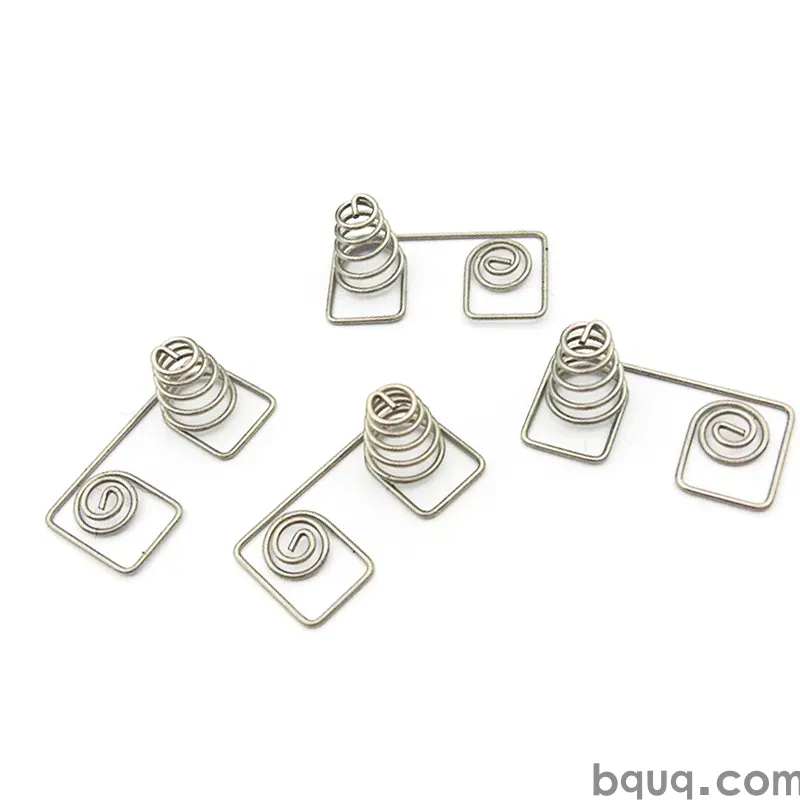
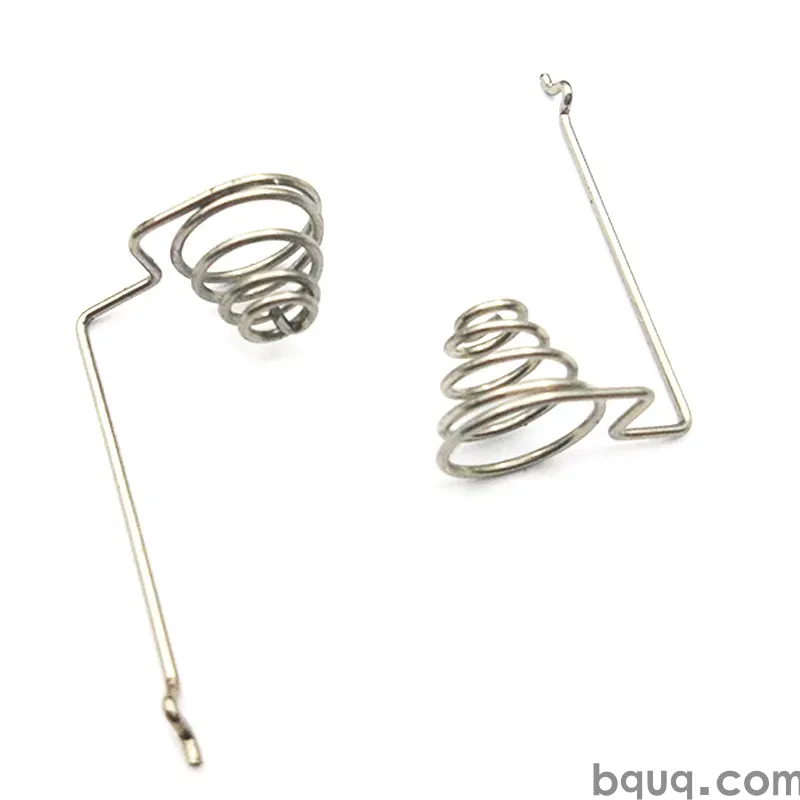
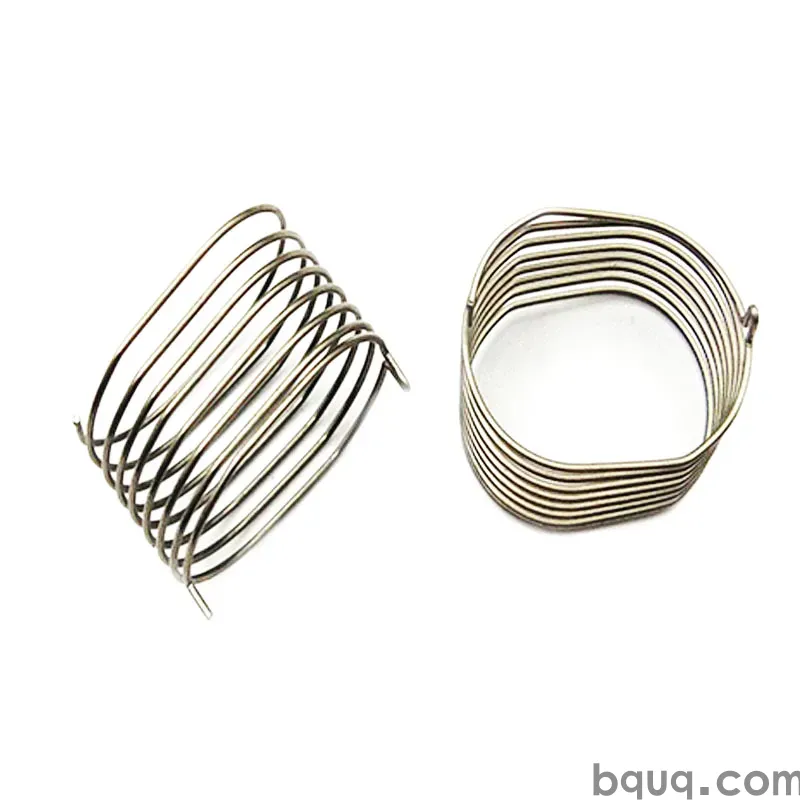
When spring steel clips can replace screws: push-in force, retention, temper and cost data. BQUQ stamps clips on progressive dies in Dongguan.
Stamped Clips and Fasteners: Replacing Screws With Spring Steel
Short answer: a stamped spring-steel clip can replace a screw in any joint where the load is light, the parts are thin, and the main enemy is vibration — typically push-in fasteners holding panels, covers, rods and cables. A stamped clip installs by hand in under a second, adds no loose parts, and keeps its grip because it is a spring, not a thread. Push-in forces of 20–60 N and retention forces of 50–300 N are routine for small clips stamped from 0.4–1.2 mm spring steel. Piece cost lands at $0.005–$0.10 at volume, against a screw, washer and nut that cost more and still loosen.
Screws are the default fastener because they are understood, but they carry hidden costs: the part count, the torque control, the tool access, the operator time, and the fact that vibration slowly unscrews them. A stamped clip replaces all of that with one piece of bent spring steel that snaps in and stays. This is not a universal substitution — clips cannot clamp like a torqued bolt — but in the applications where they fit, they cut assembly cost dramatically. This guide gives you the engineering numbers to decide where clips win.
Where a Spring Clip Beats a Screw
The clearest wins are joints between thin parts: attaching a sheet-metal cover to a frame, fixing a rod or cable in place, holding a panel against a boss, or retaining a component in a stamped bracket. The clip's spring arms deflect during installation, then press back against the mating part to create retention. Because the joint never relies on thread friction, vibration that would loosen a screw actually does nothing to a properly engaged clip — the spring keeps its force.
The comparison is stark on assembly cost. A screw joint needs the screw, usually a washer, often a nut or a threaded insert, plus a driver and an operator reaching the joint from the right angle. A clip is one part, installed blind if necessary, by straight push. On a product with 20 screw joints, replacing half of them with clips removes parts, tooling and minutes from the line. The clip also tolerates the material stack-up variations that frustrate screw lengths: the spring absorbs the tolerance. The same logic extends to field service: a clip that pries off cleanly and snaps back is a serviceable fastener, while a screw in a captive location is a service nightmare.
| Criterion | Screw + nut/washer | Stamped spring clip |
|---|---|---|
| Parts per joint | 2–3 | 1 |
| Installation time (indicative) | 5–15 s with tool | under 1 s, no tool |
| Vibration behavior | Loosens without locking | Holds; spring force is constant |
| Disassembly | Tool required, reusable | Pry or push; reuse limited |
| Clamp load | High, controlled by torque | Low–medium, set by spring design |
| Typical joint cost at volume | $0.02–$0.15 + labor | $0.005–$0.10, minimal labor |
Where screws still win: high clamp loads, joints that need preload to seal, thick rigid stacks, and any application requiring exact, adjustable clamping force. A clip is not a torque wrench. The rule is to let the clip do what springs do — hold light parts against vibration and location — and keep screws for structural clamp.
Spring Steel: The Material That Makes It Work
The clip is a spring, so the material must be able to bend past its yield into shape, then work elastically for the life of the product. That is the job of medium- to high-carbon spring steels and spring-temper stainless, supplied as strip and stamped on progressive dies that form the arms and lances in one pass.
| Material | Typical hardness/temper | Max continuous temp | Relative strip cost | Typical use |
|---|---|---|---|---|
| SAE 1050–1074 spring steel | Hard rolled / pre-tempered | 120–150°C | 1.0× (baseline) | General clips, push nuts |
| SAE 1095 spring steel | Hard rolled | 120–150°C | 1.0–1.3× | High-force clips, retainers |
| Stainless 301 (full hard) | Cold rolled | 250°C+ | 1.8–2.5× | Corrosion, outdoor, high temp |
| Stainless 17-7 PH (condition C) | Precipitation hardened | 300°C+ | 3–4× | Springs at elevated temperature |
| Phosphor bronze / brass | Spring temper | 100–150°C | 1.5–3× | Non-magnetic, conductive clips |
Carbon spring steel is the default: cheap, strong, and fine indoors or when plated. Its limit is corrosion — bare spring steel rusts, so clips get zinc plating (typically 5–12 µm), zinc-nickel, or a dip-spin coating; keep service temperature under the plating's limits. Stainless 301 removes the corrosion problem entirely but costs roughly twice as much strip and is harder to form, so sharp bends need larger radii. If the clip also carries current or must be non-magnetic, the copper alloys enter — but then you are designing a contact spring, and the material logic in our spring material selection guide applies.
Push-In Force vs Retention Force: Two Numbers, One Balance
Every snap-in fastener has two force requirements that fight each other. Push-in force must be low enough for comfortable manual or automated installation; retention force must be high enough to survive shock, vibration and temperature. The designer tunes the angle of the clip's lead-in ramp against the angle of its retention shoulder — a gentle ramp for easy entry, a steep shoulder for hard removal. Typical small clips land at 20–60 N push-in and 50–300 N retention, but the exact pair depends on application.
| Clip type | Typical push-in force | Typical retention force | Typical use |
|---|---|---|---|
| Push-on panel clip (plastic/metal boss) | 20–50 N | 50–150 N | Cover and panel retention |
| Rod/cable retaining clip | 15–40 N | 40–150 N | Holding shafts, cables, tubes |
| Speed nut / U-clip | 30–80 N | 80–300 N | Threaded studs, panel fastening |
| Printed circuit board clip | 10–30 N | 30–80 N | Card guides, board retention |
Force on a stamped clip is set by material thickness, arm length, width and the formed angle — thickness matters most, since force scales roughly with its cube. Temperature changes the balance: at elevated temperature, spring steel relaxes (loses force over time), so the clip that held at 25°C can soften at 100°C. If the product runs hot, either move up in material (301 stainless, 17-7 PH) or add force margin at design. Repeated insert-remove cycles also fatigue the arms — most clips are specified for a handful of cycles, not thousands, and the datasheet should say so.
Design Rules for Stamped Clips
Keep the clip's arms short and thick enough to deliver force without overstressing: working stress should stay below roughly 60–70% of yield at full deflection so the clip does not take a permanent set on first use. Radius every bend at least one material thickness — sharp inside corners on hard spring steel are crack starters. Put the retention shoulder where the load path is direct, and give the lead-in a generous ramp so installation force stays predictable.
Call out the material, temper and strip thickness on the drawing, plus plating and its thickness. Because a clip's force comes from geometry, tolerances matter: formed angles typically hold ±1° and bend positions ±0.1 mm on our progressive dies, and thickness is bought as strip, not machined. Secondary operations — plating, heat treatment for the PH grades, and sometimes tumbling to remove burr — belong to the stamping secondary operations conversation, and they affect cost more than most buyers expect. Burr on a clip matters twice: it can cut the operator during installation and it can gouge the mating part during insertion, so specify the burr side and maximum height.
Validate before you tool. A prototype clip formed on short-run tooling tells you within days whether push-in force, retention and clearance feel right in the real assembly, and force can be measured on a simple gauge before any production die is cut. Test the prototype at your worst-case operating temperature, because relaxation at temperature is the failure mode that room-temperature fitting never reveals. Keep a written target for insertion and retention force — clips are springs, and springs are specified in force, not just in dimensions. And state the installation/removal cycle requirement if the clip will be serviced: most clips tolerate a handful of cycles, and the whole design changes if the answer is hundreds.
Cost: The Arithmetic That Sells the Change
At volume, the clip's advantage is not the piece price alone — it is the elimination of everything around the screw. One part instead of three, no driver, no torque audit, no thread-locking compound, and no rework from stripped threads. Indicative numbers: a simple push-on clip from 0.5 mm spring steel runs $0.005–$0.02; a complex multi-bend retainer with plating runs $0.03–$0.10. Tooling for a multi-station progressive die typically runs $3,000–$15,000, which amortizes quickly when a single assembly uses ten clips across a production run of 100,000 units.
Labor is where the change really lands. Even at a modest $0.50 per minute of loaded assembly labor, saving 10 seconds per joint on 20 joints per product is real money — and it is recurring, every unit, forever. That is why OEMs in automotive, appliance and electronics assembly have spent decades converting screw joints to stamped clips, and why the conversion usually survives cost-reduction reviews while screw joints get re-audited. When the retained part is a spring itself — a compression spring seat, say — the clip and the spring are often designed together in one assembly, which is exactly the kind of multi-part engineering a one-roof factory can coordinate.
Frequently Asked Questions
Q: Can a stamped clip really replace a screw in my assembly?
A: Yes, when the joint is light, the parts are thin, and the requirement is retention against vibration rather than high clamp load. Screws keep the jobs that need torque-controlled preload, sealing or heavy structural clamping.
Q: What forces can a small stamped spring clip provide?
A: Typical small clips give 20–60 N push-in force and 50–300 N retention, depending on material thickness, arm geometry and the formed angles. Force scales roughly with the cube of thickness, so thickness is the first tuning lever.
Q: What is the best material for a stamped clip?
A: Pre-tempered carbon spring steel (SAE 1050–1095) is the default for cost and strength indoors or plated. Use 301 full-hard stainless where corrosion or temperature matters, and 17-7 PH for sustained high-temperature service.
Q: Do stamped clips loosen under vibration like screws do?
A: No. The clip holds by spring force, not thread friction, so vibration that back-drives a screw has little effect on an engaged clip. The failure mode to design against is force relaxation at temperature, not vibration loosening.
Q: What is the tooling cost for a custom stamped clip?
A: Indicatively $3,000–$15,000 for a multi-station progressive die, with piece prices of $0.005–$0.10 at volume. Below roughly 20,000–50,000 pieces a year, consider whether the die amortizes or a simpler route fits.
Related Resources
- Stamping materials guide — strip grades, tempers and plating for stamped fasteners and clips.
- Stamping services — the clips, fasteners, hooks and brackets BQUQ stamps on progressive and line dies.
- About BQUQ — ISO9001-certified source factory in Dongguan running stamping, CNC, springs and heat sinks under one roof.
- Contact us — send the drawing and receive a stamped-part quote within 12 working hours.
Authored by the BQUQ Engineering Team. BQUQ is an ISO9001-certified source factory in Dongguan, China, running CNC machining, metal stamping, custom springs, heat sink and collet lines under one roof. Send drawings to sc@bquq.com or WhatsApp +86 13713157787 for a quote within 12 working hours. www.bquq.com