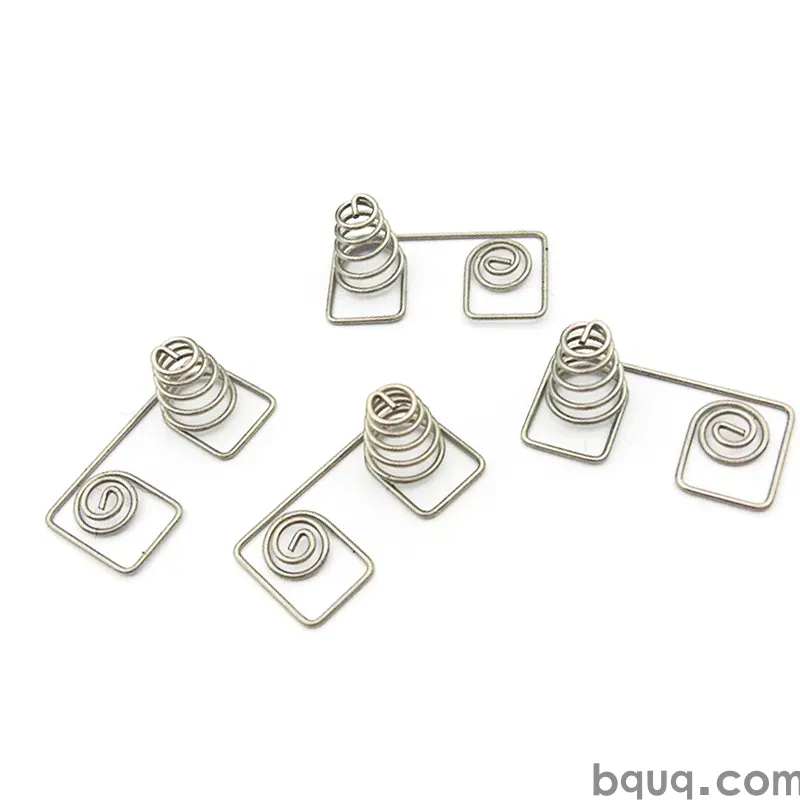
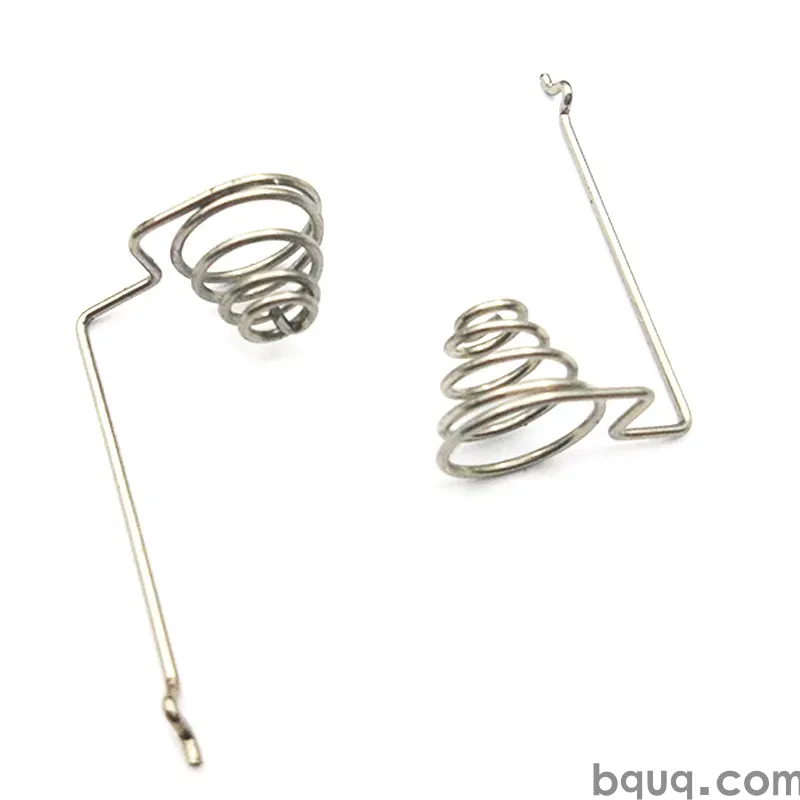
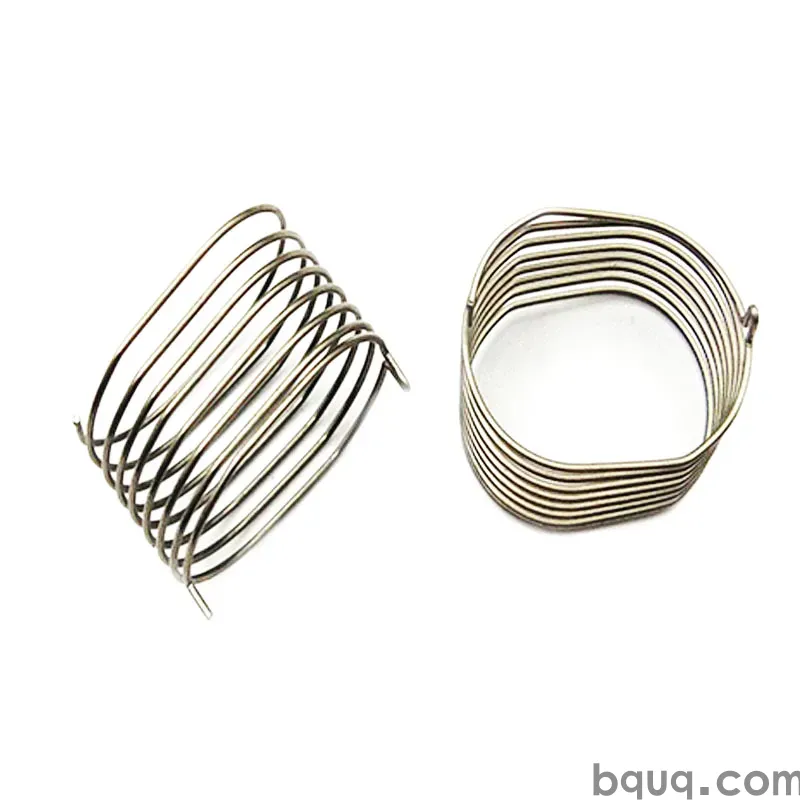
Beryllium copper stamping explained by BQUQ, a Dongguan source factory: C17200 conductivity, strength, fatigue and cost vs brass and phosphor bronze.
Beryllium Copper Stamping: When the Cost Is Justified
Short answer: beryllium copper is justified when one part must carry current, make spring force, and keep that force at elevated temperature through millions of cycles — relay contact arms, high-end connector contacts, and aerospace or automotive sockets. It costs typically 6–10× brass strip (indicative), so the value case fails for ordinary terminals where brass or phosphor bronze survives. Beryllium copper C17200 runs about 20–25% IACS conductivity with tensile strength over 1,200 MPa when age-hardened — a combination no plain copper alloy reaches. BQUQ stamps BeCu contacts with progressive dies in Dongguan and quotes from drawings within 12 working hours.
Beryllium copper is the material you specify when the drawing says "spring contact, current-carrying, hot environment, ten million cycles" and the alternative is a two-part assembly that costs more to build than the alloy costs to buy. It is also the material buyers over-specify, because its price tag is frightening and its benefits are easy to misapply. This guide lays out what C17200 actually delivers, where it beats brass and phosphor bronze, where it loses, and how to buy stamped beryllium copper parts without paying for properties the application never uses.
What Beryllium Copper Actually Is
Beryllium copper is a precipitation-hardening alloy: roughly 1.8–2.0% beryllium in copper (C17200, the strip workhorse), or high-conductivity variants like C17510 with ~0.4% beryllium plus nickel. The magic is in the heat treatment. Strip arrives solution-annealed or cold-worked, and after stamping it can be age-hardened at around 315°C for a few hours, which precipitates beryllide particles and lifts strength dramatically without melting the part or scaling it like steel hardening. That means the die can form the alloy in a relatively soft state, then the part gets its spring properties in the furnace — a real advantage over stamping pre-hardened spring steel.
The numbers explain the reputation. Age-hardened C17200 strip reaches tensile strengths of roughly 1,150–1,450 MPa depending on temper — comparable to hardened spring steel — while holding about 20–25% IACS conductivity. It is non-magnetic, resists corrosion and stress relaxation far better than brass, keeps useful spring properties at 150–200°C where brass contacts relax their force within hours, and shrugs off fatigue: cantilever spring contacts made from it routinely survive millions of deflections that would take a set or crack in cartridge brass.
| Property | C17200 BeCu (aged) | C17510 high-cond BeCu | C26000 brass | C51000 phosphor bronze | C52100 phosphor bronze |
|---|---|---|---|---|---|
| Conductivity, % IACS | ~20–25 | ~45–60 | ~28 | ~15 | ~13 |
| Tensile, MPa (strip) | 1,150–1,450 | 700–1,000 | 340–650 | 450–750 | 500–850 |
| Stress relaxation at 100°C+ | Low | Low | Severe | Moderate | Moderate |
| Fatigue resistance | Excellent | Good | Poor | Very good | Very good |
| Relative strip cost (indicative) | 6–10× brass | 5–8× brass | 1× | 2–3× brass | 2–3× brass |
| Typical use | Relay arms, connector contacts | High-current spring contacts | Terminals, fuse clips | Wiper contacts, relay springs | Heavier springs, switches |
The honest reading of the table: brass is a conductor that springs a little; beryllium copper is a spring that conducts. Phosphor bronze occupies the middle and is the default upgrade from brass. BeCu only earns its premium when brass and phosphor bronze run out of headroom — usually on stress relaxation at temperature, on fatigue life in a thin section, or on needing both high conductivity and high force in a tiny envelope. If the contact runs cool, deflects rarely, and lives indoors, brass is probably the right answer and anyone quoting BeCu is overselling. The selection logic for ordinary conductive contacts is in the terminal stamping material guide; BeCu is the last stop, not the first.
Where Beryllium Copper Wins — and Where It Loses
The clearest win is temperature. Brass and most bronzes relax: a contact arm held deflected at 85–125°C gradually loses its force as the material creeps, and a socket that gripped at 200 g drops to 80 g over a few hundred hours. Beryllium copper retains a far higher fraction of its load at the same temperature. That is why automotive connectors under the hood, relay contacts near solenoids, and aerospace circular connectors specify it — the environment is warm and the contact force is the whole reliability story.
The second win is fatigue in small sections. A contact that must flex millions of cycles (card-edge connectors, test sockets, relay blades) fails by fatigue, and BeCu's endurance limit sits well above brass's. Because force in a cantilever scales with thickness cubed over length, a designer can shrink the section to fit a tight pitch and still keep the needed grams of force — BeCu is the enabler of high-density connectors that brass simply cannot be made thin enough to build. Non-magnetic and corrosion-resistant properties matter in specific niches: BeCu is used in medical and instrumentation contacts, and in explosive or fuel environments where a sparking or arcing material is unacceptable.
Where it loses is straightforward economics and formability. The strip costs multiples of brass, and it is harder to stamp: tighter tolerance on die clearance, more punch wear, and springback that must be compensated in the tool. Deep forms and tight radii are limited — minimum bend radii run about 2–3× thickness in the harder tempers, better in annealed. For a part that only needs current carrying, plain copper or brass wins on cost. For a part that needs spring force but runs cool and bends rarely, phosphor bronze usually wins on cost. Beryllium copper is the answer to a specific specification, not to a vague desire for "the best material."
| Temper of C17200 | State | Formability | Strength after aging | Typical use |
|---|---|---|---|---|
| A (TB00) | Solution annealed | Best — tight radii | Highest after age | Severe forms, then age |
| 1/4H, 1/2H | Cold worked | Moderate | High | General contacts |
| H (TH04) | Full hard | Limited | Highest as-supplied | Straight springs, no aging needed |
| Mill-hardened | Pre-aged | Limited | Full strength | Parts used as stamped |
A practical sourcing note on tempers: buying BeCu right means buying the right starting temper for the die. If the part has a 90° bend at 1× thickness, start from annealed strip and age after forming; if the part is nearly flat, full-hard mill-hardened strip skips the aging furnace entirely. Every extra step — aging, or not — changes cost and lead time, so the drawing should state the starting temper and the final requirement together. Our contact spring materials guide shows how temper, grain direction and finish decisions land on thin spring parts.
Stamping Beryllium Copper: What Changes in the Die
Beryllium copper stamps more like a stiff spring material than like soft copper. It work-hardens as it forms, so the die must be designed for the final hardness, not the incoming one. Carbide punches and dies are the norm for volume runs because BeCu wears tool steel noticeably faster than brass does, and worn tooling shows up as burr growth and dimension drift on the very parts that carry tight tolerance. Die clearances run on the tighter side of the steel range, and lubrication is critical — the alloy is gummy in annealed form and galling on the tool is a real failure mode.
Burr control deserves its own line because BeCu parts are small, thin (typically 0.05–0.5 mm strip for contacts) and often function as sliding or wiping contacts where a burr scrapes plating or catches on a mating surface. Sheared edges should be deburred or coined, and burr direction specified on the drawing. Plating complicates things further: BeCu parts for connectors are usually plated with nickel underplate plus gold or tin at the contact area, and plating adhesion depends on the surface state left by the die. The full trade between plating types and thickness on stamped contacts is in the stamped contact plating guide; the short version is that a bright, clean, burr-free stamped surface is what makes selective plating stick and stay stuck through thermal cycling.
Health and handling deserve a straight paragraph because buyers ask. The hazard reputation of beryllium concerns inhaled dust or fume from machining and grinding — the mill produces strip in controlled conditions, and stamping itself generates essentially no respirable dust; the alloy is safe to handle as finished parts. Do not grind, sand or EDM BeCu parts without the same controls any machine shop applies to beryllium-bearing materials, and say so on the RFQ so the factory's processes match. This is a process note, not a reason to avoid the material: BeCu is specified across medical, aerospace and automotive industries with routine, well-controlled manufacturing.
Cost Reality and When to Say Yes
Model the decision in whole-assembly terms. The per-kilo premium on BeCu is real, but these parts weigh milligrams to a few grams; what matters is the finished-piece price, the tooling, and the reliability it buys. A stamped BeCu contact arm might cost $0.08–$0.60 per piece (indicative) versus $0.02–$0.15 in brass or phosphor bronze — a gap of pennies that buys away a field-failure mode worth dollars. If the application is a warm environment with sustained contact force, or high-cycle flexing in a thin section, or both, BeCu is usually the cheapest reliable answer, not the most expensive one. If the part is a static conductor or a rarely-flexed clip at room temperature, the pennies go the other way and you should not pay them.
Buying it well is a sourcing discipline. Specify the exact alloy and temper (C17200, starting temper, whether aging is required), the finish and plating, the force-at-deflection window, and the service temperature — a BeCu contact designed for 20°C and one designed for 150°C are different parts. Ask the factory whether they age in-house and whether they load-test force. BQUQ runs BeCu contacts, terminals and contact springs through progressive dies in Dongguan with in-house quality inspection, and quotes within 12 working hours on a drawing that carries alloy, temper, plating and quantity — send it to sc@bquq.com or WhatsApp +86 13713157787.
Frequently Asked Questions
Q: Is beryllium copper worth the cost for stamped contacts?
A: Only when the application needs its combination of conductivity, spring force, and resistance to stress relaxation and fatigue — typically warm environments, high cycle counts, or thin high-density sections. For ordinary room-temperature terminals, brass or phosphor bronze is the economical choice.
Q: What are the advantages of beryllium copper over phosphor bronze?
A: Beryllium copper holds contact force far better at elevated temperature, resists fatigue in thin sections, and offers roughly 20–25% IACS conductivity with steel-like strength of 1,150–1,450 MPa. Phosphor bronze costs about a third as much and wins for cool, moderate-duty springs.
Q: Can beryllium copper parts be stamped, or is it too hard?
A: It stamps routinely, but with rules: tighter die clearances, carbide tooling for volume runs, springback compensation, and starting temper matched to the geometry. Deep forms start from annealed strip and age-harden after forming; flat parts can run from mill-hardened strip.
Q: Is beryllium copper dangerous to handle in stamped parts?
A: Finished stamped parts are safe to handle — the hazard is inhaled dust or fume from machining and grinding beryllium-bearing alloys, which is why mills and machine shops use controlled processes. Stamping itself creates essentially no respirable dust, but grinding or EDM of BeCu needs proper controls.
Q: What thickness and tolerance can I expect for stamped beryllium copper parts?
A: Contacts typically stamp from 0.05–0.5 mm strip, with formed tolerances around ±0.05–0.10 mm and tighter on flat features. Burr control and plating surface quality matter as much as dimension, since most BeCu parts function as sliding or wiping contacts.
Related Resources
- Plating stamped contacts — nickel, gold and tin plating for spring contacts, selective and reel-to-reel.
- Contact and spring materials compared — where BeCu, brass, bronze and steel each make sense.
- Stamped terminals, contacts and flat springs — BQUQ's stamping line for electrical hardware.
- About BQUQ: an ISO9001-certified Dongguan factory running stamping, springs, CNC and heat sinks under one roof.
- Contact us: send your contact drawing for a quote within 12 working hours.
Authored by the BQUQ Engineering Team. BQUQ is an ISO9001-certified source factory in Dongguan, China, running CNC machining, metal stamping, custom springs, heat sink and collet lines under one roof. Send drawings to sc@bquq.com or WhatsApp +86 13713157787 for a quote within 12 working hours. www.bquq.com