Anodizing types II and III, colors and real cost impact on CNC aluminum parts, explained by an ISO9001 Dongguan source factory. Quote in 12 hours.
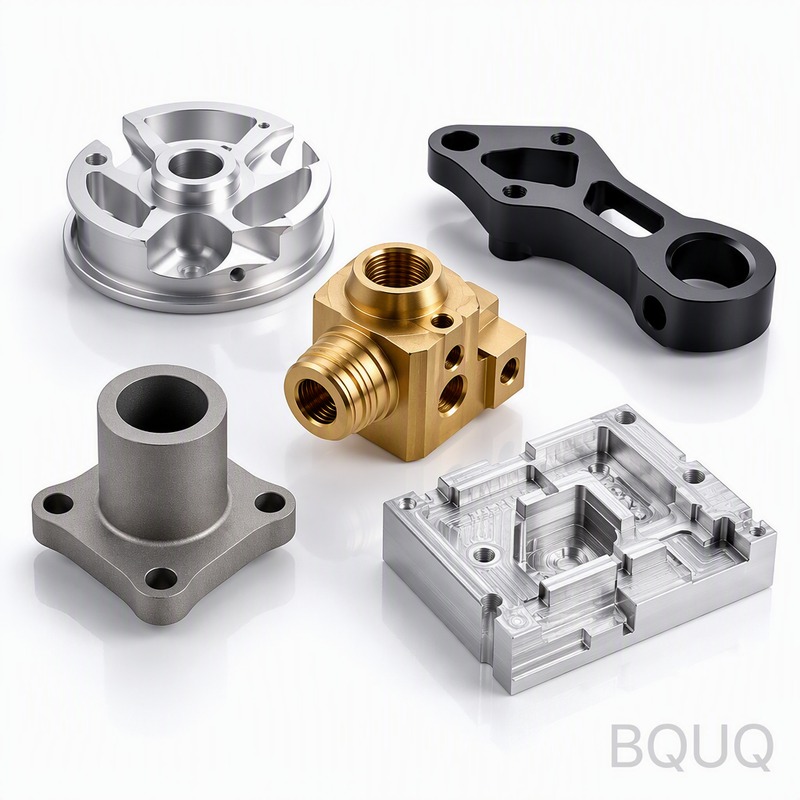
CNC Anodizing: Types, Colors and How Finish Choice Affects Cost
Short answer: on CNC aluminum parts there are two anodizing families that matter — Type II, a decorative and protective coating 5–25 µm thick in almost any color, and Type III hard coat, a wear-resistant coating 25–100 µm thick in dark shades only. Anodizing typically adds $1–$5 per part depending on type, color and masking, and the single biggest cost mistake buyers make is specifying a cosmetic color on a functional face or a hard coat on a part that never wears.
Anodizing is not paint. The process grows an aluminum oxide layer out of the metal itself in an electrolytic bath, which means it cannot peel and it follows every edge and thread precisely. It is also one of the few finishing steps that can change your part's function, not just its looks: hard coat adds genuine wear resistance, and both types improve corrosion protection and give paint an anchor. Understanding what each type actually delivers — and what it costs — keeps you from over-specifying a finish your application will never use.
What Anodizing Actually Is
Anodizing converts the aluminum surface into aluminum oxide (Al2O3) through an applied current in an acid electrolyte. The oxide layer grows inward from the surface, so parts grow slightly in dimension on every coated face — roughly half the coating thickness outward-equivalent in net effect, which is why tight tolerance holes and threads are usually masked or anodized before final sizing. The porous layer is then sealed (for corrosion protection) or dyed before sealing (for color).
The process only works on aluminum. Steel, stainless, brass and titanium parts need different treatments — passivation, plating, black oxide — which is worth knowing before you design a mixed-material assembly expecting one finish to cover everything. If your part is aluminum, anodizing is the default finish for good reason: it is durable, uniform, cheap at volume and does not hide machined detail.
Type II vs Type III: The Two That Matter
| Property | Type II (sulfuric, decorative) | Type III (hard coat) |
|---|---|---|
| Typical thickness | 5–25 µm | 25–100 µm |
| Hardness | ~200–400 HV | ~350–500+ HV (up to 3× wear life) |
| Color options | Full range incl. clear, black, red, blue, gold | Limited: black, bronze, dark gray shades |
| Corrosion protection | Good | Better (thicker barrier) |
| Wear resistance | Moderate | High — used on sliding and mating surfaces |
| Dimensional build | ~5–12 µm per surface typical | Significant, up to 50 µm per surface; may need post-machining |
| Relative cost | Baseline | 1.5–3× Type II |
| Typical parts | Enclosures, brackets, cosmetic housings, robot parts | Pistons, valves, gears, guide rails, anything sliding |
Takeaway: if your drawing calls for "anodize" with no type, the shop will default to Type II clear or black — which is correct for most CNC parts. Hard coat is a functional coating, not a color choice, and its thickness changes dimensions enough that critical features often need machining after coating or generous tolerance before it.
Colors: What You Can Actually Get
Type II accepts dye in a wide palette. Clear (natural), black, red, blue, green, gold, gray and custom colors are routine; the dye is absorbed into the porous layer before sealing, so color is part of the coating, not on top of it. What you cannot get is a bright white (aluminum oxide is translucent, so white reads as light gray), a metallic finish (that is paint or PVD), or a perfectly matched color across different aluminum alloys — 6061, 6063 and 7075 dye to slightly different shades because their alloy chemistry differs.
| Color | Typical use | Cost note |
|---|---|---|
| Clear / natural | Standard protection, shows machined surface | Baseline, no dye step |
| Black | Most common cosmetic + optical/thermal | Slight premium over clear |
| Red / blue / green / gold | Branding, identification, consumer parts | Dye + rinse steps add modest cost |
| Custom / two-tone | Brand-consistent housings | Masking between colors raises cost and lead time |
Takeaway: black and clear dominate because they cover 90% of applications — black for cosmetics, optics and thermal emissivity, clear when you want the natural machined look with protection. Color cost differences are real but small; the cost drivers are masking, racking and thickness class, not the pigment itself.
Where Color Affects Function: A Real Thermal Note
Black anodize is not just cosmetic. A black Type II coating raises surface emissivity from roughly 0.1–0.3 (bare aluminum) to about 0.8–0.9, which measurably improves radiative cooling on heat sinks and enclosures that shed heat without airflow. If your part is a CNC-machined heat sink or a power electronics housing, black anodize is a functional finish, and the small color premium pays for itself in lower operating temperature. On a purely structural bracket, the same coating is decoration — and you should feel free to spec clear instead.
How Finish Choice Changes Your Quote
Anodizing cost follows three levers: part area and racking efficiency, coating class, and masking complexity. Small parts rack densely and cost little per piece; large flat parts occupy rack space and cost more. Every masked feature — a precision bore, a ground face, a threaded hole that must stay bare for conductivity — adds a labor step, and masking is usually the largest hidden cost in a finish specification.
| Finish scenario | Typical added cost per part | What you pay for |
|---|---|---|
| Clear Type II, no masking | $1–$2 | Bath time, racking, sealing |
| Black Type II, no masking | $1.5–$3 | Dye + extra rinse steps |
| Type II with masked critical bores | $3–$6 | Hand masking labor per part |
| Type III hard coat, selective mask | $5–$12 | Thicker coating, longer bath time, masking |
| Two-tone or multi-color | $4–$10 | Second mask + second dye cycle |
Takeaway: the cheapest finish specification is the one that matches function — clear Type II on structural parts, black Type II where cosmetics or thermal emissivity matter, hard coat only on surfaces that actually slide or wear. Every masking requirement, color step and thickness class you add converts directly into per-part price, which is why the same geometry can quote at very different finished prices depending on the finish line on your drawing. If you want the full breakdown of how finishing sits inside total part cost, the CNC machining cost guide puts it in context with material, tolerance and quantity.
Practical Rules for Specifying Anodize
First, separate cosmetic faces from functional faces on the drawing. A bore that mates with a bearing should be called out "mask — no anodize" or toleranced to account for coating build; the cosmetic pocket next to it can be anodized freely. Second, do not demand hard coat on parts that never wear — Type II already protects against corrosion and gives a durable finish. Third, remember that anodize hides almost nothing: burrs, tool marks and inconsistent machining show through the coating, so the surface quality you see after anodizing is the surface quality that went into the bath.
Finally, specify the alloy with the finish in mind. 6061 anodizes to a clean, uniform finish and is the default; 7075 and high-silicon alloys castings anodize darker and less uniformly. If the finish matters as much as the dimensions, the alloy choice and the finish choice should be made together, not in sequence. At BQUQ our CNC milling line feeds a partnered anodizing shop with racking, masking and color QC managed in-process, and every batch is checked for thickness and color consistency before shipment. Put the finish spec on the drawing — type, color, masked features — and send it to sc@bquq.com or WhatsApp +86 13713157787 for a price that reflects the finish you actually need, within 12 working hours.
Email sc@bquq.com or WhatsApp +86 137 1315 7787 with your PDF/DXF/STEP file. An engineer reviews it and replies with price, lead time and DFM notes on working days.
Frequently Asked Questions
Q: What is the difference between Type II and Type III anodizing?
Type II is a 5–25 µm decorative and protective coating in any color. Type III hard coat is 25–100 µm, much harder and wear-resistant, but limited to dark shades and costlier. Most CNC parts only need Type II.
Q: Does anodizing change part dimensions?
Yes, the coating grows into the surface and adds roughly half its thickness to each coated dimension. Tight bores and mating threads are usually masked or sized afterward. Plan the coating into your tolerances.
Q: Why does black anodize cost more than clear?
Clear skips the dye step. Black adds a dye immersion plus extra rinsing before sealing. The difference is small per part — typically under a dollar — and black also adds thermal emissivity benefits.
Q: Can I get a bright white or metallic anodized part?
No. The oxide layer is translucent, so light colors read as pale gray. Metallic looks require paint or PVD. If the color must match exactly, provide a physical sample — dye shades vary slightly between alloys.
Q: Do I need hard anodizing for a wear application?
If surfaces slide, mate or see abrasion, Type III is the right call and worth the cost. If the part is static or the coating is decorative, Type II gives corrosion protection and durability at a fraction of the price.
Related Articles
- cnc-vs-3d-printing-vs-injection-molding — More from the BQUQ CNC Machining engineering series.
- cnc-dfm-guide — More from the BQUQ CNC Machining engineering series.
- cnc-machining-cost-guide — More from the BQUQ CNC Machining engineering series.
Data Sources and Verification
Tolerances, cycle times and price ranges in this guide come from BQUQ production records at our Dongguan plant, where CNC machining (±0.005 mm), stamping, custom springs and heat sinks run under one roof. BQUQ is an ISO 9001:2015 certified factory; the certificate and batch inspection reports are available on request with every quotation.
Related Resources
- About BQUQ: an ISO9001-certified source factory in Dongguan running four production lines under one roof.
- CNC products and services: turning, milling and precision components from the machining line — CNC turning parts, CNC milling parts, CNC precision components.
- Industry trends: manufacturing, material market, and sourcing analysis for buyers.
- Technical articles: engineering guides and process comparisons — more where this article came from.
- FAQ hub: quick answers on CNC, stamping, springs, and heat sinks.
- Case studies: real parts and real numbers from projects we engineered and delivered.
- Contact us: send your drawing and get a quote within 12 working hours.
Authored by the BQUQ Engineering Team. BQUQ is an ISO9001-certified source factory in Dongguan, China, running CNC machining, metal stamping, custom springs and heat sink lines under one roof. Send drawings to sc@bquq.com or WhatsApp +86 13713157787 for a quote within 12 working hours. www.bquq.com