CNC machining services from a Dongguan source factory: 0.005 mm capability, ISO9001, common materials and finishes, real lead times. Quote in 12 hours.
CNC Machining Services in China: Capabilities, Tolerances & Lead Times
Short answer: a serious CNC machining service in China holds ±0.005 mm on production features, verifies it with CMM, and quotes from your drawing within 12 hours on working days. Prototypes fly out in 5–7 days; sea freight for production runs takes 25–40 days from Shenzhen or Dongguan. MOQ is flexible — one-piece sampling is normal, and tooling is rarely involved. The real question is who you are dealing with: a trader forwarding emails, or a factory like ours in Dongguan running CNC turning, milling, stamping, springs, and heat sinks under one ISO9001 roof.
Buying CNC machining services from China is not a gamble if you pick the right counterparty. The country runs tens of thousands of machine shops, and the gap between the best and the worst is huge. This guide explains what a proper source factory offers — machines, tolerances, materials, finishes, lead times — so you know what to ask for and what a straight answer looks like. Want the pricing logic before you write to anyone? Our CNC machining cost guide breaks down the factors that move your quote.
What Does a CNC Machining Service From China Actually Cover?
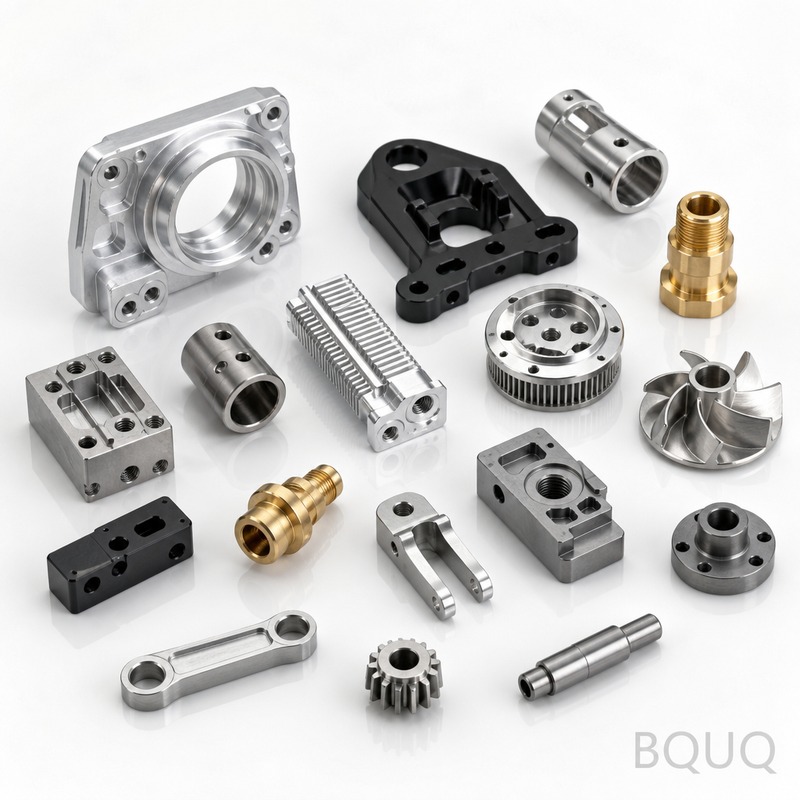
CNC machining splits into two main disciplines. Turning spins the workpiece while a stationary tool cuts it — that is how shafts, pins, bushings, and threaded parts are made. Milling holds the workpiece still and moves a rotating cutter — that is how brackets, housings, pockets, and complex 3D features are made. A full-service shop runs both, plus the supporting operations: wire EDM for hardened details, surface grinding for flatness, and CNC precision components work that combines several operations on one part.
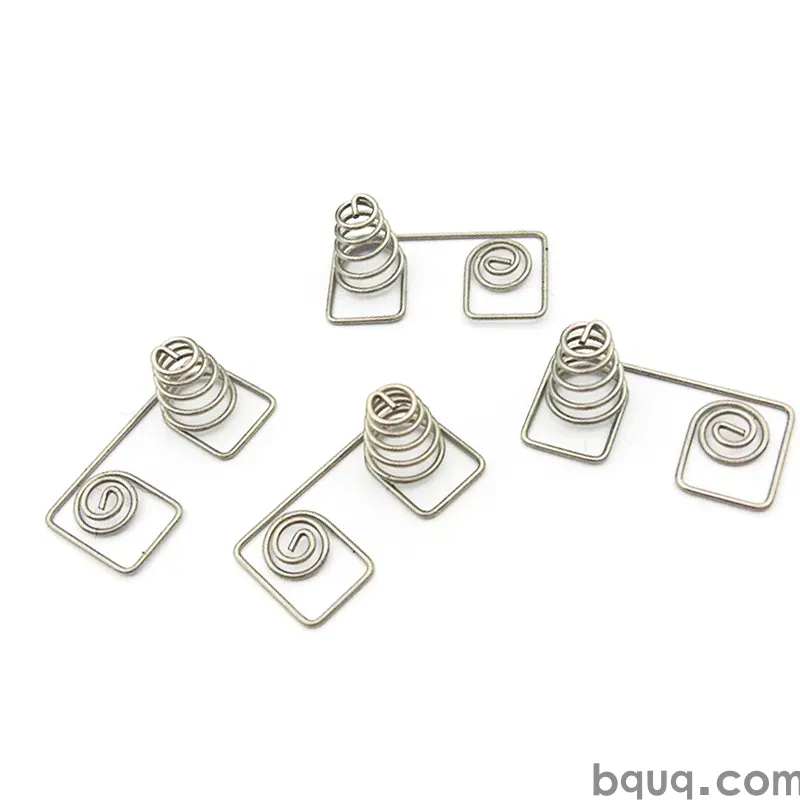
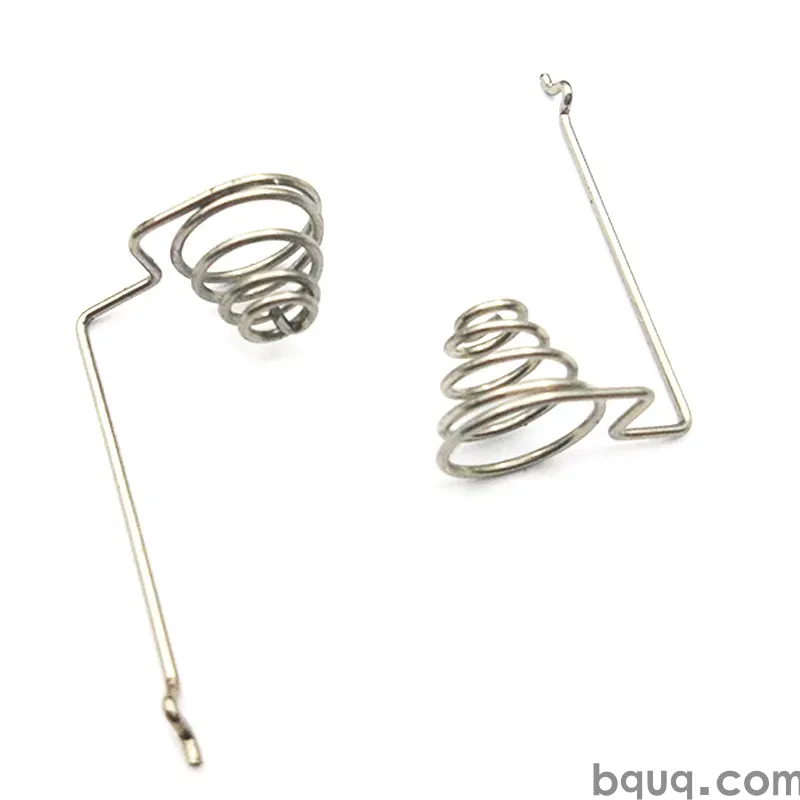
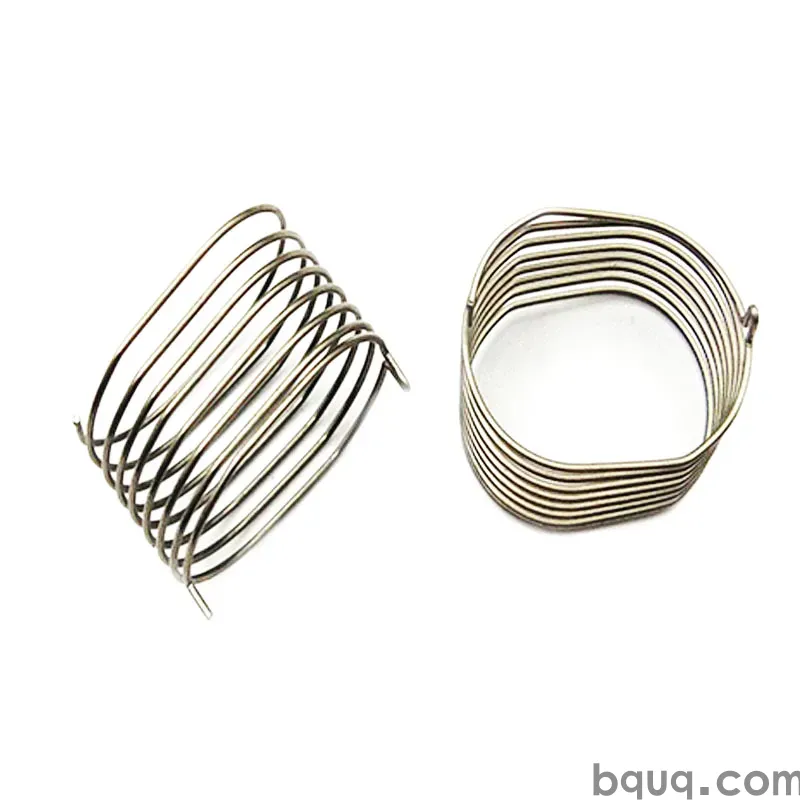
The capability you really want is depth. We machine CNC turning parts and CNC milling parts on the same floor as our stamping, spring, and heat sink lines, which matters more than it sounds. A part that starts as a machined prototype can move to a stamped production version at volume without you changing suppliers. An assembly that needs a machined housing, a stamped terminal, and a compression spring ships from one factory with one quality system, not three vendors arguing about who caused the defect.
What Machines Should You Expect From a Source Factory?
Ask any serious shop for its machine list and it should look roughly like this: three-axis and four-axis machining centers, some five-axis capacity for complex geometries, CNC lathes with live tooling so a part is turned and milled in one setup, plus wire EDM and surface grinders for the jobs CNC cannot do efficiently. Inspection matters as much as cutting — a decent shop keeps a CMM and calibrated hand tools and uses them, not just owns them.
We publish our machine list so customers can check what a part will actually run on. When you compare suppliers, ask what machines a job will use and how many setups it needs. Fewer setups means better consistency, because every time a part is reclamped, tolerance stack-up creeps in.
What Tolerances Can a China CNC Factory Really Hold?
Most shops can hold ±0.05 mm all day. The difference shows up at ±0.01 mm and tighter. That needs rigid machines, good tooling, stable temperature, and an inspector who measures instead of assumes. Our production capability is ±0.005 mm on critical features, verified with CMM on real parts, not just in theory.
| Feature class | Tolerance typically held | Verification |
|---|---|---|
| Standard pockets, profiles, outer dimensions | ±0.05 mm | Calipers, CMM spot checks |
| Precision bores, mating diameters | ±0.01 mm | CMM, air gauges |
| Critical features, datum-controlled | ±0.005 mm | Full CMM inspection, batch report |
| Position and true position | ±0.01–0.02 mm | CMM |
Two honest notes. First, ±0.005 mm is not a blanket on every surface of every part — it applies to defined critical features on stable materials like aluminum and steel. Second, a drawing that says "tight tolerance" without specifying where usually gets quoted at the tightest interpretation, and you pay for vagueness. Call out the features that matter; leave the rest at general tolerances. Our tolerance guide walks through ISO 2768 and GD&T callouts in plain language.
Which Materials Can Be Machined in China?
The practical menu covers aluminum, steel, stainless, copper alloys, and engineering plastics. Anything exotic like titanium or Inconel is machinable but priced accordingly, so only specify it when the application truly needs it.
| Material | Typical grades | Common applications |
|---|---|---|
| Aluminum | 6061-T6, 6063, 7075-T6 | Brackets, housings, heat sink bases, prototypes |
| Steel | 1215, 12L14, 1045 | Shafts, pins, structural parts |
| Stainless steel | 303, 304, 316 | Fasteners, food and medical hardware, marine parts |
| Brass and copper | C360 brass, C110 copper | Terminals, fittings, conductive parts |
| Plastics | POM (Delrin), nylon, PEEK, acrylic | Insulators, guides, wear parts, clear covers |
Material choice drives both function and price. Aluminum machines fast and is cheap; stainless costs more per kilo and cuts slower. If your part works in 6061, do not spec 7075 "just in case" — every upgrade shows up on the invoice.
What Surface Finishes Are Commonly Applied?
Standard options on machined parts: clear or black anodize on aluminum, bead blasting for a uniform matte look, nickel plating on brass or steel, passivation on stainless, and powder coat or paint for enclosures. Laser marking or silkscreen handles logos and part numbers. Cosmetic grades — scratch-free Class A surfaces — need extra handling and packaging, so only request them on visible faces.
Anodize is the default for aluminum parts and usually adds $1–$3 per piece depending on color and masking (indicative, varies by drawing and quantity). Plating on copper alloys matters for conductivity and solderability, which is where our stamping line overlaps with machining: a machined brass terminal and a stamped one often end up with the same plating spec.
How Long Do CNC Machining Lead Times Actually Take?
Work backward from your deadline. Quoting is fast: send the drawing and you get a number within 12 hours on working days. Production time depends on quantity, material, and finishing, and any factory that quotes you a firm date before seeing the drawing is guessing.
| Stage | Typical timing |
|---|---|
| Quotation | Within 12 hours (working days, drawing required) |
| Prototype machining (1–50 pcs) | 3–7 days typical |
| Production batch (100–5,000 pcs) | 7–20 working days typical |
| Air freight, Shenzhen/Dongguan to US/EU | 5–7 days |
| Sea freight | 25–40 days |
A common split-ship trick: air a handful of parts for qualification while the rest of the batch goes by sea. It costs a bit more on freight but can save weeks on your critical path.
Why Source Direct From a Factory Instead of a Trading Company?
Traders add a layer of margin, a layer of communication lag, and a layer of blame-shifting when something goes wrong. A source factory answers your technical questions with the engineer who runs the job. Three things separate a real factory from a middleman. First, ownership of the machines — we run our machine list, we do not subcontract your job to whoever is cheapest this week. Second, certification and process: ISO9001 is the baseline, and it means documented inspection, material traceability, and a dimensional report shipped with every batch. Third, range: when a part should not be machined at all — say it is a high-volume terminal better suited to stamping — a four-line factory tells you the truth because it can still win the business on another process.
How Do I Get Started With a CNC Factory in China?
Send the drawing. That is the whole secret. A STEP or IGES 3D model plus a PDF with tolerance callouts, material grade, quantity, and finish requirement is enough for a real quote. If you only have a sketch, send it anyway and the engineering team will tell you what is missing. Email sc@bquq.com or message WhatsApp +86 13713157787, and you will have a number within 12 hours on a working day.
Email sc@bquq.com or WhatsApp +86 137 1315 7787 with your PDF/DXF/STEP file. An engineer reviews it and replies with price, lead time and DFM notes on working days.
Which CNC process fits your part? (Decision tree)
| If your part... | Choose | Why |
|---|---|---|
| Is round or has turned features OD/ID/threads | CNC turning | One-setup turning of round features |
| Is prismatic with pockets, flats or slots | CNC milling (3/4-axis) | Multi-face access |
| Is under 32 mm diameter and long (L/D over 5) | Swiss-type turning | Guide bushing supports the cut |
| Has complex 3D contours on several faces | 5-axis machining | Fewer setups, better accuracy |
| Needs tighter than +/-0.005 mm or a fine finish | Add grinding or lapping | Machining alone reaches its limit |
| Runs in thousands and the shape is simple | Consider stamping instead | Lower unit cost at volume |
Frequently Asked Questions
What is the minimum order quantity for CNC machining in China?
A: There is no practical MOQ. We machine one prototype for validation or a full production batch. Setup cost makes small quantities pricier per piece, but no tooling is needed, so single-piece orders are completely normal.
Can a Chinese CNC factory really hold ±0.005 mm?
A: Yes, on defined critical features, verified with CMM. That is our production capability, not a lab trick. Ask for the dimensional inspection report on the first batch and check it yourself before scaling up.
How long does shipping from China actually take?
A: Air freight from Shenzhen or Dongguan to the US and EU runs about 5–7 days; sea freight takes 25–40 days depending on the port. Production time is separate — ask for it in the quote.
Is it safe to have parts machined in China?
A: It is, when you deal with the factory directly and verify with samples and reports. Check ISO9001 certification, ask for a first-article inspection, and confirm the tolerance and material assumptions in writing before volume production.
What files do I need to send for a CNC quote?
A: STEP, STP, IGES, or X_T 3D models, plus a PDF drawing with tolerance callouts. Include material grade, quantity, and surface finish. Missing information just delays the quote — we will ask before pricing, not after.
Related Articles
- How Much Does CNC Machining Cost? Factory Pricing Factors (2026 Guide) — CNC machining cost explained by a China source factory: material, tolerance, quantity, finishing, setup. Real price ranges and a quote checklist. Get a quote in 12 hours.
- CNC Machining Tolerances: ISO 2768 vs GD&T and What You Can Actually Hold — ISO 2768-mK, GD&T symbols, and what a CNC shop can actually hold: ±0.005 mm in production, and how tolerance choices move cost and lead time.
Data Sources and Verification
Tolerances, cycle times and price ranges in this guide come from BQUQ production records at our Dongguan plant, where CNC machining (±0.005 mm), stamping, custom springs and heat sinks run under one roof. BQUQ is an ISO 9001:2015 certified factory; the certificate and batch inspection reports are available on request with every quotation.
Related Resources
- About BQUQ: an ISO9001-certified source factory in Dongguan running four production lines under one roof.
- CNC products and services: browse the CNC turning parts, CNC milling parts, and CNC precision components we machine every day.
- Industry trends: manufacturing, material market, and sourcing analysis for buyers.
- Technical articles: engineering guides on CNC, heat sinks, springs, and stamping — more where this one came from.
- FAQ hub: quick answers on CNC, stamping, springs, and heat sinks.
- Case studies: real parts and real numbers from projects we engineered and delivered.
- Contact us: send your drawing and get a quote within 12 working hours.
Authored by the BQUQ Engineering Team. BQUQ (Dongguan) runs CNC machining (±0.005 mm), metal stamping, custom springs, and heat sink production in one ISO9001 factory. Source-direct from Dongguan, China — quote in 12 hours: sc@bquq.com | WhatsApp +86 13713157787 | www.bquq.com