Swiss lathes hold tight tolerances on small, long parts via a guide bushing. See when Swiss beats a conventional lathe. BQUQ quotes in 12 hours.
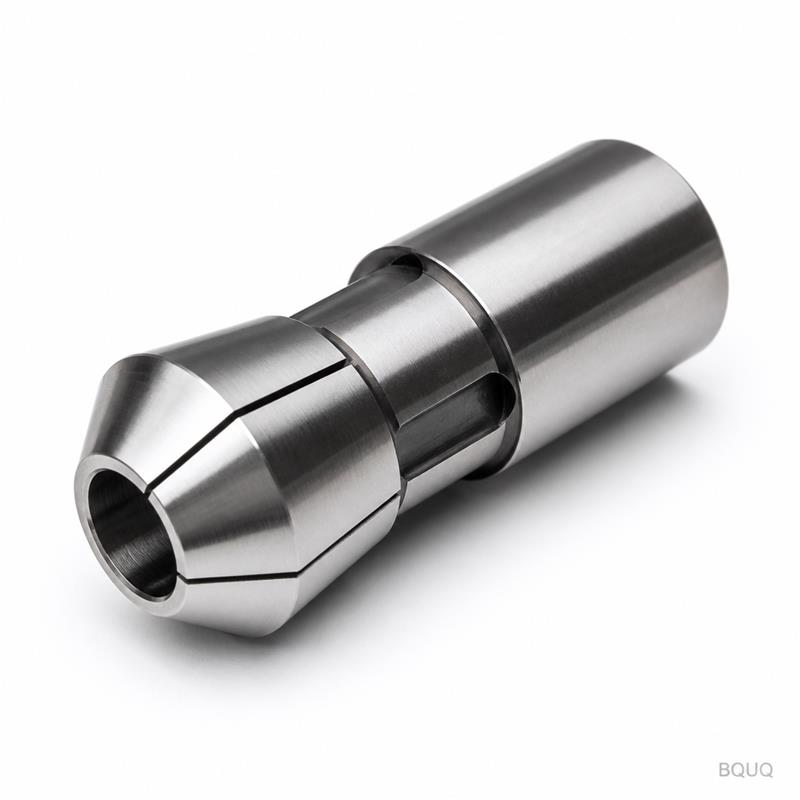
Swiss CNC Machining: What It Is and When You Actually Need It
Swiss machining is the answer when the part is small, long, and tight: it holds concentricity and straightness on parts from about 0.5 mm to 32 mm diameter, with length-to-diameter ratios no conventional lathe can manage. If your part is a pin, sleeve, connector, or implant component under roughly 30 mm diameter, Swiss is worth the rate premium — for a 100 mm flange, it is wasted money.
Swiss-type CNC lathes look like conventional CNC lathes but work on a different principle. Instead of the part spinning while a tool moves along it, the bar stock slides through a guide bushing as the tools cut close to that bushing. The cutting happens right at the support point, which is why long skinny parts do not deflect and why roundness and concentricity come out as good as the machine's spindle. This guide explains how Swiss machining works, the tolerances and part shapes it genuinely owns, and the honest crossover point where a conventional lathe is the cheaper tool.
How a Swiss Lathe Is Different
In a conventional CNC lathe, the chuck grips the stock and the part extends unsupported into space; machining a feature far from the chuck means the workpiece flexes, and length-to-diameter ratios beyond about 3:1 or 4:1 need a steady rest or tailstock. A Swiss lathe reverses the logic: the headstock slides on the Z axis and pushes the bar through a fixed or sliding guide bushing, while the tools cut the material right at the bushing face. The unsupported length of material at the cut is always short — often under a few millimeters — so a 20:1 length-to-diameter shaft machines straight, round, and concentric without chatter.
| Machining factor | Conventional CNC lathe | Swiss-type lathe |
|---|---|---|
| Workpiece support | Chuck + tailstock/steady rest | Guide bushing at the cut |
| Practical L/D ratio | ~3:1 to 4:1 unsupported | 10:1 to 20:1+ routine |
| Typical diameter range | 5 mm to 300 mm+ | ~0.5 mm to 32 mm standard |
| Concentricity on long parts | Drifts with unsupported length | Held at bushing |
| Multiple operations | Usually two or more setups | One setup with subspindle and live tools |
| Machine-hour rate | Lower | Higher |
The price of the Swiss approach is the machine itself: a Swiss lathe with a subspindle and live tooling is a complex, expensive piece of equipment, and its work envelope is deliberately small. That is why the technology clusters around small precision parts — medical, watch, electronics, automotive fuel and brake components — where the geometry and tolerances justify the rate.
The Tolerances Swiss Machining Actually Gives
Swiss machines earn their reputation on features a conventional lathe struggles with: long diameters that must stay round and straight, and features on opposite ends of a long part that must line up. Machining near the guide bushing means cutting forces act on a short, well-supported section, so roundness on a 3 mm diameter can hold in the low-micron range and diameters commonly run to ±0.005 mm or better with stable process control. Concentricity between a turned diameter and a milled flat or cross-hole on a long part is held because the datum does not change — the part never leaves the bushing.
| Part type | Typical size | Why Swiss suits it |
|---|---|---|
| Medical guidewire components | 0.5–3 mm dia | Long, slender, burr-free, tight tolerance |
| Watch and instrument pins | 1–6 mm dia | Concentric features, fine finish |
| Connector and contact pins | 1–8 mm dia | High volume, cross-drilled, milled flats |
| Fuel/brake valve parts | 5–20 mm dia | Multiple diameters, sealing seats |
| Fastener and screw-machine parts | 3–25 mm dia | Complex forms in one pass |
The tolerance claim to make is modest and correct: Swiss machining holds the same per-feature tolerances as good conventional turning — ±0.005 mm is realistic on critical diameters — and it holds them on geometries where a conventional lathe cannot even attempt the part. Cross-drilled holes, milled flats, slots, and back-facing operations all run in one clamping with a subspindle, which removes the setup error between operations. For a part that needs two conventional setups, the Swiss route's single clamping is often the tolerance advantage that matters.
When You Do Not Need Swiss Machining
Swiss is not a general-purpose turning technology. The guide bushing constrains the work to bar stock within the machine's envelope, so a 60 mm diameter flange, a long shaft over 32 mm, or a large chucked housing cannot run on a standard Swiss machine at all. For those, a conventional CNC lathe — often with a tailstock or steady rest for support — is the correct and cheaper tool. The rate premium of Swiss is only justified when the part's geometry actually exploits the bushing: small diameter, high length-to-diameter ratio, or many operations on a small part.
The crossover logic mirrors what we wrote about CNC accuracy vs repeatability: choose the process that meets the tolerance with the least setup risk, not the most impressive machine. A 12 mm diameter by 80 mm long precision shaft is a Swiss part. A 50 mm diameter pulley is not, and quoting it on Swiss just adds cost. Volume matters too — Swiss shines at high-volume small parts where the machine's automation and bar feeding run unattended; for a handful of prototypes, the setup cost dominates either way.
What to Send When You Want a Swiss Quote
The drawing needs the same completeness as any turning job, plus a few Swiss-specific notes. State the bar diameter and material condition — Swiss machines run from bar, so the stock size must fit the guide bushing, and hex or square stock needs the matching bushing. Call out the critical concentricity and runout tolerances explicitly, because those are the features Swiss machining exists to hold. If the part needs burr-free edges — common for medical and electronic parts — say so; Swiss parts often get a deburr pass or secondary process, and the quote should include it honestly.
Also tell the shop the annual quantity. Swiss setup is involved — guide bushings, bar feeder setup, tool layout — so per-part price falls steeply with volume. A shop that runs Swiss-style precision turning as a line rather than as a novelty will ask about volume before quoting, because it changes the tooling and programming choices. For a full view of how small-part work is priced, our CNC machining cost guide walks through the setup and cycle-time logic line by line.
Swiss Versus the Alternatives, Honestly
For very small, high-volume parts, Swiss competes with cam automatic lathes and with multi-spindle machines; Swiss wins on flexibility and quick changeover, while cam autos win on raw speed at enormous volumes. For parts at the small end with extreme precision, Swiss is frequently the only practical route. For everything larger than the envelope, conventional CNC turning is the answer. The choice is geometry-driven, and the honest supplier will say so — a CNC precision components floor that runs both conventional and Swiss capacity can quote the same drawing both ways and let the numbers decide, which is exactly what we do at BQUQ before recommending a route.
Email sc@bquq.com or WhatsApp +86 137 1315 7787 with your PDF/DXF/STEP file. An engineer reviews it and replies with price, lead time and DFM notes on working days.
Frequently Asked Questions
Q: What is the difference between a Swiss lathe and a regular CNC lathe?
A: On a Swiss lathe the bar slides through a guide bushing while tools cut right at the bushing, so long slender parts stay supported at the cut. A conventional lathe holds stock in a chuck, leaving unsupported length that deflects beyond about 3:1 to 4:1 length-to-diameter.
Q: What size parts are Swiss machined?
A: Typically 0.5 mm to 32 mm diameter bar stock, with the sweet spot below about 20 mm. Parts larger than the machine envelope cannot run on Swiss at all and belong on a conventional lathe.
Q: When should I choose Swiss machining over conventional CNC turning?
A: When the part is small, long (length-to-diameter over about 4:1), needs tight concentricity between end features, or combines turning with milling and cross-drilling in one clamping. Otherwise a conventional lathe is cheaper for the same tolerance.
Q: What tolerances can Swiss machining hold?
A: Critical diameters commonly hold ±0.005 mm or better with stable process control, and roundness on small well-supported diameters runs in the low-micron range. The bigger win is holding those tolerances on long, slender parts a conventional lathe cannot support.
Q: Does Swiss machining cost more than conventional turning?
A: Yes — Swiss machines carry higher hourly rates and more involved setup. The premium pays off through fewer setups, less scrap on slender parts, and unattended high-volume running. For simple large parts the conventional lathe is the cheaper, correct answer.
Authored by the BQUQ Engineering Team. BQUQ is an ISO9001-certified source factory in Dongguan, China, running CNC machining, metal stamping, custom springs, heat sink and collet lines under one roof. Send drawings to sc@bquq.com or WhatsApp +86 13713157787 for a quote within 12 working hours. www.bquq.com