Stamped silver and silver-clad contacts for relays and switches from BQUQ in Dongguan: clad strip, plating, contact force and switching life. Quote in 12 hours.
Silver and Silver-Clad Contacts: Stamping for Switching Reliability
Short answer: stamp contacts from silver or silver-clad strip when the switch must close reliably at low current and low voltage — relays, thermostats, signal switches — because silver's oxide stays conductive, which is exactly why silver is the default contact metal while copper and nickel fail as dry contacts. A stamped silver contact typically carries contact resistance under 10 mΩ and survives hundreds of thousands of mechanical operations when force and plating are right. BQUQ stamps silver and silver-clad contacts, relay blades and contact springs in Dongguan and quotes from drawings within 12 working hours.
Every switch failure you have ever traced to "the relay" usually happened at one microscopic point: the interface where two metals meet. That interface oxidizes, pits, or tarnishes, and when the oxide layer stops conducting, the switch stops switching. Silver is the contact material that exists to defeat that failure. This guide covers when stamped silver contacts make sense, how silver-clad strip replaces expensive solid-silver parts, which alloys handle arcing, and what the die and plating must do to keep switching reliable for the rated life.
Why Silver Is the Default Contact Metal
Copper is the best common conductor, so why not switch with copper? Because copper oxide is a semiconductor with high resistance: a copper contact that sits oxidized at a few volts and a few milliamps may not conduct at all when it closes. The same is true of nickel and most base metals. Silver is unique among practical metals because its tarnish — silver sulfide and silver oxide — remains reasonably conductive, and its native oxide decomposes at modest temperature. The result: a silver contact surface closes with low and stable resistance even after years of idle service, which is why relays, thermostats, contactors and precision switches have used silver contacts for a century.
The penalty is cost and a soft surface. Fine silver is soft, so pure silver contacts wear and stick under heavy load; and silver migrates under DC voltage in humid conditions, growing dendrites across insulating surfaces. Engineering answers exist for each: alloy the silver for hardness and arc resistance, switch to silver-clad strip to save cost, and design creepage distance for migration. What you do not do is drop to a base metal when the circuit is a dry circuit — low current and low voltage — because no oxide film is acceptable there. That rule drives the whole material selection: dry and low-level switching demands silver or gold; power switching with real current and voltage can burn through oxides and can use harder, cheaper materials with silver alloy tips.
| Contact material | Resistivity, µΩ·cm | Hardness | Arc/erosion resistance | Typical switching duty |
|---|---|---|---|---|
| Fine silver (Ag 99.9+) | ~1.6 | Soft | Poor — sticks and wears | Low-level, dry circuit |
| Silver-nickel (AgNi10) | ~2.0 | Moderate | Good | Mid-current relays, contactors |
| Silver-tin oxide (AgSnO2) | ~2.3 | Hard | Excellent — resists welding | Power relays, AC switching |
| Silver-palladium (AgPd) | ~7–10 | Moderate | Moderate | Signal relays, telecom |
| Gold-plated silver | ~2–3 (surface Au) | n/a | n/a — no arcing duty | Connectors, dry signal switches |
| Copper/nickel (base) | 1.7–7 | varies | Oxide blocks low-level | Not for dry circuits |
The arcing boundary matters for stamped parts: pure silver is fine below roughly 0.3–0.5 A at low voltage where no arc forms; once switching current and voltage sustain an arc, the contact needs silver-tin oxide or silver-nickel, and these are normally not stamped from strip but welded or riveted as sintered tips onto stamped brass or copper blades. That two-material construction — a stamped spring blade carrying a welded contact tip — is the mainstream relay design, and it is exactly the kind of part a precision relay contact stamper builds: the blade is stamped, the contact is joined, and the assembly logic is in the terminal design.
Solid Silver vs Silver-Clad Strip: The Stamping Economics
Silver is expensive enough that solid-silver stamped contacts are rare outside small signal parts. The economical construction is silver-clad strip: a base metal — usually copper, brass, or nickel-silver — roll-bonded with a silver layer in a strip, band, or inlay pattern, then stamped into contacts. Cladding puts silver exactly where the contact face is and cheap metal everywhere else, cutting material cost by 50–80% versus solid silver while keeping the switching surface identical. Inlay cladding goes further: the silver is rolled only into the longitudinal stripe where the contact point will be, so a reel of strip carries a thin expensive ribbon instead of a full-width layer.
| Construction | Silver usage | Relative cost (indicative) | Typical part |
|---|---|---|---|
| Solid silver strip | Full section | 1.0× (baseline) | Miniature signal contacts |
| Silver-clad strip (overlay) | Full width, thin layer | ~0.4–0.6× | Relay blades, thermostat springs |
| Selective inlay strip | Stripe only | ~0.2–0.4× | Connector contacts, contact points |
| Welded/riveted Ag-tip on blade | Small tip | ~0.3–0.5× | Power relay contacts |
| Silver plating (electrolytic) | Micron layer | Lowest | Where wiping, not arcing |
Typical cladding layers run from about 10 µm up to a few hundred micrometres of silver, depending on wear life and current. The die must handle the composite: the two metals form differently, and a clad contact stamped with the silver side in tension or compression changes how the bend behaves. A critical rule: mark the silver face on the drawing. Bends, burr direction, and plating edges all depend on which face is the contact face. Burr on a silver contact face is a real reliability problem — a burr concentrates current, arcs early, and wears fast. The plating and finishing guide for stamped contacts covers the electrolytic alternative (silver plating a base-metal part), which is cheaper still but wears through on high-cycle wipes, so clad strip wins when the contact must keep a silver surface for the product's whole life.
Design for Switching Life: Force, Wipe and Environment
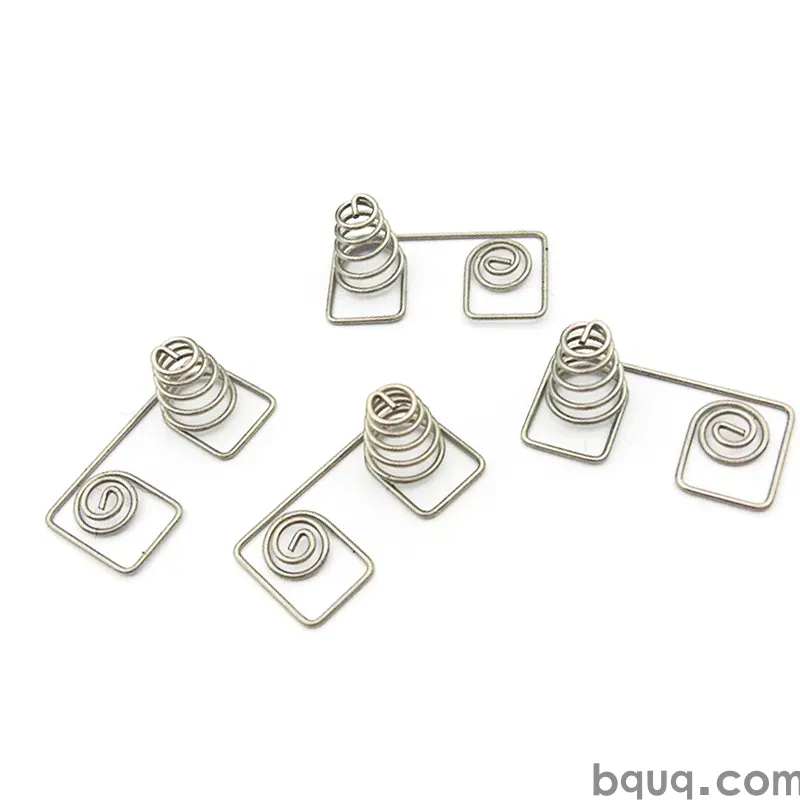
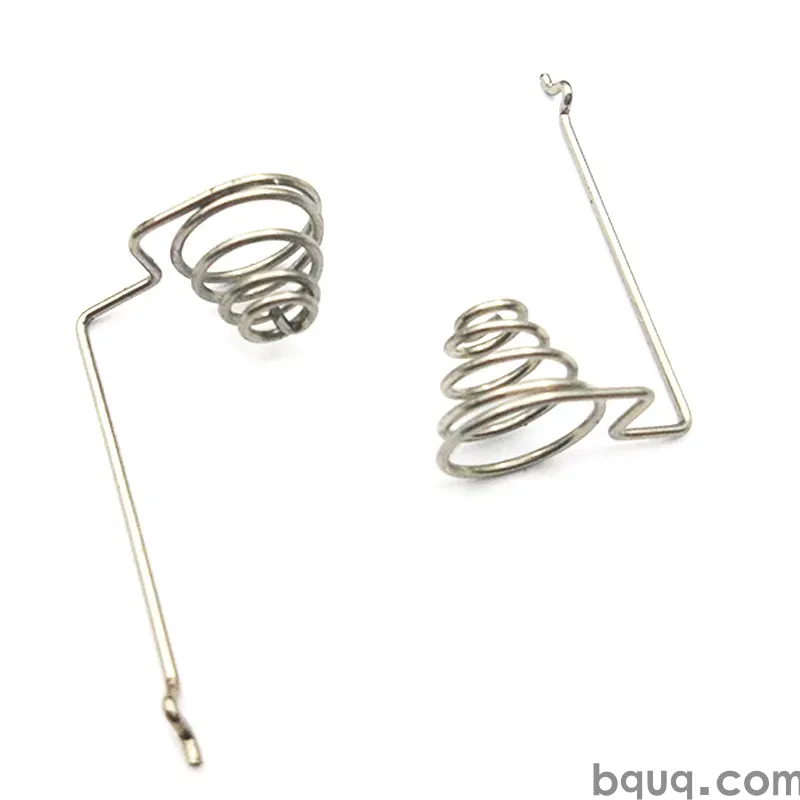
Switching reliability is engineered, not hoped for. The three levers are contact force, contact wipe, and the sealed-or-vented environment — and stamping sets the first two. Contact force comes from the spring blade, so the blade material and geometry decide the pressure at the interface: too little force and oxide or contamination defeats the closure; too much force and the soft silver face deforms and the actuator wears. Stamped spring blades are commonly beryllium copper, phosphor bronze, or spring steel with a silver contact joined at the end; the force window is tuned by blade length and thickness exactly as in any cantilever spring, with the additional constraint that the contact tip must not rotate or flex out of alignment. Wipe — the sliding motion of the contact faces as they close — is a gift in the design: a few tenths of a millimetre of wipe scrubs through tarnish and lands the contact on fresh metal. Stamped geometries can build wipe into the blade shape; a purely vertical "butt" contact cannot.
| Switching regime | Typical load | Contact construction | Key stamped-part requirement |
|---|---|---|---|
| Dry circuit | <10 mV, <10 mA | Ag, AgPd or Au-plated | Stable low resistance, no organic film |
| Low-level signal | <0.1 A, <30 V | Silver or silver-clad | Clean surface, controlled force 10–50 gf |
| Mid-current relay | 0.1–5 A | AgNi/AgSnO2 tip on blade | Tip joint integrity, force, heat path |
| Power switching | >5 A | Welded sintered tip | Arc erosion margin, heat sinking |
| Connector insertion | n/a (no arc) | Silver or Au plating | Wear life, wipe, corrosion |
Environment decides how much of the silver's tolerance you can spend. Sealed relays keep out sulfides, so their contacts see little tarnish and silver runs for the rated life; vented relays in industrial air breathe sulfur, and the contact surface slowly converts to silver sulfide regardless of material. That is why sealed relays quote electrical life in the hundreds of thousands of operations while a vented power relay is often derated. Designers counter with higher contact force, gold flashing over silver, or switching to gold for the smallest currents where even silver sulfide is too resistive. If the contact also carries RF or must not generate noise, the EMI shielding and contact stamping notes add the grounding and shielding angle to the same force-and-surface logic.
Stamping Silver Contacts: Process and Sourcing Notes
Silver and silver alloys are soft and gummy in the die, which sets the process rules. Die clearances close up to control the smeared shear edge and burr; tool steel must be polished and well-lubricated to stop silver galling onto the punches; and cutting speeds drop so the soft metal shears instead of tearing. Carbide tooling is standard for volume runs of silver-clad strip. Forming the blade and the silver face together means springback compensation for the base metal and surface protection for the silver — scratched or die-marked silver is a contact defect, so handling and packaging matter as much as the stamping itself. Parts that need extra insurance against burrs or plating defects get a coining or brushing station in the progression, and selective plating (silver only on the contact zone) is done reel-to-reel for connector-style parts.
Sourcing discipline for silver contacts comes down to four drawing details: the alloy of the contact face and the base metal (both, not just "silver"), the cladding or plating thickness, the contact force window in grams at a stated deflection, and the switching duty (voltage, current, cycles, environment). Silver content is a cost line, so state it: a 20 µm clad layer and a 200 µm layer are different parts at different prices. And because silver price moves with the market, ask for the silver surcharge mechanism in the quote so a later silver spike does not arrive as a surprise invoice. BQUQ stamps silver and silver-clad relay contacts, thermostat blades and contact springs on progressive dies in Dongguan with in-house inspection; send the drawing with duty, force, and material callout to sc@bquq.com or WhatsApp +86 13713157787 for a quote within 12 working hours.
Frequently Asked Questions
Q: Why are switch contacts made of silver instead of copper?
A: Because copper oxide is a poor conductor, so an oxidized copper contact fails to close at low voltage and current. Silver's tarnish stays conductive, so a silver contact closes with low, stable resistance even after years of idle service — that is what makes it the default for relays and switches.
Q: What is the difference between silver-clad and silver-plated contacts?
A: Silver-clad strip is roll-bonded with a thick layer of silver (typically 10 µm to several hundred), so the surface lasts the life of the part and survives wiping. Plating deposits only microns and can wear through on high-cycle contacts. Clad costs more than plating but less than solid silver.
Q: When do I need silver-tin oxide instead of pure silver?
A: When the contact switches enough current and voltage to sustain an arc — typically above a few tenths of an ampere at low voltage, or any mains-voltage switching. Pure silver then welds, sticks and erodes; silver-tin oxide resists arc erosion and welding, usually as a sintered tip on a stamped blade.
Q: What contact force do stamped silver contacts need?
A: Indicatively 10–50 grams-force for low-level and signal contacts, tuned by blade length and thickness. Too little force lets tarnish or contamination defeat the closure; too much deforms the soft silver face and wears the actuator. The force window must be stated on the drawing.
Q: How long do stamped silver contacts last?
A: In a sealed relay, hundreds of thousands of operations is routine; vented contacts in sulfidizing industrial air lose surface to silver sulfide and are often derated. Rated life depends on load, contact force, wipe, and environment — specify the switching duty and cycles on the RFQ so the contact is designed for them.
Related Resources
- Plating stamped contacts — silver, gold, nickel and tin finishes for stamped electrical parts.
- EMI shielding and contact stamping — grounding contacts and shields where force and surface finish set RF performance.
- Stamped terminals, contacts and relay parts — BQUQ's stamping line for switching and connection hardware.
- About BQUQ: an ISO9001-certified Dongguan factory running stamping, springs, CNC and heat sinks under one roof.
- Contact us: send your contact drawing for a quote within 12 working hours.
Authored by the BQUQ Engineering Team. BQUQ is an ISO9001-certified source factory in Dongguan, China, running CNC machining, metal stamping, custom springs, heat sink and collet lines under one roof. Send drawings to sc@bquq.com or WhatsApp +86 13713157787 for a quote within 12 working hours. www.bquq.com