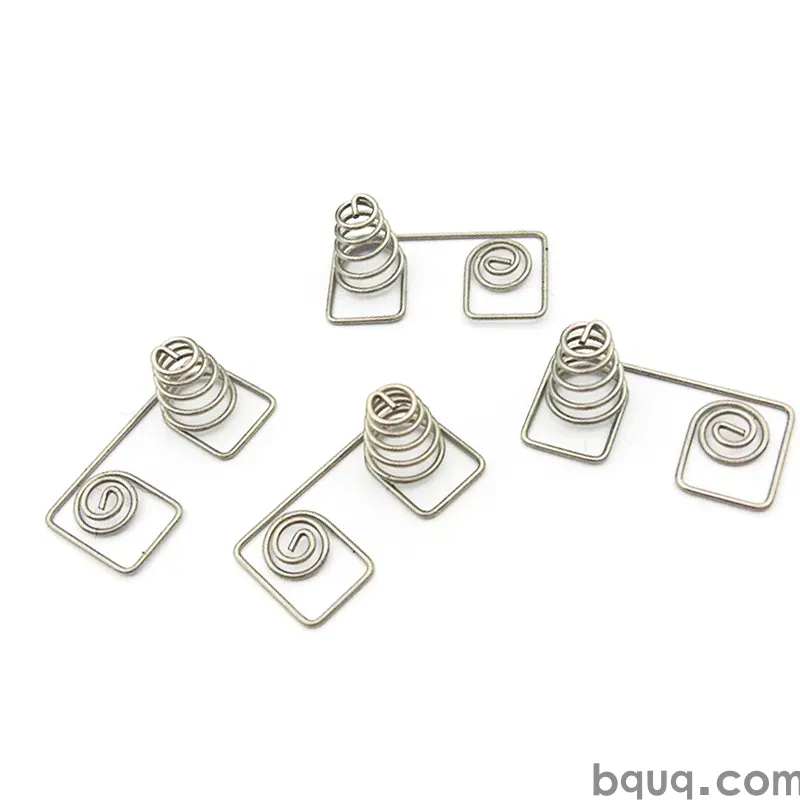
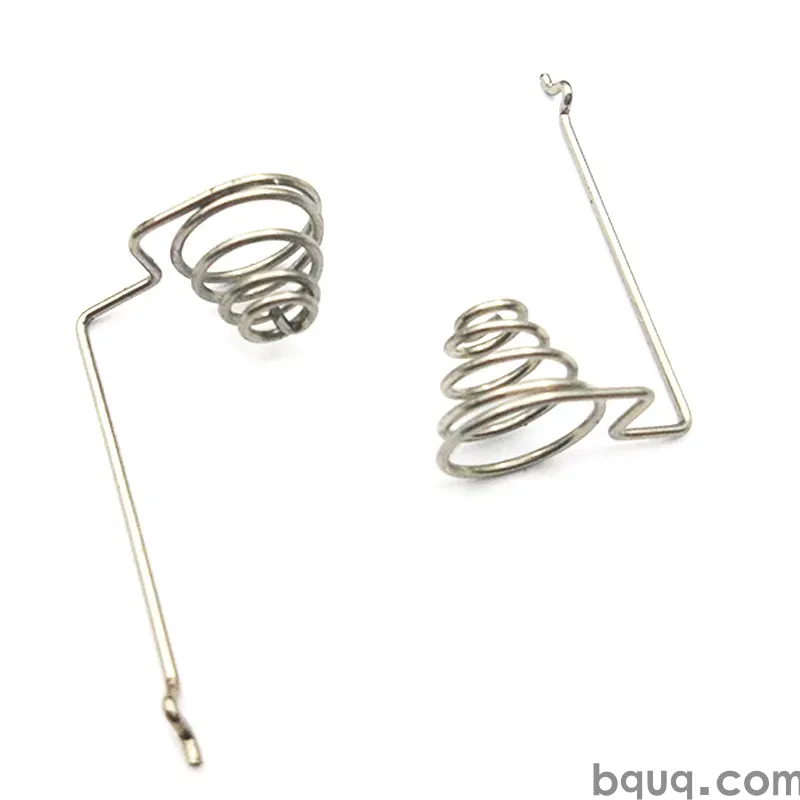
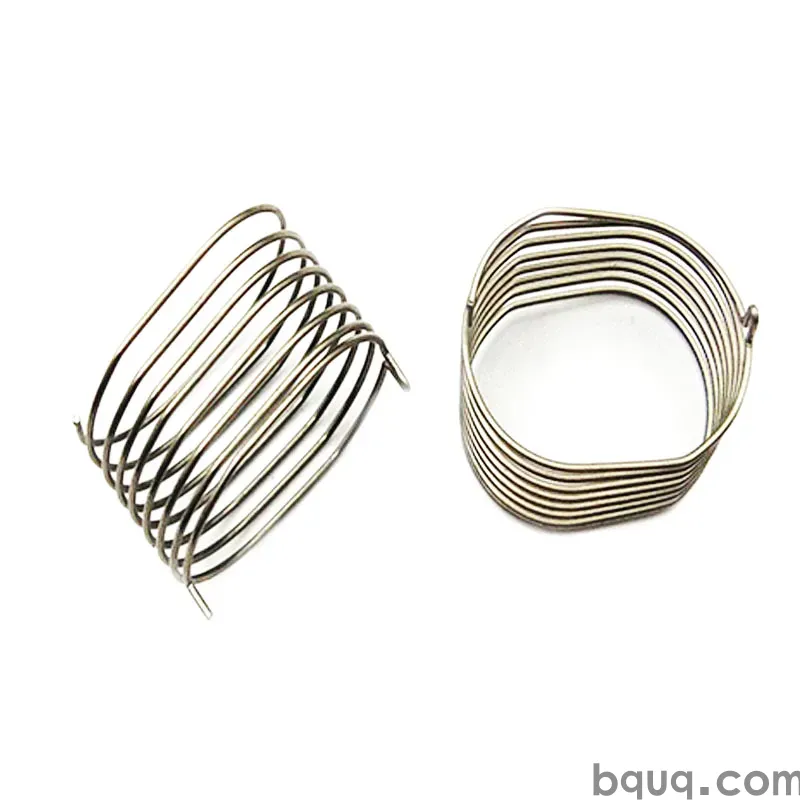
Copper, brass and phosphor bronze strip compared for stamped terminals and contacts. BQUQ stamps conductive parts in Dongguan with plating and tolerance guidance.
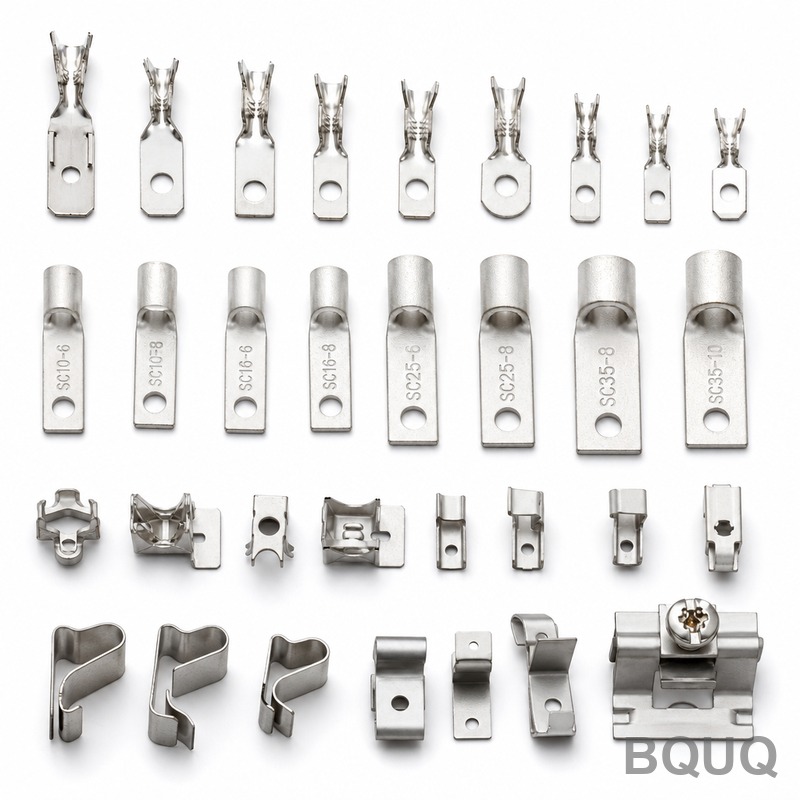
Stamping Copper and Brass: Conductive Parts Done Right
Short answer: stamp pure copper (C11000) when conductivity is everything and the part carries current in a fixed shape; stamp brass (C26000) when you need springiness plus low cost for terminals and contacts; step up to phosphor bronze (C51000) or beryllium copper when the contact must deflect millions of times. Conductivity ranges from 100% IACS for copper down to about 28% for cartridge brass and 15% for phosphor bronze, so material choice is a direct trade between resistance heating and mechanical life. BQUQ runs progressive dies for terminals and contacts and quotes from drawings within 12 working hours.
Copper alloys are the only stamped materials that do three jobs at once: carry current, make spring force, and resist corrosion well enough to survive a connector for decades. But the family spans a 7:1 conductivity range and a bigger price range, and the wrong choice shows up as a hot terminal, a contact that takes a set, or a part that costs twice what it needed to. This guide sorts the strip alloys by what they are actually good at.
The Conductive Alloy Family: What Each Strip Does Best
Every stamped conductive part starts with the same question: how much of the job is carrying current, and how much is making and holding contact force? Copper maximizes the first, brass and bronze trade conductivity for spring properties.
| Alloy | Conductivity, % IACS | Typical tensile | Spring quality | Typical parts |
|---|---|---|---|---|
| Copper C11000 (ETP) | ~100 | 220–380 MPa (hard) | Poor — takes a set | Busbars, tabs, heatsink bases, power lugs |
| Copper C10200 (OFC) | ~100 | Similar | Poor | High-purity applications, brazing, vacuum |
| Brass C26000 (cartridge) | ~28 | 340–650 MPa (spring temper) | Good | Terminals, fuse clips, contacts, sockets |
| Brass C26800 (yellow) | ~27 | Similar | Good, slightly cheaper | General terminals, hardware |
| Phosphor bronze C51000 | ~15 | 450–750 MPa | Very good | Relay springs, contact arms, wiper contacts |
The pattern to remember: when strength and springiness rise, conductivity falls. Copper is a soft, forgiving metal that cannot hold contact pressure — bend a copper cantilever and it stays bent. Brass is the middle ground and the volume workhorse of the connector industry. Phosphor bronze trades away half of brass's conductivity for far better fatigue life. If you need conductivity above roughly 60% IACS and spring behavior at the same time, you are into beryllium copper territory — the expensive answer covered in our electronic contact spring guide — or you redesign so copper carries current and a steel spring supplies force. Our terminal design guide walks through that split decision with real part examples.
What Changes in the Die for Copper and Brass
Copper alloys stamp more gently than steel but with their own habits. The alloys are gummy — pure copper in particular — so dies need sharp, polished edges, adequate clearance, and generous lubrication, or the metal smears instead of shearing and the burr grows on every stroke. Carbide tooling is standard for high-volume terminal dies because copper alloys wear punches faster than mild steel does, and worn tools are what widen the tolerance scatter.
Work hardening matters in the opposite direction to steel: copper and brass harden as they form, which is useful — a terminal bent from spring-temper brass gets stronger at the bend, not weaker. But it also means deep draws and severe forms start from soft or quarter-hard strip, because hard strip cracks at tight radii. Minimum bend radius on spring-temper brass is typically 1–2× thickness; soft copper will fold nearly flat. Springback on brass is modest but real, and on spring-temper strip the die needs overbend compensation just like any spring material. For dimensionally fussy multi-bend terminals, formed tolerances land around ±0.05–0.10 mm, with hole positions and flat features tighter.
Current, Heat and Contact Design
Conductivity numbers only matter when you size the part. A stamped terminal is a resistor: resistance heats it with I²R losses, and the heat must flow out through the metal and the mating joint. Two design rules dominate. First, keep the current path short and fat — every necked-down section in a terminal is a hot spot, and thin webs between holes are where terminals melt in overload tests. Second, the joint dominates: a crimped or bolted interface often carries more resistance than the terminal body, which is why surface finish and plating matter as much as alloy. For a given current, copper allows a smaller cross-section than brass — at 10 A continuous, a copper terminal body can be roughly half the cross-section of a brass one running at the same temperature rise — but the brass part may still win on cost and spring behavior. Plating is the other half of the conductivity story: tin, nickel or silver plating controls contact resistance and corrosion, and the right coating depends on the mating surface and environment — see our stamped contact plating guide for the full comparison.
Corrosion: Brass's Hidden Weakness
Brass looks inert and mostly is, but two failure modes bite stamped parts. The first is stress-corrosion cracking: brass under residual tensile stress from forming can crack in the presence of ammonia and some atmospheres, which is why high-quality terminal suppliers add a low-temperature stress-relief anneal after forming when the part sees aggressive environments. The second is dezincification: in acidic or chloride environments, zinc leaches out of the alloy leaving porous, weak copper. Tin-plating, or stepping to phosphor bronze or a tin-brass, handles the worst cases. Pure copper's problem is the opposite — it tarnishes and its oxide is not protective, so unplated copper parts destined for warm, humid service need a coating or an aggressive maintenance plan. None of this is a reason to avoid the alloys; it is a reason to state the service environment on the RFQ so the factory picks the alloy and finish together rather than separately.
Cost and Sourcing: When Brass Beats Copper and Vice Versa
Raw strip price is the loudest cost signal. Copper and brass prices track the LME copper market, and brass is usually priced at a small premium or discount to copper depending on the zinc spread — but because brass is cheaper per kilogram and lighter-duty parts can use thinner gauge, brass terminals are typically the low-cost answer for ordinary connector duty. Copper wins the value argument only when the design truly needs the conductivity: high-current lugs, busbar-style parts, and heat-transfer components where the extra cross-section of brass would not fit the envelope. Compare finished parts, not metal prices: a copper terminal that runs cooler may allow a smaller, cheaper housing and connector, and that system saving can justify the material.
Two practical sourcing notes. First, strip gauge: terminals and contacts mostly stamp from 0.1–1.5 mm strip, and the coil width you buy is scrap you pay for, so part nesting that narrows the strip cuts cost directly. Second, plating is usually done in continuous selective strips before stamping or reel-to-reel after, and specifying "tin plated" without thickness and bright/matte finish leaves the door open for the cheap version — put 1–3 µm tin, or the plating spec you actually need, on the drawing. Send the drawing with alloy, temper, plating and quantity to sc@bquq.com or WhatsApp +86 13713157787 for a quote within 12 working hours; where a busbar or heavier copper part is really the answer, we will say so rather than quote you a terminal die.
Frequently Asked Questions
Q: Which is better for stamped terminals — copper or brass?
A: It depends on the job. Copper (about 100% IACS) wins when current is high and the part does not need to spring. Brass (about 28% IACS) wins for spring contacts and general terminals where cost matters. A terminal that must both carry current and grip is usually brass or bronze with the cross-section sized for the current.
Q: Why do brass stamped parts sometimes crack months after delivery?
A: That is stress-corrosion cracking: residual tensile stress from forming plus an ammonia-bearing or aggressive environment. A low-temperature stress-relief anneal after forming removes the residual stress and is standard practice for parts in harsh service.
Q: Can I stamp pure copper into a spring contact?
A: Not a good one. Copper has almost no spring memory and takes a set under load. Use spring-temper brass, phosphor bronze, or beryllium copper for anything that must deflect and return.
Q: What plating should I specify on stamped copper or brass parts?
A: Tin (1–3 µm, bright or matte) is the default for crimp terminals and general connectors; silver suits high-current switching contacts; nickel suits high-temperature service. State thickness and finish on the drawing, since plating cost and performance vary a lot with spec.
Q: What tolerances can I expect on stamped copper alloy parts?
A: Flat blanked features typically hold ±0.05 mm, and multi-bend formed terminals land around ±0.05–0.10 mm with die compensation. Copper alloys are softer than steel, so burr control and tool sharpness set the practical floor.
Related Resources
- Stamped terminal design guide: sizing, bending and plating rules for connector parts.
- Stamped terminals and contacts: progressive-die production of conductive parts in Dongguan.
- About BQUQ: an ISO9001-certified source factory running stamping, CNC, spring and heat sink lines under one roof.
- Contact us: send the drawing for a quote within 12 working hours.
Authored by the BQUQ Engineering Team. BQUQ is an ISO9001-certified source factory in Dongguan, China, running CNC machining, metal stamping, custom springs, heat sink and collet lines under one roof. Send drawings to sc@bquq.com or WhatsApp +86 13713157787 for a quote within 12 working hours. www.bquq.com