BQUQ, ISO9001 certified, compares copper, brass, phosphor bronze and beryllium copper strip for stamped terminals — conductivity, force, cost, plating.
Terminal Stamping Materials: Copper, Brass and Alloy Strip Compared
Short answer: for a stamped terminal that only carries current, choose pure copper or low-zinc brass and plate it; for a terminal that must also spring — a contact beam, a clip, a receptacle — choose phosphor bronze C5210 or beryllium copper C1720, because conductivity and elastic strength trade off against each other. In round numbers: copper strip conducts about 100% IACS but has almost no spring, brass C2680 runs ~27% IACS, phosphor bronze C5210 ~13% IACS with good spring force, and beryllium copper C1720 reaches ~22% IACS with the best fatigue life at roughly 10–20 times the strip cost of brass. The correct grade is decided by the current, the cycles, and the temperature of your application, in that order.
Every stamped terminal is a compromise written in metal. Raise conductivity and you usually lose spring strength; add alloying elements for strength and resistance drops; plate the surface for corrosion and the base metal still decides whether the beam relaxes after 10,000 insertions. This guide compares the strip materials used for stamped terminals — copper, brass, phosphor bronze, and the specialty alloys — with real numbers, from the perspective of a progressive-die shop that stamps them daily.
The Trade-Off That Selects the Grade
Terminal design starts with one question: does this terminal carry current only, or must it also generate contact force by elastic deflection? A current-only part — a busbar tab, a solder tag, a power lug — can use soft, highly conductive metal. A force-generating part — a receptacle beam, a tuning-fork contact, a battery clip — needs the metal to act as a spring at the same time it conducts. You cannot have both at the maximum: conductivity comes from a pure metal lattice, and strength comes from alloying and cold work, which scatter electrons.
That is why the industry keeps a handful of standard grades instead of one perfect metal. Each occupies a different point on the conductivity-versus-spring curve, and each has a price that reflects how hard it is to roll into strip.
| Strip material | Conductivity, %IACS | Yield strength, typical spring temper | Modulus of elasticity, GPa | Relative strip cost index | Best role in a terminal |
|---|---|---|---|---|---|
| Copper C1100/C1020 | ~100% | 250–350 MPa | ~117 | 1.0–1.3 | High-current tabs, busbars, battery straps |
| Brass C2680 (CuZn33) | ~27% | 350–500 MPa | ~110 | 0.9–1.1 | Cost-sensitive terminals, solder tags, frames |
| Brass C2600 (cartridge, CuZn30) | ~28% | 400–550 MPa | ~110 | 1.0–1.2 | Terminals needing moderate formability and strength |
| Phosphor bronze C5191/C5210 | ~13–15% | 450–650 MPa | ~110 | 1.6–2.2 | Contact beams, clips, receptacles, spring contacts |
| Beryllium copper C1720 | ~22% | 900–1,300 MPa | ~128 | 12–20 | High-cycle, high-force, high-temperature contacts |
| CuNiSi / Corson alloy (C7025-type) | ~40–55% | 550–750 MPa | ~130 | 3–6 | Automotive and connector terminals needing strength plus conductivity |
Read the table as a decision ladder. If your terminal is a solder tab in a power supply, brass or even copper at the lowest cost does the job. If it is a connector receptacle that must grip a mating pin for 10,000 cycles in a hot engine bay, beryllium copper or a Corson-type alloy earns its price. The mistake we see most often in RFQs is a spring-contact application specified in brass — it works in the first sample and relaxes in the field.
Copper and Brass: When Simple Is Correct
Pure copper strip (C1100 ETP or C1020 OFC) is the reference conductor. It stamps cleanly, solders and welds beautifully, and carries the most current per cross-section of any practical terminal metal. Its weakness is mechanical: soft copper takes a permanent set under load, so it cannot be a spring. Use it for battery straps, power lugs, shunt links, and ground tabs where another component supplies the clamping force. If the part needs a bit more stiffness at nearly full conductivity, spec C1100 in a hard-drawn temper rather than switching alloys.
Brass is copper's cost play, and it deserves its popularity. C2680 strip at roughly 27% IACS still carries current fine for signal and moderate-power terminals, it forms and stamps easily, and it is the cheapest way to make a terminal that must survive mild spring deflection. Brass is the default frame material for many connectors and the base for tin- and gold-plated contacts in consumer electronics. Its limits: at elevated temperatures brass relaxes faster than the specialty alloys, and in humid sulfur or chloride environments it tarnishes — so plating is not optional on brass, it is the design. Choosing plating thickness and type matters as much as the base metal; our stamped contact plating guide covers the pairing rules.
Phosphor Bronze and Beryllium Copper: When the Beam Must Spring
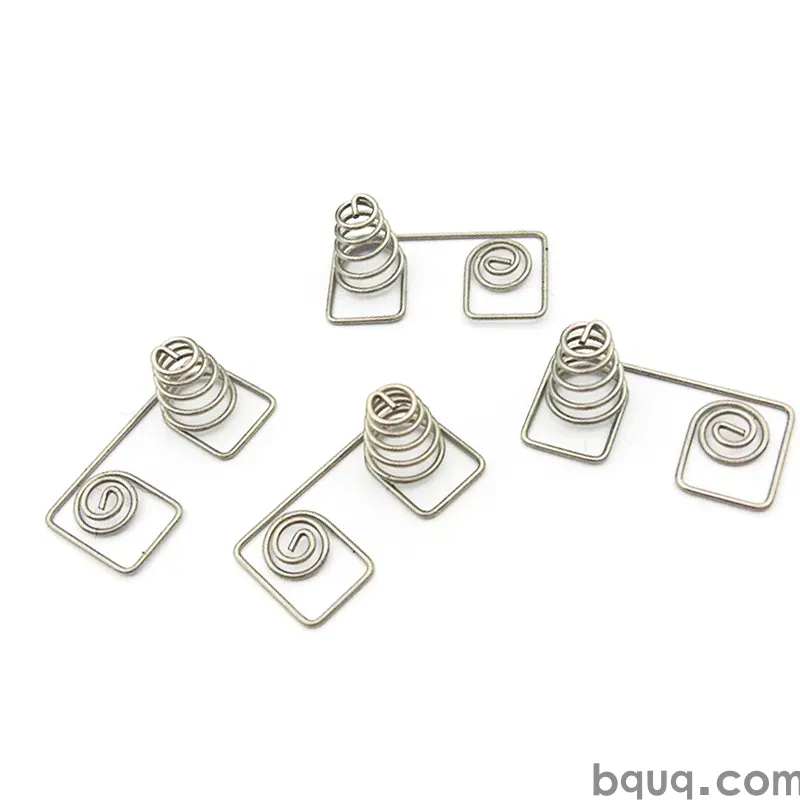
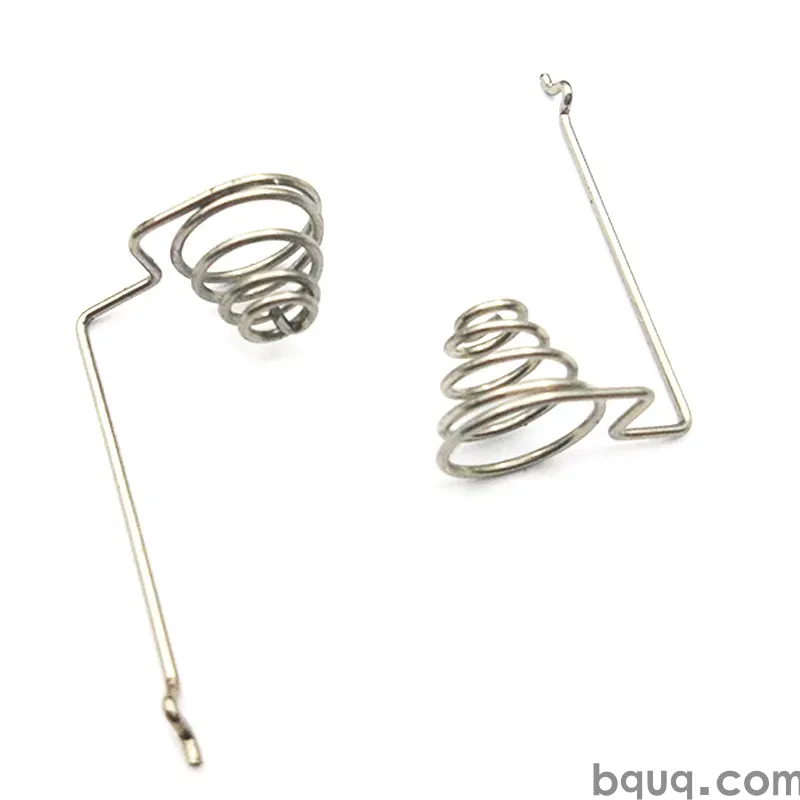
Once a terminal must generate and hold contact force — a cantilever beam deflected by a mating pin — the design driver becomes elastic limit and stress relaxation, not raw conductivity. Phosphor bronze C5210 is the workhorse: good fatigue strength, excellent formability into tight bends, and corrosion resistance good enough for most indoor and many automotive environments. Its ~13% IACS is fine for signal currents and modest power; it is not the metal for a 50 A power terminal.
Beryllium copper C1720 sits at the top of the stamped-spring hierarchy: roughly 22% IACS, yield strength over 1,200 MPa in the aged condition, the best resistance to stress relaxation at 150°C and above, and fatigue life that outlasts every other copper alloy. That is why it is the default for high-reliability contacts — telecom connectors, automotive safety systems, aerospace. The price is the problem: strip cost typically 10–20 times brass, plus heat treatment after stamping to age it to full strength. If your application does not need the temperature rating or the cycle count, beryllium copper is wasted money. Where the middle ground sits, Corson-type CuNiSi alloys (C7025-type) give 40–55% IACS with respectable strength at a fraction of beryllium copper's cost — which is why they have taken over high-end automotive and server connector terminals. A practical material-selection walkthrough for the whole stamping floor lives in our stamping materials guide.
How the Die Shop Treats These Metals Differently
Strip material choice changes die design, and a shop that stamps brass all day cannot simply swap in beryllium copper. Temper matters as much as alloy: the same strip chemistry behaves completely differently in the die depending on the cold-rolled condition you order.
| Strip temper | Typical terminal use | Bending behavior | Die shop implications |
|---|---|---|---|
| Soft / annealed | Deep-formed parts, parts that need post-stamping heat treatment | Sharp bends and severe forms OK | Aging or other heat treatment after stamping, e.g. beryllium copper aged to full strength |
| Half-hard (1/2H) | Most formed terminals and contact beams | Clean bends at 1–2× stock thickness | Moderate springback compensation, standard tool steel dies |
| Hard / spring (H, EH) | Flat springs and beams with minimal forming | Needs 2–4× thickness bend radius | Larger overbend, coining stations, carbide tooling |
Key differences by alloy: hard-tempered alloys spring back more, so bend compensation grows — a 90° bend in hard phosphor bronze may need 3–6° of overbend. Beryllium copper in the soft condition forms easily but must be aged (typically 315–330°C for 2–3 hours) after stamping to reach full strength, which changes dimensions slightly and needs to be planned, not discovered. High-strength alloys wear tooling faster: expect carbide or coated tooling on C1720 and C7025-type strip where brass runs happily on tool steel. Burr behavior differs too — harder alloys produce finer, more consistent burrs, which helps, but they also work-harden at the shear zone, so die clearance and lubricant choice matter more. None of this is exotic; it is routine for a die shop that specializes in precision stamped terminals, but it is why "just stamp my terminal in whatever is cheapest" produces field failures, not savings.
Plating Completes the Material Decision
Base metal sets the spring and the current; plating sets the interface. Tin is the default for solderable and low-cost contacts; gold (or palladium-nickel with a gold flash) for low-voltage, high-reliability signal contacts where tin oxide would block micro-currents; silver for high-current power contacts where its oxide stays conductive; nickel as an underplate to stop copper diffusing through the finish. Rule of thumb: if your terminal carries less than about 0.5 V and must switch reliably, do not rely on bare tin — the oxide film is an insulator at that voltage. Match plating to the base metal's coefficient of expansion and to the service temperature, and specify thickness in the drawing (for example, 1–3 µm gold over 1–2 µm nickel, or 2–5 µm tin). The alloy strip and the plating are one system; designing the terminal as a system is what separates parts that work at sample stage from parts that work for ten years.
Sourcing Terminal Strip Parts: What to Send
When you RFQ a stamped terminal, the grade and temper decide both performance and price, so write them on the drawing: base alloy, temper (for example C5210R-H or C2680 1/2H), thickness tolerance, plating spec, and the duty (current, cycles, temperature, environment). If you do not know the grade, tell us the current, the number of insertions, and the ambient temperature — we will recommend the cheapest strip that survives the job, because a source factory that also runs springs and CNC has no reason to oversell you an alloy. Send the drawing to sc@bquq.com or WhatsApp +86 13713157787 and get a quotation within 12 working hours.
Frequently Asked Questions
Q: What is the cheapest material for a stamped terminal?
A: Brass C2680 or C2600 strip, typically at or slightly below the cost of pure copper. Use it wherever the terminal does not need high spring force or high temperature rating — solder tabs, frames, and plated signal contacts are its natural home.
Q: Why does my brass terminal lose its grip after some months of use?
A: Brass relaxes under sustained stress, and the rate accelerates with temperature — a stressed beam slowly loses contact force. If the terminal must hold force long-term, step up to phosphor bronze or a CuNiSi alloy rather than thickening the brass.
Q: When is beryllium copper worth its high price?
A: When the contact must hold force at high temperature (above roughly 125°C), survive very high cycle counts, or meet reliability standards that demand minimal stress relaxation. At 10–20 times brass strip cost, use it only where the duty genuinely requires it.
Q: Can I solder or weld a phosphor bronze terminal reliably?
A: Yes. Phosphor bronze solders well and is widely used for solder tabs and weld tabs. Note its lower conductivity raises resistance heating in high-current joints, so size the cross-section for the current, not just the mechanical fit.
Q: Does the base metal or the plating decide contact reliability?
A: Both, in different roles. The base metal decides spring force, current capacity, and how the part behaves at temperature; the plating decides the electrical interface and corrosion behavior. A weak base metal will relax no matter how good the plating is, and an unplated brass surface will tarnish no matter how well it springs.
Related Resources
- Stamped terminals and contacts: progressive-die production of precision stamped terminals in Dongguan.
- Stamped contact plating: pairing base metals with the right finish for the job.
- About BQUQ: an ISO9001-certified source factory running stamping, CNC, spring and heat sink lines under one roof.
- Contact us: send the drawing for a quote within 12 working hours.
Authored by the BQUQ Engineering Team. BQUQ is an ISO9001-certified source factory in Dongguan, China, running CNC machining, metal stamping, custom springs, heat sink and collet lines under one roof. Send drawings to sc@bquq.com or WhatsApp +86 13713157787 for a quote within 12 working hours. www.bquq.com