Music Wire Springs: Grade, Availability and Performance
Short answer: Music wire is the default high-carbon spring wire for small, high-strength springs, usually specified to ASTM A228 (equivalent to DIN 17223 / EN 10270-1 grade DH or SH). Typical tensile strength for 1.0 mm diameter runs 1,700–2,000 MPa, allowing tight coils and high fatigue life at low cost. It is widely available in 0.10–6.0 mm diameters from stock, but it has essentially no corrosion resistance and loses strength above roughly 120 °C. BQUQ machines and winds music wire springs to ±0.005 mm on CNC axes in one ISO9001 Dongguan factory, with quotes back in 12 working hours.
Music wire — also called piano wire, or in older drawings "MB" per the old US Federal QQ-W-470 spec — is the workhorse material behind the majority of small compression, extension and torsion springs produced worldwide. It is cheap, strong, dimensionally stable and available off the shelf in a huge range of diameters. That combination is hard to beat, which is exactly why so many engineers reach for it first.
But "music wire" is not a single material. Grade, coating, diameter and the way the wire was drawn all change what the finished spring can do. This article covers what the grades actually mean, what is realistically available, and where music wire stops being the right answer.
What exactly is music wire?
Music wire is a high-carbon steel wire, typically 0.60–0.95% carbon with 0.20–0.60% manganese and a small silicon addition, cold-drawn to very high tensile strength and then often patented (a controlled heat treatment that produces fine pearlite before final drawing). The name comes from its original use: strings for musical instruments, where uniform diameter, high strength and consistent elastic behaviour matter enormously.
For spring making, those same properties are exactly what you want. The cold drawing process leaves the wire with a smooth, bright surface and high residual strength, so a spring wound from it can store more energy per unit volume than one wound from mild steel or annealed stainless.
Music wire vs. oil-tempered and hard-drawn wire
Three high-carbon wires dominate small spring production, and buyers confuse them constantly.
| Wire type | Typical carbon | Form as supplied | Typical use | Relative cost |
|---|---|---|---|---|
| Music wire (ASTM A228) | 0.80–0.95% | Cold-drawn, high tensile, bright | Small precision springs, high fatigue | Highest of the three |
| Oil-tempered wire (ASTM A229) | 0.60–0.75% | Drawn then quenched & tempered | Larger springs, lower cost, general purpose | Medium |
| Hard-drawn wire (ASTM A227) | 0.45–0.85% | Cold-drawn, lower tensile | Low-stress springs, clips, light duty | Lowest |
Music wire wins on strength and fatigue life. Oil-tempered wins on cost and on diameters above roughly 3 mm, where drawing music wire to full strength becomes impractical. Hard-drawn wire is a budget option for springs that are not cycled hard.
Which grades and specifications apply?
If you are buying from a Chinese or European supplier, the specification on the drawing determines everything downstream — inspection, acceptance and traceability.
ASTM A228 (US) and EN 10270-1 (EU)
ASTM A228 is the classic US specification for music wire. In Europe, the equivalent family is EN 10270-1, which classifies patented cold-drawn spring wire by strength class: SL (static, low), SM (static, medium), DM (dynamic, medium) and DH (dynamic, high). Grade DH is the closest match to A228 in strength and fatigue behaviour.
| Standard | Designation | Strength class | Typical application |
|---|---|---|---|
| ASTM A228 / A228M | Music wire | Single grade, high tensile | Precision small springs |
| EN 10270-1 | SL | Low | Static, lightly loaded |
| EN 10270-1 | SM | Medium | Static, general |
| EN 10270-1 | DM | Medium-high | Dynamic, moderate cycles |
| EN 10270-1 | DH | High | Dynamic, high fatigue |
| JIS G 3522 | SWP-B | High | Japanese-spec precision springs |
In practice, a well-run factory will hold certificates for the wire coil and can trace each production batch back to the heat number. Ask for that traceability if the spring is going into a safety-relevant or long-life assembly.
Diameter and tolerance
Music wire is supplied in standard diameters with tolerances defined by the specification. As a rule of thumb, tolerance tightens as diameter decreases — a 0.5 mm wire might be held to ±0.01 mm while a 4 mm wire might be ±0.03 mm. This matters because spring rate scales with the fourth power of wire diameter; a small diameter error becomes a large load error.
What performance can you expect?
Music wire's headline numbers are impressive for the price, but they come with clear limits.
Strength and modulus
For a typical 1.0 mm music wire, tensile strength sits in the 1,700–2,000 MPa range depending on the exact grade and drawing route. Shear modulus is conventionally taken as about 79.3 GPa and elastic modulus about 206 GPa. Those values are used directly in spring rate calculations, so they are worth pinning down early.
Fatigue and stress limits
Music wire performs well in cyclic service provided you keep the corrected stress below roughly 40–45% of tensile strength for infinite life, and below about 60% for finite life of a few hundred thousand cycles. Above that, expect set and eventual fracture. Shot peening and presetting (scragging) both raise the practical fatigue limit meaningfully.
Temperature and corrosion limits
This is where music wire is weakest.
| Property | Music wire (A228) | 302/304 stainless | 17-7PH |
|---|---|---|---|
| Corrosion resistance | None (needs plating) | Good | Moderate-good |
| Max continuous service temp | ~120 °C | ~250 °C | ~315 °C |
| Relative fatigue life | Reference | Lower (~70–80%) | Higher |
| Relative material cost | Low | Medium | High |
| Magnetic | Yes | Slightly (cold worked) | Yes |
Above about 120 °C, music wire begins to lose temper and the spring takes a permanent set. In humid, marine or wash-down environments, it will rust unless it is plated, coated or oiled. If either condition applies, look at stainless or a precipitation-hardening grade instead — see our comparison of 17-7PH spring steel for the high-strength stainless route.
Is music wire actually available?
Yes — and this is one of its strongest arguments. Music wire is one of the most widely stocked spring materials in the world.
- Diameter range: commonly stocked from about 0.10 mm up to 6.0 mm. Above 6 mm, oil-tempered or alloy wire is usually more practical.
- Lead time: standard diameters are typically available from mill or distributor stock within days. Non-standard diameters and special coatings add lead time.
- Coatings: plain bright, phosphate-coated, galvanised, and sometimes tin or zinc-plated wire are all available.
- Form: coils, spools and straight lengths depending on diameter.
For buyers sourcing from Asia, availability is rarely the constraint. The constraint is usually specification clarity — if the drawing says "music wire" with no standard, no diameter tolerance and no coating, two suppliers can legitimately ship two different springs.
What to put on the drawing
To avoid that, specify: wire standard (e.g. ASTM A228), nominal diameter and tolerance, coating or finish, spring dimensions, load at one or two positions, direction of wind, end condition, and any required presetting or heat treatment. If you need help translating a load requirement into a wire diameter, our notes on spring rate versus load walk through the relationship, and spring ISO and DIN standards covers the documentation side.
Where music wire springs are used
Typical applications include:
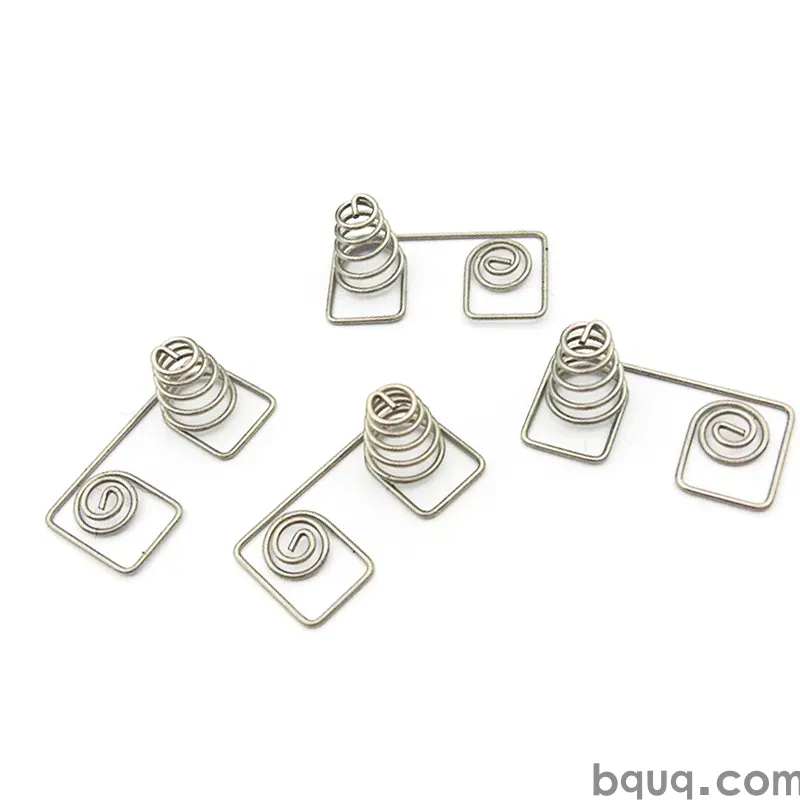
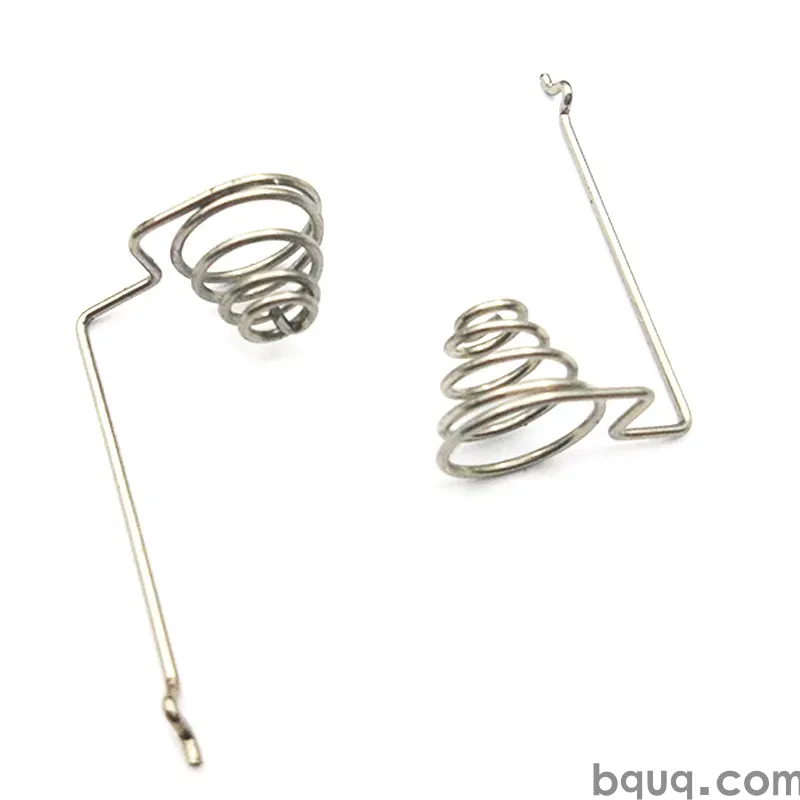
- Precision compression springs in valves, connectors and small mechanisms — see our compression spring range.
- Extension springs with hooks, loops or threaded ends for return and tension duties — custom extension springs.
- Torsion springs for light return torque in latches and levers — torsion springs.
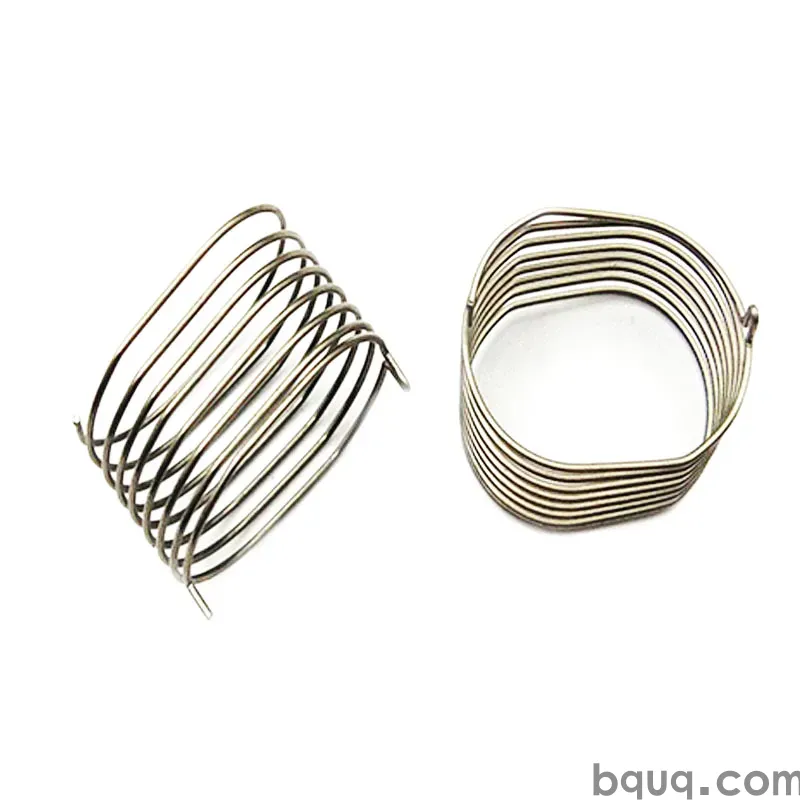
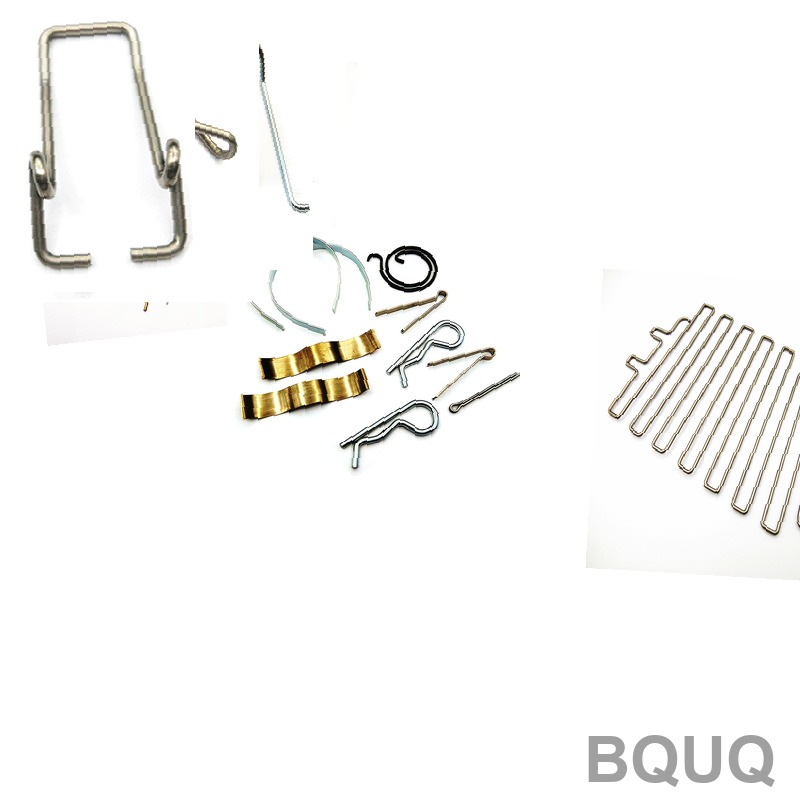
- Clips, retainers and wire forms where a small amount of stored energy is needed.
- Electronics and instrumentation, where a plated music wire spring is cheaper than stainless and the environment is controlled.
In all of these, the design logic is the same: use music wire where strength-to-cost matters and the environment is benign, and switch material only when temperature, corrosion or fatigue life forces you to.
When should you not use music wire?
Switch away from music wire when any of the following is true:
1. Continuous service above roughly 120 °C. Use stainless or a precipitation-hardening alloy.
2. Humidity, salt spray or wash-down. Plating helps but adds cost and can flake; stainless is often the better answer.
3. Very high cycle counts at high stress. Consider 17-7PH or a chrome-silicon grade.
4. Non-magnetic requirements. Music wire is ferromagnetic; you need austenitic stainless.
5. Wire above about 6 mm. Oil-tempered or alloy wire is more economical and easier to wind accurately.
If you are unsure, send the operating conditions rather than just a drawing. Temperature, cycle count, environment and load tolerance usually determine the material more than geometry does.
How BQUQ produces music wire springs
BQUQ runs four production lines in one Dongguan factory covering CNC machining, metal stamping, custom springs and heat sinks. Music wire springs are wound on CNC coilers with closed-loop diameter control, then stress-relieved, preset where required, and inspected for load, free length, squareness and end condition. CNC-machined tooling and end forms are held to ±0.005 mm where the spring interfaces with a machined seat.
Because we are ISO9001 certified and work source-direct, we can quote from a drawing or a sample in 12 working hours, and we accept flexible MOQ — prototype quantities through to production volumes. If you are still choosing between materials, send the application data and we will tell you honestly whether music wire is the right call.
Frequently Asked Questions
Q: Is music wire the same as piano wire?
A: Yes, in practice the two names describe the same material. "Piano wire" is the older trade term, while "music wire" is the standard specification name used in ASTM A228 and in most modern drawings. Both refer to high-carbon, cold-drawn steel wire with high tensile strength. Suppliers may use either term on a certificate, so check the standard and grade rather than the label.
Q: What is the maximum temperature for music wire springs?
A: Roughly 120 °C for continuous service. Above that, the cold-drawn structure begins to relax and the spring takes a permanent set, so load at a given deflection drops. Short excursions higher than that may be tolerable if the spring is not highly stressed, but for sustained heat you should specify stainless steel or a precipitation-hardening grade such as 17-7PH.
Q: Can music wire springs be plated to resist rust?
A: Yes. Zinc, zinc-nickel, phosphate and tin coatings are all applied to music wire springs for corrosion protection. Plating adds cost and a small dimensional change, and hydrogen embrittlement must be controlled on high-strength wire. For aggressive environments, stainless steel is usually more reliable than a plated carbon spring, even though the material cost is higher.
Q: What wire diameter range is available in music wire?
A: Standard stock typically covers about 0.10 mm to 6.0 mm. Below 0.10 mm the wire becomes difficult to draw and wind consistently. Above roughly 6 mm, oil-tempered or alloy spring wire is generally more economical and easier to form accurately. If your design needs a diameter outside that range, discuss it early — availability drives both lead time and tooling choice.
Q: How do I specify music wire on a spring drawing?
A: State the wire standard (for example ASTM A228 or EN 10270-1 DH), nominal wire diameter with tolerance, surface finish or coating, free length, outside or inside diameter, number of coils, end condition, direction of wind, and load at one or two deflected positions. Add any presetting or stress-relief requirement. A complete drawing removes ambiguity and lets suppliers quote accurately the first time.
Related Resources
- About BQUQ and our Dongguan factory: /about/
- Compression, extension and torsion spring products: /compression-springs/
- Industry trends in spring and metal component sourcing: /industry-dynamics/
- Technical articles on spring design and materials: /bquq-blog/
- Frequently asked questions for buyers: /faq/
- Case studies from production: /case/
- Contact the engineering team for a 12-hour quote: /contact/
Authored by the BQUQ Engineering Team. BQUQ (Dongguan) runs CNC machining (±0.005 mm), metal stamping, custom springs, and heat sink production in one ISO9001 factory. Source-direct from Dongguan, China — quote in 12 hours: sc@bquq.com | WhatsApp +86 13713157787 | www.bquq.com