How Does Heat Sink Surface Treatment Affect Thermal Performance?
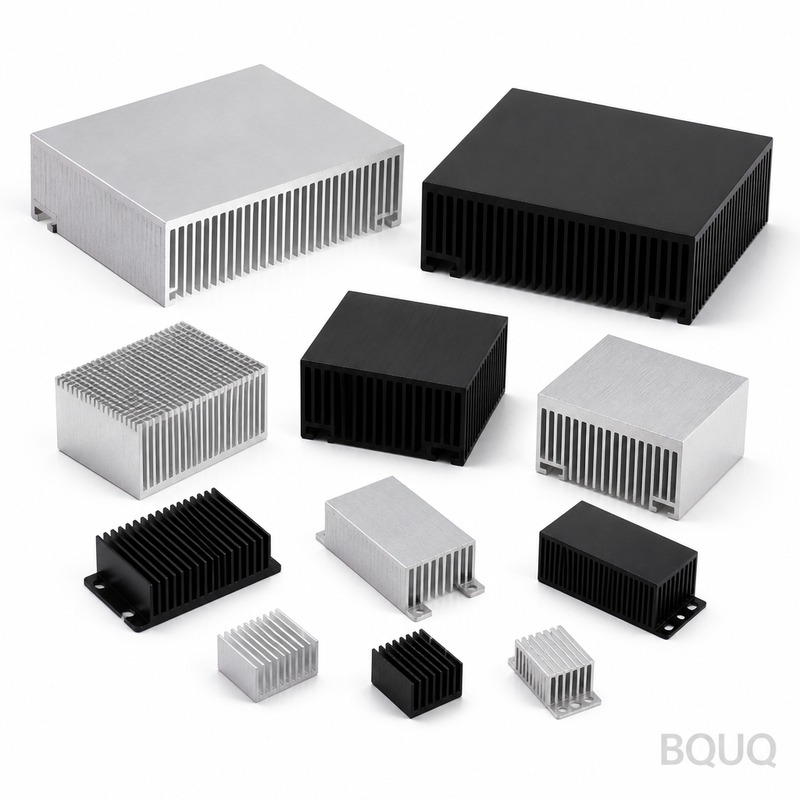
Surface treatment directly determines a heat sink's ability to transfer heat to the surrounding air by increasing effective surface area and emissivity. Anodizing, for example, can
Surface treatment directly determines a heat sink's ability to transfer heat to the surrounding air by increasing effective surface area and emissivity. Anodizing, for example, can
Computational Fluid Dynamics (CFD) thermal simulation optimizes heat sink performance by predicting airflow and heat transfer with over 90% accuracy before physical prototyping, re
The direct answer is that a solid heat sink spreads heat through passive conduction, a heat pipe transfers heat via phase change in one direction, and a vapor chamber does the same
The direct answer is that anodizing improves a heat sink's emissivity (radiative heat transfer) but adds a thin, thermally insulating oxide layer, while organic coatings like paint
Choosing the correct heat sink material is a balancing act between thermal conductivity, weight, cost, and manufacturing feasibility. For 90% of standard electronics cooling applic