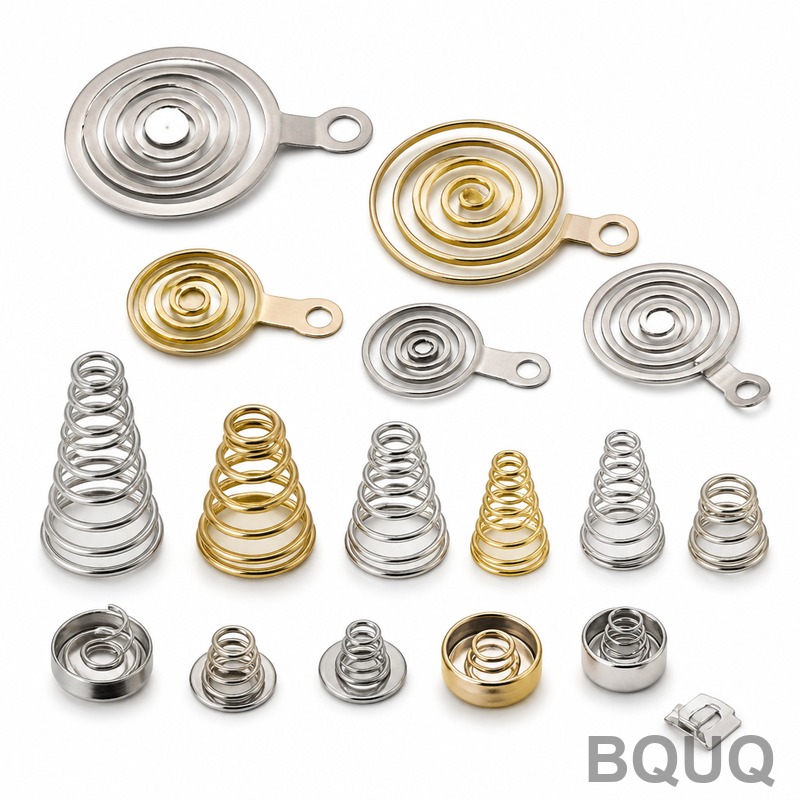
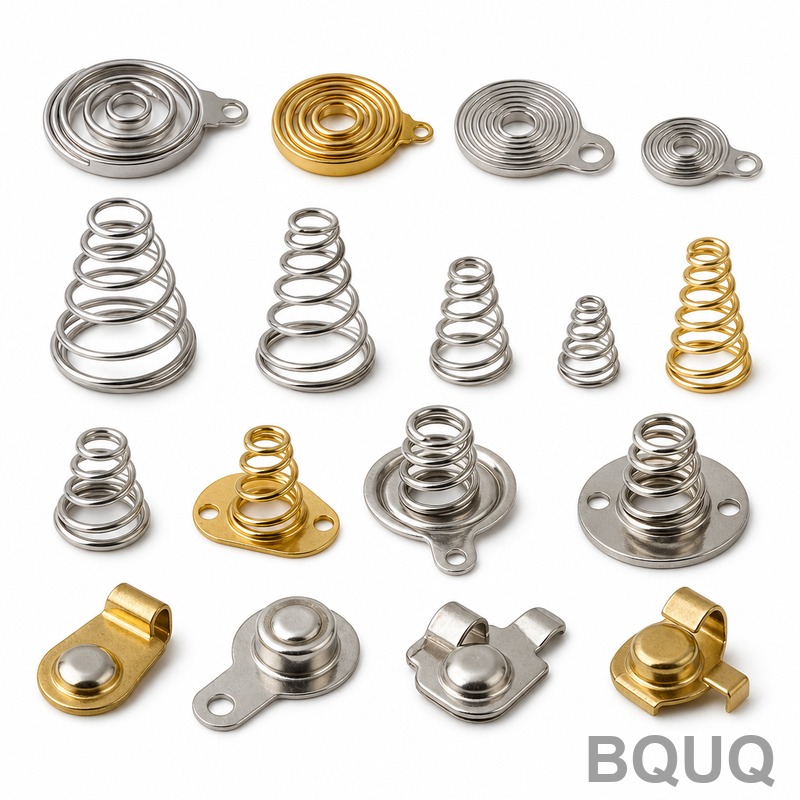
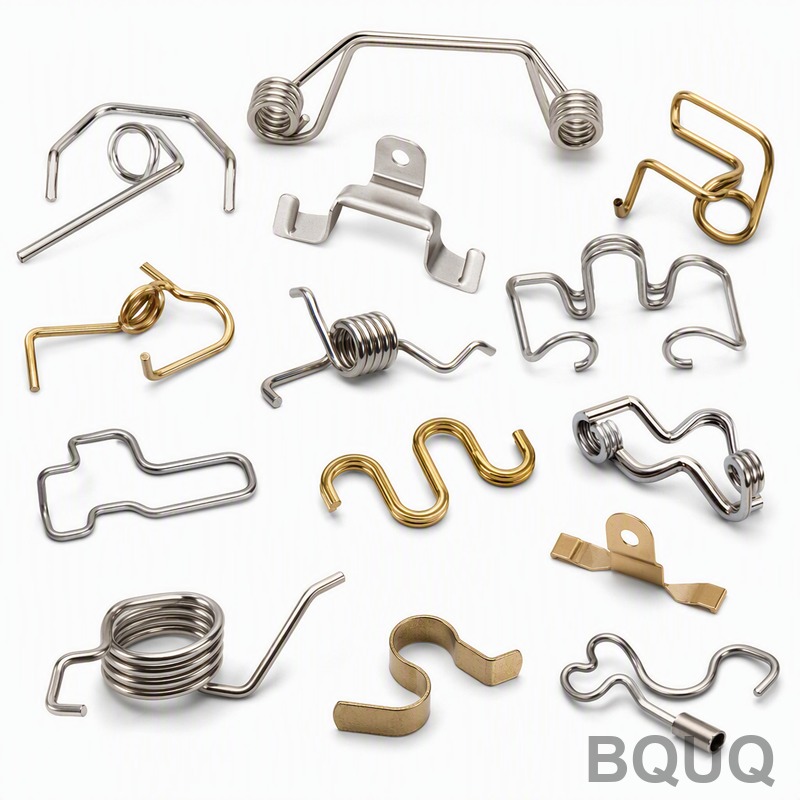
This is a custom battery contact spring collection built for engineers who need consistent electrical contact under vibration, thermal cycling, and repeated compression. We hold fl
BQUQ Battery Contact Spring Collection | Precision Custom Springs Made in China
This is a custom battery contact spring collection built for engineers who need consistent electrical contact under vibration, thermal cycling, and repeated compression. We hold flatness to 0.02 mm, s
Get a Fast Quote for This Part
Send us your drawing / quantity / material — reply within 24h.
This is a custom battery contact spring collection built for engineers who need consistent electrical contact under vibration, thermal cycling, and repeated compression. We hold flatness to 0.02 mm, spring rate tolerance to ±5%, and surface finish to Ra 0.4, with a standard lead time of 7 days for prototypes and 15 days for production runs. Every spring is manufactured in our Dongguan factory with hardness controlled to HRC 45–52, and we ship globally with no MOQ.
How We Control Contact Force Uniformity Across 10,000-Piece Batches
Battery contacts fail when one spring in a series has a different compression rate than its neighbor. Our CNC coiling machines use servo-controlled wire feed with closed-loop tension monitoring, holding free length variation to ±0.05 mm and force variation to ±3% across a batch. We measure load at 20%, 50%, and 80% of deflection on every 50th piece, and we document the standard deviation in your inspection report. This is not statistical sampling—it is batch-level verification for critical battery pack applications.
Materials and Heat Treatment We Use for Low Contact Resistance
We stock five spring-grade materials specifically for battery contacts: SUS301 (high yield strength), SUS304 (corrosion resistance), SK5 carbon steel (cost-effective high cycle life), C17200 beryllium copper (lowest resistance, no spark risk), and C5210 phosphor bronze (excellent fatigue life). For lithium-ion battery packs, we recommend C17200 because its electrical conductivity is 22% IACS, which is 3x higher than stainless steel. Heat treatment is done in vacuum furnaces to prevent oxide scale, followed by cryogenic treatment at -73°C for 2 hours to stabilize the microstructure and eliminate drift over 10,000+ cycles.
Spring Geometry That Prevents Battery Disconnection Under Shock
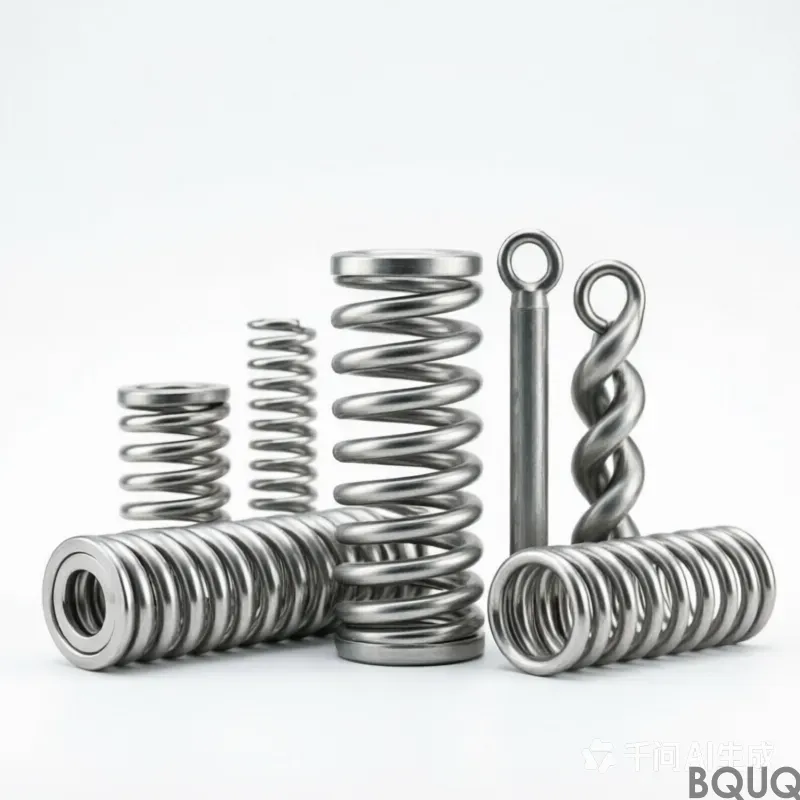
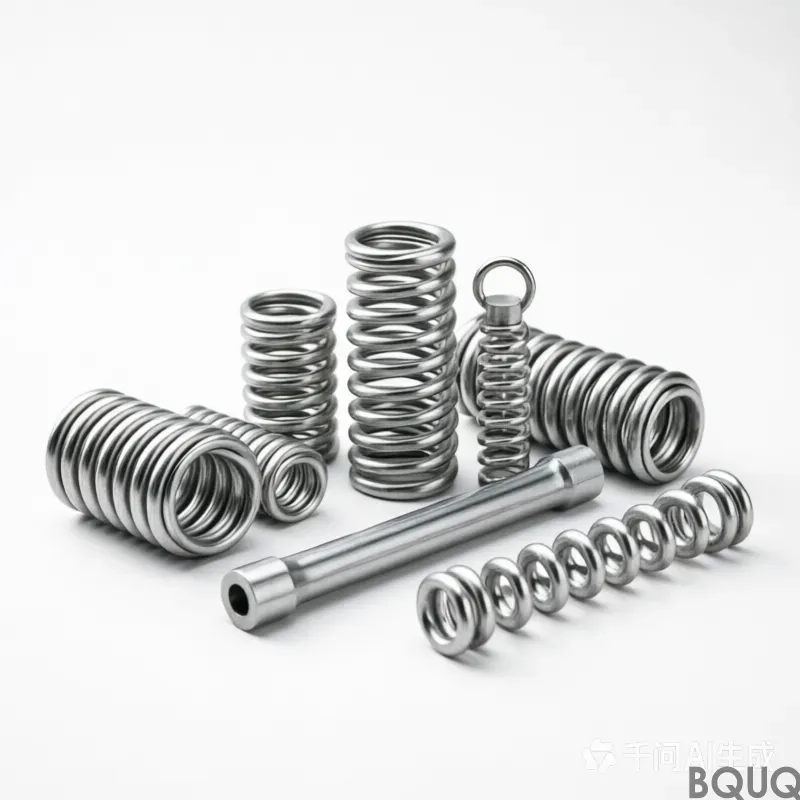
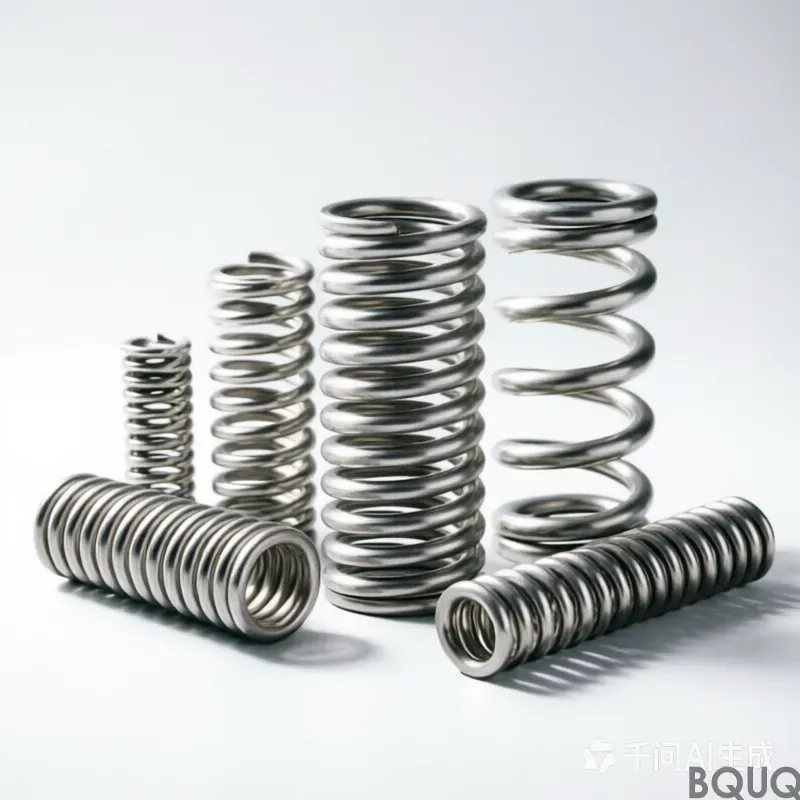
A standard coil spring can buckle under side loads. Our battery contact springs use a tapered or conical geometry with a closed and ground end, ensuring the spring stands perpendicular to the PCB with less than 0.05 mm runout. We also offer double-wound springs for redundant contact paths—if one coil breaks, the second maintains continuity. For coin cell holders, we produce wave springs with 3–5 contact points, reducing resistance by 40% compared to single-point contacts. We laser-cut the end faces flat to 0.02 mm, which prevents the spring from scratching the battery's nickel-plated surface.
Surface Finish and Plating Options to Prevent Galvanic Corrosion
Bare springs are not suitable for battery contact because dissimilar metals create galvanic corrosion. We apply electroless nickel plating at 3–5 microns thickness for stainless steel, or silver plating at 2–3 microns for beryllium copper to keep resistance below 50 milliohms. For harsh environments, we add a gold flash over nickel—gold thickness 0.1–0.3 microns—which maintains stable contact resistance even after 500 hours of salt spray testing. Our plating baths are filtered continuously to prevent pitting, and we verify plating thickness using X-ray fluorescence on each batch.
Inspection Before Every Shipment: Load Testing and Dimensional Checks
Every battery contact spring collection order passes through a three-stage inspection. First, a vision system measures free length, coil OD, total coil count, and end flatness at 0.01 mm resolution. Second, a load tester compresses each spring at a speed of 10 mm/min and records force at specified deflection points, comparing against your drawing's acceptable range. Third, we run a micro-ohmmeter test on plated samples to confirm contact resistance is below your specified threshold. We supply a full dimensional report with every shipment—no extra charge. If any spring fails, we replace the entire batch, not just the defective parts.
Why We Reject Springs That Pass Standard QC but Fail Real Battery Packs
Most factories test springs in isolation—free height and rate. We test in a simulated battery holder. We press the spring to working height, apply a 3N side load, and measure if the contact point shifts more than 0.1 mm. We also cycle each spring 1,000 times at 2 Hz to check for set (permanent compression). If a spring loses more than 3% of its free height after cycling, we reject it. This is why our customers report zero field failures in EV battery packs and medical devices. For design guidance on acceptable tolerances, see our CNC cutting tool selection guide.
Packaging and Documentation for Traceable Assembly
We ship battery contact springs in anti-static trays with individual pockets, preventing tangling or surface scratches during transit. Each tray is labeled with a batch number, material lot, and plating date. The packing list includes an RoHS and REACH compliance declaration. We can also add a 2D DataMatrix code on the tray for automated pick-and-place, linking each spring to its inspection data. If you need to audit our process, we will send you a video of the actual batch being tested—not a generic factory tour.
What is the minimum order quantity for the Battery Contact Spring Collection?
We have no MOQ—we manufacture one prototype or 100,000 pieces at the same tolerance, and you pay only for the parts you order.
Can you customize spring geometry for a non-standard battery size?
Yes, we modify wire diameter, coil count, end type, and plating based on your CAD drawing, and we provide a free DFM review within 24 hours to ensure the design is manufacturable.
How do you ensure quality control for high-volume battery spring orders?
We use 100% vision inspection for dimensions and load testing on every 50th piece, plus a full material certificate from our steel supplier for each heat.
What is the typical lead time for production quantities?
Prototype springs ship in 7 days, production orders in 15 days, and we can expedite to 5 days for urgent EV battery development projects.
How to Specify Your Battery Contact Spring for a Fast Quote
Send us your drawing in STEP or PDF format, plus three operational parameters: working height, required force at that height, and expected cycle life. If you do not have a drawing, we can design from your battery cell dimensions and current draw. Our engineers will respond with a firm quote within 12 hours, including a suggested material and plating based on your voltage and environment. For more on how we hold tight tolerances in our CNC processes, read our CNC machining tolerances guide.
Get a firm quote within 12 hours. Email your drawing to sc@bquq.com or send it via WhatsApp +86 13713157787. If you need material selection help, include your battery chemistry and target contact resistance—we will recommend the right spring within one working day. This is the Battery Contact Spring Collection from BQUQ, precision manufacturing made in China, with no MOQ and full traceability.