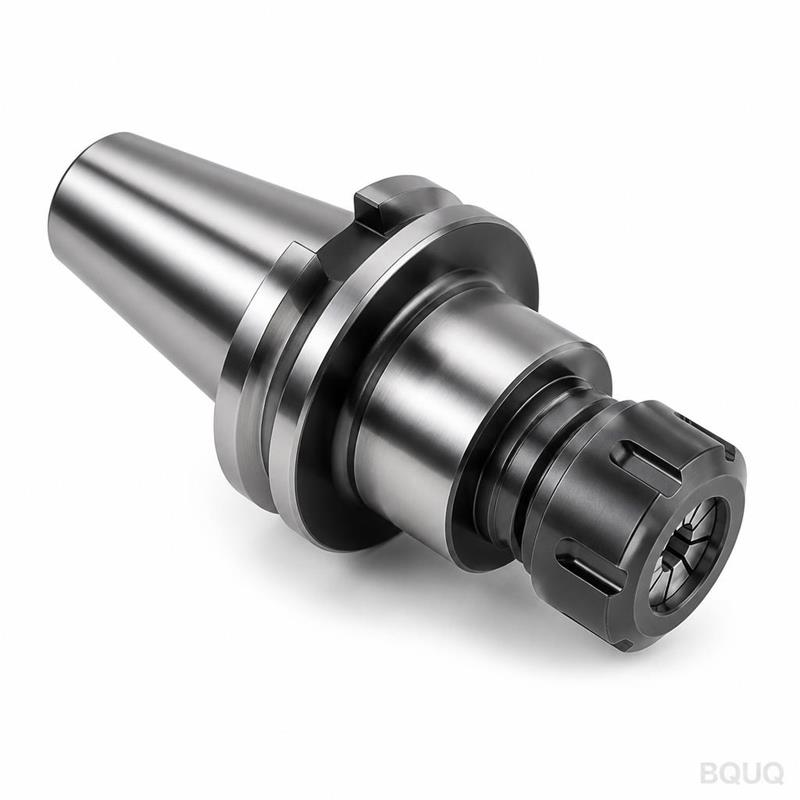
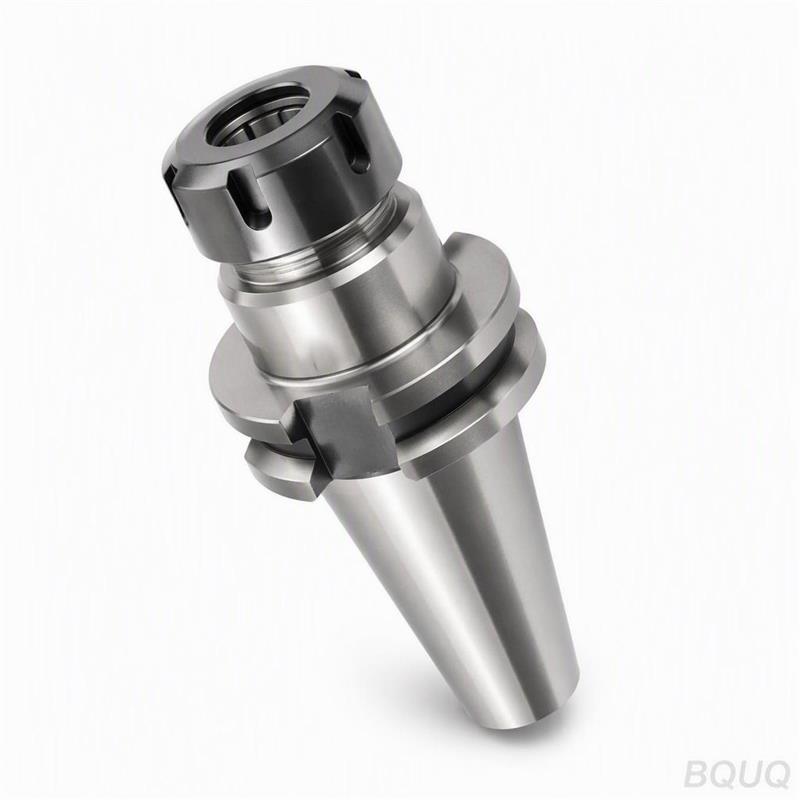
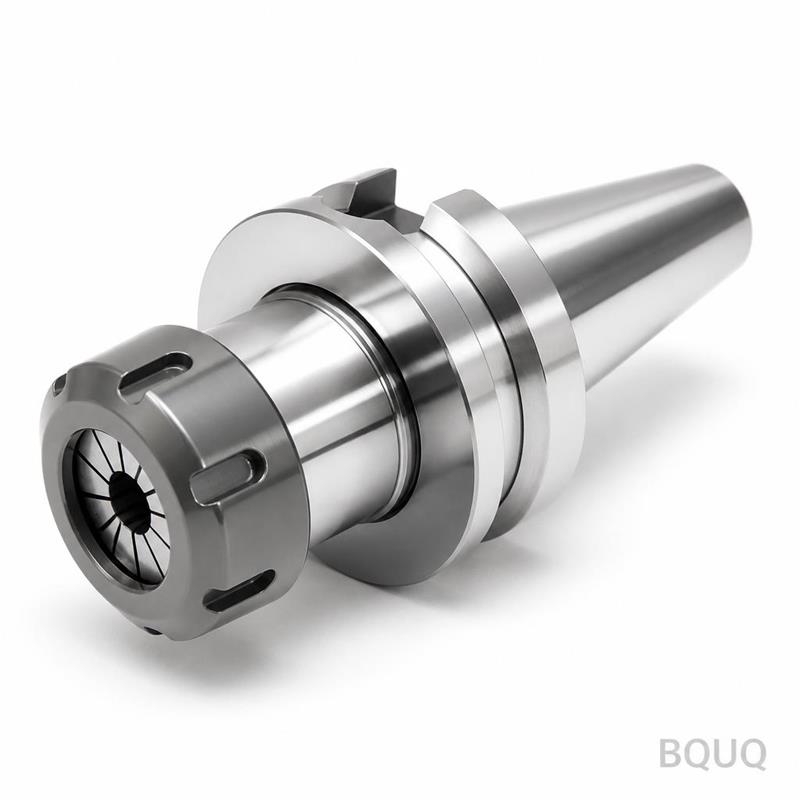
What This BT40 ER16 Chuck Does Differently This is a CNC machined BT40 ER16 collet chuck tool holder designed for milling centers that need rigid tool clamping without spindle inte
What This BT40 ER16 Chuck Does Differently This is a CNC machined BT40 ER16 collet chuck tool holder designed for milling centers that need rigid tool clamping without spindle interference. The taper
Get a Fast Quote for This Part
Send us your drawing / quantity / material — reply within 24h.
This is a CNC machined BT40 ER16 collet chuck tool holder designed for milling centers that need rigid tool clamping without spindle interference. The taper is ground to AT3 grade, giving you a 0.005mm TIR runout at the nose—measured, not estimated. You get a hardness of HRC 58-62 on the taper and bore, which means the collet seat will not wear out after thousands of tool changes. Lead time is 15 days for standard BT40 ER16 sizes, and we ship from our Dongguan factory.
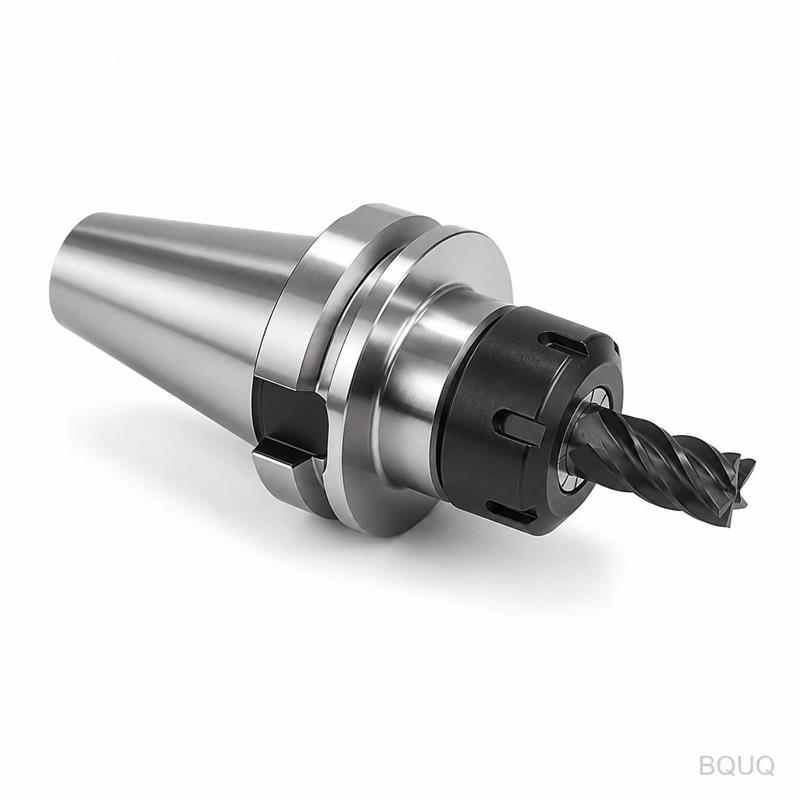
If you are tired of holders that lose grip after a few weeks, this one holds ER16 collets with a pull-back action that centers the tool shank automatically. The through-hole is 20mm deep, so you can use extended length end mills without vibration. This is not a cast or forged blank—it is machined from a solid 40CrMo4 round bar, then hardened and ground. That is why the runout stays consistent even after re-clamping 500 times.
How ER Collet Chucks Grip Tooling Without Runout
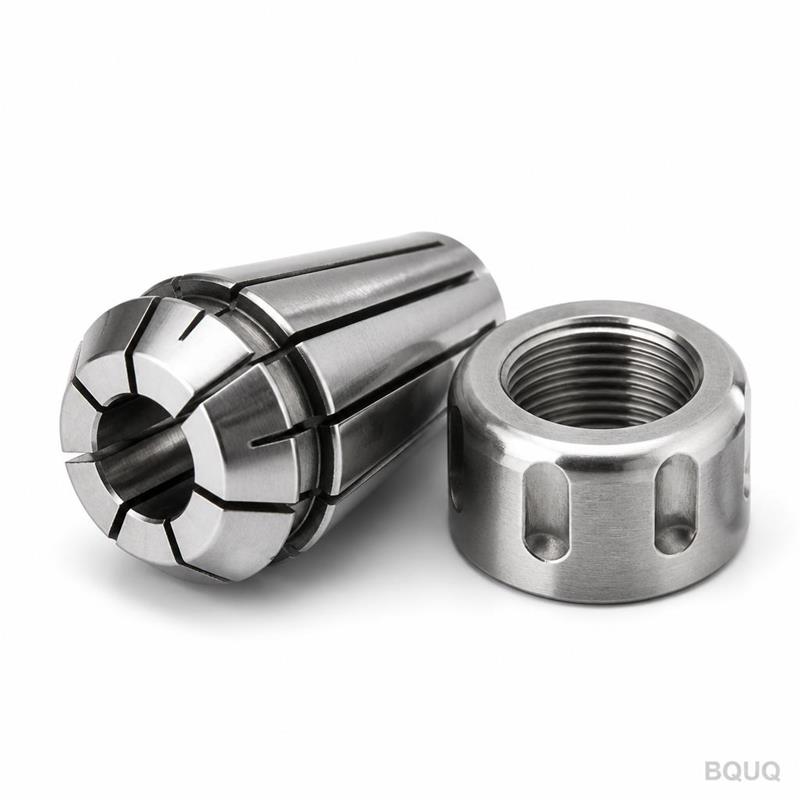
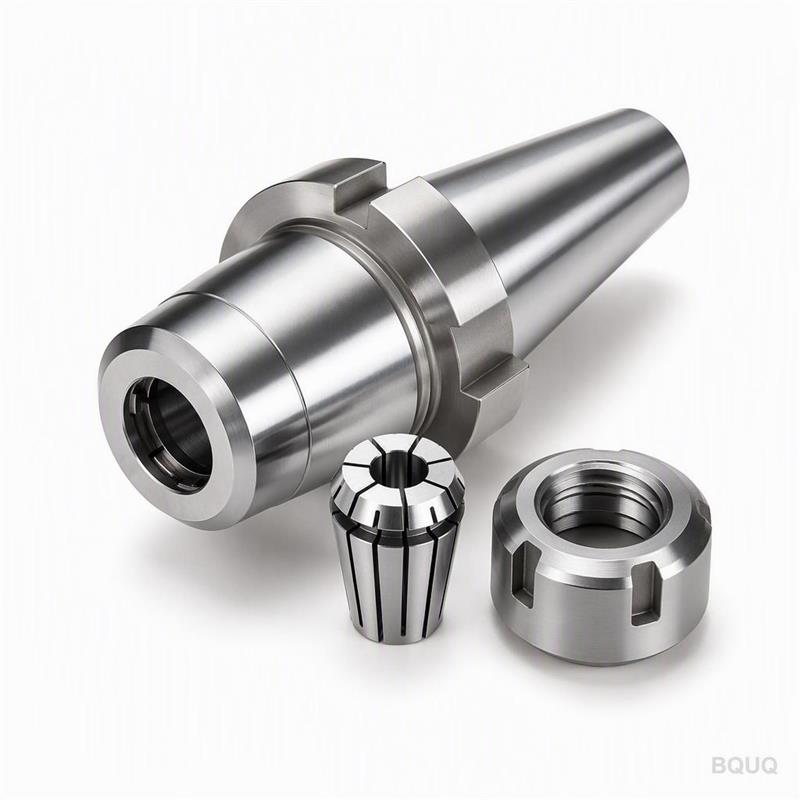
ER collet chucks work by compressing a slotted sleeve around the tool shank. The BT40 taper seats into the spindle, and the drawbar pulls the chuck back, which forces the ER16 collet to close evenly. The secret is the 8-degree internal taper angle—we grind this seat to a 0.003mm roundness. If the seat is off, the collet distorts and you get runout at the cutting edge.
We machine the collet pocket using a single-point boring operation, not a reamer. This gives a surface finish of Ra 0.4 on the taper and Ra 0.8 on the collet bore. The nut threads are rolled, not cut, so they do not gall when you torque them to 60 Nm. You will see the difference in your part finish: less chatter marks, better hole position, longer tool life.
Materials and Heat Treatment We Use
We start with 40CrMo4 (AISI 4140) steel, supplied with mill certificates. The blank is rough turned to remove scale, then stress-relieved at 650°C to remove internal stresses. After that, we harden to HRC 58-62 using a vacuum furnace—this prevents decarburization on the taper surface. The final grinding steps are done on a Studer universal grinder with coolant filtration to 5 microns.
You will not find soft spots on the taper because we grind after hardening, not before. The hardness is checked on every piece with a Rockwell tester, and we record the value on the inspection report. For corrosive environments, we offer an optional black oxide finish that does not affect the taper geometry. Surface hardness is uniform from the surface to 1.5mm depth, so re-sharpening the taper later is possible.
Specifications for BT40 ER16 Collet Chuck Tool Holder
Parameter
Value
Shank Type
BT40 (MAS BT-403 standard)
Collet Type
ER16 (accepts 1.0mm to 10.0mm shank diameters)
Material
40CrMo4 (AISI 4140) steel
Hardness
HRC 58-62 (taper and bore)
Taper Grade
AT3 (runout ≤ 0.005mm TIR)
Surface Finish
Ra 0.4 (taper), Ra 0.8 (collet bore)
Concentricity
0.005mm TIR at nose, 0.008mm at 4x diameter
Nut Type
ER16, knurled or hex, rolled thread
Lead Time
15 days (standard sizes), 20 days (custom)
MOQ
No MOQ – order 1 piece or 1000
All dimensions are verified with a CMM and a hydraulic clamping fixture to simulate real spindle pull. We also test each holder with a mounted dial indicator at 100mm from the nose—the reading is written on the box. If you order a custom length (e.g., 150mm or 200mm), we adjust the balance and re-check runout after final grinding.
Inspection Before Every Shipment
Each BT40 ER16 chuck goes through a 5-step inspection before packing. First, we check the taper angle with a precision air gauge. Second, we measure the collet seat diameter with a bore micrometer. Third, we test runout with a 10mm test bar inserted and torqued to 60 Nm. Fourth, we verify hardness on the taper and the nut thread. Fifth, we do a dye penetrant test on the taper surface to catch micro-cracks.
You get a signed inspection report with every order, including the actual runout value and hardness reading. If you need a full material certificate or a dimensional report per DIN ISO 2768-mK, we include that at no extra cost. Our QC team rejects about 2% of production for taper burrs or surface scratches—those never leave the factory. This is precision manufacturing, not batch production, and we treat every holder like a prototype.
What is your minimum order quantity (MOQ)?
There is no MOQ—you can order a single BT40 ER16 holder for testing, and we ship it with the same inspection report as a bulk order.
Can you customize the length or collet type?
Yes, we can machine custom overall lengths from 50mm to 200mm, and we can also supply ER20 or ER32 versions of the BT40 shank with the same AT3 taper grinding.
How do you control quality on the taper and runout?
We use a CMM and a hydraulic clamping fixture to simulate spindle pull, then verify each unit with a dial indicator at 100mm from the nose, recording the actual TIR on the inspection report.
What is your lead time for a standard BT40 ER16 chuck?
Standard sizes ship in 15 days from Dongguan, and custom lengths take 20 days—we also offer express air freight for urgent orders at cost.
Why Our BT40 ER16 Holders Beat Imported Brands
We have been machining tool holders for 20 years, and we know where cheap holders fail: the taper is ground before hardening, or the collet seat is reamed instead of bored. We do neither. Our taper is ground after hardening, and the collet seat is single-point bored. The result is a holder that maintains 0.005mm runout even after 1000 tool changes—tested in our own milling center.
This is made in China, but not the kind you have to rework. We use the same grinding machines (Studer, Kellenberger) as German and Swiss manufacturers. The difference is price: you pay about 30-40% less for the same performance. For a factory running 10 spindles, that adds up quickly. And because we are the manufacturer, you can talk directly to the engineer who sets up the grinding process—no middlemen, no miscommunication.
How to Choose the Right Collet Chuck for Your Spindle
Before you order, check your spindle taper is BT40 (MAS BT-403) and that your drawbar pull force is within 10-15 kN. If you use ER16 collets, the chuck capacity is 1-10mm shank diameter. For heavy roughing, a solid holder with a shorter gauge length (e.g., 70mm) reduces vibration. For deep cavities, a 150mm extended holder works, but you must reduce feed by 20% to avoid chatter.
If you are unsure about the tool holder type, read our CNC cutting tool selection guide for matching collet chuck sizes to spindle speed and torque. Also check our CNC machining tolerances guide to understand how runout affects hole position and surface finish in your parts. Both guides are written by our shop floor engineers, not copywriters.
Get a Firm Quote Within 12 Hours
Send us your drawing or just the required length and collet size. We will reply with a firm price, a confirmed lead time, and a technical proposal for your spindle setup. If you need a sample for testing, we offer one piece at a small premium, and we deduct that cost from your first bulk order. We are ready to answer questions about runout, hardness, or balancing—ask us directly.
Email your drawing to sc@bquq.com or message us on WhatsApp at +86 13713157787. We respond within 12 hours, including weekends. No MOQ, no minimum order value, just a straight answer from the factory floor.