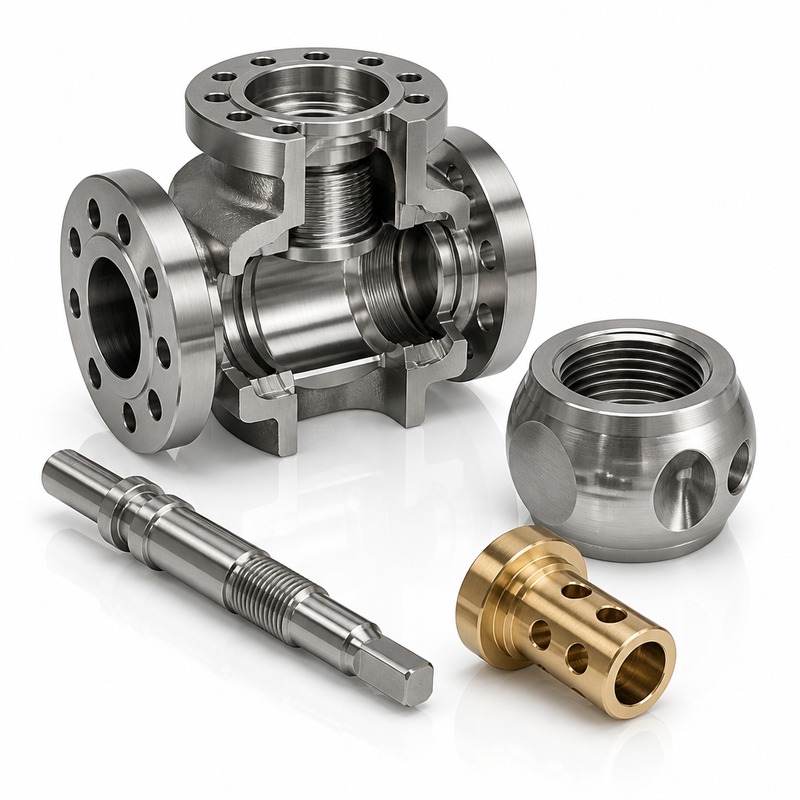
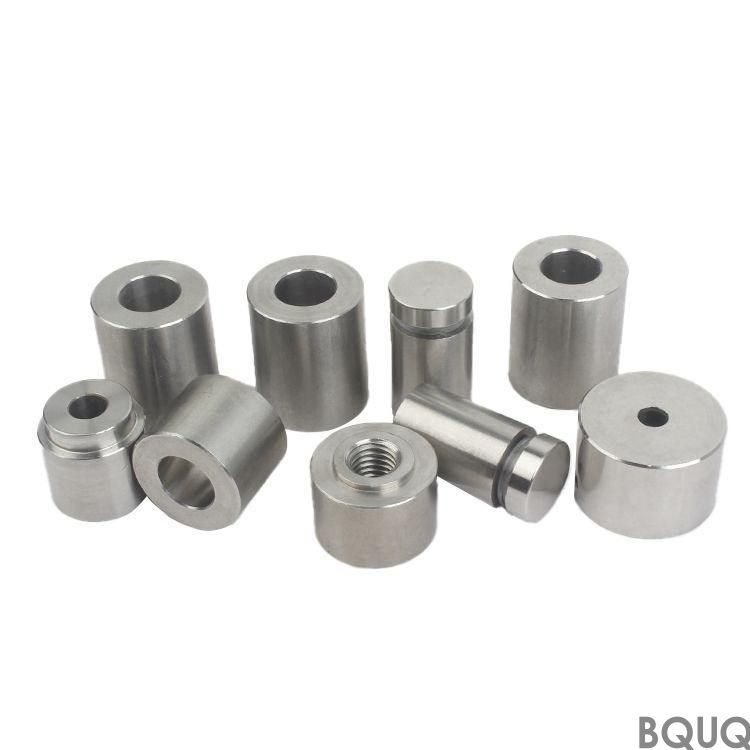
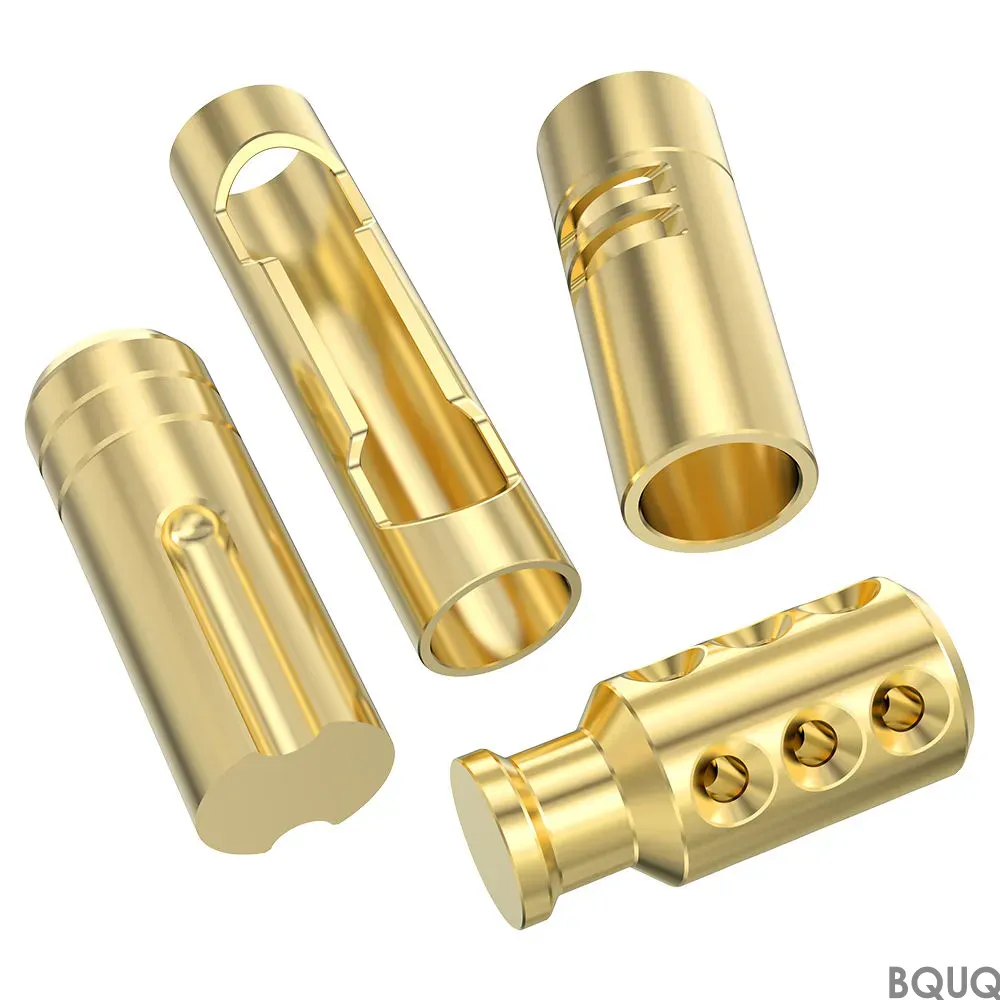
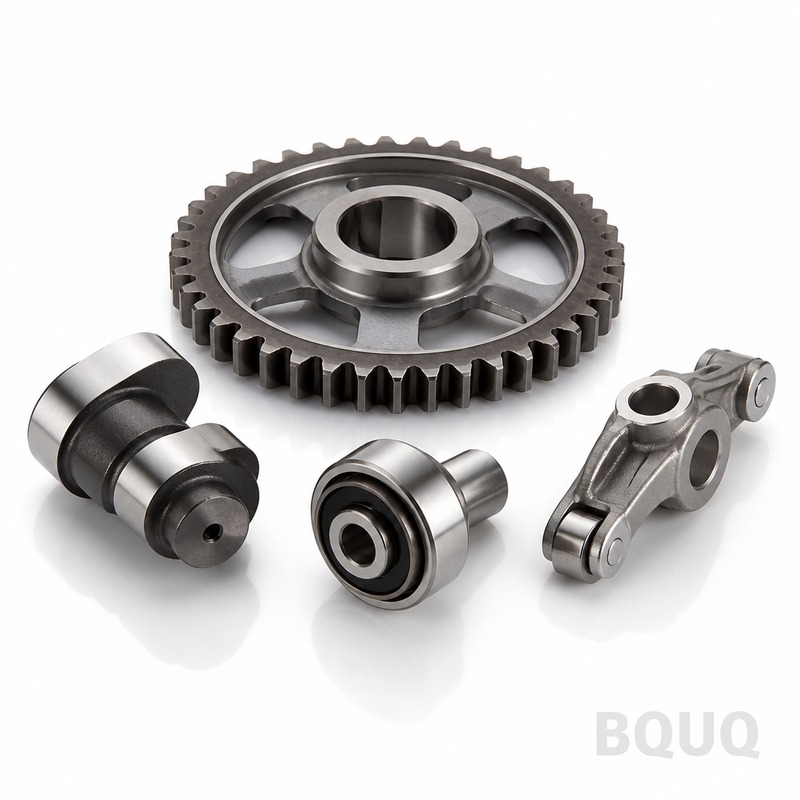
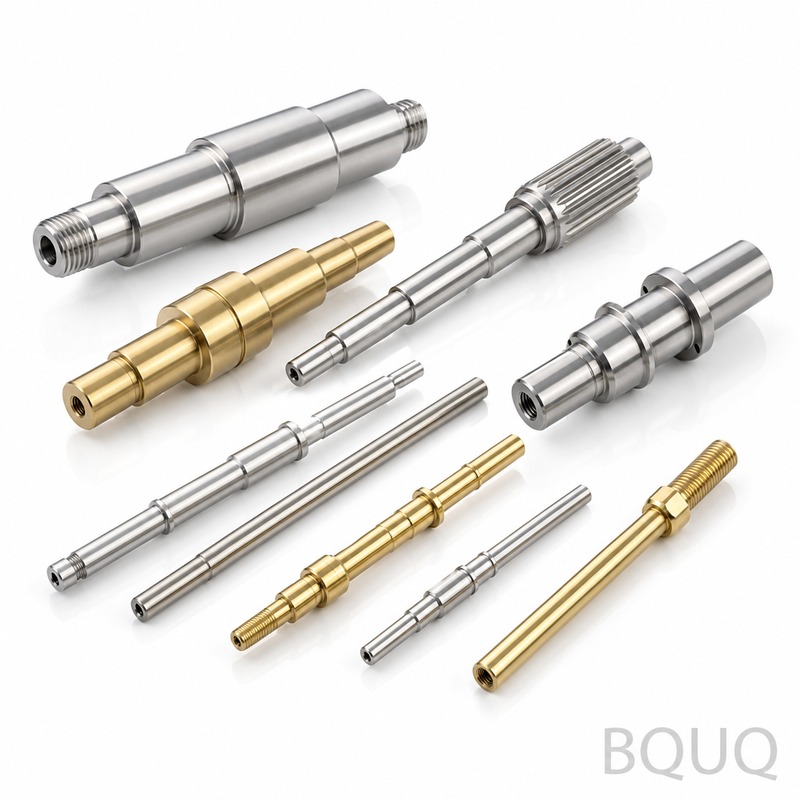
These are Cnc Machined Oil Gas Valve Parts produced on 3-axis and 5-axis CNC centers in our Dongguan factory. You get valve stems, seats, chokes, and cage components with a toleran
BQUQ Cnc Machined Oil Gas Valve Parts | Precision Manufacturing China
These are Cnc Machined Oil Gas Valve Parts produced on 3-axis and 5-axis CNC centers in our Dongguan factory. You get valve stems, seats, chokes, and cage components with a tolerance of ±0.005 mm, sur
Get a Fast Quote for This Part
Send us your drawing / quantity / material — reply within 24h.
These are Cnc Machined Oil Gas Valve Parts produced on 3-axis and 5-axis CNC centers in our Dongguan factory. You get valve stems, seats, chokes, and cage components with a tolerance of ±0.005 mm, surface finish down to Ra 0.4, and a guaranteed 15-day lead time for most alloys. Hardness reaches 58–62 HRC after heat treatment, which directly extends service life in sour gas and high-pressure downhole environments.
Why Valve Parts Need ±0.005 mm Tolerance and Ra 0.4 Finish
Valve seats and stems face erosive flow, thermal cycling, and repeated impact. A seat that is 0.01 mm off creates a leak path — that is 10 microns of failure. We hold critical sealing diameters to ±0.005 mm and roundness under 0.003 mm. Ra 0.4 on sealing faces reduces friction and prevents galling between moving parts. For choke trim, we machine flow ports with a deburred edge of 0.05 mm max, so pressure drop stays predictable.
Materials We Run: From 316L to Inconel 718
We stock and machine six main alloys for oil gas service: 316L stainless (0.02% max carbon), 17-4PH H1150 (33–35 HRC), duplex 2205 (yield 450 MPa), Inconel 718 (aging to 44 HRC), Monel K500, and AISI 4140 with nitride coating. For CO2 and H2S environments, we recommend 17-4PH or Inconel 718. Every bar comes with a material certificate traceable to the mill. If you need a specific grade, we source it in 48 hours — no extra charge for small quantities.
Runout Control on Long Valve Stems — The Fixturing Method
Valve stems longer than 300 mm are the hard part. We use a hydraulic chuck with a live center on the tailstock, not a three-jaw chuck. That setup holds total indicated runout (TIR) to 0.01 mm over a 400 mm length. For stems up to 800 mm, we switch to a steady rest with a nylon pad, keeping TIR at 0.02 mm. We never machine long stems in a single pass — we rough, stress relieve in a vacuum oven, then finish. This removes internal stress and prevents bowing after shipping.
Our 5-Axis Machining for Choke Trim and Valve Cages
Choke trim and valve cages have complex internal profiles, often with 6 to 12 flow slots at angles. A 3-axis machine needs two setups, which kills concentricity. Our DMG MORI 5-axis machines cut those slots in one clamping. Concentricity between the bore and outer diameter stays within 0.008 mm. Slot width tolerance is ±0.02 mm, and the edge radius is held to 0.1 mm. This reduces turbulence and cavitation in high-pressure drops — a common failure point in choke valves.
Heat Treatment and Hardness — We Do It In-House
We run a vacuum heat treatment furnace in our factory. For 17-4PH, we solution anneal at 1040°C, then age at 620°C for H1150 condition (33–35 HRC). For Inconel 718, we age at 720°C for 8 hours, then 620°C for 8 hours, reaching 44 HRC. We check hardness on every part with a Rockwell tester, not a sample. For surface hardening of 4140, we offer nitriding to 58–62 HRC with a case depth of 0.3 mm. Distortion after heat treatment is corrected by a final grinding pass on the sealing surfaces.
Inspection Before Every Shipment — CMM and Hydrostatic Test
Every batch of Cnc Machined Oil Gas Valve Parts goes through a 100% inspection protocol. We use a Zeiss CMM for dimensional checks: bore diameter, thread pitch, and concentricity. Surface finish is measured with a profilometer, not eyeballed. For valve seats, we run a helium leak test down to 1×10⁻⁹ mbar·L/s. Threads are checked with a Go/No-Go gauge. We send you a full inspection report with each shipment — including the material certificate and heat treatment chart. No report, no shipment.
Lead Time and MOQ — No MOQ, 15 Days for Prototypes
We do not have a minimum order quantity. One prototype or 10,000 pieces — the same process control. Prototype lead time is 15 days for standard alloys like 316L and 17-4PH. Production runs of 100–500 pieces ship in 25–30 days. For Inconel 718, add 5 days for material sourcing. We keep a buffer stock of 316L and 17-4PH bars in our warehouse, so the most common orders start machining within 48 hours of drawing approval.
±0.005 mm on sealing diameters; ±0.02 mm on general features
Surface finish (Ra)
0.4 µm on sealing faces; 0.8 µm standard; 0.2 µm on request
Runout (TIR)
0.01 mm over 400 mm length; 0.02 mm over 800 mm
Concentricity (5-axis)
0.008 mm between bore and OD
Thread class
UNS 2A/3A, NPT, API modified — Go/No-Go verified
Lead time (prototype)
15 days for 316L/17-4PH; 20 days for Inconel 718
MOQ
No MOQ — 1 piece accepted
Quality system
ISO 9001:2015, CMM inspection, helium leak test
When you specify a material, we ask for the service condition: pressure, temperature, H2S partial pressure, and fluid composition. That tells us whether to use 316L or move up to Inconel 718. If you are unsure, our engineers will recommend a grade based on NACE MR0175 guidelines. We also machine from your supplied blanks if you have forged or cast preforms — that saves you material cost on complex geometries.
Deburring and Edge Prep — The Small Detail That Prevents Erosion
Sharp edges on flow paths are a failure point. A 0.1 mm burr will break off and score the seat. We use a thermal deburring process for internal cross-holes — it burns off burrs in a controlled explosion inside a sealed chamber. For external edges, we hand-debur with a 0.05 mm max radius. Then we pass every part through a vibratory finisher with ceramic media for 20 minutes. This gives a consistent micro-finish that reduces erosion in high-velocity gas flow.
Threading and Sealing Surfaces — Cut, Not Rolled, for Repeatability
Valve bonnets and end connections often use NPT or API threads. We single-point cut threads on a CNC lathe with a full-profile insert. This gives a 0.002 mm pitch accuracy and a 32 RMS finish on the flanks. We do not roll threads on oil gas parts — rolling can leave micro-cracks that propagate under fatigue. After cutting, we run a thread micrometer on every part. For metal-to-metal seals, we grind the taper angle to 1.0° ± 0.05°, then lap to a 0.2 µm finish.
Finishing Options — Passivation, Electropolish, and Coating
For 316L parts, we offer passivation per ASTM A967 to remove free iron. For higher corrosion resistance, electropolish removes 0.01 mm from the surface and creates a bright, passive layer. For wear resistance on 17-4PH, we apply a tungsten carbide coating (HVOF) on the seal diameter — that hardness reaches 1100 HV. Coating thickness is 0.15 mm ± 0.05 mm, and we grind it back to final size. If you need a specific surface treatment, tell us the standard — we follow ASTM, NACE, or your internal spec.
Packing and Traceability for Offshore Shipment
Offshore and remote sites need parts that survive shipping and storage. Each part is individually wrapped in VCI paper (vapor corrosion inhibitor) and sealed in a plastic bag with a desiccant pack. Then we pack into a wooden crate with foam inserts — no loose parts. Every crate has a packing list with the purchase order number, part number, and heat number. We also laser-mark a DMC code on each part for full traceability. That code links to our database with the material cert, inspection results, and the operator's name.
How to Get a Quote — Send Your Drawing Today
Send your 2D drawing (PDF or DWG) or 3D model (STEP or IGES) to sc@bquq.com. We will review the geometry, material, and tolerance within 2 hours. If the drawing is incomplete, we will call you to clarify — no automated rejections. You get a firm quote with unit price, lead time, and suggested material changes if we see a cost-saving opportunity. For complex valve assemblies, we can also machine the mating parts together to guarantee fit.
Frequently Asked Questions
What is the minimum order quantity for Cnc Machined Oil Gas Valve Parts?
No MOQ — we accept a single prototype or a full production order with the same quality control process.
Can you customize the valve part geometry from my existing design?
Yes, we machine any geometry that fits our 5-axis work envelope (800 mm x 600 mm x 500 mm), and we can suggest design changes to reduce machining cost.
How do you ensure quality on small batches of valve parts?
We run a first-article inspection on the first piece, then in-process checks every 10 pieces, and a final 100% CMM inspection before shipment.
What is the lead time for a prototype valve stem in Inconel 718?
20 days from drawing approval, including material sourcing, machining, heat treatment, and final inspection.
Firm quote within 12 hours. Email sc@bquq.com or WhatsApp +86 13713157787. Send your drawing — we will confirm the price, lead time, and material grade before you commit. Precision manufacturing, made in China, with no MOQ and full traceability.