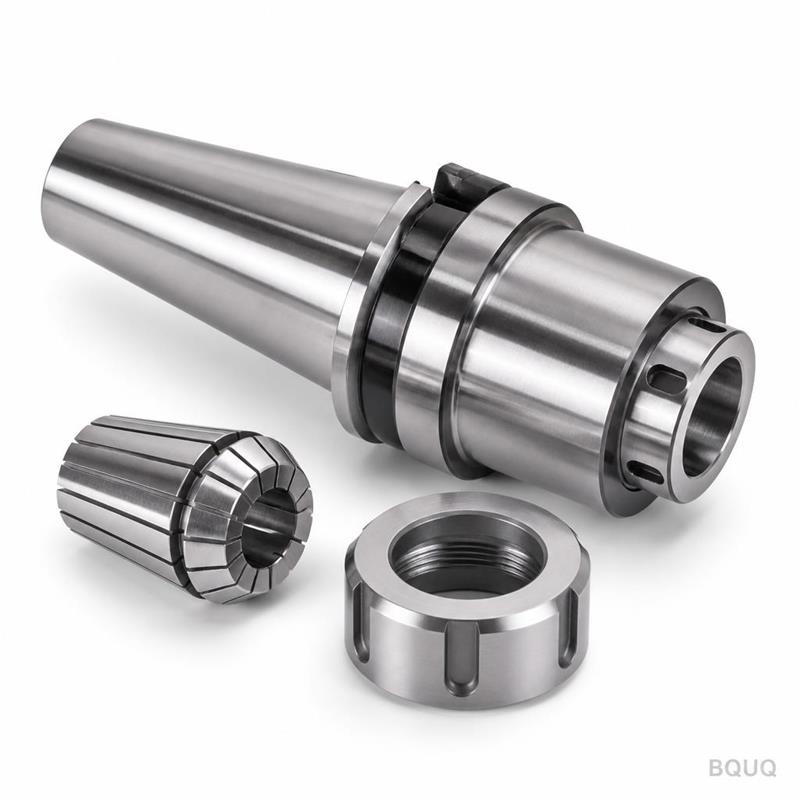
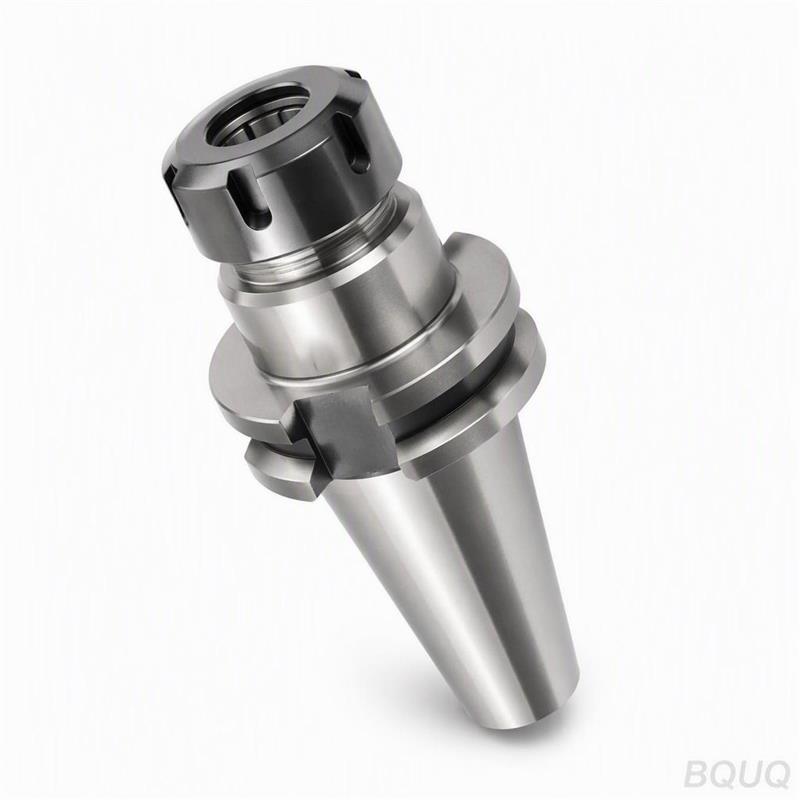
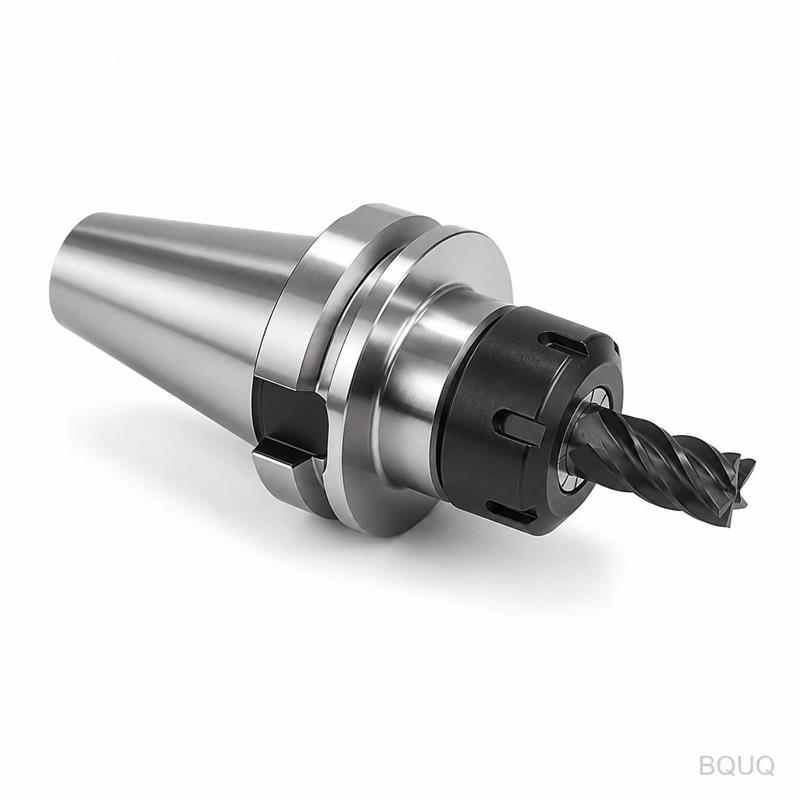
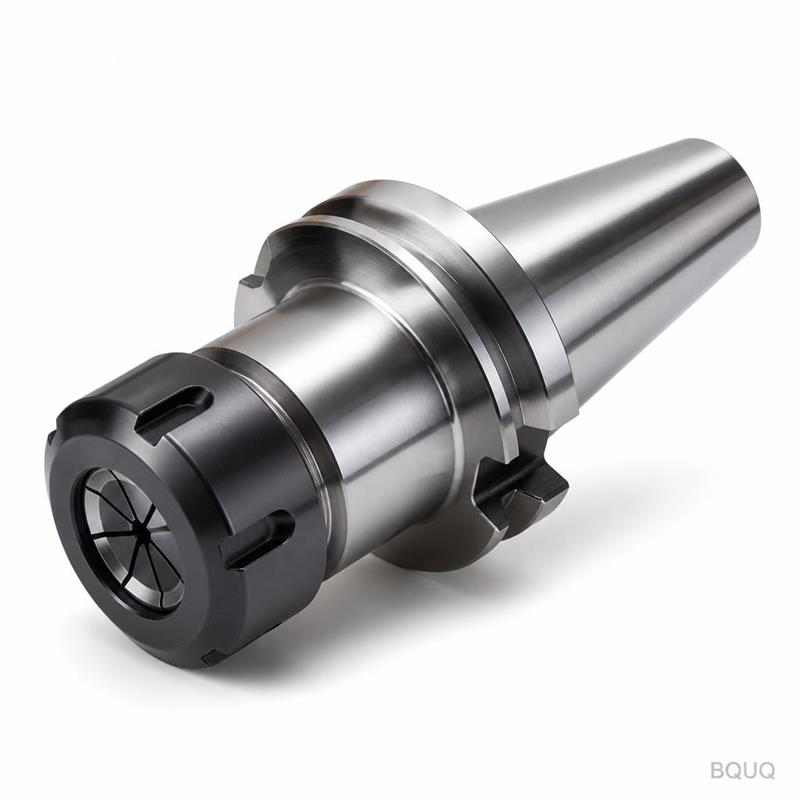
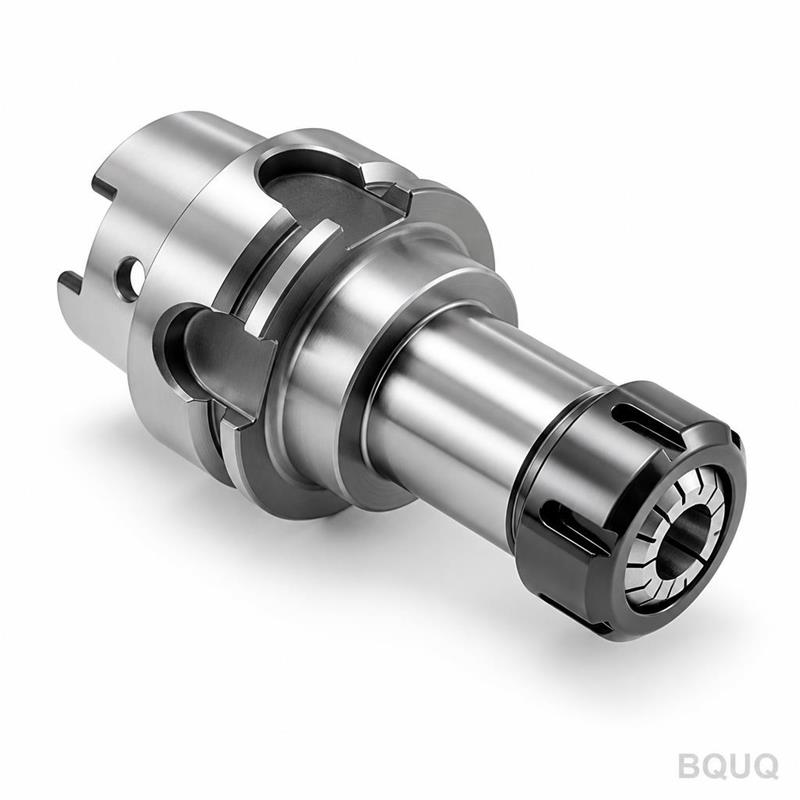
This is a TG150 series collet chuck, CNC machined from a single billet of 20CrMnTi alloy steel. It delivers a guaranteed runout of 0.005 mm TIR at the nose and a hardness of HRC 58
This is a TG150 series collet chuck, CNC machined from a single billet of 20CrMnTi alloy steel. It delivers a guaranteed runout of 0.005 mm TIR at the nose and a hardness of HRC 58-62 after carburizin
Get a Fast Quote for This Part
Send us your drawing / quantity / material — reply within 24h.
This is a TG150 series collet chuck, CNC machined from a single billet of 20CrMnTi alloy steel. It delivers a guaranteed runout of 0.005 mm TIR at the nose and a hardness of HRC 58-62 after carburizing, which gives you the gripping force and wear resistance needed for heavy interrupted cuts. We ship standard sizes in 15 days, and custom bores in 20 days, directly from our Dongguan factory.
How TG150 Collets Lock Tooling Without Radial Movement
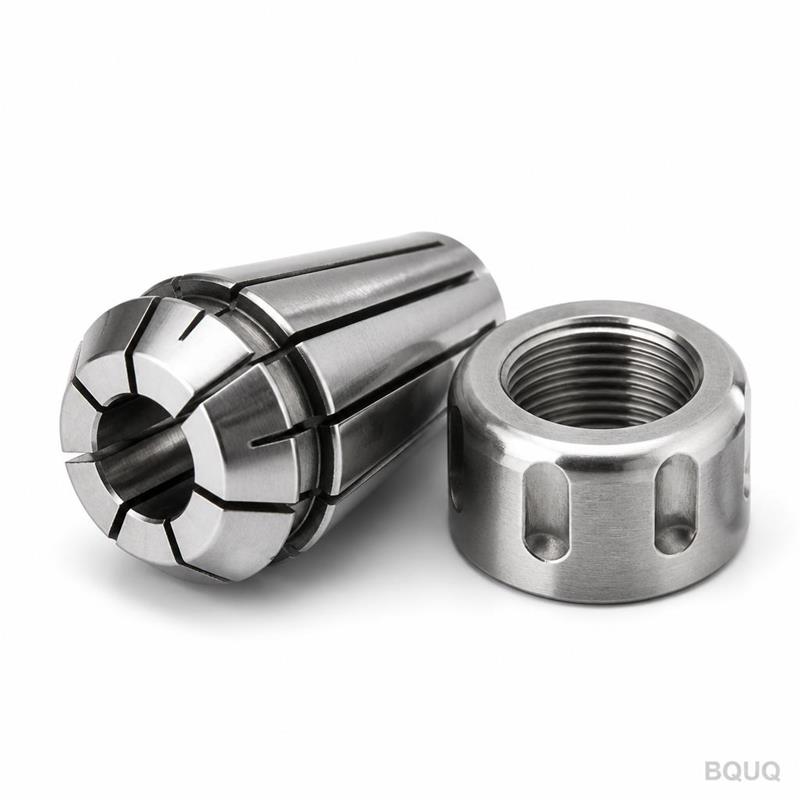
The TG150 system uses a tapered collet that is pulled into a matching 15-degree internal cone. When you tighten the lock nut, the collet compresses radially and evenly around the tool shank. This is not a spring collet; it is a slotted, thick-walled sleeve that produces a rigid, full-length grip. The result is zero radial shift during tightening, which is why we hold 0.005 mm TIR at 4xD projection. Unlike ER collets, TG150 collets have a longer gripping surface (up to 2.5 times the shank diameter), which reduces vibration and chatter in deep cavity milling.
Billet Choice and Carburizing Cycle for Heavy-Duty Milling
We start with 20CrMnTi, not free-machining 12L14. The material is forged to refine grain structure, then CNC turned and milled. After machining, every chuck goes through a gas carburizing process at 920°C for 6 hours, followed by oil quenching and low-temperature tempering. This yields a case depth of 0.8–1.2 mm and a surface hardness of HRC 58-62. The core remains tough at HRC 35-40, so the chuck absorbs shock from interrupted cuts without cracking. We do not hard chrome plate the bore; we grind it after heat treatment to maintain true geometry.
Grinding Sequence That Achieves 0.005 mm TIR
Heat treatment distorts steel. We fix that with a strict grinding order. First, we grind the outer taper and the back face. Then we mount the chuck on a precision arbor and grind the internal bore, referencing the already-ground taper. The taper angle is held to ±0.0002 radians. The bore is ground to a finish of Ra 0.4 µm. After grinding, we check runout with a 0.001 mm dial indicator at two positions: at the nose and at 100 mm from the nose. If either reading exceeds 0.005 mm, the part is rejected and reground.
Thread and Lock Nut Specifications for Repeatable Clamping
The lock nut is not a generic off-the-shelf part. It is CNC machined from 40Cr steel and heat-treated to HRC 45-50. The internal threads are cut to a class 2B fit, and the external gripping surface is knurled for a positive grip even with oily gloves. We pre-load the nut with a torque of 120 Nm for testing, but the chuck is rated for continuous operation up to 200 Nm. The thread pitch is 1.5 mm, which means one full turn of the nut compresses the collet by 1.5 mm—enough to clamp a shank with a tolerance range of -0.01 mm to -0.05 mm. We include a hardened back-up screw to prevent the collet from pushing out under high axial forces.
Inspection Before Every Shipment: Air Gauge and Hardness Test
Every single TG150 chuck is inspected, not just sample-tested. We use an air gauge to measure the internal bore diameter with 0.001 mm resolution. The bore must be within +0.005 mm / +0.010 mm of the nominal size. We test hardness on a Rockwell C scale at three points on the body. We verify the collet taper with a blueing test against a master gauge. Finally, we run a functional test: we clamp a test bar, measure TIR, and record the value on the inspection report. That report is included in the shipping box. We keep a copy in our quality system for 10 years.
Surface Finish and Coatings: Ra 0.4 µm and Optional Nitride
The internal bore is ground to Ra 0.4 µm to reduce friction with the tool shank and prevent galling. The outer body is finished to Ra 0.8 µm. Standard product is uncoated, but we offer a low-temperature nitride treatment (not TiN) that increases surface hardness to HRC 65 and reduces the coefficient of friction to 0.15. This is recommended for stainless steel machining or when using coolant with high chlorine content. The nitride layer is 0.02 mm thick and does not affect the bore tolerance. We do not offer electroless nickel plating because it builds up on the taper and ruins concentricity.
Balancing and Speed Limits for High-RPM Machining
We balance every chuck to G2.5 at 10,000 RPM as standard. If you are running >15,000 RPM, we offer optional dynamic balancing to G1.0 at 20,000 RPM. The balancing is done on a hard-bearing balancer with a sensitivity of 0.1 g·mm. We remove material from a dedicated balancing ring on the back face, not from the taper or the bore. Unbalance is limited to 0.2 g·mm in the standard version. For a 63 mm diameter chuck, this corresponds to a maximum safe speed of 25,000 RPM with a balanced tool assembly.
Specification
Value
Product Type
CNC Machined TG150 Collet Chuck
Collet Range (TG150)
Ø3 mm – Ø30 mm (with 1 mm increments)
Shank Types Available
BT30, BT40, BT50, HSK63A, HSK100A, CAT40, CAT50
Body Material
20CrMnTi alloy steel (forged)
Heat Treatment
Carburized, case depth 0.8–1.2 mm
Hardness (Surface)
HRC 58–62
Hardness (Core)
HRC 35–40
Runout (TIR at Nose)
0.005 mm (0.0002")
Runout (TIR at 100 mm)
0.005 mm (0.0002")
Bore Surface Finish
Ra 0.4 µm
Taper Angle Accuracy
±0.0002 radians
Balancing Grade (Standard)
G2.5 @ 10,000 RPM
Max Torque (Lock Nut)
200 Nm
Lead Time (Standard)
15 days
Lead Time (Custom Bore)
20 days
MOQ
No MOQ (1 piece accepted)
Country of Origin
Made in China (Dongguan)
Is a single piece order (MOQ of 1) really possible?
Yes, we do not enforce a MOQ. You can order one TG150 chuck for testing or prototyping. The price per piece is higher than bulk, but the quality and inspection process are identical to a 500-piece order.
Can you customize the bore diameter or the shank taper?
Yes, we can grind any bore diameter within the collet range (Ø3–Ø30 mm) to a tolerance of +0.005/+0.010 mm. We also manufacture non-standard shanks, such as modified HSK or special taper angles, but custom shanks require a 5-day engineering review and a minimum run of 5 pieces.
How do you guarantee the 0.005 mm runout on every unit?
Each chuck is individually measured with a 0.001 mm dial indicator after final grinding. The measurement is recorded on a unique inspection report that ships with the part. If the runout exceeds 0.005 mm, the part does not leave our factory.
What is the exact lead time for a standard TG150 chuck?
Standard sizes (BT40, BT30, HSK63A) with a standard bore (e.g., Ø6 mm, Ø10 mm, Ø20 mm) ship in 15 days from order confirmation. Custom bore diameters add 5 days. We ship via DHL or FedEx; delivery to the US or Europe takes 3–5 days after the part is ready.
Send us your drawing or just a sketch with your spindle type and tool shank diameter. We will reply with a firm quote within 12 hours, including price, exact lead time, and a drawing of the proposed chuck if you need a custom bore. We are a precision manufacturing factory in Dongguan, China, with 20 years of experience in CNC machining, stamping, springs, and heat sinks. No MOQ, no middlemen, no surprises.
Email: sc@bquq.com WhatsApp: +86 13713157787 Attach your drawing and get a TG150 collet chuck that holds 0.005 mm all day.