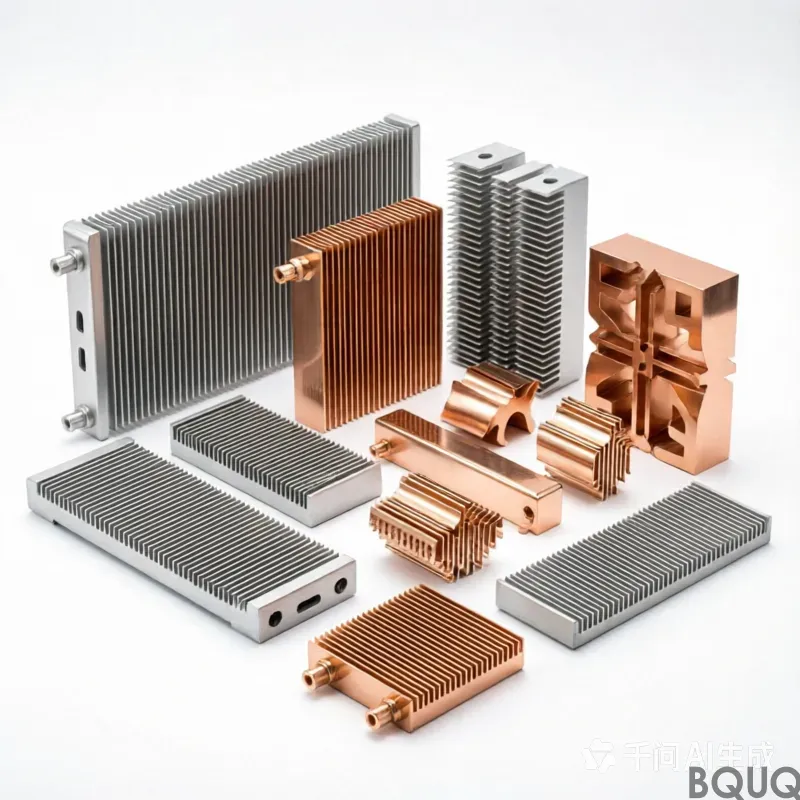
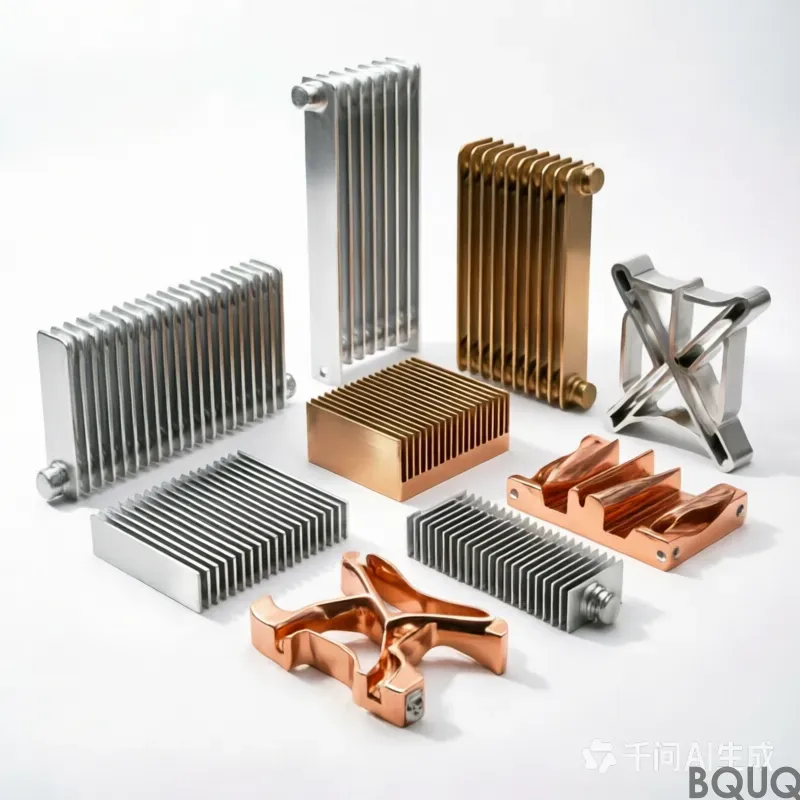
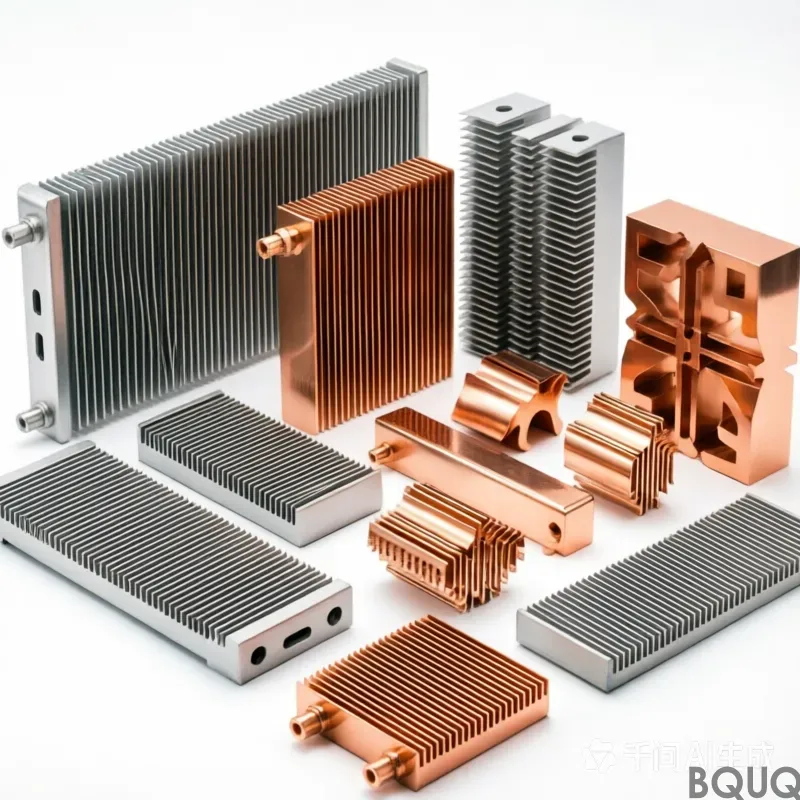
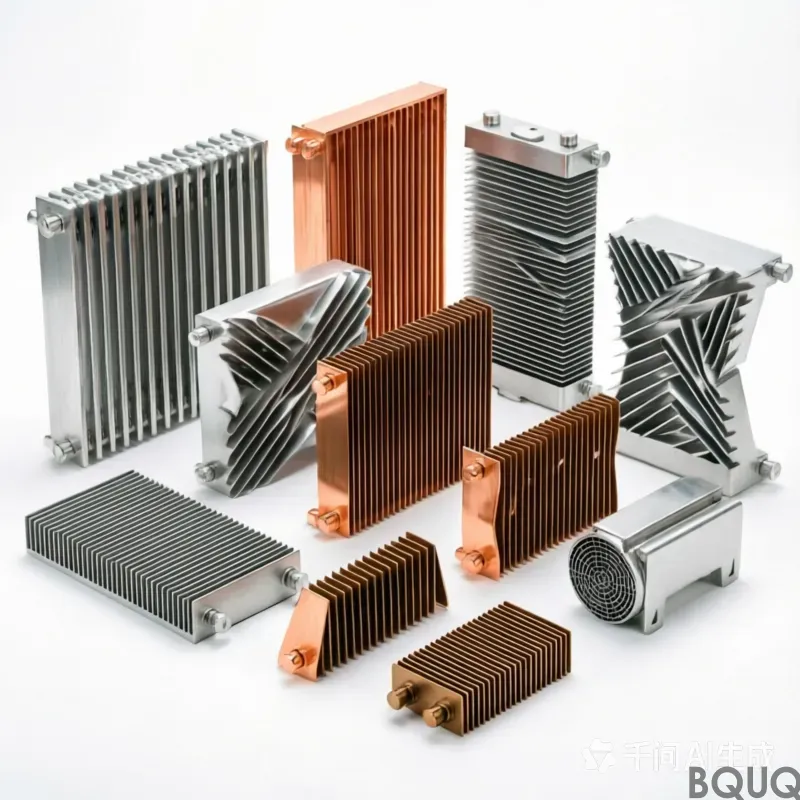
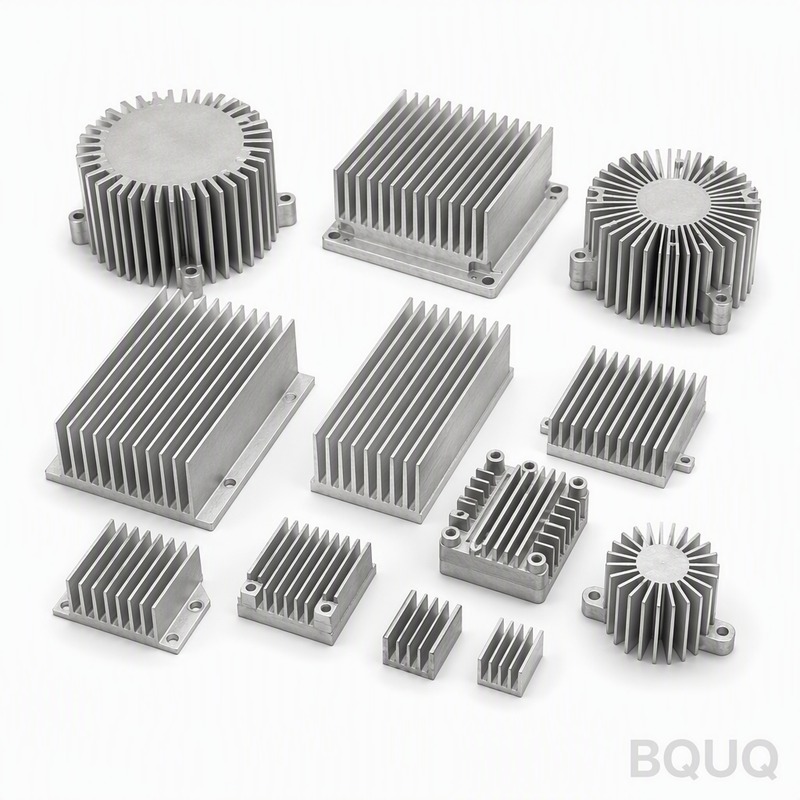
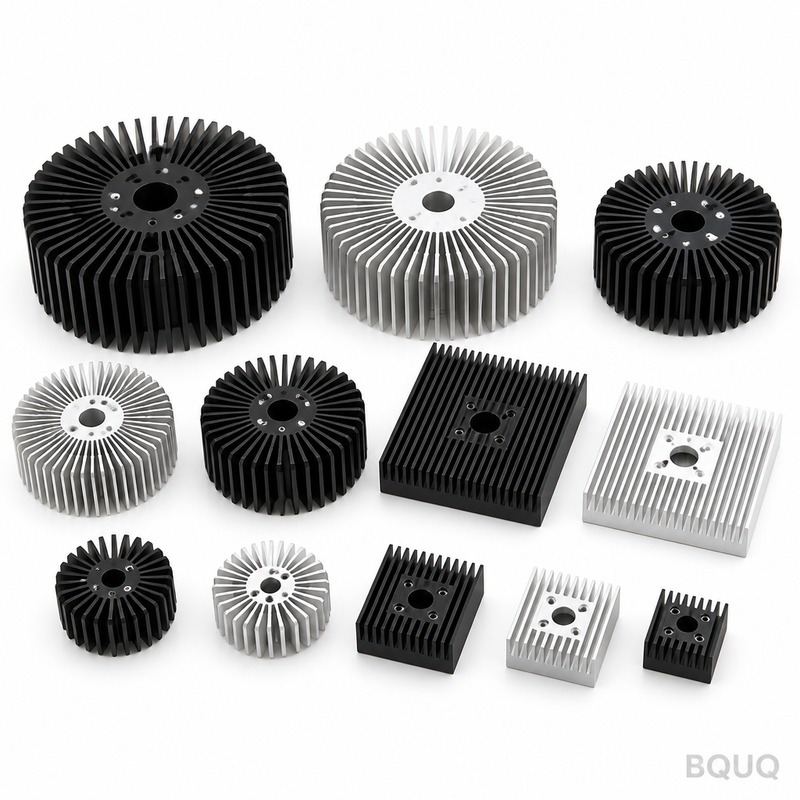
What This CPU Heat Sink Is and the Numbers That Matter This is a CNC-machined CPU heat sink built for active cooling of processors in servers, industrial PCs, and custom embedded
Precision CPU Heat Sink Manufacturing | BQUQ CNC Factory China
What This CPU Heat Sink Is and the Numbers That Matter This is a CNC-machined CPU heat sink built for active cooling of processors in servers, industrial PCs, and custom embedded systems. You get a
Get a Fast Quote for This Part
Send us your drawing / quantity / material — reply within 24h.
What This CPU Heat Sink Is and the Numbers That Matter
This is a CNC-machined CPU heat sink built for active cooling of processors in servers, industrial PCs, and custom embedded systems. You get a flatness of 0.05 mm across the base, a surface finish of Ra 1.6 µm on the contact face, and a fin thickness down to 0.8 mm with a 0.02 mm runout on the entire fin stack. Lead time is 15 days for standard aluminum alloys, and we hold a hardness of 8–12 HRC on 6063-T5 after aging.
We are BQUQ, a precision manufacturing factory in Dongguan, China, with 20 years of CNC machining, stamping, and spring production experience. Every CPU heat sink leaves our shop with a CMM inspection report, not a guess.
Fin Geometry That Actually Moves Air: Slot Width and Depth Tolerances
The cooling performance of a CPU heat sink depends on the gap between fins and the depth of each channel. We cut slots as narrow as 1.2 mm wide with a depth-to-width ratio of 8:1, holding a ±0.05 mm tolerance on slot width. This is not stamped sheet metal folded together—it is solid billet CNC milling, so you get no burrs inside the airflow path. A 0.02 mm runout on the fin tips means the fan pushes air through every channel evenly, not just the center ones.
For a typical 90 mm × 90 mm base, we machine 25 to 40 fins depending on your thermal target. If you need a vapor chamber or heat pipe interface, we machine the base pocket to ±0.01 mm depth so the pipe sits flush and solder wets evenly.
Materials and Heat Treatment We Use for CPU Heat Sinks
We stock 6063-T5 and 6061-T6 aluminum for most CPU heat sinks. 6063-T5 gives you a thermal conductivity of 201 W/m·K and is our default because it extrudes cleanly and machines without tearing. For higher strength, 6061-T6 at 167 W/m·K is available, and we age it to 8–12 HRC to keep thin fins from bending during assembly. We also work with C1100 copper for base plates when you need 385 W/m·K heat spreading—we CNC machine it and nickel-plate it to prevent oxidation.
Surface finish on the CPU contact area is Ra 1.6 µm as standard. This is critical because a rougher surface traps air between the CPU die and the heat sink, adding 0.1–0.2 °C/W of thermal resistance. If you need a mirror finish, we can go to Ra 0.8 µm with a polishing pass, but that adds 2 days to the lead time.
How We Hold Flatness on the Base Without Warping Thin Fins
Thin fins warp during machining because of residual stress in the aluminum billet. We pre-stress the material by stress-relieving it at 180 °C for 4 hours before CNC cutting. Then we machine the base first, clamp it on a vacuum chuck, and cut the fins last. This sequence keeps the base flat to 0.05 mm even after you bolt it onto a motherboard. We check flatness with a granite surface plate and a dial indicator on every single part, not a random sample.
For heat sinks wider than 150 mm, we use a two-step process: rough cut the fin channels, then release the part, re-clamp it, and finish the channels. This eliminates the spring-back that happens when you cut deep slots in one pass. The result is a fin pitch that holds within ±0.03 mm across the entire width.
Inspection Before Every Shipment: CMM Report and Runout Certificate
Every CPU heat sink gets a full dimensional check on a coordinate measuring machine (CMM) with a resolution of 0.001 mm. We measure the base flatness, fin height, slot width, and the critical 0.02 mm runout on the fin stack. You receive a PDF report with the actual measured values, not just a “passed” stamp. This is part of our precision manufacturing process, and it is included in the price for any order above 100 pieces.
For smaller orders, we still run a 100% visual check for burrs and scratches, and we measure the base flatness on a dial gauge. If you are using a heat sink for a high-end GPU or a server CPU, ask for the CMM report—it takes us one extra day but it removes all doubt.
Finishing Options: Anodizing, Nickel Plating, and Thermal Pad Pre-Application
We offer black anodizing (MIL-A-8625 Type II) up to 25 µm thick, which raises surface emissivity for better radiative heat dissipation. Clear anodizing is also available if you want to keep the raw aluminum look. For copper bases, we do electroless nickel plating to prevent corrosion and maintain solderability. We do not apply thermal paste—that is a consumable you should choose yourself—but we can pre-cut and apply thermal pads (3M or Laird) on the base if you specify the thickness.
All finishing is done in-house or by our partner within 3 km of the factory, so we do not ship parts out for anodizing and wait weeks. The total lead time for a standard CPU heat sink with anodizing is 15 days from drawing approval to your door (DDP or EXW, your choice).
Why Our 20-Year CNC Shop Is a Better Fit Than a Stamping House
Stamped heat sinks are cheap but they have burrs, inconsistent fin thickness, and poor flatness. If you are designing a CPU cooler that needs to hit a specific thermal resistance, you need machined fins. We have 40 CNC machining centers, including 4-axis machines for angled fin arrays, and we run 24/7. Our minimum order quantity is zero—we will machine a single prototype for you and ship it in 10 days. This is rare for a factory in China, but we do it because we want your production order later.
If you are comparing us to a local CNC shop in your country, our cost per part is typically 30–50% lower for the same tolerance, and our lead time is shorter because we stock 6063-T5 billets in 10 common sizes. For a deeper look at how we choose cutting tools for thin fins and deep slots, read our CNC cutting tool selection guide. For a full explanation of what ±0.01 mm really means in practice, see our CNC machining tolerances guide.
Specification
Value
Material (standard)
6063-T5 aluminum (201 W/m·K)
Material (high-strength)
6061-T6 aluminum (167 W/m·K)
Material (high-conductivity)
C1100 copper base (385 W/m·K)
Hardness (6063-T5 after aging)
8–12 HRC
Base flatness
0.05 mm max
Fin thickness
0.8 mm min (CNC milled)
Slot width tolerance
±0.05 mm
Fin stack runout
0.02 mm max
Surface finish (CPU contact face)
Ra 1.6 µm (option: Ra 0.8 µm)
Lead time (standard, no anodize)
15 days
MOQ
No MOQ (1 prototype accepted)
What is your minimum order quantity for a CPU heat sink?
No MOQ—we machine a single prototype at a fair price and ship it in 10 days, so you can test before committing to volume.
Can you customize the fin pattern or base thickness for my CPU socket?
Yes, we machine from your drawing or modify our standard 90 mm × 90 mm design—fin count, slot width, base thickness, and mounting holes are all adjustable with no tooling fee.
How do you ensure quality if I only order 10 pieces?
Every part, regardless of order size, gets a 100% visual inspection and a base flatness check; CMM reports are available on request for any quantity.
What is the typical lead time for a custom CPU heat sink with anodizing?
15 days from drawing approval to shipment for standard 6063-T5 with black anodizing; copper bases add 3 days for plating.
Send your drawing today for a firm quote within 12 hours. Email sc@bquq.com or WhatsApp +86 13713157787. We are BQUQ, precision manufacturing made in China, and we will tell you exactly what we can hold and what it costs—no surprises.