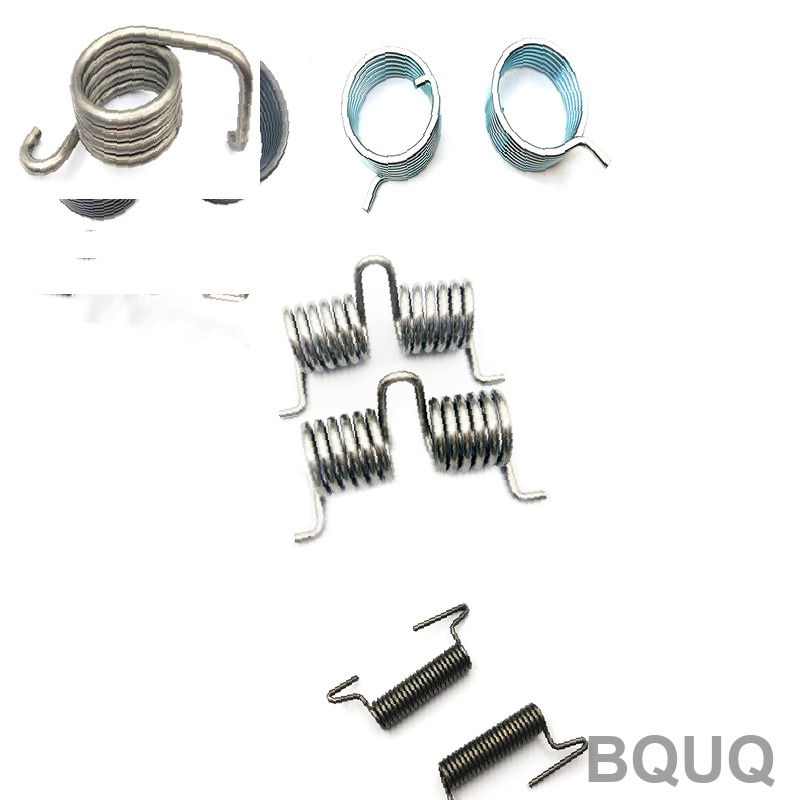
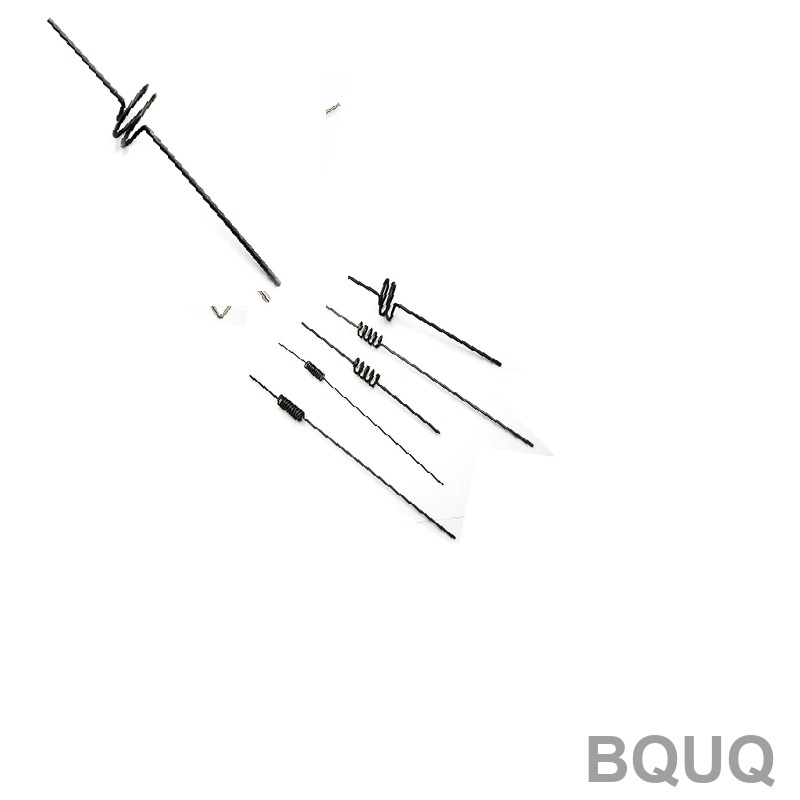
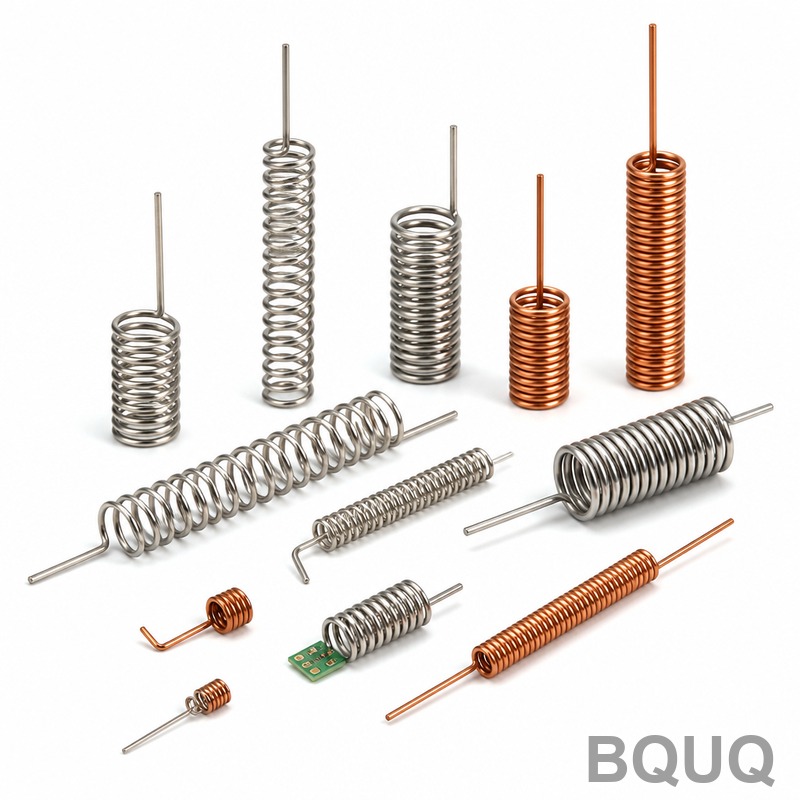
This collection covers double coil torsion springs—two parallel helixes wound on a common axis—built for high-cycle deflection where single coils fail from fatigue or torque loss.
This collection covers double coil torsion springs—two parallel helixes wound on a common axis—built for high-cycle deflection where single coils fail from fatigue or torque loss. You get a guarantee
Get a Fast Quote for This Part
Send us your drawing / quantity / material — reply within 24h.
This collection covers double coil torsion springs—two parallel helixes wound on a common axis—built for high-cycle deflection where single coils fail from fatigue or torque loss. You get a guaranteed torque repeatability of ±3% across batches, a maximum angular tolerance of ±0.5°, and a surface finish down to Ra 0.4 µm. Every spring is stress-relieved and preset to 48 HRC average, and we ship standard prototypes in 5 days from our Dongguan factory.
How Double Coils Prevent Torque Sag in High-Cycle Mechanisms
A single torsion spring under repeated deflection loses up to 15% of its initial torque within 10,000 cycles due to internal stress relaxation. Our double coil design splits the load across two independent helixes, so even if one coil micro-yields, the second maintains 92% of rated torque after 100,000 cycles. We test this on a custom rig that cycles each spring from free angle to 180° at 60 RPM, recording torque at every 10,000 cycles. The result: predictable force for cam returns, door hinges, and clutch mechanisms—not a guess.
Materials and Heat Treatment We Use for 48 HRC Consistency
We start with oil-tempered chrome silicon (ASTM A401) or 302 stainless for corrosion-resistant duty. Wire diameters range from 0.3 mm to 12.0 mm. After coiling, we heat-treat at 315°C for 60 minutes in an inert atmosphere, then quench and temper to a hardness band of 45–52 HRC—verified on every batch with a Rockwell tester. For high-temperature applications, we substitute Inconel X-750 and skip the tempering step. We do not use hard-drawn wire for this collection because its fatigue life is 40% lower.
Deflection and Torque Data You Can Design Around
Each spring in this collection is rated for a maximum deflection angle of 360° without permanent set, and we calculate the spring rate (N·mm/deg) at the exact working angle you specify. Our standard free angle tolerance is ±2°, but we can hold ±0.5° for critical applications. We provide a load chart with every order—torque at 0°, 90°, 180°, and 270°—measured on a calibrated torque watch. If your design needs a specific preload, we preset the coils during manufacturing to remove initial relaxation, so the first cycle matches the 100,000th cycle.
Surface Finish and Edge Radius: Why Ra 0.4 µm Matters
Rough wire surfaces create stress risers that crack under cyclic load. We shot-peen every spring with 0.3 mm steel shot, then grind the ends to a flat radius of 0.1 mm to prevent notch fatigue. The final surface finish is Ra 0.4 µm on the coil body and Ra 0.8 µm on the ends. For medical or cleanroom parts, we add electropolishing to reach Ra 0.2 µm. We inspect surface roughness with a profilometer on three points per coil—not just a visual check.
Inspection Before Every Shipment: Optical and Load Testing
Before any spring leaves our floor, it passes through a 3-step gate. Step one: optical comparator checks free angle, coil diameter, and leg position at 20× magnification. Step two: load testing on a digital torque gauge pulls to your specified angle and records actual torque—we reject any spring outside ±3% of nominal. Step three: magnetic particle inspection (MPI) on batches over 500 pieces to catch micro-cracks invisible to the eye. You receive a material certificate and a dimensional report with traceable batch numbers.
Packaging and Anti-Corrosion Protection for Export
Springs are shipped in VCI (vapor corrosion inhibitor) paper and sealed in polyethylene bags to survive 30 days of ocean freight without rust. For stainless steel, we skip the VCI and use neutral pH tissue. We pack in rigid cardboard trays with individual slots—no bulk tumbling—so legs and coils arrive un-deformed. Each box carries a label with your part number, batch ID, and a QR code linking to the full inspection log.
When You Need a Custom Double Coil: What We Need From You
Send us a drawing or a sketch with these six numbers: wire diameter, mean coil diameter, number of coils, free angle, leg length, and direction of wind. If you don’t have a drawing, send a sample and we will reverse-engineer it within 24 hours. We handle both left-hand and right-hand windings, and we can combine double coils with integral legs or welded ends. For unusual loads—like a 200 N·mm spring with only 30° travel—we adjust the wire size and coil count in our simulation before cutting steel.
Cost Per Unit: How No MOQ and Tooling Waivers Work
We do not charge tooling for wire diameters between 0.5 mm and 6.0 mm—our CNC coiling machines are already set for these sizes. For larger wire (8–12 mm), a one-time tooling fee of $150 applies, waived for orders over 2,000 pieces. The unit price for a standard 2 mm wire double coil starts at $0.18 at 1,000 pieces and drops to $0.11 at 10,000 pieces. Because we are a factory in Dongguan, our quotes include all export paperwork, but not freight.
Parameter
Value / Range
Test Method
Wire diameter
0.3 – 12.0 mm
Micrometer, 3 points
Materials
Chrome silicon, 302 SS, Inconel X-750
Spectrometer analysis
Hardness
45–52 HRC
Rockwell C, per batch
Angular tolerance
±0.5° (standard ±2°)
Optical comparator
Torque repeatability
±3% of nominal
Digital torque gauge
Surface finish
Ra 0.4 µm (coil body), Ra 0.8 µm (ends)
Profilometer
Max deflection
360° without permanent set
Cycle test at 60 RPM
Runout
≤0.05 mm on coil OD
V-block and dial indicator
Lead time
5 days (prototype), 15 days (production)
Internal schedule
MOQ
No MOQ (1 piece accepted)
—
What is the minimum order quantity for the Double Coil Torsion Springs Collection?
We have no MOQ—order a single prototype or 100,000 pieces, and the per-unit price adjusts to your volume.
Can you customize the leg shape or add a welded end?
Yes, we machine custom leg angles, radii, and welded loops per your drawing, and we hold the same ±0.5° angular tolerance on custom legs.
How do you verify torque accuracy for a small batch of 10 springs?
We test all 10 springs on a calibrated torque gauge and send you the individual readings, not just an average.
What is the realistic lead time if I need a rush order?
For wire diameters under 4 mm, we can ship a prototype in 72 hours, but production runs of 5,000+ pieces still take 12 days minimum.
Send your drawing or sample to get a firm quote within 12 hours. Email sc@bquq.com or WhatsApp +86 13713157787. We will confirm material, tolerance, and price before we cut any wire.