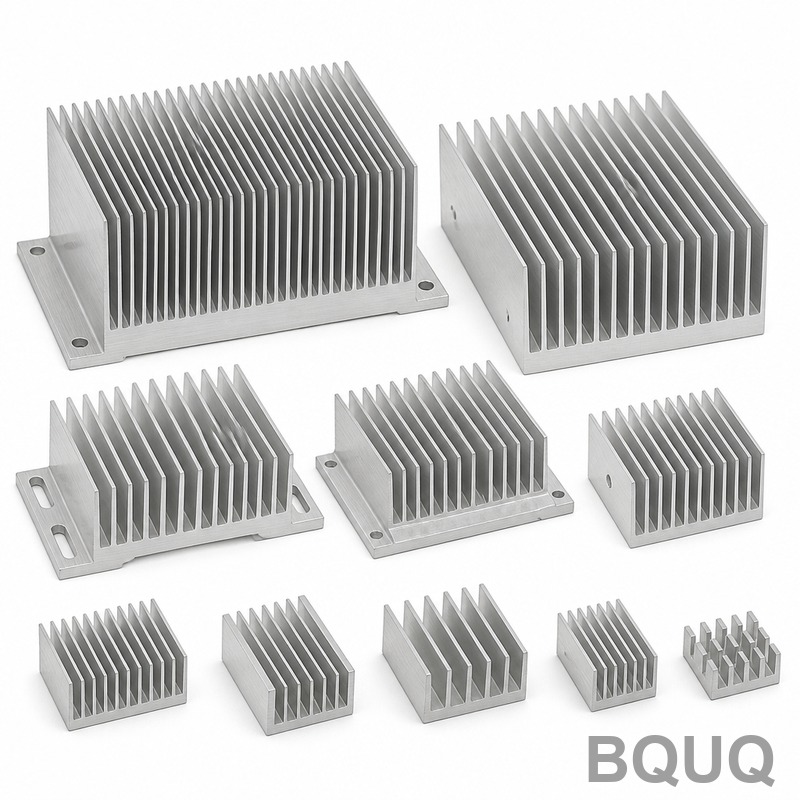
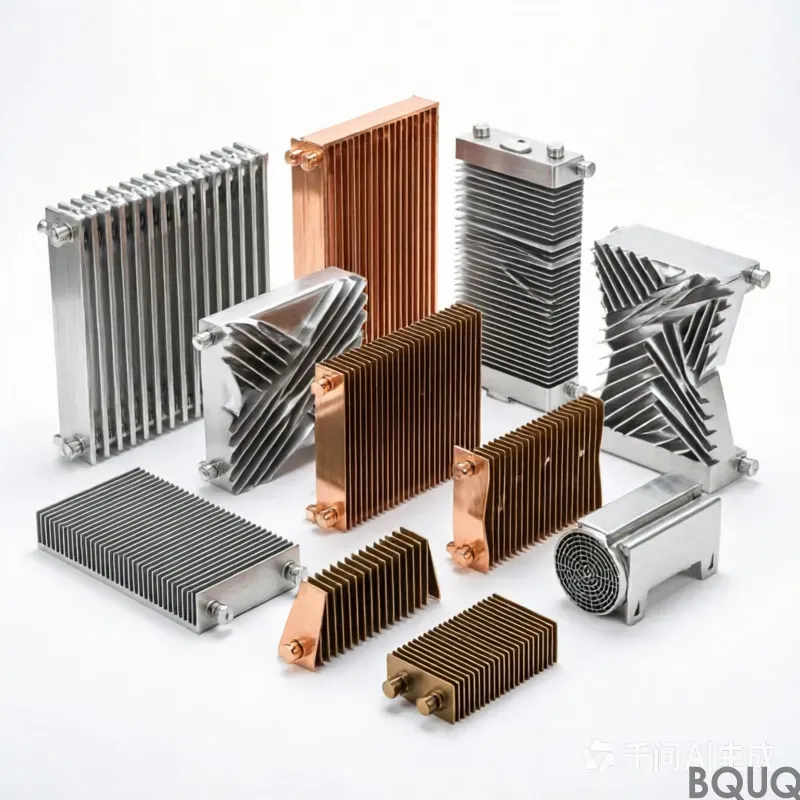
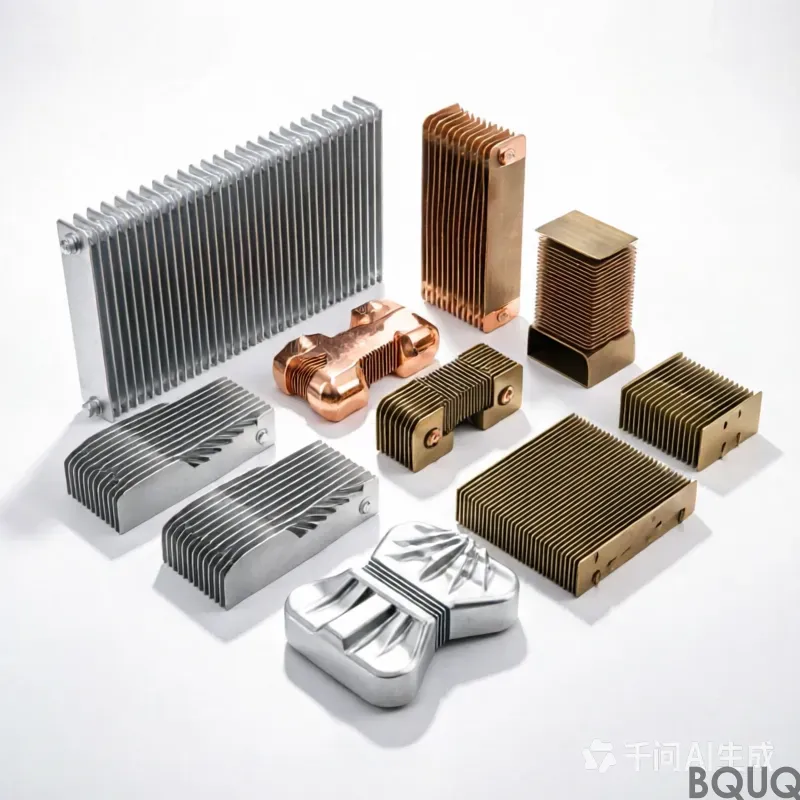
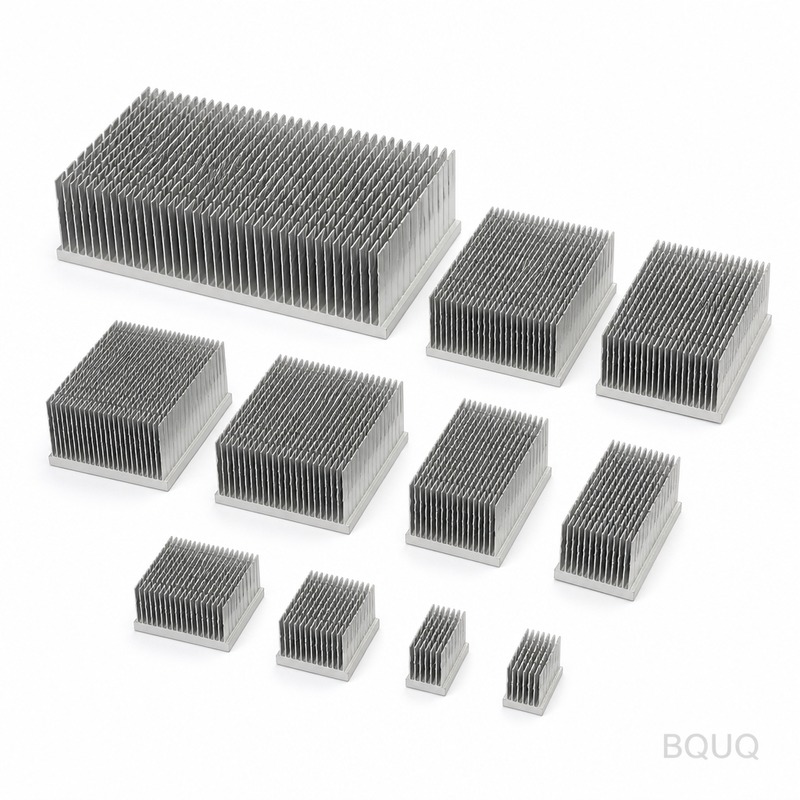
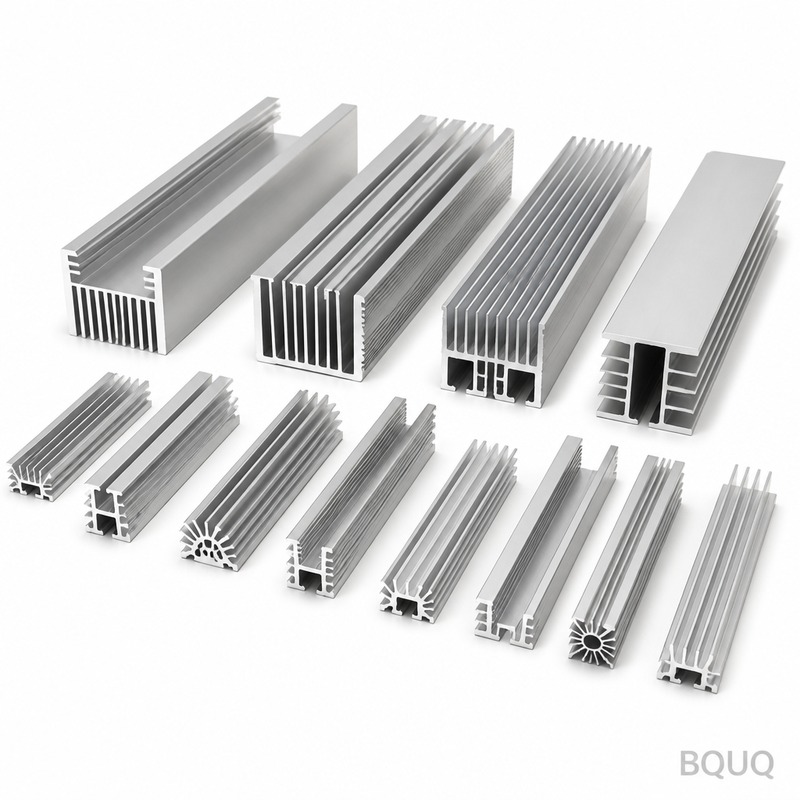
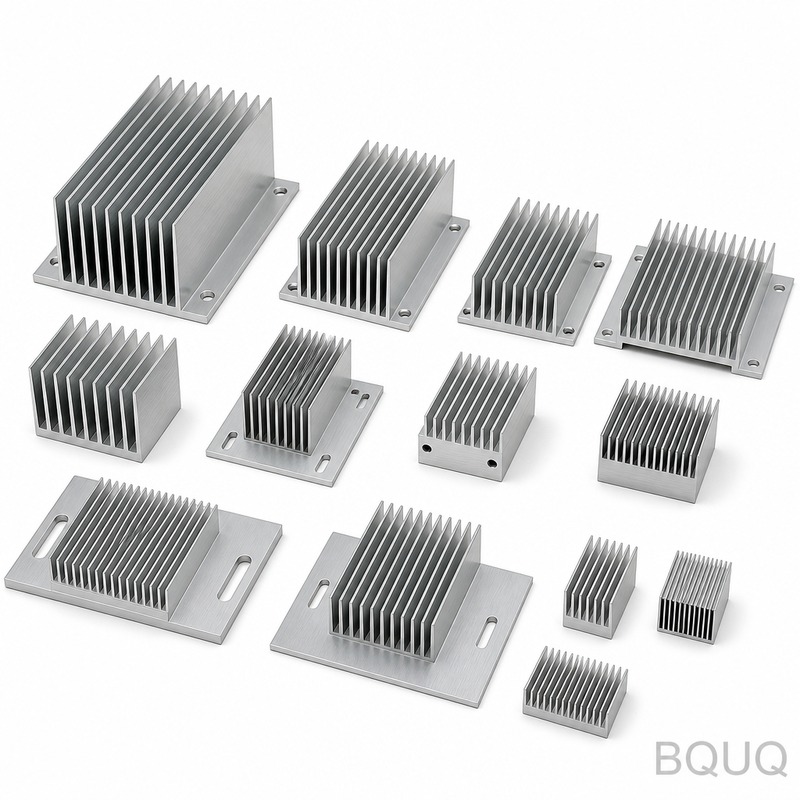
This is a catalog of extruded aluminum heatsinks that we cut, machine, and finish to your exact print. Every part leaves our Dongguan factory with a maximum profile tolerance of
This is a catalog of extruded aluminum heatsinks that we cut, machine, and finish to your exact print. Every part leaves our Dongguan factory with a maximum profile tolerance of ±0.01 mm, a runout of
Get a Fast Quote for This Part
Send us your drawing / quantity / material — reply within 24h.
This is a catalog of extruded aluminum heatsinks that we cut, machine, and finish to your exact print. Every part leaves our Dongguan factory with a maximum profile tolerance of ±0.01 mm, a runout of 0.02 mm or less, and a surface finish down to Ra 0.8 µm. Standard lead time is 12 days from drawing approval, and we run no MOQ on any profile in this collection.
How Extrusion Profiles Become Precision Heat Sinks
We do not sell raw extruded bars. Instead, we take 6063-T5 or 6061-T6 billets, push them through dies we maintain in-house, then cut and CNC-machine every fin, base, and mounting hole. The extrusion process gives you a continuous grain structure, which means better thermal conductivity than die-cast parts. After extrusion, we stress-relieve long profiles to hold flatness within 0.05 mm per 300 mm. Your drawing drives the final cut — we hold fin pitch to ±0.05 mm and base thickness to ±0.03 mm. If you need a custom length, we saw it to +0.2 mm / -0.0 mm and then face-mill the ends for a clean butt joint.
Materials and Heat Treatment We Use for Maximum Heat Transfer
The collection is built around two alloys. For most forced-air and natural convection applications, we use 6063-T5: it offers a thermal conductivity of 209 W/m·K and excellent extrudability, which lets us make thin fins down to 0.8 mm thick with a height-to-thickness ratio of 20:1. For higher mechanical loads or vibration environments, we switch to 6061-T6, which gives 167 W/m·K but a yield strength of 276 MPa. After extrusion, we solution heat-treat and artificially age every batch to T5 or T6 hardness. Our hardness tester verifies 8–12 HRC for 6063-T5 and 15–20 HRC for 6061-T6 on every heat lot. We reject any batch that falls outside those numbers.
Surface Finish Options That Change Thermal Performance
Raw extruded aluminum has a dull, rough skin with a natural oxide layer that reduces emissivity. We offer three standard finishes. First, clear anodizing (8–12 µm) for corrosion resistance and a matte look — this is the default. Second, black anodizing (18–20 µm) which raises surface emissivity to 0.85, improving radiant cooling by up to 30% in enclosed enclosures. Third, a chromate conversion coating (MIL-DTL-5541) for electrical grounding without adding thickness. If your design needs a smooth base for a CPU or IGBT, we can diamond-mill the mounting surface to Ra 0.4 µm. For fin tips, we deburr and roll them to prevent injuries and improve airflow. We do not paint heatsinks — paint acts as an insulator.
Inspection Before Every Shipment – Dimensional and Thermal Checks
Every heatsink in this collection goes through a 3-step QC gate before it ships. First, a CMM (coordinate measuring machine) checks critical datums: base flatness, fin parallelism, hole positions, and overall length. We report actual values on the certificate of conformance, not just pass/fail. Second, a surface profilometer measures Ra on the mounting surface. Third, we do a 100% visual inspection under a 2.5x magnifier for scratches, dents, or extrusion die lines. For thermal validation, we have a lab-grade thermocouple rig that tests a sample from each batch — we measure the temperature rise from base to fin tip with a 50 W heater. If the delta exceeds 8°C on a standard 100 mm profile, we reject the batch. We also check straightness with a granite table and feeler gauge: maximum bow is 0.1 mm per 500 mm.
Specification
Value / Range
Materials
6063-T5, 6061-T6, 6082-T6 (custom)
Profile sizes
Width 20–400 mm, height 10–150 mm, length 10–3000 mm
Fin thickness
0.8 mm min (6063), 1.2 mm min (6061)
Hardness (as delivered)
8–12 HRC (6063-T5), 15–20 HRC (6061-T6)
Profile tolerance
±0.01 mm on critical features
Surface finish (mounting face)
Ra 0.8 µm standard, Ra 0.4 µm optional
Runout / flatness
0.02 mm runout, 0.05 mm/300 mm flatness
Lead time
12 days after drawing approval
MOQ
No MOQ – 1 piece or 10,000 pieces
Finishing options
Clear anodize, black anodize, chromate
Why We Beat Cast and Skived Heatsinks on Cost and Speed
Die-cast aluminum heatsinks require expensive molds ($3,000–$10,000) and have a minimum wall thickness of 1.5 mm, which limits fin density. Skived heatsinks are precise but slow — each fin is cut one at a time, so a 50-fin part takes 20 minutes of machine time. Extrusion, on the other hand, pushes the entire profile in one pass — we can produce 300 meters per hour. That translates to a unit cost that is typically 40% lower than skived and 25% lower than die-cast for runs under 5,000 pieces. Because we machine after extrusion, you get the best of both: the low cost of a continuous profile and the precision of CNC. If you are designing a new thermal solution, our engineers can suggest a standard die from our existing collection (over 200 dies in stock) to eliminate tooling costs entirely. We have dies for common shapes like flat bases with parallel fins, pin-fin arrays, and offset fin patterns.
Packaging and Logistics for Fragile Fin Geometries
Thin fins at 0.8 mm bend if not packed correctly. We ship every heatsink in individual EVA foam slots, separated by corrugated inserts, inside a rigid carton. For large orders (over 500 pieces), we use wooden pallets with moisture-barrier bags and desiccant. We do not use loose bubble wrap — it presses against the fins and bends them. Each carton is labeled with your part number, our batch number, and the dimensional inspection report. For international air freight, we can consolidate multiple small orders into one box to reduce shipping costs. For sea freight, we use anti-corrosion VCI paper to prevent white rust during the 20-day transit. We have shipped to the US, Germany, Japan, and Australia without a single damage claim in the last 18 months.
What is the minimum order quantity for the Extruded Aluminum Heatsink Collection?
There is no MOQ — you can order a single prototype for testing or a full production run; the unit price simply scales with quantity.
Can you customize the extrusion die or just cut standard profiles?
We can cut and machine any of our 200+ standard dies, but we also design and manufacture custom dies in 15 days, with the die cost amortized into your first production order.
How do you guarantee the 0.02 mm runout on a long heatsink?
After extrusion, we stress-relieve and straighten every profile on a hydraulic press, then verify runout on a granite surface plate with a dial indicator before any machining begins.
What is the fastest lead time for a small batch of 50 pieces?
For standard profiles with anodizing, we can ship in 7 days; for custom dies with black anodize, the lead time is 15 days, not 12.
Thermal Design Tips for Using These Heatsinks
Before you send a drawing, check the airflow direction. Our parallel-fin profiles work best with forced air along the fin channels — a 3 m/s fan flow can reduce thermal resistance by 50% compared to natural convection. For passive cooling, choose a black anodized finish and increase fin spacing to 6 mm or more to allow air to rise naturally. If you are mounting a power module, use a thermal interface material (TIM) with a thickness of 0.1–0.2 mm — our Ra 0.4 µm mounting face lets you use a thinner TIM layer, which lowers the thermal resistance by up to 15% compared to a raw extrusion. For a deeper look at tool selection for machining these profiles, see our CNC cutting tool selection guide. And if you are unsure about how tight your tolerances should be, read our CNC machining tolerances guide — it explains which dimensions you can relax to save cost.
Request Your Firm Quote with Real Numbers in 12 Hours
Send us your 2D drawing (PDF or DXF) or 3D STEP file. Our engineers will review the profile, check it against our existing dies, and reply within 12 hours with a firm unit price, tooling cost (if any), and delivery date. We include a DFM (design for manufacturability) note if we see a way to reduce cost — for example, loosening a tolerance or changing to a standard die. This is a quote you can trust. We are a precision manufacturing company made in China, with 20 years of experience serving automotive, telecom, and power electronics clients. Email your drawing to sc@bquq.com or send a WhatsApp message to +86 13713157787. We answer within one business hour during working hours (GMT+8).