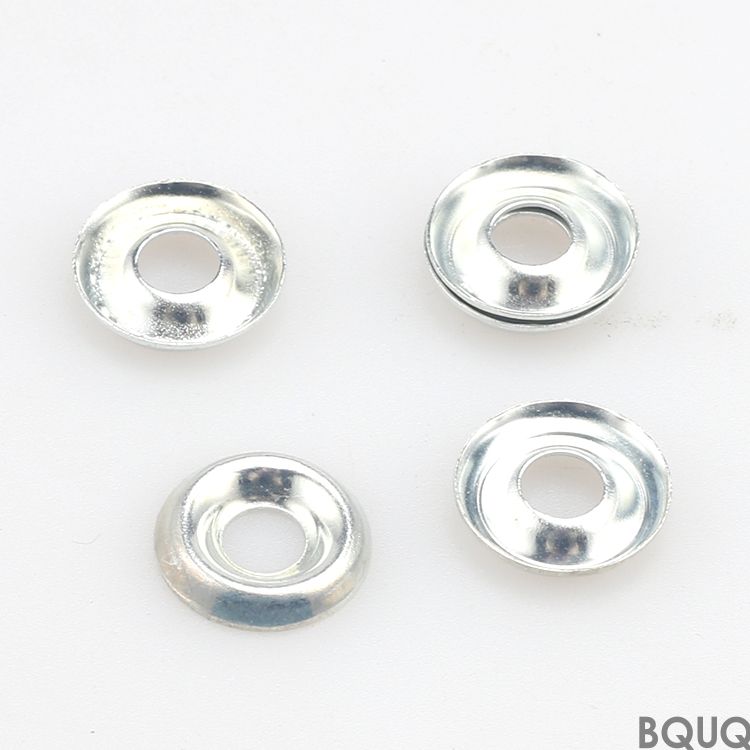
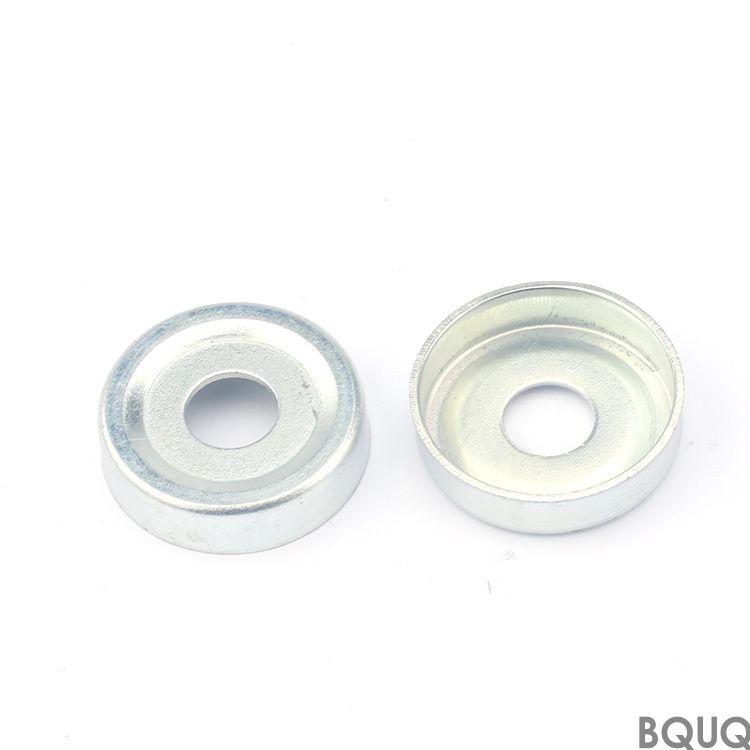
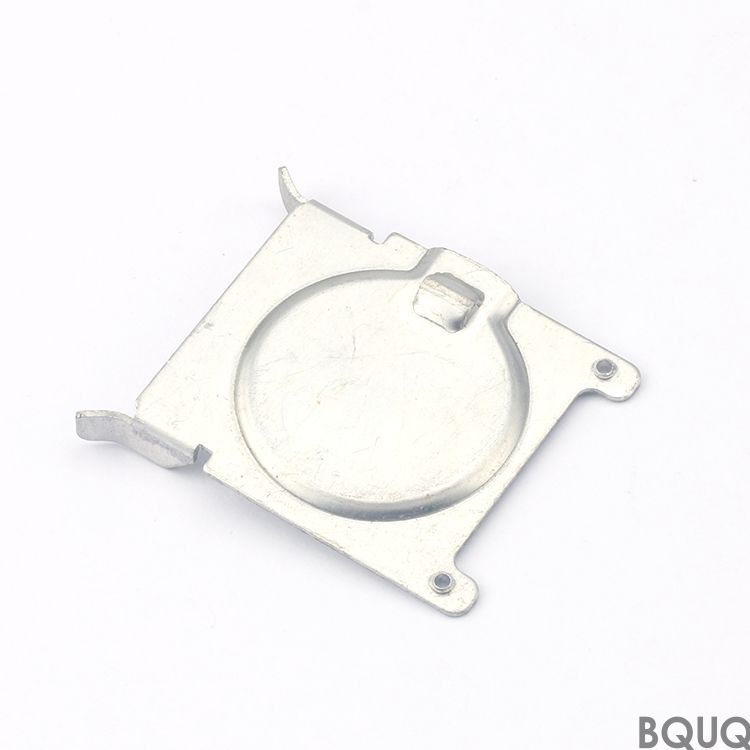
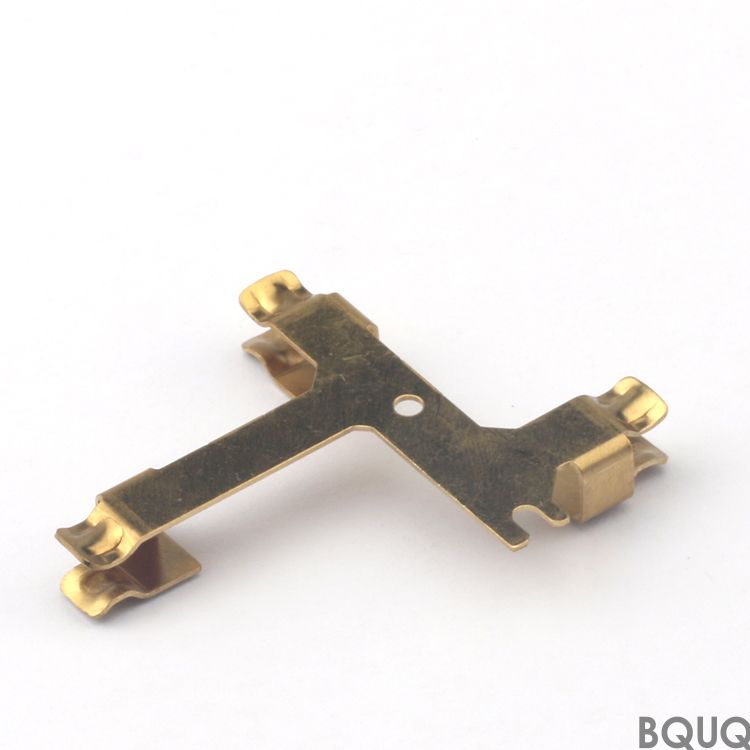
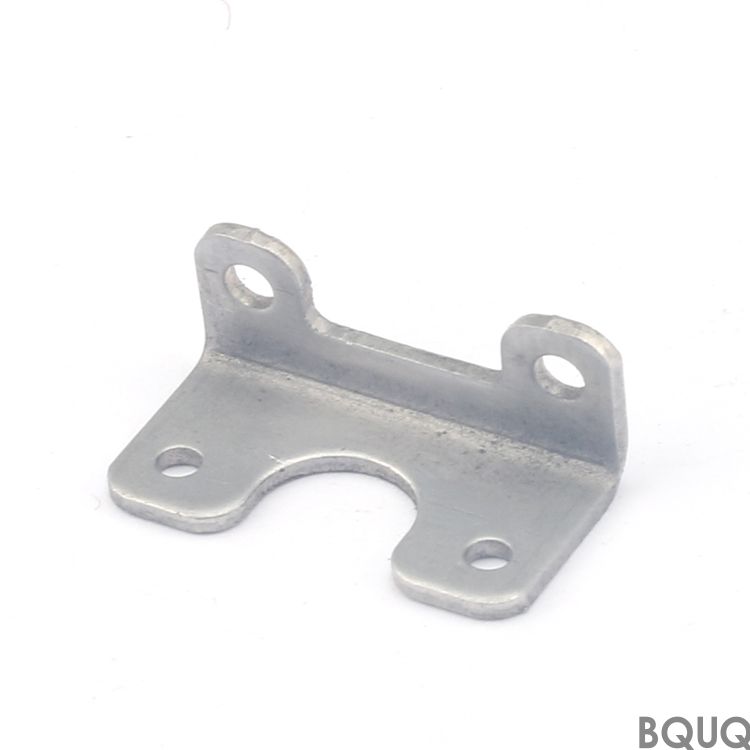
These are nickel plated spring steel stamping parts engineered specifically for switch mechanisms—tactile domes, contact arms, and leaf springs. We punch them from 0.05 mm to 3.0 m
BQUQ Nickel Plated Spring Steel Stamping Parts For Switches | Precision Made in China
These are nickel plated spring steel stamping parts engineered specifically for switch mechanisms—tactile domes, contact arms, and leaf springs. We punch them from 0.05 mm to 3.0 mm annealed spring st
Get a Fast Quote for This Part
Send us your drawing / quantity / material — reply within 24h.
These are nickel plated spring steel stamping parts engineered specifically for switch mechanisms—tactile domes, contact arms, and leaf springs. We punch them from 0.05 mm to 3.0 mm annealed spring steel (C75S, 65Mn, or SUS301), then heat treat and nickel plate to deliver a hardness of 48-52 HRC with a flatness tolerance of ±0.02 mm. Every part ships with a maximum runout of 0.01 mm, and we quote firm within 12 hours, with production lead times as short as 7 days for standard tooling.
How We Hit ±0.01 mm Tolerance on Thin Spring Steel
Thin spring steel is notoriously unstable during stamping—it wants to spring back, twist, and warp. We counter this with a three-step process. First, we use a high-precision Bruderer press (up to 600 strokes per minute) with a die clearance held to 5% of material thickness. Second, we run a coining pass after the blanking step to flatten the part and remove internal stress. Third, we stress-relieve in a vacuum furnace at 320°C for 90 minutes before plating. This sequence keeps the critical contact points on your switch within a 0.01 mm position tolerance, so your actuator force stays consistent across millions of cycles.
Materials and Heat Treatment We Use for Contact Reliability
We stock three spring steel grades for switch parts: C75S (for general tactile feedback), 65Mn (for higher fatigue life in sliding contacts), and SUS301 (for corrosion resistance before plating). All parts go through oil quenching at 830°C, then tempering at 400°C to reach 48-52 HRC. We do not skip the temper—without it, the part is brittle and will fracture at the bend radius. After heat treat, we apply a 5-8 micron electroless nickel plating (per ASTM B733) that gives you a surface hardness of 550 HV and a coefficient of friction of 0.15 against copper contacts. This plating layer does not peel, even after a 180-degree bend test.
Flatness and Runout Control for Multi-Pole Switch Assemblies
If your switch uses multiple stamped contacts on a single carrier strip, runout between poles is your biggest enemy. We hold total runout (including camber and twist) to 0.01 mm over a 50 mm length. How? We use a laser measurement system on the press line—every 500th part is checked automatically. If runout drifts, the system adjusts the die shims in real time. For parts longer than 30 mm, we add a secondary straightening roll before plating. This is why our stamped parts drop into your switch housing without manual rework, and why you can expect consistent actuation force from the first part to the 100,000th.
Nickel Plating Thickness and Solderability for PCBA Mounting
Switch contacts often need to be soldered directly onto a PCB. Our standard nickel plating is 5-8 microns, which gives excellent solderability with lead-free SAC305 solder. We test every batch with a wetting balance test—the wetting time must be under 2 seconds at 245°C. If you need a thicker layer for higher cycle wear, we can go up to 15 microns, but that adds 2 days to the lead time. We also offer a matte finish (Ra 0.4) for reduced reflectivity in optical sensors, or a bright finish (Ra 0.2) for lower electrical resistance. Tell us your maximum contact resistance spec—we will match the plating to it.
Inspection Before Every Shipment—Not Just a Sampling
We do not do AQL sampling. Every single part is checked for dimension, hardness, and plating thickness before we pack it. We use a Keyence IM-8000 vision system for dimensional checks (accuracy ±0.5 micron), a Wilson Vickers hardness tester for HV verification, and an X-ray fluorescence (XRF) gauge for plating thickness. The inspection report is included in every shipment—you get a PDF with the actual measured values, not a certificate of compliance. If a dimension is out of spec, the part is scrapped, not shipped. In the last 12 months, our outgoing defect rate was 0.03% (measured in PPM).
Tooling Cost and Lead Time for Custom Switch Stamping Parts
For a simple switch contact (2-3 bends, one hole), our new die costs between $800 and $1,500, and we deliver the first articles in 7 days. For a complex part with 5+ bends and a spring finger, the die is $2,000-$3,500, with 12-15 days for first articles. We keep the tooling modular—so if you change the bend angle or add a slot later, the modification cost is only $150-$400. We also offer a tooling amortization option: if you order more than 100,000 parts, the die cost is absorbed into the part price, and you pay zero upfront for tooling.
Production Speed and Volume Flexibility for Prototype to Mass Production
Our high-speed presses run at 300-600 strokes per minute, so a typical switch contact part (10 mm x 5 mm) produces at 12,000-20,000 parts per hour. We can do a 500-piece prototype run on a manual press (for your functional testing) in 2 days, then scale up to 2 million parts per month on the high-speed lines. Because we are a precision manufacturing facility made in China with in-house tooling, heat treatment, and plating, we control the entire process—no outsourcing delays, no quality surprises. And there is no MOQ—order 100 parts to validate your design, then scale as you ramp.
Specification
Value
Notes
Base materials
C75S, 65Mn, SUS301
Annealed strip, thickness 0.05-3.0 mm
Hardness after heat treat
48-52 HRC
Oil quench + temper at 400°C
Dimensional tolerance
±0.01 mm (critical), ±0.02 mm (general)
Held on all bend and hole positions
Flatness
±0.02 mm over 50 mm length
Coining pass + straightening roll
Total runout
0.01 mm max
Including camber and twist
Nickel plating thickness
5-8 micron (standard), 15 micron (max)
Electroless per ASTM B733
Surface finish (plated)
Ra 0.2 to 0.4
Bright or matte option
Max part size
150 mm x 100 mm
Larger on request
Production lead time (with new die)
7-15 days
Prototype in 2 days
MOQ
No MOQ
1 piece to 2 million per month
Is there a minimum order quantity for these stamped parts?
No, we work with no MOQ—you can order 100 parts for validation or 2 million for production, and the unit price scales accordingly.
Can you customize the shape, bend angle, or plating thickness?
Yes, we customize everything—we modify the die for your specific bend radius, add slots or holes, and adjust nickel plating from 3 to 15 microns based on your contact resistance and wear requirements.
How do you ensure quality for a high-volume switch production run?
We use in-line laser measurement every 500 parts, full inspection on 100% of parts before shipping, and provide a batch-specific inspection report with actual measured values for every dimension.
What is your typical lead time from drawing approval to delivery?
For a new die, first articles ship in 7-15 days; for an existing die, production parts ship in 5 days; shipping from Dongguan to most global destinations takes 3-5 days by air.
Send your drawing today for a firm quote within 12 hours. We will review your part geometry, recommend the right spring steel grade and nickel plating thickness, and give you a per-part price with no tooling surprises. Email sc@bquq.com or WhatsApp +86 13713157787. Need to verify tolerances or tooling approach first? Read our CNC cutting tool selection guide for material considerations, or our CNC machining tolerances guide to confirm which specs are achievable on your switch part.