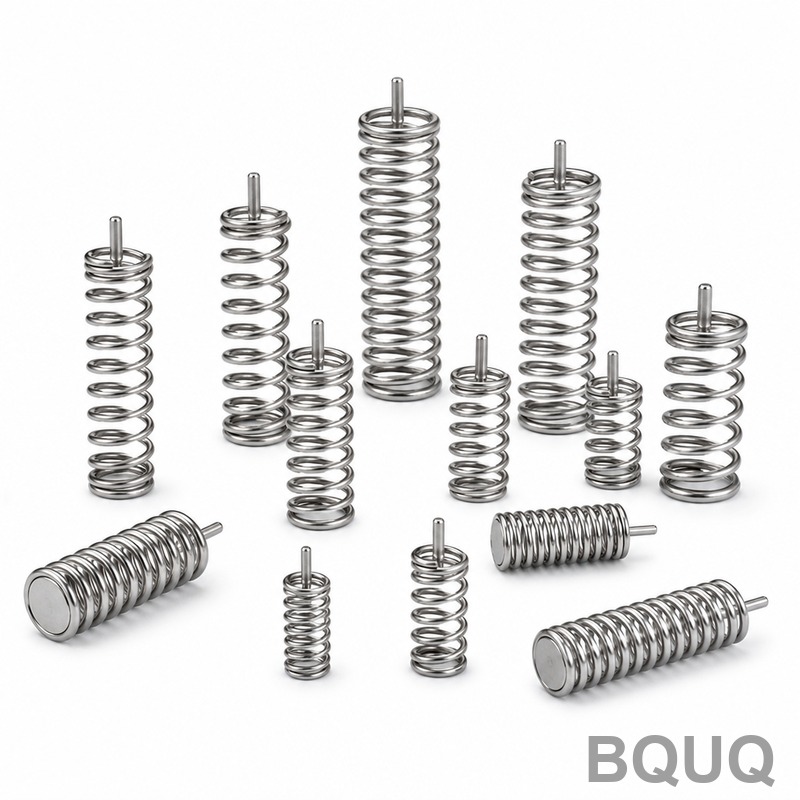
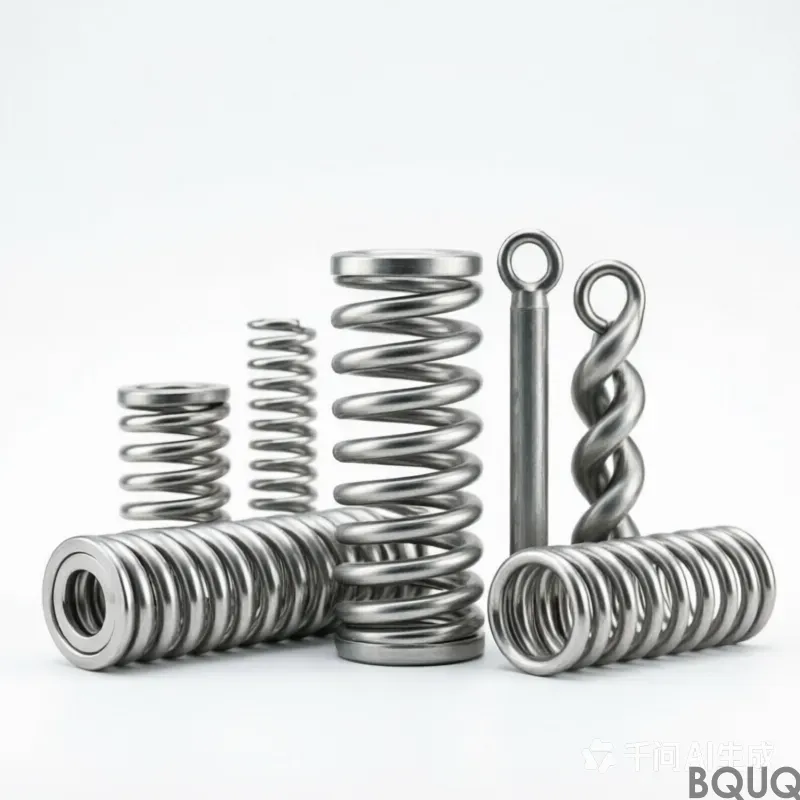
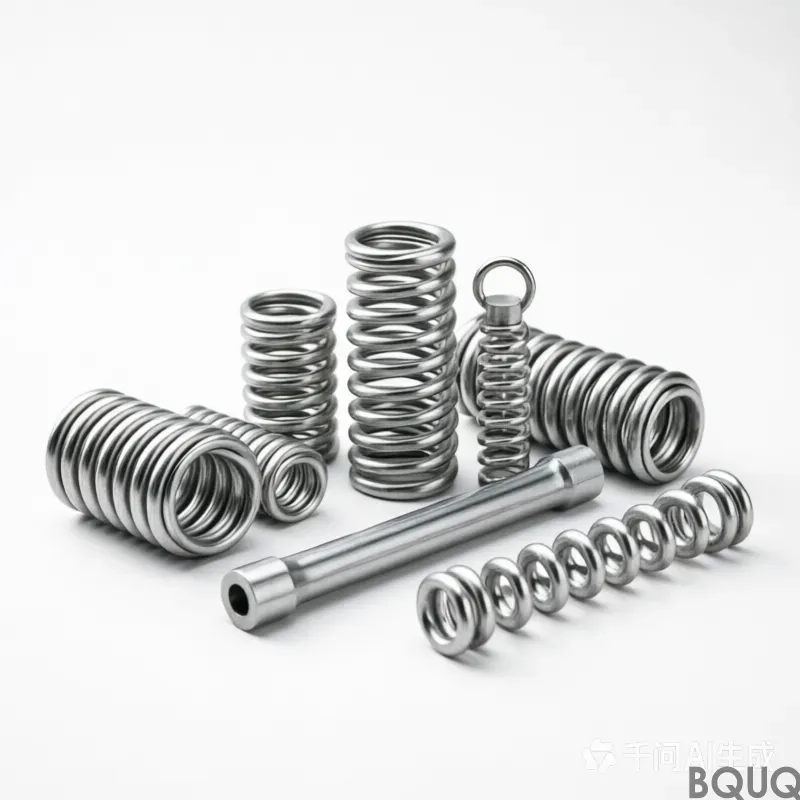
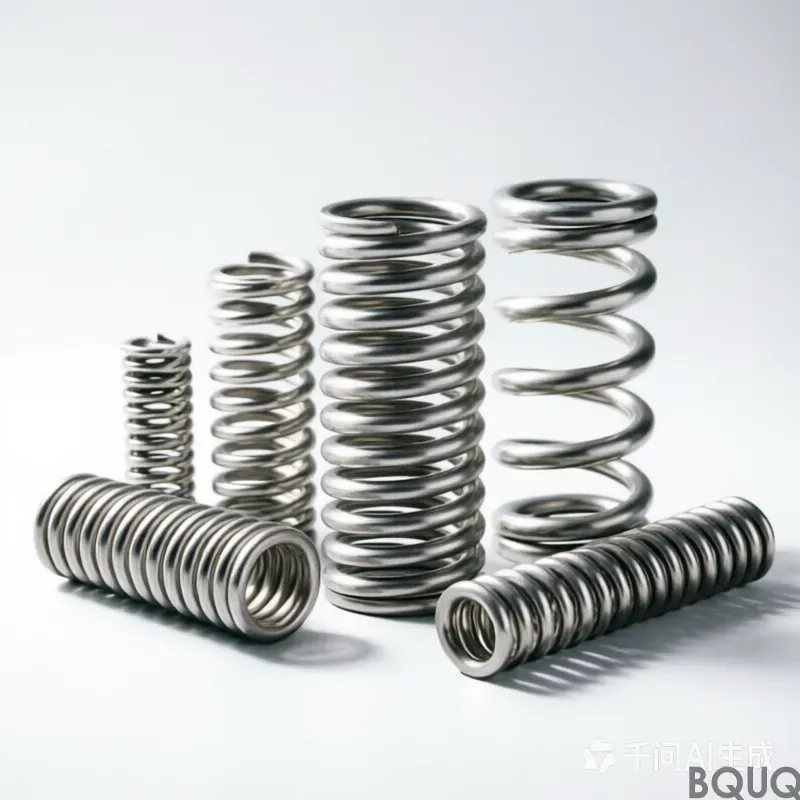
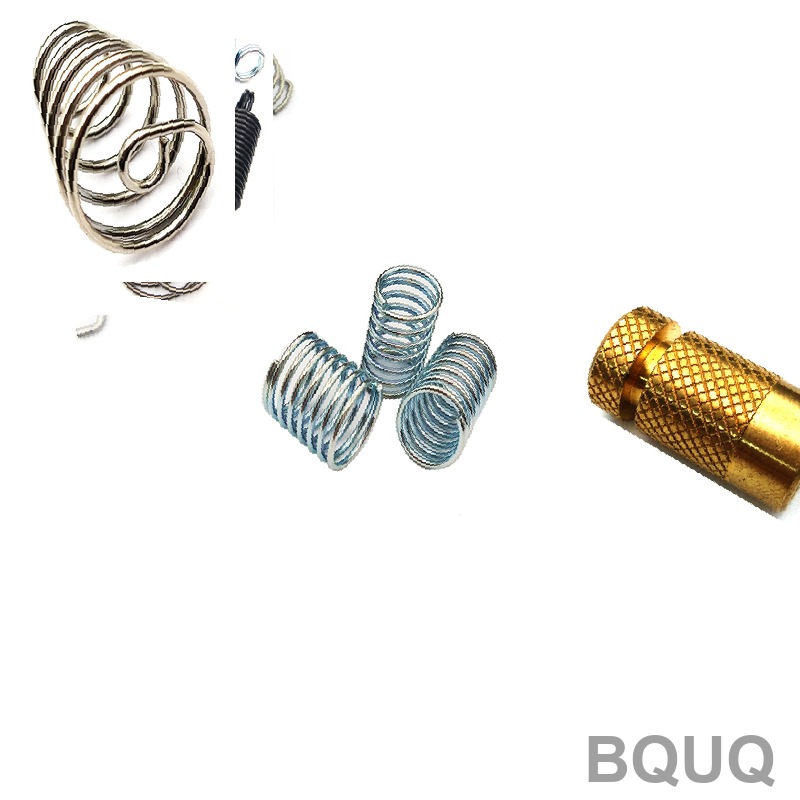
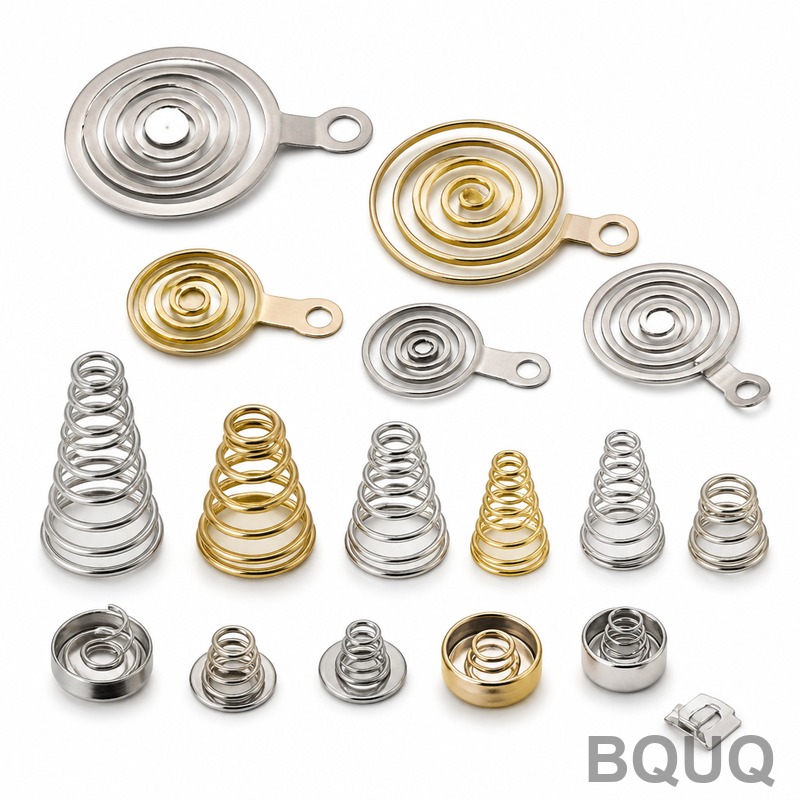
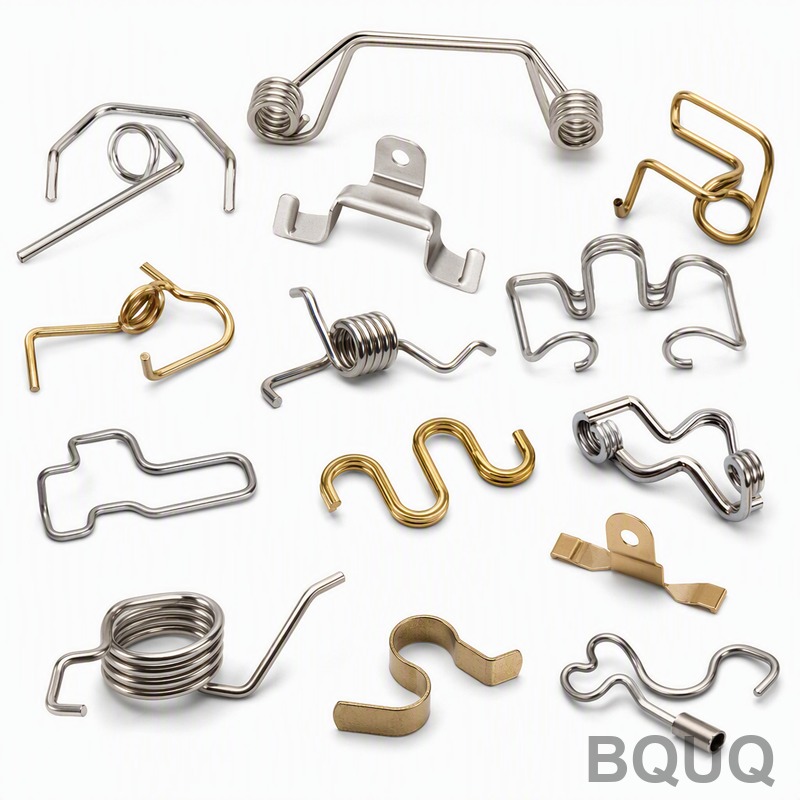
Our Stainless Steel Touch Spring Collection is a family of custom-formed contact springs engineered for low-resistance electrical touch points in battery contacts, RF shielding, an
Stainless Steel Touch Spring Collection | BQUQ Precision Springs
Our Stainless Steel Touch Spring Collection is a family of custom-formed contact springs engineered for low-resistance electrical touch points in battery contacts, RF shielding, and latch mechanisms.
Get a Fast Quote for This Part
Send us your drawing / quantity / material — reply within 24h.
Our Stainless Steel Touch Spring Collection is a family of custom-formed contact springs engineered for low-resistance electrical touch points in battery contacts, RF shielding, and latch mechanisms. You get repeatable deflection with a tolerance of ±0.01 mm, a hardness range of 38–45 HRC, and a surface finish of Ra 0.8 to keep contact resistance stable. Every batch is made in China at our Dongguan factory, with a standard lead time of 3 days for prototypes and 10 days for production runs.
How We Control Contact Force with a 0.02 mm Flatness Limit
Touch springs fail when the contact point drifts. We use a four-slide forming process instead of a press brake, which eliminates spring-back variation. Each spring is checked on an optical comparator for flatness within 0.02 mm. For a 15 g actuation force target, we hold a variance of ±1.5 g across a sample of 50 pieces. This is not a statistical guess—we run a force-deflection curve on every new tool before production.
Materials and Heat Treatment for 100k Cycle Life
We start with SUS301-H and SUS304 stainless steel strip, 0.08 mm to 0.5 mm thick. For springs requiring high fatigue resistance, we use SUS631 (17-7 PH) and age-harden it to 45–48 HRC. We do not skip stress relief. After forming, every part goes through a 400°C vacuum stress-relief cycle for 30 minutes. This step prevents delayed cracking and holds the spring's free angle within ±2°. You get a spring that survives 100,000 compression cycles without a measurable drop in load.
Surface Finish Options for Low Contact Resistance
Bare stainless steel gives a contact resistance of about 50 milliohms at 10 g force. If your circuit needs below 20 milliohms, we offer selective gold plating (0.1–0.3 µm) or silver plating (2–4 µm). For oxidation resistance in humid environments, we apply a passivation layer per ASTM A967. The standard Ra is 0.8, but we can polish to Ra 0.4 on the contact pad area. All plating is done in-house, so we control thickness without extra shipping delays.
Inspection Before Every Shipment: Force, Dimension, and Surface
We do not ship a batch without a full report. Each lot is inspected with a digital force gauge (accuracy ±0.5 g), a 2D vision system (resolution 0.001 mm), and a roughness tester. We check 10 pieces per 500 for destructive testing—compressing to solid height three times to verify no fracture. The inspection report includes a Cpk value for the critical dimension. If Cpk is below 1.33, the lot is reworked or scrapped. You never see marginal parts.
Tooling and Prototyping: No MOQ, 3-Day Samples
We do not force you into a huge minimum order. The Stainless Steel Touch Spring Collection has no MOQ. For a prototype, we use wire-cut EDM tooling, which costs $100–$300 depending on part size. You get 100 samples in 3 days. Production tooling (a four-slide die) runs $400–$800 and is amortized over your first 5,000 pieces. If you later change a radius or a leg length, we modify the die for $50–$150—not a full retool.
| Specification | Value | |---|---| | Material Options | SUS301-H, SUS304, SUS631 (17-7 PH) | | Strip Thickness | 0.08 mm – 0.5 mm | | Hardness (SUS301-H) | 38–42 HRC | | Hardness (SUS631 aged) | 45–48 HRC | | Dimensional Tolerance | ±0.01 mm | | Flatness Limit | 0.02 mm | | Surface Finish (bare) | Ra 0.8 | | Contact Resistance (bare) | ≤ 50 mΩ at 10 g force | | Plating Options | Gold 0.1–0.3 µm, Silver 2–4 µm | | Lead Time (prototype) | 3 days | | Lead Time (production) | 10 days | | MOQ | No MOQ |
Why Four-Slide Forming Beats Stamping for Touch Springs
Stamping dies create burrs on the edge, which cause arcing and high contact resistance. Our four-slide machines form the wire or strip without a shearing action—edges stay smooth. This is critical for a touch spring that slides against a battery terminal. The process also allows for complex bends in multiple planes without secondary operations. For a spring with a 90° twist and a flat pad, we hold the twist angle within ±1°. This is why our springs drop into your assembly without manual adjustment.
Die Wear and Consistency Over a 500k Production Run
Tool wear changes spring force. To counter this, we use carbide inserts on the forming tools, not tool steel. Carbide holds its edge for 500,000 hits before a grind is needed. We also run a mid-production check every 2,000 pieces—measuring the free height and load. If the load drifts by more than 5%, we stop the press and adjust the die. This is a stricter protocol than the industry standard of 10% drift. You get consistent springs from the first piece to the last.
What is the MOQ for the Stainless Steel Touch Spring Collection?
There is no MOQ. You can order 1 piece or 1 million pieces at the same unit price structure, with a small tooling charge only for the first order.
Can I customize the spring shape or material?
Yes, we modify leg length, bend radius, coil count, and material grade; just send a 2D drawing or a sample, and we will return a DFM report within 24 hours.
How do you ensure quality for small batch orders?
Small batches (under 500 pieces) are 100% inspected on critical dimensions; larger batches use AQL 0.65 sampling with a full force-deflection test report included in every shipment.
What is the typical lead time for a custom touch spring?
Prototype samples take 3 days, production orders take 10 days after tooling approval, and urgent orders (< 48 hours) are possible for minor modifications to existing tools.
Integration with Your Existing CNC Machined Assembly
Touch springs often sit inside a machined pocket. We design the spring's free height to match your pocket depth, avoiding over-compression. If your pocket has a tolerance of ±0.05 mm, we can hold the spring height to ±0.02 mm to ensure a slip-fit but not a loose part. For more on how to pick the right tooling for such parts, see our CNC cutting tool selection guide. If you are designing the pocket itself, check our CNC machining tolerances guide to avoid over-specifying features that drive cost up.
Packing and Documentation for Global Shipment
We ship in anti-static bags with individual compartment trays to prevent tangling. Each box has a label with the part number, batch number, and a QR code linking to the full inspection report. For export, we provide a material certificate (EN 10204 3.1) and a RoHS/REACH declaration. We handle all customs paperwork—you receive a clean DDP quote to your door, with no surprise duties.
Send your drawing for a firm quote within 12 hours. Email sc@bquq.com or WhatsApp +86 13713157787. Include your target load, deflection, and environment (temperature, humidity) and we will reply with a material recommendation and a price break.