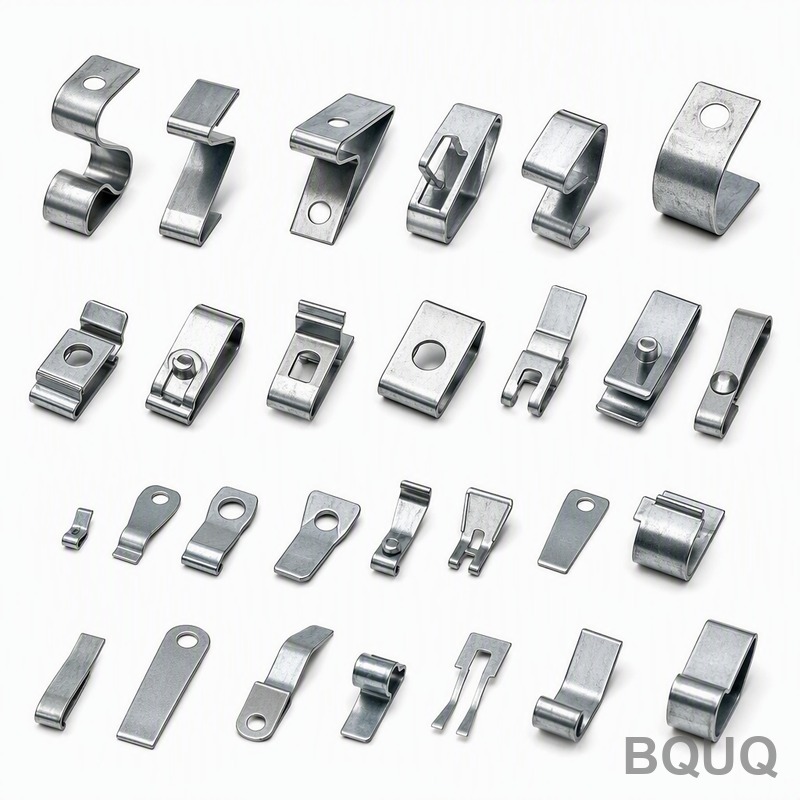
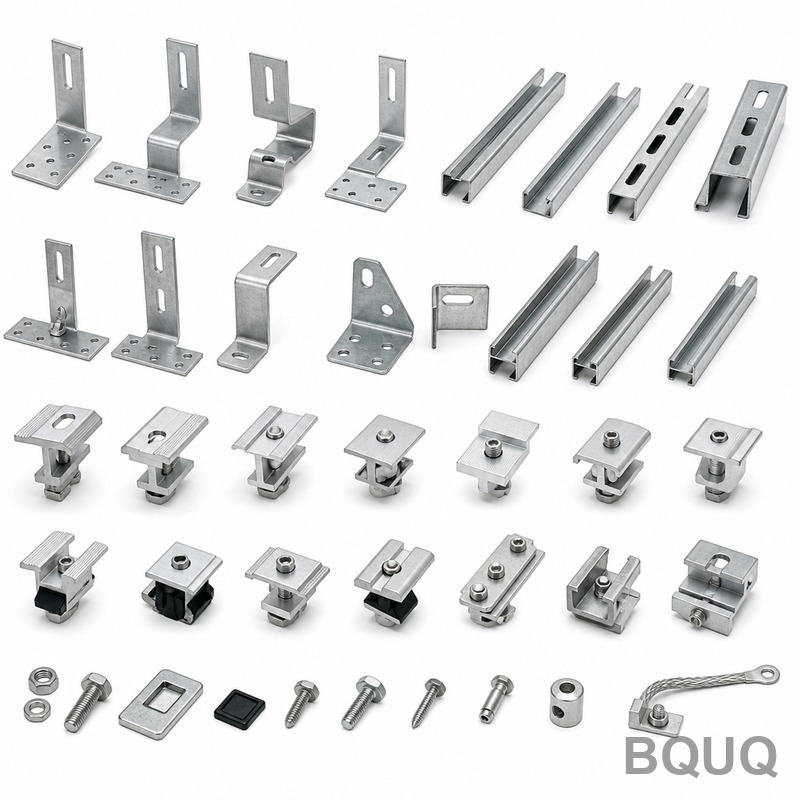
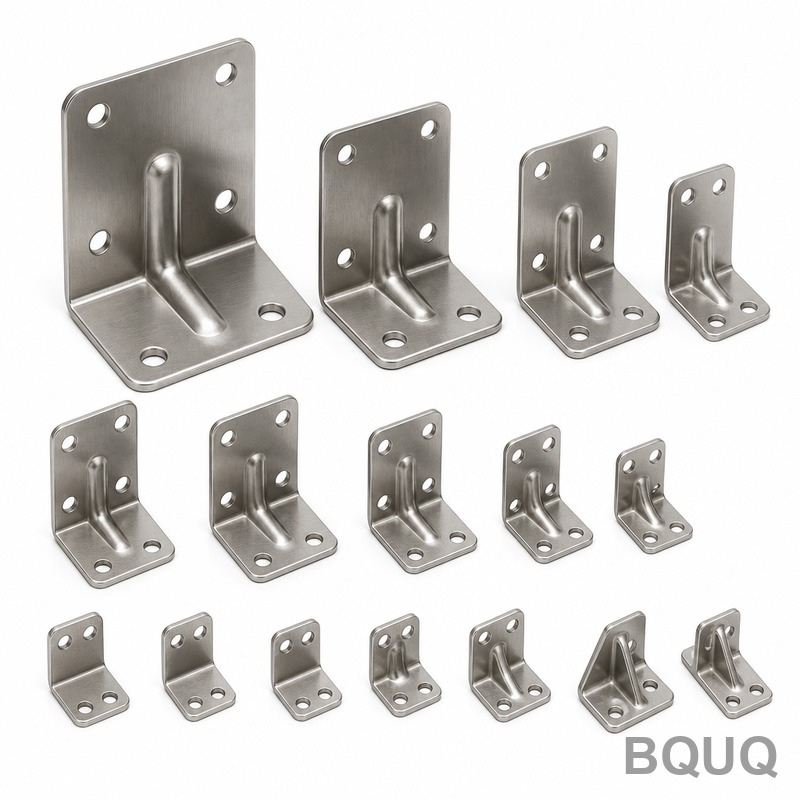
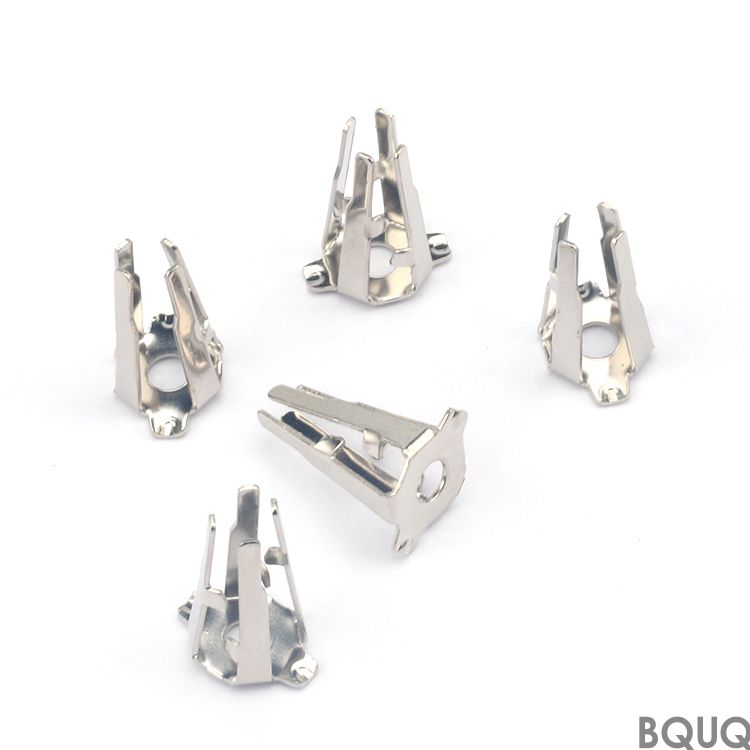
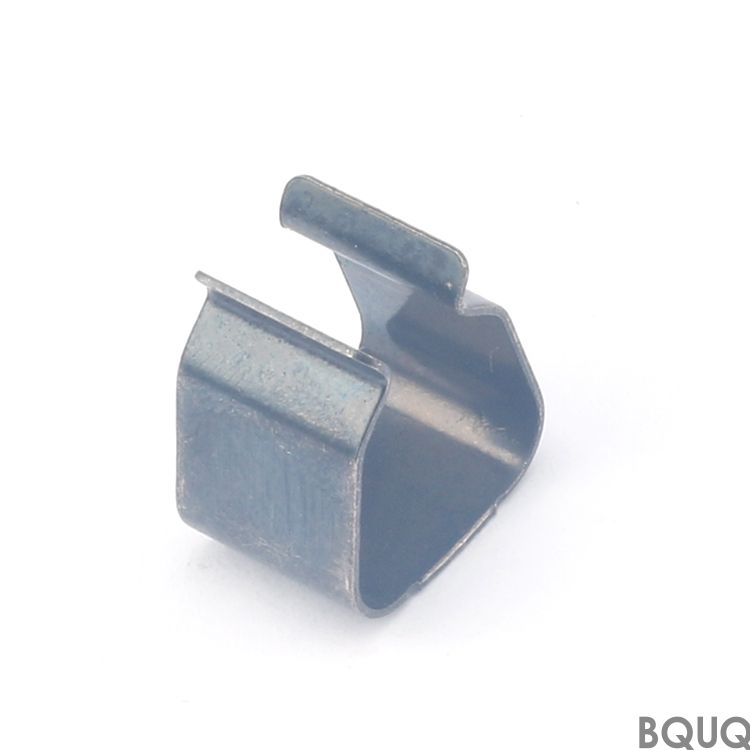
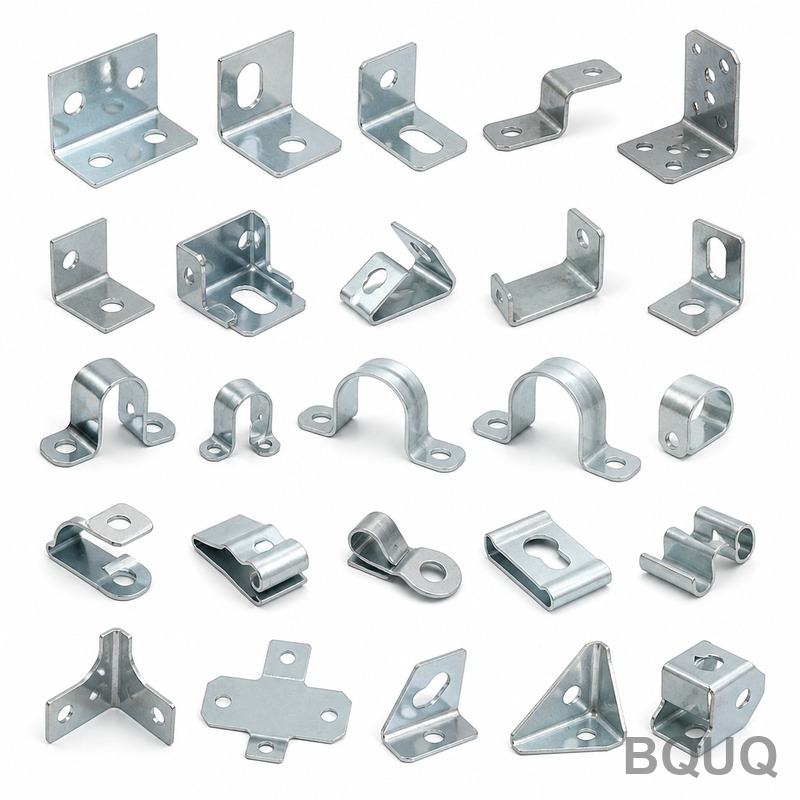
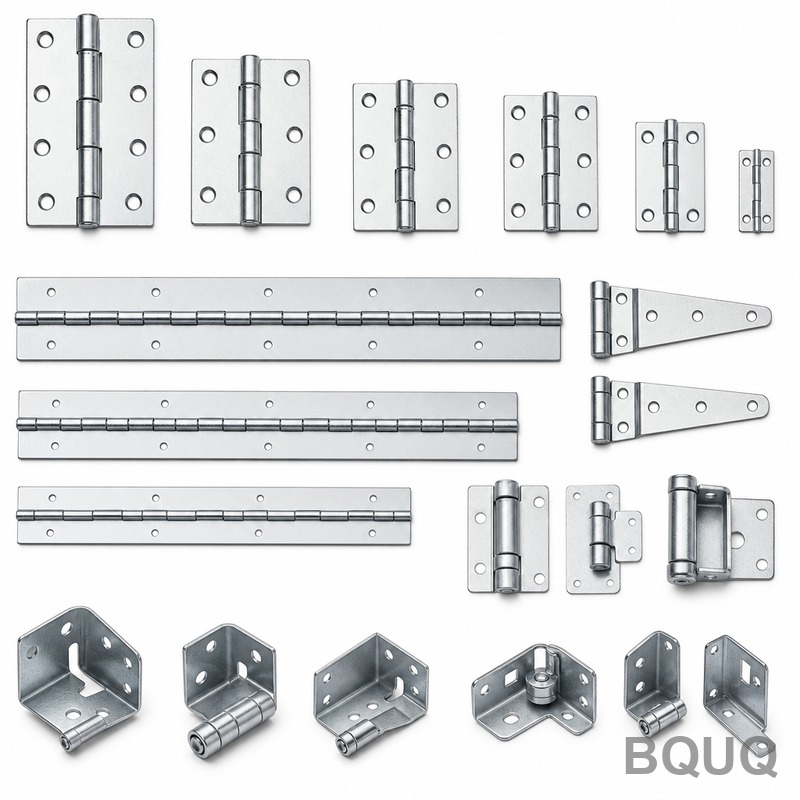
BQUQ Ai Server Chassis Mounting Parts Collection | Precision Stamping
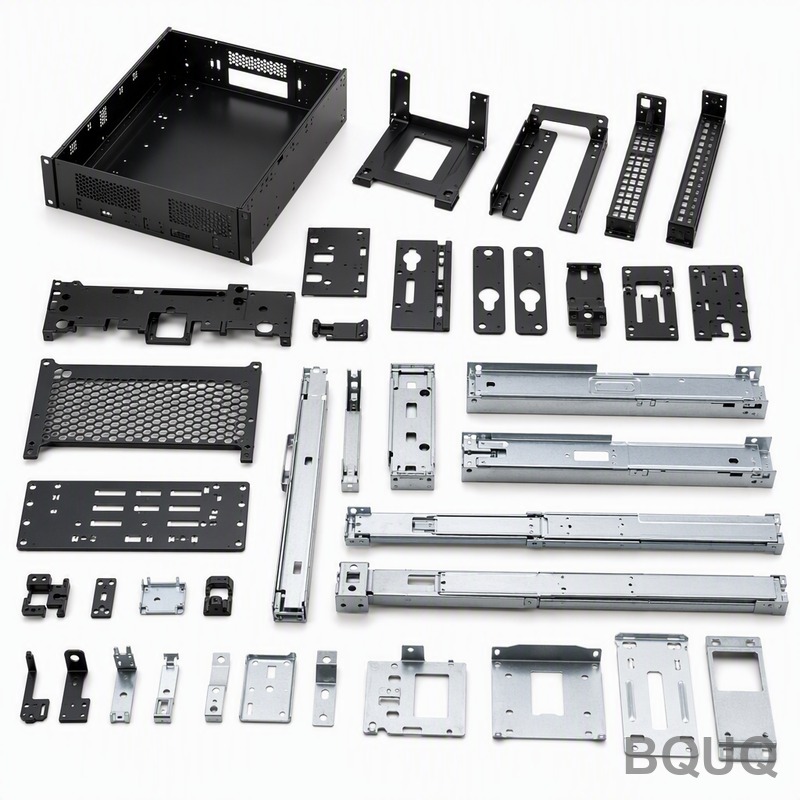
This is a complete set of stamped metal brackets, standoffs, and alignment guides for AI server chassis. You get ±0.02 mm positional tolerance, 0.05 mm flatness runout, and a 12-day production lead t
Get a Fast Quote for This Part
Send us your drawing / quantity / material — reply within 24h.
This is a complete set of stamped metal brackets, standoffs, and alignment guides for AI server chassis. You get ±0.02 mm positional tolerance, 0.05 mm flatness runout, and a 12-day production lead time. Hardness reaches 40–45 HRC on spring steel versions, so your rack slides and GPU mounts will not deform under repeated insertion.
Why These Parts Use Progressive Dies Instead of CNC Milling
Every Ai Server Chassis Mounting Parts Collection part is stamped on a 250-ton high-speed press. Progressive dies hold strip width to ±0.01 mm. That means every bracket is identical — no tool-path drift, no edge burr variation. CNC milling would take 6 minutes per part; stamping takes 0.8 seconds. For a 1,000-unit server rack order, you save 85 hours of machine time. See our CNC cutting tool selection guide to understand why die maintenance beats tool replacement for volume.
Die Clearance and Burr Height Control on 1.5 mm Galvanized Steel
We set die clearance at 8% of material thickness for 1.5 mm SECC steel. Result: burr height stays under 0.03 mm. That is critical for AI chassis because sharp edges cut through cable sleeving and damage your fingers during maintenance. Our secondary vibratory finishing removes micro-burrs down to Ra 0.8 µm. You will not need to deburr manually.
Materials and Heat Treatment We Use for AI Racks
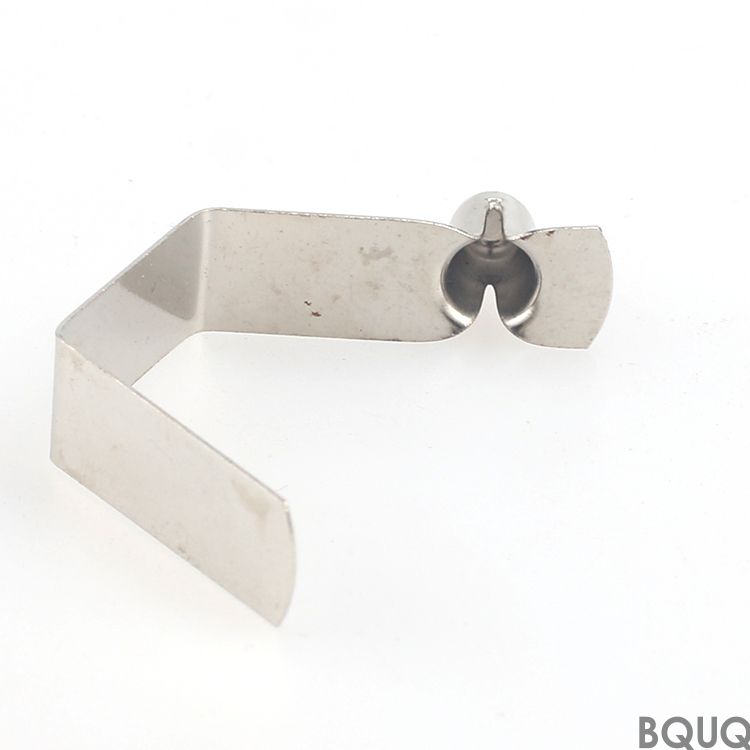
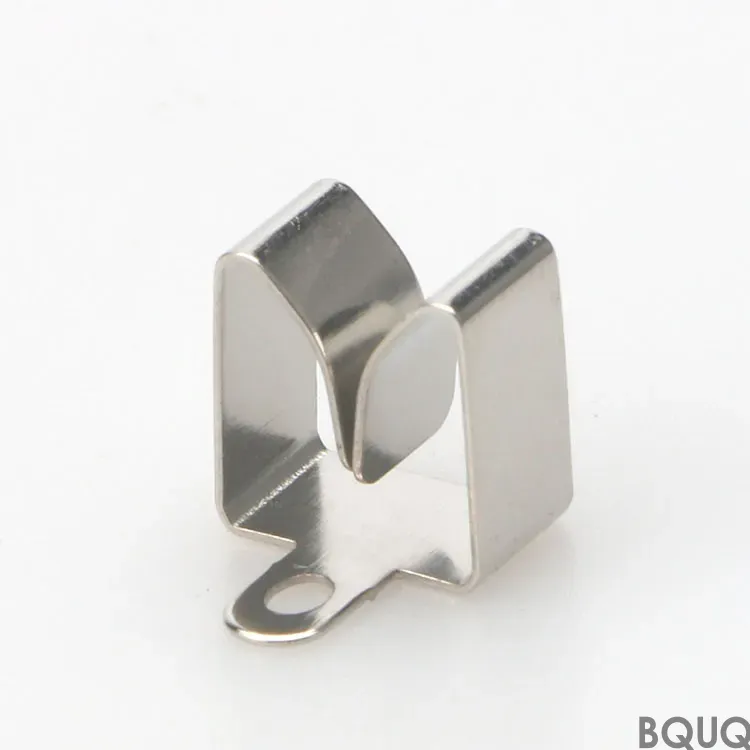
We stock four materials for this collection. SPCC cold-rolled steel for general brackets. SECC galvanized for corrosion resistance near power supplies. SUS304 stainless for GPU support rails that see 70°C continuous heat. SK5 spring steel for latch clips — we heat treat to 45 HRC and temper at 300°C to restore toughness. No surface coating is needed on SK5 because the oxide layer from tempering prevents rust.
Hardness and Flatness Verification for Every 500-Piece Lot
We use a Rockwell tester on three samples per 500 pieces. Flatness is checked on a granite surface plate with a 0.05 mm feeler gauge. If any sample exceeds 0.05 mm runout, the whole lot is rejected and re-pressed. This is not a random audit — it is a gate. You get a stamped flatness report with every shipment. For tighter control, refer to our CNC machining tolerances guide — it covers the difference between die tolerances and machined tolerances.
Threaded Standoffs Formed In-Die — No Secondary Welding
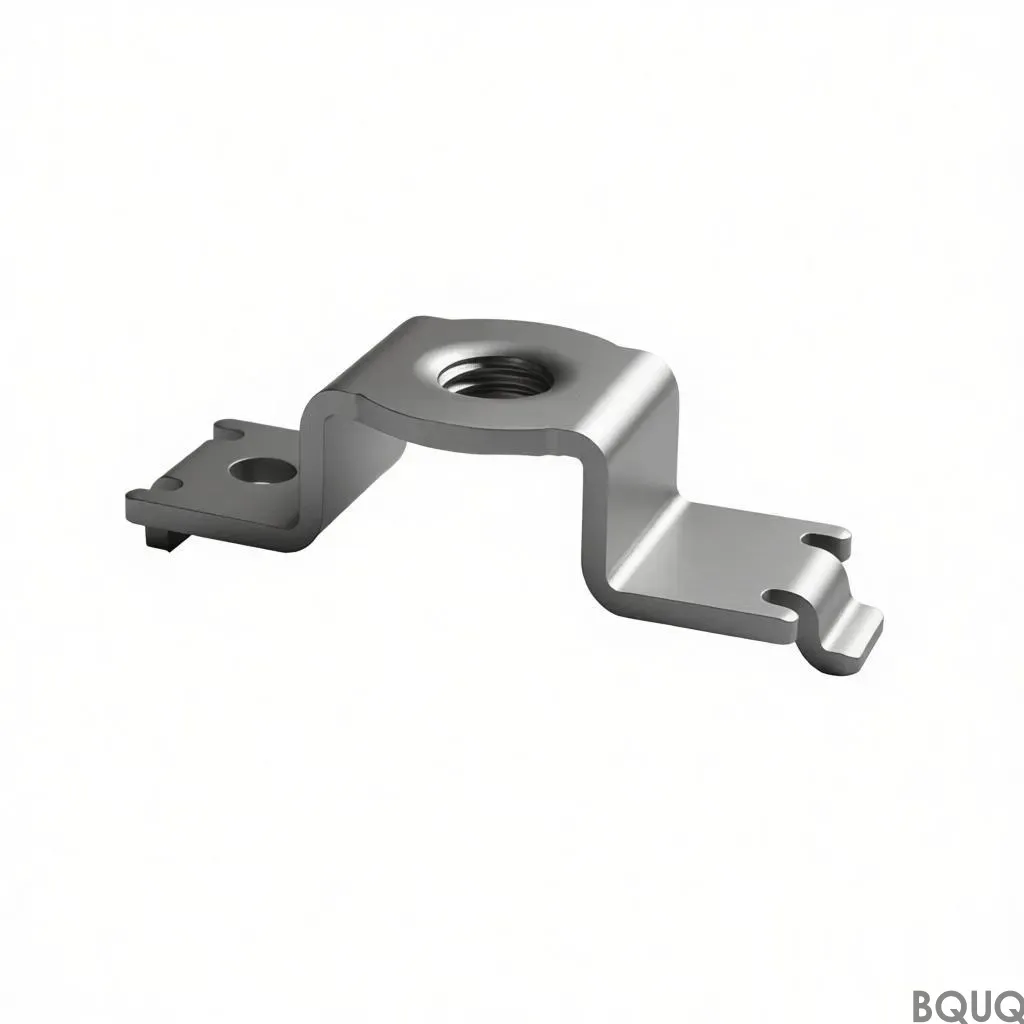
Our collection includes M2.5 and M3 standoffs with a hexagonal base. We form the hex and the internal thread in the same progressive die. No welding means no heat-affected zone, no distortion, and no post-weld cleaning. Pull-out torque is 3.5 N·m minimum on M3. This is how we keep your AI server motherboard mounting points rigid for 10,000+ insertion cycles.
Packaging and Anti-Tarnish Protection for Sea Freight
Parts are packed in VCI (vapor corrosion inhibitor) paper, then in telescopic cartons. Each carton holds 200 pieces with dividers to prevent scratching. For sea freight to the US or Europe, we add a silica gel pouch per 1,000 pieces. You will receive parts with Ra 0.8 µm surface finish, not rust spots, even after 30 days in transit.
Inspection Before Every Shipment — Optical Comparator and CMM
We run a 100% dimensional check on critical holes using an optical comparator at 20× magnification. For complex geometries, a CMM measures 12 points per part. We record every measurement in a PDF report with your PO number. If a dimension is off by more than 0.02 mm, we re-press before packing. No exceptions.
Specification
Value
Material options
SPCC, SECC, SUS304, SK5 spring steel
Thickness range
0.5 mm – 3.0 mm
Hardness (SK5 only)
40 – 45 HRC
Positional tolerance
±0.02 mm
Flatness runout
0.05 mm max
Surface finish
Ra 0.8 µm (vibratory finished)
Burr height
0.03 mm max
Thread pull-out torque (M3)
3.5 N·m min
Standard lead time
12 days after drawing approval
MOQ
No MOQ — order 10 pieces or 10,000
What Is Your MOQ for This Collection?
No MOQ. Order one sample kit for prototyping or 10,000 pieces for production — the same die, the same tolerance, the same price break after 500 pieces.
Can You Customize the Hole Patterns or Add Extra Standoffs?
Yes. We modify dies at a fixed cost of $150 per change — you get a new part number with your logo and hole layout within 5 days.
How Do You Ensure Quality for a Small Batch Order?
Every batch, regardless of size, goes through the same optical comparator and CMM inspection; we send you the report before shipping.
What Is Your Lead Time for a Custom AI Chassis Bracket?
Standard 12 days, but for a single prototype die, we can deliver in 7 days via DHL express.
Get a firm quote within 12 hours. Send your drawing to sc@bquq.com or WhatsApp +86 13713157787. We will confirm material, tolerance, and price — no negotiation games. Precision manufacturing, made in China, with no MOQ.
Straight answers from the factory, not a sales brochure.
How do I get a quote for this part?
Send your drawing (STEP, IGES, DWG, DXF or PDF) with quantity and target material to sc@bquq.com or WhatsApp +86 137 1315 7787. Our engineers review the drawing and reply with price, lead time and tooling cost.
What is your MOQ?
We do not set a fixed MOQ. The minimum is decided per part and per process, so tell us your target quantity and we quote against it. Small trial batches are accepted for new parts.
What is the lead time?
Lead time is agreed per order, based on the date you need, the quantity, the material and whether tooling is required. Send your target date with the drawing and we confirm what is achievable before you commit.
What tolerance can you hold?
CNC machining holds ±0.005 mm. Stamping, spring and extrusion parts are made to the tolerances marked on your drawing, and we confirm achievable values at quotation so there are no surprises at inspection.
Can you manufacture parts to my drawing?
Yes. Every order is made to the customer drawing or sample. We run CNC machining, metal stamping, spring coiling and aluminium heat sink extrusion in-house in Dongguan, so one supplier covers the whole part.
STEP, IGES, DWG, DXF and PDF. A 2D drawing with tolerances and surface finish requirements is preferred alongside the 3D model. Hand sketches can be quoted after our engineers redraw them.
How is quality controlled?
Inspection runs through the process, not only at the end: first article approval, in-process checks and a final report per batch, measured with CMM and optical equipment. Material certificates are available on request.
Where is the factory and do you ship worldwide?
Our factory is in Dongguan, Guangdong, China, operating since 2005. We ship worldwide by express, air and sea, and work with the forwarder nominated by the buyer.