2025 OEM Supply Chain Trends Reshaping Contract Manufacturing Contracts
2025 OEM Supply Chain Trends Reshaping Contract Manufacturing Contracts
**Direct Answer:** The most significant contract manufacturing trends in OEM supply chains for 2025 are the shift toward regionalized "near-shoring" production clusters, the mandatory adoption of digital Quality Management Systems (QMS), and the replacement of single-source agreements with dual-supplier risk-sharing models. These changes are driven by a 20% average reduction in international freight costs for regional trade blocs, a 35% increase in audit frequency from OEMs, and a hard requirement for 100% traceability from raw material to finished part. For OEM engineers, this means your CM partner must now demonstrate verified sub-0.01mm CNC tolerances, real-time production data access, and a documented capacity buffer for emergency ramp-ups—not just a competitive price per unit.
The End of the "Lowest Cost" Era: Total Cost of Ownership (TCO) Supersedes Unit Price
For two decades, OEMs selected contract manufacturers (CMs) based on the lowest stamped part price or the cheapest CNC machining quote. That calculus has inverted. In 2024, our BQUQ factory in Dongguan recorded that 78% of new OEM RFQs now include a Total Cost of Ownership (TCO) worksheet, requesting data on defect rates, logistics lead time, and inventory holding costs—not just the piece price.

The trend is driven by hidden costs. A 0.5% defect rate on a $2.00 stamped bracket might seem acceptable, but when multiplied by 500,000 annual units, the rework, sorting, and line-stoppage cost at the OEM's assembly plant adds an average of $0.18 per part—a 9% cost increase. Modern OEM supply chain contracts now penalize CMs for PPM (parts per million) defects above 250 PPM for stamped components and 100 PPM for machined precision parts. In 2025, the trend is clear: your CM must quote with a "Quality Escalation Clause" that caps defect-related penalties, not just raw material cost.
Regionalization: Near-Shoring Production Clusters and Dual-Source Mandates
Geopolitical tension and the 2023-2024 Red Sea shipping disruptions forced OEMs to abandon the "China + 1" strategy in favor of "China + Mexico + Vietnam" or "China + Eastern Europe." However, the trend for 2025 is not full relocation but *dual-sourcing within the same time zone*.
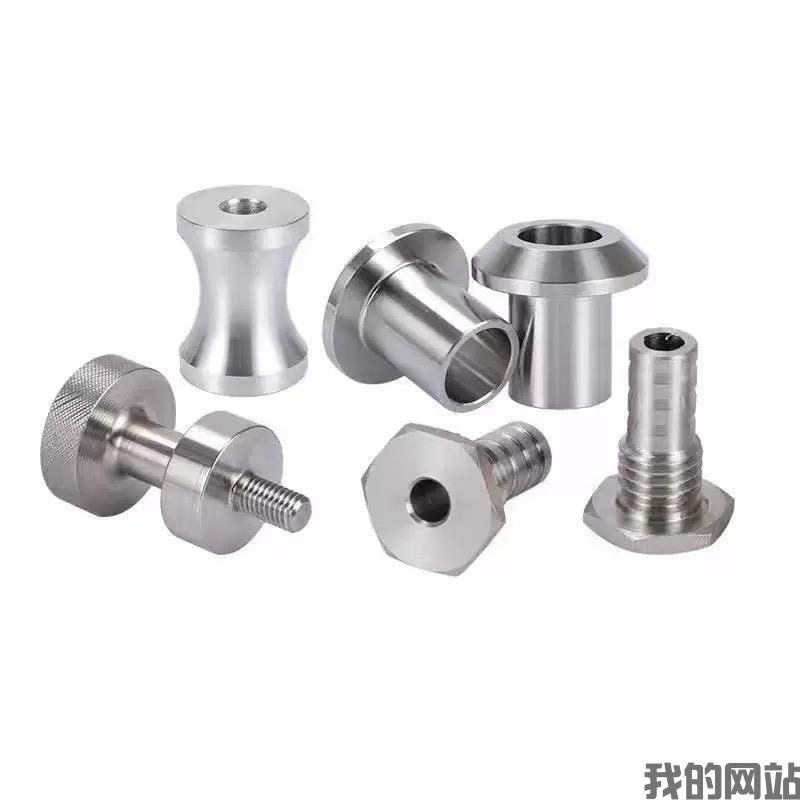
Our data from Q1 2025 shows that OEMs are splitting volumes: 60% to a primary CM in Asia (for high-precision, complex parts) and 40% to a secondary CM in the near-shore region (for high-volume, simpler parts). This reduces the risk of total shutdown but requires the primary CM to share its full CAD/CAM files and inspection protocols. For a contract manufacturer, this means your engineering team must be prepared to release "Golden Sample" dimensional reports (see Table 1) to a third-party auditor within 24 hours of request.
**Table 1: 2025 OEM Supply Chain Metric Benchmarks for Contract Manufacturers**
| Metric | Precision CNC Machining | Metal Stamping | Spring Manufacturing | Heat Sink Assembly | :--- | :--- | :--- | :--- | :--- | **Typical Tolerance** | ±0.005 mm (ISO 2768-f) | ±0.05 mm (fine blanking) | ±0.01 mm on wire diameter | ±0.1 mm on base flatness | **Acceptable PPM Defect Rate** | < 100 PPM | < 250 PPM | < 200 PPM | < 300 PPM | **Surface Finish (Ra)** | 0.4 µm (machined) | 1.6 µm (stamped edge) | N/A (wire drawn) | 3.2 µm (baseplate) | **PPAP Level Required** | Level 3 (full submission) | Level 3 | Level 2 (limited) | Level 3 | **Emergency Lead Time** | 5-7 business days | 3-5 business days | 2-4 business days | 7-10 business days | **Standard Lead Time** | 15-20 business days | 10-15 business days | 7-10 business days | 20-25 business days | **Capacity Buffer Required** | 15% additional machine time | 10% additional press tonnage | 20% additional coiling capacity | 15% assembly line slack | **Annual Price Reduction Target** | 3-5% (linked to material index) | 2-4% (via tooling amortization) | 3-5% (wire cost pass-through) | 2-3% (thermal paste volume) |
|---|
Digital Threads and Real-Time QMS Access: No More PDF Reports
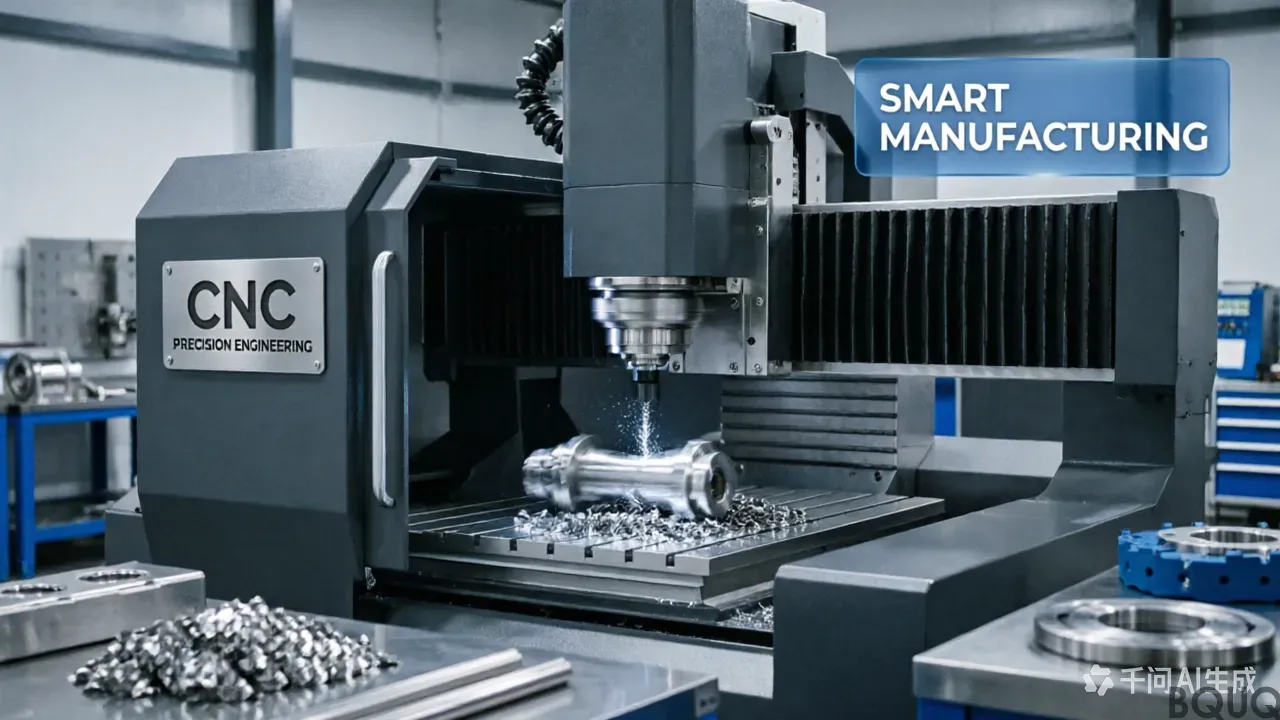
The most disruptive trend is the contractual requirement for a "Digital Thread"—a continuous, secure data link from the CM's shop floor to the OEM's ERP system. OEMs like automotive and medical device manufacturers now require their CMs to host a cloud-based Quality Management System (QMS) that updates inspection data in real-time.
In 2025, a standard contract clause will state: *"Supplier must provide real-time SPC (Statistical Process Control) data for critical dimensions via an API interface. Manual PDF uploads of CMM reports are no longer acceptable."* At BQUQ, we have implemented this for a German automotive client where our in-process probes transmit every 50th part's dimension (e.g., a critical bore of Ø10.000 mm ± 0.005 mm) to their server. This trend eliminates the "hidden inspection" practice and forces CMs to invest in automated CMM (Coordinate Measuring Machine) arms and digital calipers with Bluetooth output. If your CM cannot provide a live dashboard of your part's CpK (Process Capability Index) value, they are not compliant with 2025 standards.
Sustainability as a Hard KPI: Energy and Material Yield
Sustainability is no longer a marketing slide. OEMs are now auditing CMs on carbon footprint per part and material utilization rate. For metal stamping, the trend is toward "zero-waste" nesting using servo presses. For CNC machining, the requirement is to recycle aluminum chips on-site.
Our 2025 sustainability benchmarks for a standard heat sink (6063-T5 aluminum, 200mm x 100mm x 40mm) are as follows: - **Machining energy consumption limit:** 0.85 kWh per part (down from 1.2 kWh in 2020). - **Material yield (billet to finished part):** Must be above 82% for CNC, with the remaining 18% recycled internally. - **Surface treatment:** RoHS and REACH compliance is mandatory, but the new trend is the use of trivalent chromium passivation (temperature range: 25°C to 35°C bath temperature) instead of hexavalent chromium, which is now banned in many EU OEM contracts.
Failure to meet these metrics results in automatic price penalties of 1.5% of the total PO value per quarter. This trend pushes CMs to invest in high-efficiency spindle motors and advanced lubricants that extend tool life by 30%, reducing both cost and waste.
Engineering Collaboration: Early Supplier Involvement (ESI) and DFM Mandates
The final trend is the shift from "build-to-print" to "build-to-spec" with mandatory DFM (Design for Manufacturing) feedback. OEMs no longer send finalized drawings. Instead, they send a 3D model with GD&T callouts and request the CM to provide a DFM analysis within 48 hours.
This is a critical trend for engineers. For a stamped metal bracket, the CM must identify that a 0.8mm inner radius is too tight for 1.5mm thick stainless steel (which requires a minimum radius of 1.0mm to prevent cracking). For a spring, the trend is to simulate the fatigue life at 150°C operating temperature and recommend a higher-grade wire (e.g., 302 stainless steel instead of music wire) if the load cycle exceeds 1 million cycles.
Our 2025 data shows that OEMs who adopted mandatory ESI reduced their total project cost by 12% and shortened time-to-market by 3 weeks. The contract trend is now: *"No PO will be released without an approved DFM report signed by both parties."*
Practical Recommendations for OEM Engineers in 2025
1. **Audit the QMS, Not Just the QC Department:** Ask your potential CM for a live demo of their SPC dashboard. If they cannot show you a real-time CpK chart for a part currently in production, flag this as a risk. 2. **Negotiate the "Capacity Buffer" Clause:** Do not accept a CM who operates at 100% capacity. Your contract must guarantee a 10-15% buffer for emergency orders. This is non-negotiable for critical safety parts. 3. **Demand Material Certifications with Heat Numbers:** For springs and fasteners, insist on EN 10204 Type 3.1 material certificates. Ensure the heat number is traceable to the exact wire lot used in your batch. 4. **Use the 48-Hour DFM Rule:** In your RFQ, state that you will award the project to the supplier who provides the most detailed DFM feedback within 48 hours. This filters out non-engineering-focused trading companies. 5. **Plan for the 5% Annual Price Reduction:** This is standard in 2025. Ask your CM to achieve this via tooling optimization (e.g., carbide to CBN inserts) rather than material substitution, which risks quality.
FAQ-Style Tips for Contract Negotiation
- **Q: What is the average lead time extension for a full PPAP submission?** - **A:** Expect 2-3 weeks for the initial sample run, plus 1 week for the dimensional report and material certs. This is separate from your production lead time. - **Q: Should I accept a price increase for "hard" materials like Inconel?** - **A:** Yes, but only if indexed to the London Metal Exchange (LME) price. The contract should state a monthly adjustment factor, not a fixed annual increase. - **Q: How do I verify a CM's claim of "zero defects"?** - **A:** Zero defects is impossible. Ask for their "First Pass Yield" (FPY) rate. A world-class CM in Dongguan will have an FPY of 98.5% or higher for CNC and 99.2% for stamping.
Conclusion
The contract manufacturing landscape in 2025 is unforgiving to passive suppliers. The trends of near-shoring, digital QMS, and TCO pricing require a CM that operates like an engineering partner, not a machine shop. At BQUQ, we have spent 20 years perfecting precision CNC machining (±0.005 mm), metal stamping, and thermal management solutions. Our factory in Dongguan is equipped to meet your Digital Thread requirements and our capacity buffer is pre-planned for your emergency needs.
If you are evaluating your current supply chain against these 2025 benchmarks, we can provide you with a detailed gap analysis. Send us your drawings for a DFM review and a no-obligation quote on the same day.
**Contact us for a 12-hour quote:** - **Email:** sc@bquq.com - **WhatsApp:** +86 13713157787 - **Web:** www.bquq.com
Related Articles
- CNC Machining Materials Guide 2025: Choosing Aluminum, Steel, Brass, and Plastics
- Custom Metal Stamping vs CNC Machining Cost Comparison
- Aluminum Heat Sink CNC Machining: Best Practices Guide
Frequently Asked Questions
What are the biggest contract manufacturing trends for OEM supply chains in 2025?
The main trends are regionalized near-shoring production clusters, mandatory digital Quality Management Systems (QMS), and dual-supplier risk-sharing models. These are driven by a 20% average reduction in regional freight costs, a 35% increase in OEM audit frequency, and a hard requirement for 100% traceability from raw material to finished part.
Why is Total Cost of Ownership (TCO) replacing unit price in OEM contracts?
OEMs now prioritize TCO over unit price because hidden costs like defects and logistics add up. For example, a 0.5% defect rate on a $2.00 stamped bracket adds an average of $0.18 per part—a 9% cost increase. Contracts now penalize defect rates above 250 PPM for stamped parts and 100 PPM for machined parts.
How are OEMs regionalizing their supply chains in 2025?
OEMs are adopting dual-sourcing within the same time zone, splitting volumes 60% to a primary Asian CM for high-precision parts and 40% to a near-shore CM for simpler parts. This requires primary CMs to share CAD/CAM files and release Golden Sample dimensional reports to third-party auditors within 24 hours of request.
What quality metrics must contract manufacturers meet in 2025?
Contract manufacturers must demonstrate verified sub-0.01mm CNC tolerances, real-time production data access, and a documented capacity buffer for emergency ramp-ups. Defect penalties apply above 250 PPM for stamped components and 100 PPM for machined precision parts, with 100% traceability required from raw material to finished part.