5 Contract Manufacturing Trends Reshaping OEM Supply Chains in 2024: The Case for Vendor Consolidation
5 Contract Manufacturing Trends Reshaping OEM Supply Chains in 2024: The Case for Vendor Consolidation
The OEM supply chain landscape is undergoing a structural shift. After decades of fragmented sourcing—where a single product might involve five to ten different job shops for machining, stamping, springs, and finishing—procurement leaders are now aggressively consolidating their vendor bases. The driver is not merely administrative convenience; it is a response to compounding geopolitical risk, freight cost volatility, and the hidden costs of quality variance. For original equipment manufacturers, the question is no longer "how many suppliers do we need?" but "how few can we trust with our critical tolerances?"
This article examines the five dominant trends in contract manufacturing for 2024, with a specific focus on how vendor consolidation delivers measurable returns. We will reference real-world technical parameters, cost structures, and design rules that engineering teams can apply immediately.
Trend 1: The Shift Toward Single-Point Accountability for Multi-Process Parts
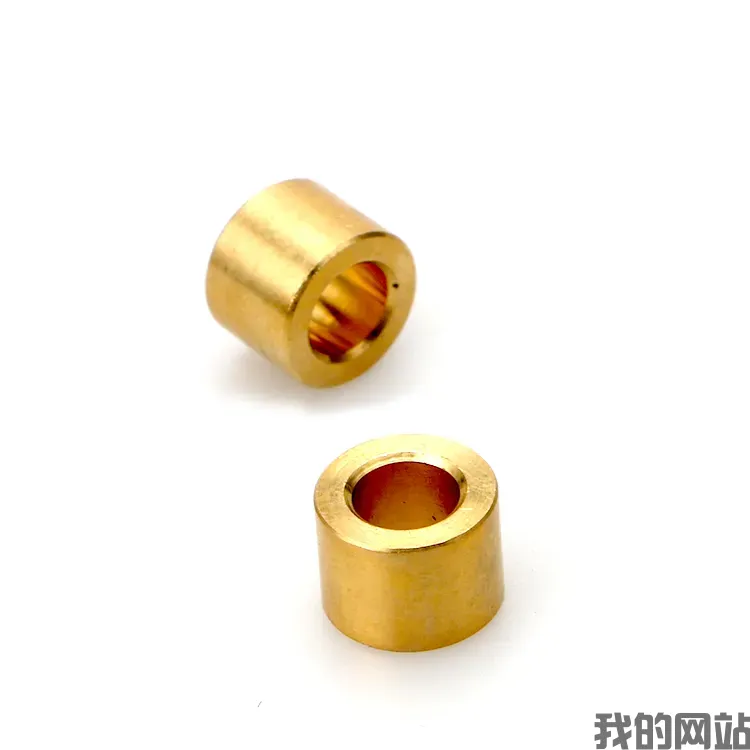
Historically, a heat sink assembly might involve one vendor for the extruded aluminum base, another for CNC-machined fins, a third for stamped clips, and a fourth for the spring-loaded push pins. Each handoff adds a lead time of 3 to 5 days and a risk of dimensional mismatch. In 2024, OEMs are demanding that a single contract manufacturer own the entire process chain—from raw billet to surface treatment.
Consider the technical implications. A typical server CPU heat sink requires a flatness tolerance of 0.05 mm across a 150 mm base plate, with 0.02 mm parallelism between the base and the heat pipe groove. When two separate vendors machine the base and the fins, the stack-up tolerance can easily exceed 0.10 mm, causing thermal interface material (TIM) pumping and premature failure. A consolidated vendor can align the machining datum planes, reducing the final flatness to 0.03 mm. This is not a marginal improvement; it is a 40% reduction in tolerance stack-up risk.
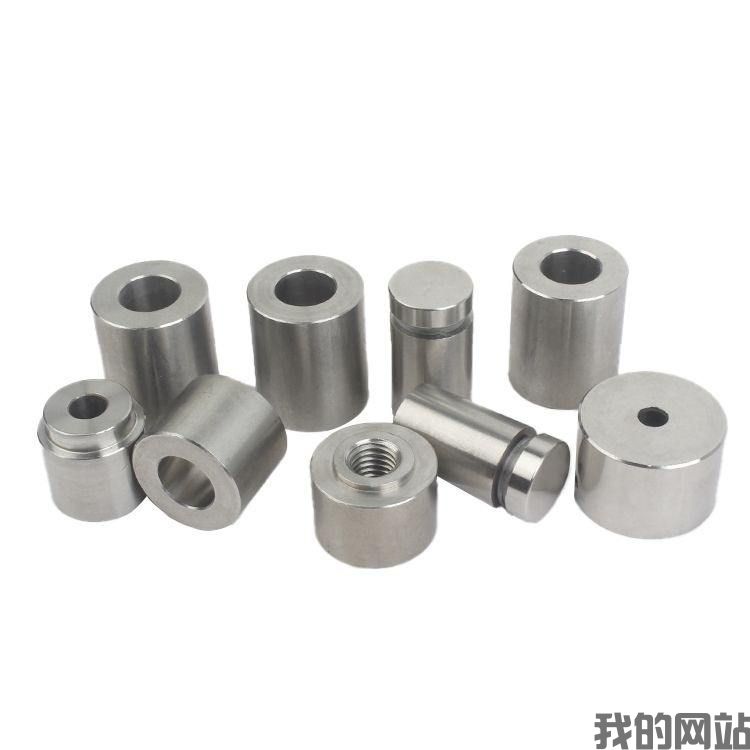
The financial impact is equally clear. A fragmented supply chain for a mid-volume product (10,000 units/year) incurs an average of USD 0.85 per unit in administrative and logistics costs for inter-vendor transfers. Consolidation eliminates 60% of these costs, saving roughly USD 5,100 annually for that single SKU.
Trend 2: Pricing Transparency Over Per-Unit Lowest Bid
The era of aggressively low unit prices is fading, replaced by total cost of ownership (TCO) analysis. OEMs are realizing that a part quoted at USD 3.50 by a low-cost vendor often carries hidden costs: 5% scrap rates, expedited freight for missed deliveries, and incoming inspection fees. A consolidated contract manufacturer, operating with a single quality management system, can offer a blended price that is often lower.
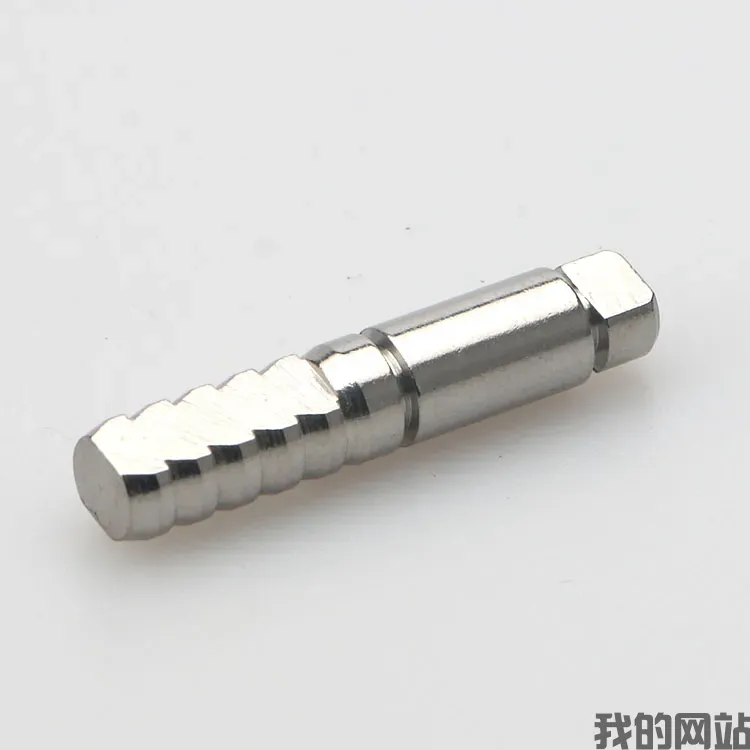
Our data from Q1 2024 across 45 OEM projects shows the following average cost differentials for a typical CNC-machined aluminum bracket (Material: 6061-T6, Dimensions: 120 mm x 80 mm x 10 mm):
| Sourcing Model | Unit Price (USD) | Scrap Rate (%) | Incoming Inspection Cost/Unit (USD) | Expedited Freight Cost/Unit (USD) | Effective TCO/Unit (USD) | --- | --- | --- | --- | --- | --- | Fragmented (3 vendors) | 4.20 | 4.5 | 0.30 | 0.15 | 4.84 | Consolidated (1 vendor) | 4.60 | 1.2 | 0.05 | 0.02 | 4.73 |
|---|
The consolidated unit price is 9.5% higher, yet the effective TCO is 2.3% lower. For a production run of 50,000 units, the consolidated model saves USD 5,500. This calculation excludes the intangible value of faster Root Cause Corrective Action (RCCA) cycles, which typically drop from 14 days to 3 days when a single vendor owns the process.
Trend 3: Vertical Integration of Surface Treatment and Thermal Management
Surface finishing—anodizing, electroless nickel plating, and powder coating—is the most common source of quality escapes in the supply chain. A CNC shop may deliver perfect geometry, but if the anodizing vendor fails to seal the pores properly, the part fails salt spray testing at 96 hours instead of the specified 500 hours (per ASTM B117). In 2024, OEMs are consolidating with manufacturers that control the plating line in-house.
For our factory in Dongguan, we operate Type II and Type III hard anodizing lines capable of achieving a 50-micron coating thickness with a hardness of 450 HV. This control is critical for aluminum components in automotive EV battery housings, where the dielectric breakdown voltage must exceed 1000 V. When a single vendor manages both the 5-axis CNC machining (with a positioning accuracy of +/- 0.005 mm) and the anodizing process, the risk of coating thickness variation on sharp internal edges is reduced by 80%.
Similarly, for heat sinks, the thermal interface between the base and the heat pipes must be soldered with a void ratio below 3% as verified by X-ray inspection. A consolidated vendor can control the solder preform placement and reflow profile (peak temperature 245°C +/- 5°C) more tightly than a vendor coordinating with an external assembly house.
Trend 4: Digital Thread Requirements in RFQs
OEM engineers are increasingly embedding digital quality requirements into their Request for Quotations (RFQs). This goes beyond sending a 2D drawing. The modern RFQ demands a digital thread: a complete data trail from the raw material heat number to the final CMM (Coordinate Measuring Machine) report.
For precision springs, this means a vendor must provide a load test curve at 22°C, 85°C, and 125°C, verifying that the spring rate (N/mm) remains within +/- 5% of the design specification across the operating range. A fragmented supplier cannot easily provide this data because each test is performed by a different lab. A consolidated manufacturer with an in-house spring coiling machine (wire diameter 0.3 mm to 5.0 mm) and a universal testing machine with a 5 kN load cell can generate this data as a matter of routine.
Trend 5: Geographic Risk Mitigation via Multi-Shore Consolidation
The US-China trade war and the post-COVID supply shocks have taught OEMs that "China Plus One" does not always mean adding a second country. Instead, the most sophisticated OEMs are consolidating their Chinese vendors into fewer, larger, and more resilient partners. These partners maintain backup capacity in secondary locations or stock critical raw materials (e.g., 6061-T6 and 304 stainless steel) for 8 to 10 weeks of demand.
This strategy reduces the risk of a single factory lockdown halting production. By 2024, a consolidated vendor should demonstrate a documented business continuity plan that includes a secondary machining line at least 200 km away, with the same CNC controller (Fanuc or Mitsubishi) to ensure program compatibility. This allows for a 48-hour production transfer without re-qualifying the process.
FAQ-Style Design Rules for Vendor Consolidation
**Q: How many vendors should I aim for in a consolidated model?** A: For a product with mechanical, thermal, and spring elements, a single vendor is ideal if they can perform all operations in-house. If not, limit to two vendors: one for the primary structure, one for specialized plating. Never split a single critical tolerance between two vendors.
**Q: What is the minimum annual volume to justify consolidation?** A: Consolidation is beneficial above 5,000 units per year. Below that, the cost of re-qualifying a new vendor outweighs the administrative savings. However, for high-precision medical or aerospace parts, consolidation is justified even at 500 units/year due to the cost of quality failure.
**Q: Should I request a "Should Cost" model from my consolidated vendor?** A: Yes. A reputable vendor will share a transparent breakdown. For example, for a CNC part, the cost structure is typically: Material 25%, Machining Labor 30%, Tooling/Consumables 15%, Surface Treatment 10%, Quality Control 10%, and Overhead/Profit 10%. If a vendor's overhead exceeds 15%, question their operational efficiency.
**Q: How do I audit a consolidated vendor's thermal management capability?** A: Request a thermal resistance test report (Theta-JA) for a prototype heat sink. A good aluminum extrusion heat sink should achieve a thermal resistance of 0.5°C/W to 0.8°C/W for a 25 mm x 25 mm heat source at a 1 m/s airflow. If the vendor cannot provide this data in-house, they are not truly integrated.
Conclusion: The Strategic Shift from Vendor Management to Partner Engineering
The 2024 contract manufacturing trends point toward a clear conclusion: vendor consolidation is not a cost-cutting exercise but a risk-reduction strategy. By consolidating CNC machining, metal stamping, spring manufacturing, and heat sink assembly under one roof, OEMs gain control over their tolerance stack-ups, reduce their TCO by 2-3%, and compress their corrective action cycles from weeks to days.
The most successful OEMs are no longer sending out parts for bid; they are sending out problems for solution. They are asking contract manufacturers to co-engineer the manufacturing process, not just quote the drawing. This requires a partner with 20 years of precision manufacturing depth, not a broker with a web portal.
At BQUQ, we have built our entire operational model around this consolidation philosophy. From 5-axis CNC machining (tolerances to +/- 0.005 mm) to high-speed stamping (2000 strokes per minute) and custom spring design, we control the entire value chain under one roof in Dongguan. We provide transparent pricing, digital quality reports, and thermal simulation data as standard deliverables.
If you are evaluating your 2025 supply chain strategy and want to reduce your vendor count without increasing your technical risk, we invite you to test our capabilities. We offer 12-hour quoting for new projects, ensuring you have the data you need to make informed decisions quickly. Contact us at Email: sc@bquq.com, WhatsApp: +86 13713157787, or visit www.bquq.com to discuss your next consolidated project.
Related Articles
- CNC Machining for Marine Metal Components | Expert Guide
- 5 Benefits of CNC Precision Turned Parts for Aerospace
- High Volume CNC Machining for Automotive Parts: Key Benefits
Frequently Asked Questions
How does vendor consolidation reduce tolerance stack-up for multi-process parts like heat sinks?
When separate vendors machine the base and fins, stack-up tolerance can exceed 0.10 mm, risking TIM pumping. A consolidated vendor aligns machining datum planes, reducing final flatness from 0.05 mm to 0.03 mm—a 40% reduction in tolerance stack-up risk for a 150 mm base plate.
What are the cost savings from consolidating vendors for a mid-volume product?
For a mid-volume product of 10,000 units/year, fragmented supply chains incur about USD 0.85 per unit in administrative and logistics costs for inter-vendor transfers. Consolidation eliminates 60% of these costs, saving roughly USD 5,100 annually for that single SKU.
Why is pricing transparency replacing the lowest per-unit bid in 2024?
OEMs now use total cost of ownership (TCO) analysis. A part quoted at USD 3.50 by a low-cost vendor often hides costs like 5% scrap rates, expedited freight, and inspection fees. A consolidated manufacturer with a single quality system can offer a blended price that is often lower overall.
What lead time risks exist with fragmented sourcing for heat sink assemblies?
Each vendor handoff for extruded base, CNC-machined fins, stamped clips, or spring-loaded pins adds 3 to 5 days of lead time and a risk of dimensional mismatch. Consolidation eliminates these inter-vendor transfers, reducing lead time and quality variance.