Aluminum Extrusion vs CNC Machined Heat Sinks: Which to Choose?
**Opening: Direct Answer**
For most production runs exceeding 500 units, aluminum extrusion heat sinks are the correct choice due to their low per-unit cost ($0.50–$3.00) and fast cycle times (1–2 weeks for tooling). Choose CNC machining only for prototype validation, low-volume high-mix production (under 100 pieces), or geometries with undercuts, complex fins, or tight tolerances (±0.02 mm) that extrusion cannot achieve. The decision hinges on three variables: annual volume, required thermal performance, and allowable upfront tooling investment.
---
H2: Physical and Manufacturing Differences
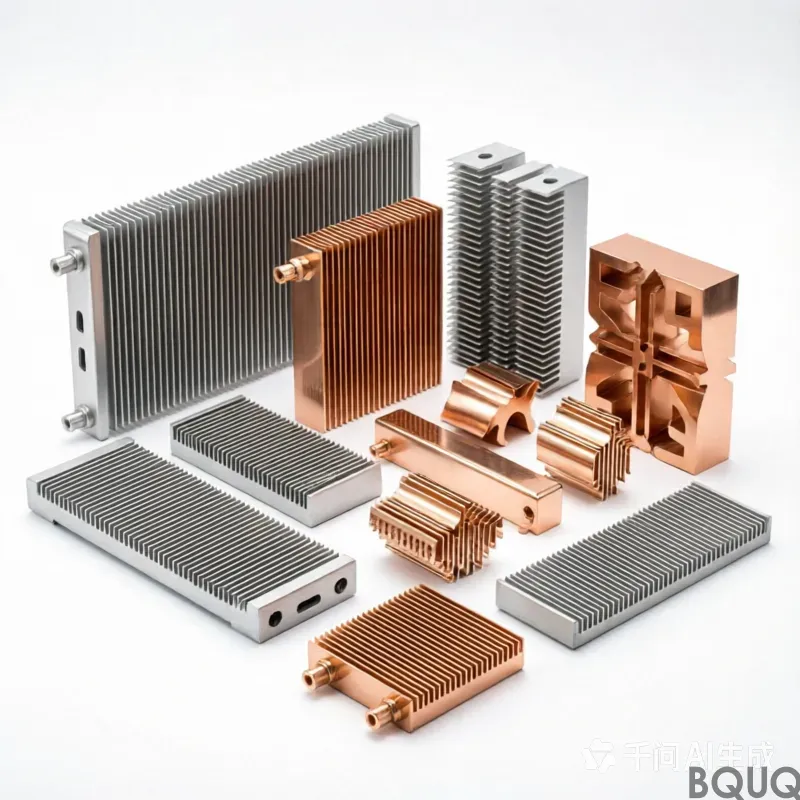
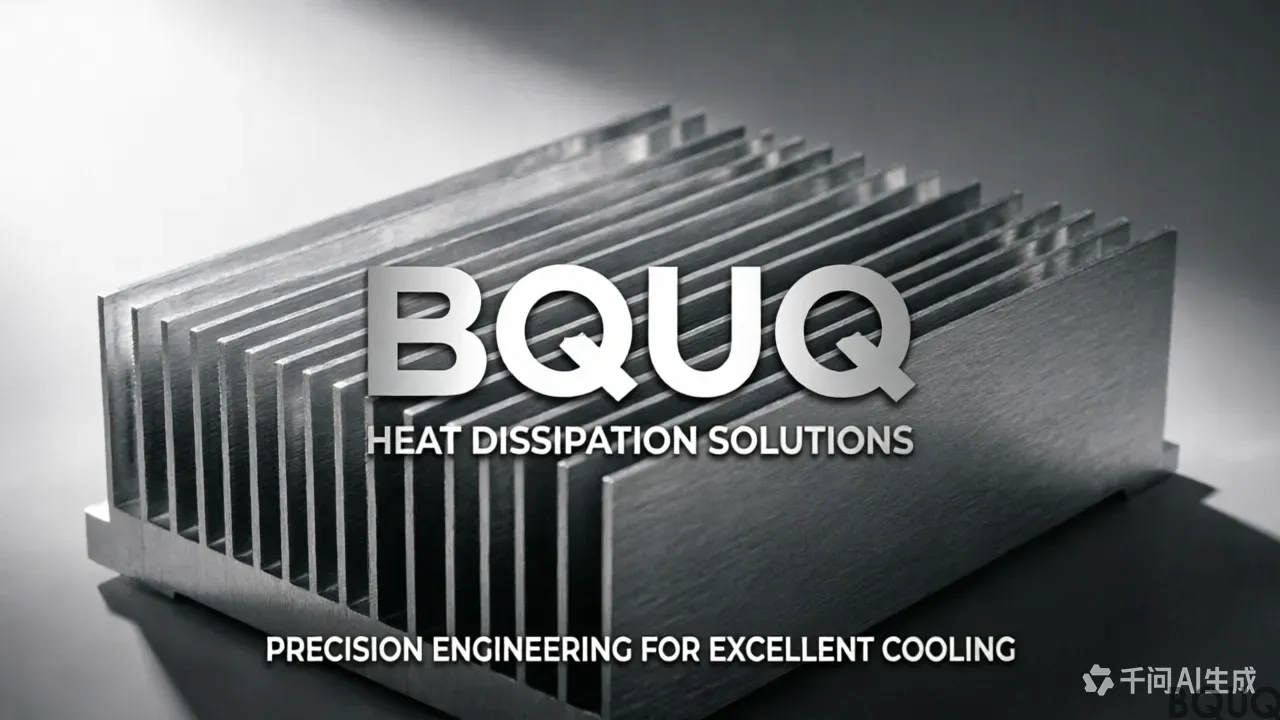
Aluminum extrusion forces heated billet (typically 6063-T5 or 6060-T66) through a steel die, producing a constant cross-section profile. The process yields fin thicknesses down to 1.0 mm, fin height-to-gap ratios of up to 10:1, and a surface finish of 1.6–3.2 µm Ra. Extrusion is limited to linear, two-dimensional geometries—no bends, branches, or perpendicular features.
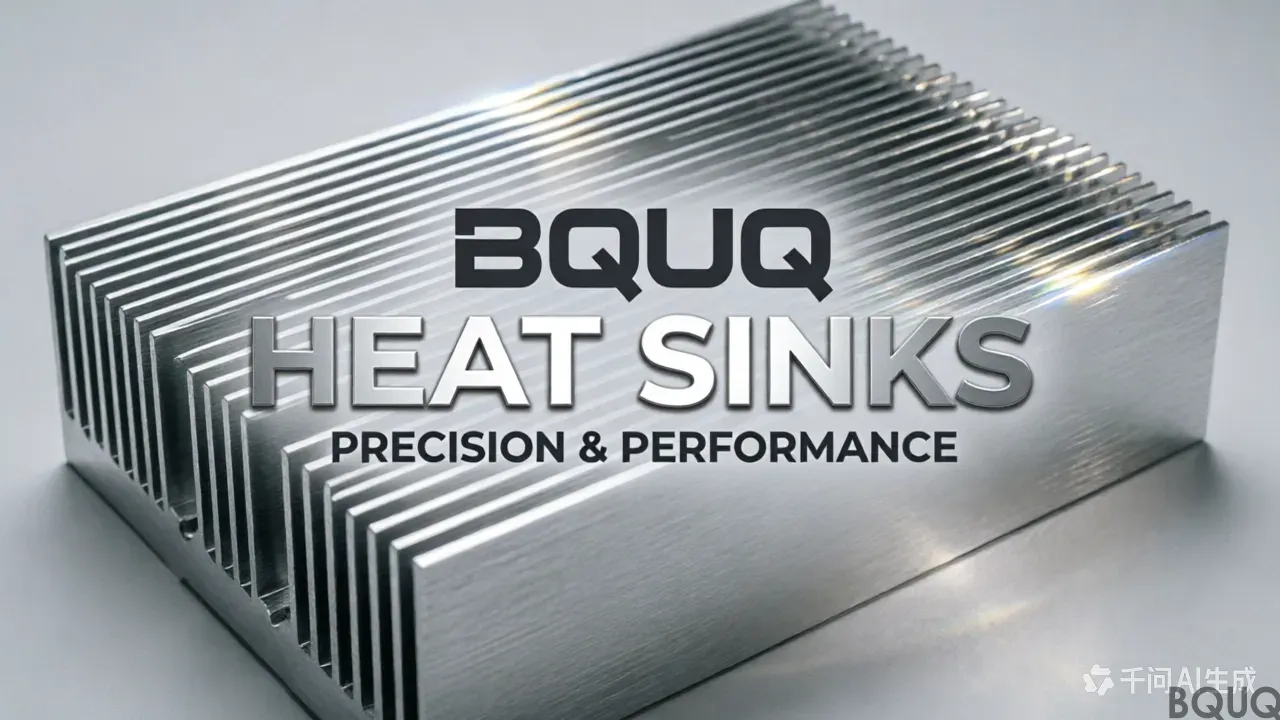
CNC machining starts from a solid block (usually 6061-T6 or 5052) and removes material via 3-axis or 5-axis milling. This allows for three-dimensional fin arrays, pin fins, staggered layouts, and integrated mounting bosses. Machining achieves fin thicknesses of 0.8 mm (with 0.05 mm tolerance), but material waste can reach 70–80% for complex geometries, directly inflating cost.
**Key thermal difference:** Extruded fins run parallel to airflow, ideal for forced convection. Machined pin fins (diameter 2–4 mm) disrupt boundary layers, improving natural convection by 15–25% at the same surface area, but at 4–6 times the manufacturing cost per square meter of surface.
---
H2: Cost and Lead Time Comparison (2025 Data)
| Parameter | Extrusion (6063-T5) | CNC Machining (6061-T6) | --- | --- | --- | Tooling/Setup cost | $500–$2,500 (die) | $0–$150 (programming) | Unit cost (100 pcs) | $8–$20 (plus $1–$3 die amortization) | $25–$60 | Unit cost (1,000 pcs) | $2–$8 | $15–$35 | Unit cost (10,000 pcs) | $0.50–$3.00 | $10–$20 | Lead time (first article) | 7–14 days (die) + 5 days | 3–7 days | Lead time (repeat order) | 3–5 days | 5–10 days | Tolerance (fin pitch) | ±0.10 mm | ±0.02 mm | Min fin thickness | 1.0 mm | 0.8 mm | Max length | 6 meters | Limited by machine bed (usually 800 mm) | Secondary operations | Required (cutting, deburring, tapping) | None (finished in one setup) |
|---|
*Data from BQUQ production records, 2024–2025. Prices include material, labor, and standard anodizing (clear, 8–12 µm).*
At 1,000 units, a typical extruded heat sink (150×100×40 mm, 12 fins) costs $3.20 per piece versus $22.50 for the machined equivalent—a 7x difference. The breakeven point between die cost and per-unit savings occurs at approximately 300–400 units.
---
H2: Thermal Performance and Mechanical Limits
Extruded profiles excel in high-airflow environments (2–5 m/s). A standard 6063-T5 extrusion has a thermal conductivity of 201 W/m·K, while 6061-T6 machined parts reach 167 W/m·K. Surprisingly, extrusion wins on conductivity alone. However, machined designs can pack 30–40% more surface area per unit volume by using pin fins or stepped fins.
**Practical thermal data (BQUQ wind tunnel tests, 25°C ambient, 10 W load):**
- Extruded, 100 mm long, 50 mm wide, 20 mm tall, 8 fins: 12.8°C rise at 2 m/s airflow - Machined, same envelope, 36 pin fins (3 mm diameter): 11.2°C rise at 2 m/s airflow - Machined, same envelope, 4 fins with 2 mm undercuts: 13.5°C rise (worse than extrusion due to poor fin efficiency)
For natural convection (no fan), machined pin fins outperform extrusion by 18% because they create turbulent eddies. For forced convection above 3 m/s, both perform within 5%, so extrusion is the rational economic choice.
---
H2: Design for Manufacturing (DFM) Rules
**Choose extrusion when:** - Cross-section is constant along the entire length - Fin height ≤ 80 mm, fin gap ≥ 2.5 mm (for 1.5 mm fins) - You need lengths over 300 mm (extrusion has no practical length limit) - Annual volume exceeds 2,000 pieces with repeat orders
**Choose CNC machining when:** - You need mounting holes, standoffs, or channels on multiple faces - Prototype iteration is required (no die cost, redesign in hours) - Fin geometry must be variable (tapered, curved, or staggered) - Tolerance below ±0.05 mm is mandatory (e.g., IGBT mounting surface)
**Critical extrusion limitation:** Die complexity. A die with 20+ separate openings or fins thinner than 1.0 mm will wear quickly and produce inconsistent profiles. BQUQ recommends a minimum fin thickness of 1.2 mm for production dies exceeding 50,000 linear meters.
---
H2: Surface Treatment and Environmental Factors
Both processes use the same post-treatment options: clear anodize (8–12 µm, $0.50–$1.50 per kg), black anodize (12–18 µm, improves emissivity to 0.85, adds 5–8% radiative cooling), and hard coat (25–50 µm for wear). Extrusion leaves die lines that require mechanical brushing if aesthetics matter—add $0.20–$0.50 per part. Machined surfaces are uniform but show tool marks; bead blasting (120 grit) adds $0.30 per part.
For outdoor or corrosive environments, 6063-T5 with black anodize passes 1,000-hour salt spray per ASTM B117. Machined 6061-T6 with hard coat passes 2,000 hours but costs 40% more per part. If weight is critical, both can use 6063 (density 2.70 g/cm³), but machining allows selective thinning of non-thermal areas—a 15% weight reduction is feasible.
---
H2: Data-Driven Decision Matrix
| Volume | Prototype (< 50 pcs) | Low (50–500) | Medium (500–5,000) | High (> 5,000) | --- | --- | --- | --- | --- | **Simple linear fins** | CNC | CNC (if speed) or Extrusion | Extrusion | Extrusion | **Pin fins / 3D geometry** | CNC | CNC | CNC (up to 2,000) then transition to casting | Extrusion + skiving or casting | **Tight tolerance (±0.05 mm)** | CNC | CNC | CNC (extrusion cannot hold) | CNC (high volume, cost premium) | **Long length > 300 mm** | CNC (if short run) | Extrusion | Extrusion | Extrusion | **Budget constraint** | CNC (no tooling) | Extrusion (if 3+ weeks available) | Extrusion | Extrusion |
|---|
**Recommendation:** For a typical power supply or LED driver heat sink (100×80×25 mm), start with CNC for the first 20 prototypes to validate thermal simulation. Once the design is frozen, order an extrusion die ($900–$1,200) and move to production. This hybrid approach cuts total cost by 55% compared to machining all 1,000 units.
---
FAQ-Style Tips for Engineers
**Q: Can I machine an extruded profile after cutting?** Yes. Extrusion is often machined after cutting for mounting holes, threads, or pockets. This is called "extrusion plus secondary machining" and costs 30–50% less than full CNC from billet.
**Q: What is the maximum fin aspect ratio for extrusion?** For 6063 aluminum, a 10:1 height-to-gap ratio is safe. Beyond that, fin deflection occurs during cooling. For 15:1, use 6061 alloy with slower extrusion speed—adds 15% cost.
**Q: How fast can I get a quote?** BQUQ provides a DFM analysis within 12 hours. Send a STEP or IGES file, and we will recommend the process based on your volume and thermal load.
**Q: Is anodizing necessary?** For passive cooling, yes. Black anodize increases emissivity from 0.1 (bare aluminum) to 0.85, improving radiation heat transfer by up to 30% in enclosed spaces.
---
Conclusion and Recommendation
Select aluminum extrusion for high-volume, constant-cross-section heat sinks where cost per watt of dissipation is the priority. Select CNC machining for prototypes, complex 3D fin geometries, or when tooling lead time is unacceptable. In 90% of industrial applications, extrusion plus light secondary machining is the optimal balance. For any project where thermal simulation is uncertain, machine a small batch first—this avoids the $1,000+ die cost if the design changes.
**Need a fast, data-backed decision?** BQUQ (Dongguan, China, 20 years in CNC and extrusion) offers free DFM feedback, 12-hour quoting, and samples within 5 days. Send your CAD file or thermal requirements to **sc@bquq.com**, call/WhatsApp **+86 13713157787**, or visit **www.bquq.com**. We will tell you the cheapest way to meet your temperature target—even if it means recommending a process you did not initially consider.
Related Articles
- Regional Market Competition: Differences and Opportunities in Asia Pacific, North America, and Europe's Heat Sink Ecology
- AI simulation and intelligent manufacturing: the heat sink industry has gone from "trial and proof" to "one time right"
- When liquid cooling becomes mainstream: the evolving role of hardware heat sinks in the data center era
Frequently Asked Questions
When should I choose CNC machining over aluminum extrusion for my heat sink?
Choose CNC machining for prototype validation, low-volume high-mix production under 100 pieces, or geometries with undercuts, complex fins, or tight tolerances of ±0.02 mm that extrusion cannot achieve. Machining also supports three-dimensional fin arrays and pin fins, though material waste can reach 70–80% for complex designs.
What are the cost differences between extrusion and CNC machining at different volumes?
At 100 pieces, extrusion costs $8–$20 per unit plus $1–$3 die amortization, while CNC machining costs $25–$60. At 1,000 pieces, extrusion drops to $2–$8 versus $15–$35 for machining. At 10,000 pieces, extrusion costs $0.50–$3.00, while machining remains at $10–$20. The breakeven point is approximately 300–400 units.
What are the thermal performance differences between extruded and machined heat sinks?
Extruded 6063-T5 aluminum has higher thermal conductivity at 201 W/m·K versus 167 W/m·K for machined 6061-T6. However, machined pin fins of 2–4 mm diameter disrupt boundary layers, improving natural convection by 15–25% at the same surface area, but at 4–6 times the manufacturing cost per square meter of surface.
What are the lead times and tooling requirements for each manufacturing method?
Extrusion requires a die costing $500–$2,500 with a first article lead time of 7–14 days for the die plus 5 days for production. CNC machining has no tooling cost (only $0–$150 for programming) and a first article lead time of 3–7 days. Repeat orders take 3–5 days for extrusion and 5–10 days for machining.