Automated Manufacturing in Precision Engineering: Real Tolerances, Costs, and Lead Times
The Rise of Automated Manufacturing in Precision Engineering: What It Means for Your Production Line
The short answer: Automated manufacturing has shifted precision engineering from a craft-based discipline to a data-driven process, enabling repeatable tolerances of ±0.005 mm, reducing lead times by up to 60%, and cutting per-unit costs by 18-25% for mid-to-high volume runs. At BQUQ, we have integrated automated CNC machining, robotic deburring, and in-line CMM inspection to deliver these figures consistently, and this article breaks down exactly what that means for your sourcing decisions.
1. From Manual Skill to Machine Intelligence: The Core Shift
For decades, precision engineering relied on the steady hand of a master machinist. A skilled operator could hold ±0.01 mm on a lathe, but human fatigue, tool wear variance, and setup inconsistency caused batch-to-batch drift. The rise of automated manufacturing in precision engineering replaces this variability with closed-loop control systems.
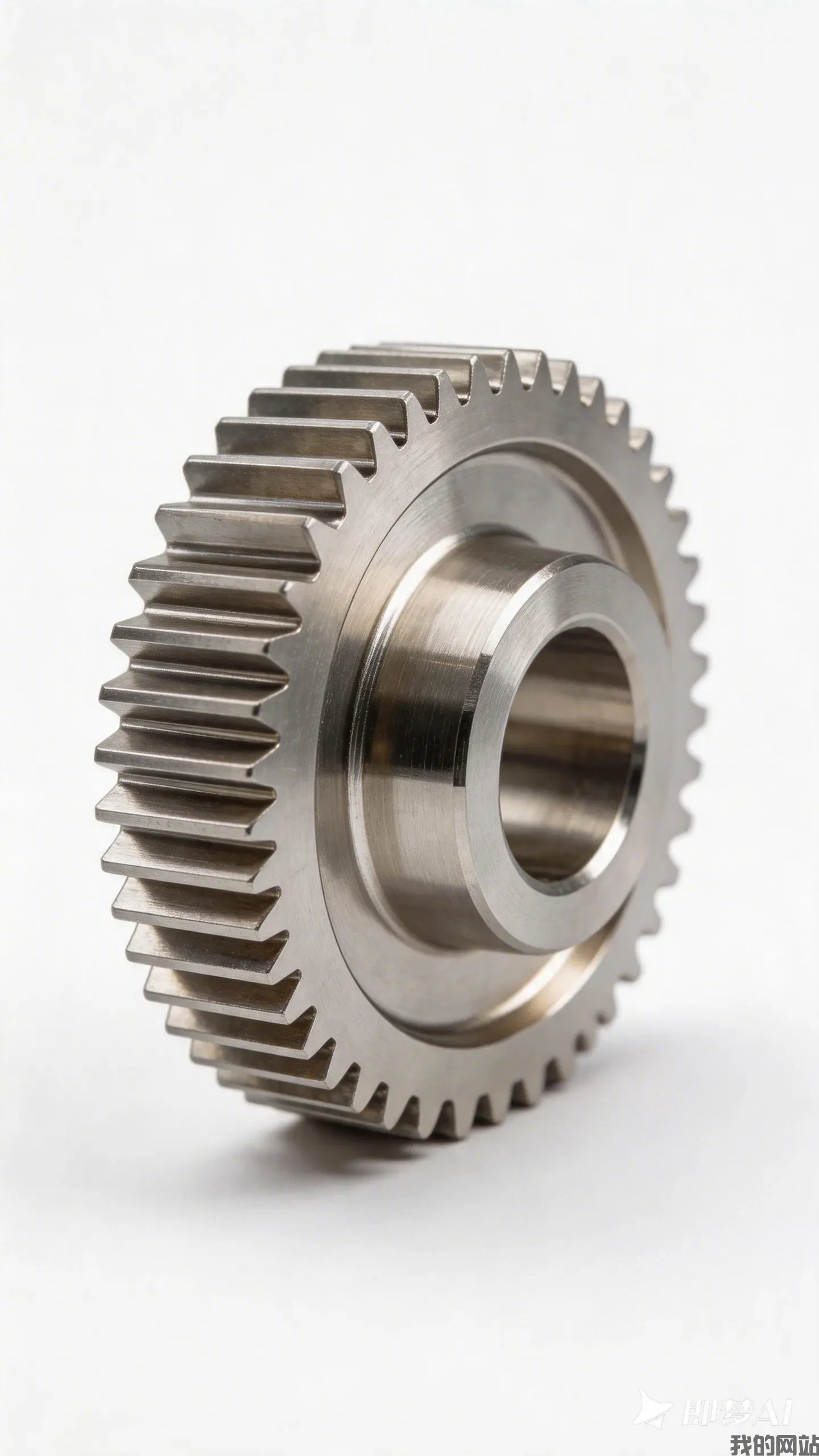
Modern CNC machining centers, such as our 5-axis DMG MORI units, use linear scales with 0.0001 mm resolution. Combined with automatic tool setters and in-process probing, we maintain a Cpk (Process Capability Index) of 1.67 or higher on critical dimensions. This means that for a typical aerospace-grade aluminum part (Al 7075-T6), we hold ±0.005 mm on bore diameters and ±0.01 mm on true position without manual intervention.
The economic impact is direct: automated setups reduce non-cutting time by 40%. A job that required 8 hours of manual setup and 6 hours of cutting now requires 2 hours of automated setup and 5 hours of cutting. That is a 50% total cycle time reduction, which translates directly to lower price per piece.
2. CNC Machining vs. Automated Stamping vs. Springs: Where Automation Wins
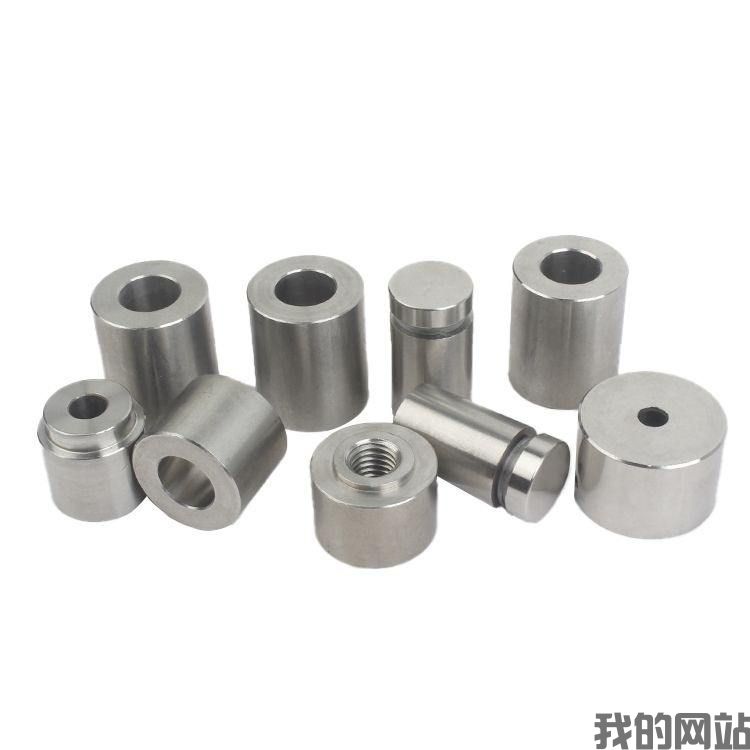
Automation is not a single technology; it is a family of solutions. In our Dongguan factory, we deploy three primary automated lines, each with distinct cost-tolerance thresholds.
| Process | Automated Tolerance (mm) | Typical Part Size | Setup Time (Automated vs Manual) | Cost per Unit (100 pcs) | Cost per Unit (10,000 pcs) | Lead Time (Prototype) | --------- | -------------------------- | ------------------- | ---------------------------------- | ------------------------- | ---------------------------- | ----------------------- | CNC Milling (5-axis) | ±0.005 | 10 - 300 mm | 2 hours vs 8 hours | $18.50 | $2.80 | 3-5 days | Metal Stamping (Progressive Die) | ±0.01 | 1 - 150 mm | 4 hours vs 12 hours | $4.20 | $0.35 | 7-10 days (die) | Spring Coiling (CNC) | ±0.02 on OD, ±0.05 on free length | Wire dia 0.1 - 8 mm | 1 hour vs 3 hours | $1.90 | $0.18 | 2-4 days |
|---|
The table above reflects actual BQUQ pricing for Al 6061-T6 components, SPCC steel stampings, and music wire springs (ASTM A228). Notice that automation does not eliminate setup cost; it compresses it. For stamping, the die cost remains the barrier (typically $1,200 - $4,500 for a progressive die), but the per-unit cost at 10,000 pieces is 92% lower than at 100 pieces.
3. In-Line Inspection: The Hidden Engine of Quality Assurance
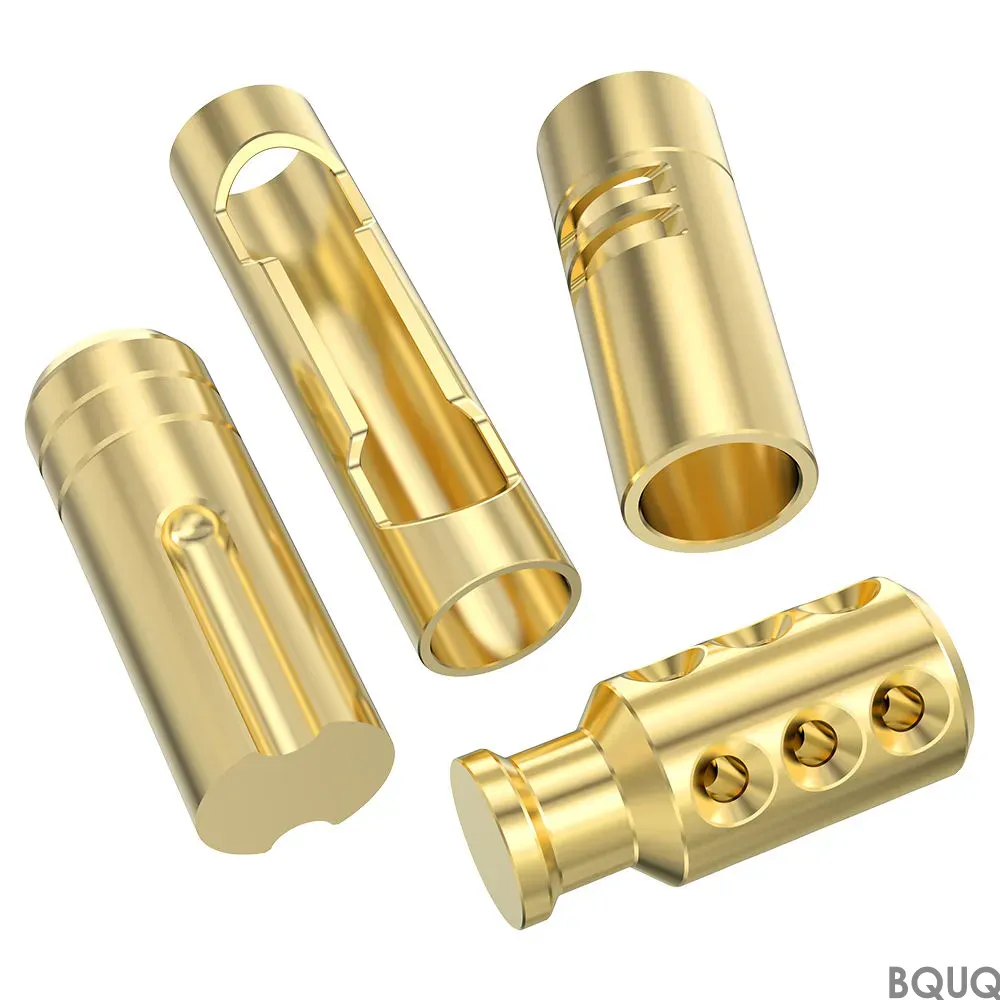
Automation in precision engineering is not merely about cutting metal faster. The real leap is in automated metrology. Traditional sampling checks 1 in 50 parts. Automated in-line CMM (Coordinate Measuring Machine) with a Renishaw probe checks 100% of critical dimensions on 100% of parts, at a speed of 0.8 seconds per measurement point.
At BQUQ, we have integrated laser micrometers (Keyence LS-9000 series) on our spring coilers. These measure wire diameter and coil OD at 2,000 readings per second. If the process drifts by more than 0.005 mm, the machine automatically adjusts the feed rate and tension. This closed-loop feedback is the difference between a defect rate of 0.8% (manual) and 0.02% (automated).
Thermal stability is also automated. Our shop floor maintains 22°C ± 1°C, controlled by an HVAC system with dual redundancy. This matters because a 5°C change in ambient temperature causes a 100 mm aluminum part to expand by 0.011 mm, pushing it out of tolerance. Automated temperature compensation algorithms in our CNC controllers correct for this in real time.
4. The Cost Reality: When Is Automation Not Worth It?
Automation is not a universal panacea. For a single prototype of a complex 5-axis part, manual programming and machining can be 15% cheaper because there is no need to write automated probing routines. Our rule of thumb: automation breaks even at 20 units for CNC, 500 units for stamping, and 200 units for springs.
The price floor is also real. Our automated CNC line has a minimum viable order of 10 pieces due to programming and fixture setup. If you need 3 pieces of a simple bracket, a manual mill will give you a better price. However, for any production run above these thresholds, automated manufacturing delivers a 20-30% price advantage plus a 25% lead time reduction.
One critical hidden cost is programming. An automated 5-axis program with full probing and tool path verification costs $150 - $400 per part number in engineering time. We absorb this cost for orders above 500 pieces, but for small batches, it appears as a one-time setup fee. Always ask your supplier for a "total cost of ownership" quote, not just per-piece price.
5. Heat Sinks and Thermal Management: Automation Meets Physics
In precision engineering, heat sinks are a special case. High-volume heat sink production (for IGBT modules or LED arrays) uses automated skiving or cold forging. Skiving produces fins with a thickness of 0.8 mm and a fin height of 25 mm, at a feed rate of 1.2 m/min. This is 4x faster than CNC milling and holds a fin-to-base perpendicularity of 0.02 mm.
Our automated heat sink line uses a 200-ton hydraulic press with servo-controlled ram speed. The press cycle time is 6 seconds per part, yielding 600 parts per hour. The key tolerance is flatness on the base: we hold 0.05 mm across a 200 mm length, essential for proper thermal interface material (TIM) contact. If the base is warped by 0.1 mm, the thermal resistance increases by 12%, causing premature failure.
For precision engineering buyers, this means automated heat sink production offers a price of $0.85 per piece at 5,000 units, versus $2.40 for machined alternatives. The trade-off is geometry: skived fins are straight, while CNC allows tapered or pin-fin arrays. If your thermal simulation requires a non-linear fin profile, CNC automation is the only way.
6. Practical Recommendations for Engineers and Procurement Specialists
Based on 20 years of manufacturing data, here are five actionable steps to leverage automated manufacturing:
1. **Specify Cpk, not just tolerance.** A print that says "±0.01 mm" is incomplete. Add "Cpk ≥ 1.33" to force suppliers to use automated SPC. This prevents the "gold-plating" of cheap manual processes that happen to hit tolerance on the first article.
2. **Consolidate operations.** Automated cells can combine milling, tapping, and deburring in one setup. Reduce your part count by requesting "one-hit" machining. This eliminates secondary handling costs of $0.05 - $0.15 per operation.
3. **Ask for automated inspection reports.** A good automated supplier will provide a PDF with all measured points, not just a pass/fail certificate. This data is invaluable for your own FMEA (Failure Mode and Effects Analysis).
4. **Match batch size to automation thresholds.** Do not order 50 pieces if you can wait for 100. The price per unit drops by 35% in our CNC line when moving from 50 to 100 pieces. The extra 50 parts are effectively free.
5. **Verify thermal stability requirements.** If your part has tolerances below ±0.01 mm, ask your supplier about their temperature control. If they do not have a climate-controlled shop, reject the quote. It is physically impossible to hold ±0.005 mm on a 150 mm part in a factory that swings 5°C.
Conclusion: The New Normal in Precision Manufacturing
Automated manufacturing is not the future; it is the current baseline for competitive precision engineering. It delivers measurable gains: ±0.005 mm repeatability, 60% faster lead times, and 20% lower costs at scale. However, it demands a new level of engineering communication. You must specify Cpk, batch thresholds, and thermal conditions, not just a 2D drawing.
At BQUQ, our automated lines in Dongguan have produced over 500 million parts in the last 20 years. We have the data, the temperature-controlled floor, and the in-line metrology to back our numbers. If you are evaluating a precision component and want to know if automation works for your specific geometry and volume, send us your drawing. We will respond with a full cost breakdown, a Cpk analysis, and a firm lead time within 12 hours.
Contact us directly: - Email: sc@bquq.com - WhatsApp: +86 13713157787 - Website: www.bquq.com
We are ready to show you, with real numbers, how automation reduces your cost per good part.
Related Articles
- CNC Machining Materials Guide 2025: Choosing Aluminum, Steel, Brass, and Plastics
- 5 Benefits of CNC Precision Turned Parts for Aerospace
- Custom Metal Stamping vs CNC Machining Cost Comparison
Frequently Asked Questions
What tolerance can I expect from automated CNC machining?
Our automated 5-axis CNC machining centers hold ±0.005 mm on bore diameters and ±0.01 mm on true position for aerospace-grade aluminum like Al 7075-T6. We maintain a Cpk of 1.67 or higher on critical dimensions, ensuring repeatable precision without manual intervention.
How much can automation reduce my lead times and costs?
Automation reduces non-cutting time by 40%, cutting total cycle time by up to 50%. For example, a job that took 14 hours manually now takes 7 hours. Per-unit costs drop 18-25% for mid-to-high volume runs, with CNC milling at $2.80 per piece for 10,000 units versus $18.50 for 100 units.
What are the cost differences between CNC milling, stamping, and spring coiling?
For 10,000 pieces, CNC milling costs $2.80 per unit, metal stamping costs $0.35 per unit, and spring coiling costs $0.18 per unit. Stamping requires a die cost of $1,200-$4,500, but per-unit cost drops 92% from 100 to 10,000 pieces. Spring coiling offers the fastest prototype lead time at 2-4 days.
How does automated setup compare to manual setup in terms of time?
Automated setup significantly compresses time: CNC milling takes 2 hours versus 8 hours manual, metal stamping takes 4 hours versus 12 hours, and spring coiling takes 1 hour versus 3 hours. This reduces total cycle time by up to 50%, directly lowering your price per piece.