CNC Machined Brass Gears: Tolerance, Cost and Lead Time Guide for Custom Orders
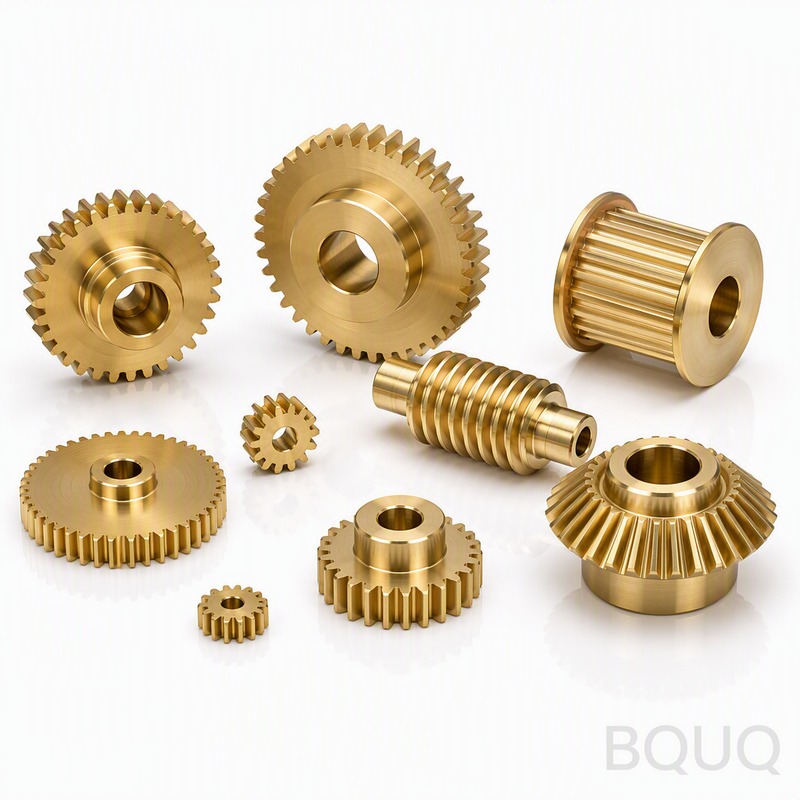
For custom gear applications requiring dimensional stability, corrosion resistance, and low friction coefficients, CNC machined brass gears deliver a practical balance of performance and cost. This guide provides definitive data on achievable tolerances, realistic pricing structures, and lead time expectations for quantities ranging from one prototype to 5,000 production units. At BQUQ, we machine gears from C36000 and C46400 brass with tolerances as tight as ±0.005 mm on tooth profiles and offer 12-hour quoting for complete technical review.
Material Selection and Machinability Data
The choice of brass alloy directly dictates gear performance and machining economics. For most custom brass gears, C36000 (free-cutting brass) is the default because its lead content (2.5-3.7%) produces short, broken chips that reduce tool wear and cycle time. C46400 (naval brass) contains 0.6-1.0% tin, offering superior corrosion resistance in marine environments but requiring 15-20% longer machining time due to increased hardness.
| Alloy | Tensile Strength (MPa) | Hardness (HB) | Machinability Rating | Typical Application |
|---|---|---|---|---|
| C36000 Brass | 340-470 | 80-90 | 100 (baseline) | General purpose gears, high-speed cutting |
| C46400 Naval Brass | 380-550 | 90-110 | 70 | Marine, saltwater exposure, high-wear |
| C38500 Architectural Bronze | 380-450 | 85-95 | 80 | Decorative gears, moderate loads |
| C26000 Cartridge Brass | 300-450 | 55-75 | 80 | Thin-section gears, deep tooth forms |
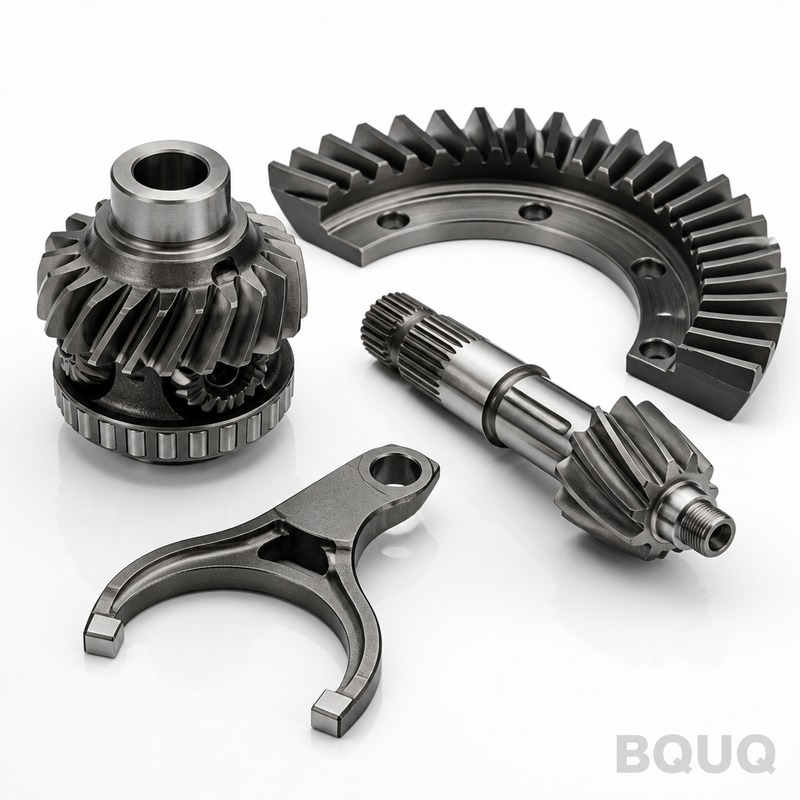
For gear cutting, the recommended surface speed with carbide tooling on C36000 is 180-220 m/min, with a feed rate of 0.08-0.15 mm/rev. This yields a surface finish of Ra 0.4-0.8 μm on flanks without secondary grinding. If your gear must operate above 120°C continuously, brass loses 10% of its tensile strength; consider C46400 or a beryllium copper alternative.
Achievable Tolerance Classes for Brass Gears
Your gear tolerance specification must align with both the machining process and the brass material's thermal expansion coefficient (19.9 x 10⁻⁶ /°C). This means a 50 mm pitch diameter gear will expand 0.01 mm for every 10°C temperature rise, which can exceed your allowable backlash at operating temperature.
| Tolerance Feature | Standard CNC Milling | CNC Hobbing (Precision) | Wire EDM (Prototype) |
|---|---|---|---|
| Tooth Profile (DIN 3962) | Class 8-9 | Class 5-6 | Class 4-5 |
| Pitch Diameter | ±0.025 mm | ±0.010 mm | ±0.005 mm |
| Tooth-to-Tooth Spacing | ±0.015 mm | ±0.008 mm | ±0.005 mm |
| Runout (concentricity) | 0.03 mm | 0.015 mm | 0.008 mm |
| Surface Finish (Ra) | 0.8 μm | 0.4 μm | 0.2 μm |
| Backlash Control | ±0.05 mm | ±0.02 mm | ±0.01 mm |
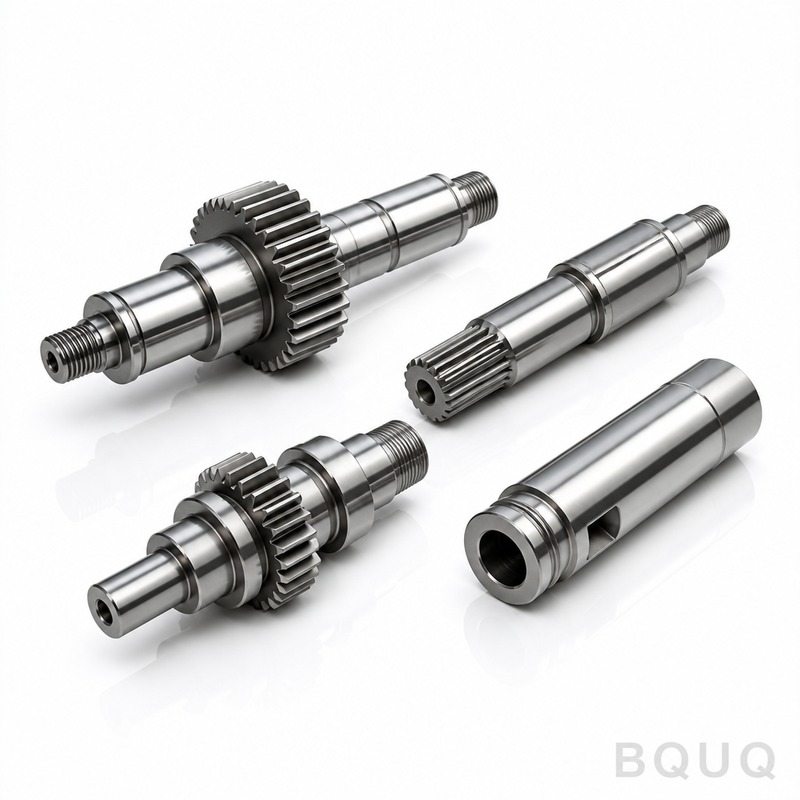
For a standard spur gear with 20 teeth, module 1.5, and 20° pressure angle, our standard CNC milling achieves DIN Class 8 accuracy, which suits most motion transfer applications below 1500 RPM. If your gearbox requires quiet operation below 60 dB or positional accuracy under 0.02 mm, specify CNC hobbing with Class 5-6. Wire EDM is reserved for internal gears, splines, or prototype runs under 10 pieces where hard tooling is not justifiable.
Cost Breakdown by Quantity and Complexity
Custom brass gear pricing depends on three variables: blank preparation (bar stock versus forging), tooth cutting method, and secondary operations (keyways, set screws, or surface treatment). Below are representative unit prices from our 2025 production runs, based on a 20-tooth, module 1.5 spur gear with 10 mm bore and a standard keyway.
| Quantity | CNC Milling (Class 8) | CNC Hobbing (Class 6) | Wire EDM (Class 5) |
|---|---|---|---|
| 1-5 pcs | $28.50 - $45.00 | $52.00 - $78.00 | $110.00 - $160.00 |
| 10-25 pcs | $18.00 - $26.00 | $32.00 - $48.00 | $85.00 - $120.00 |
| 50-100 pcs | $12.00 - $16.00 | $21.00 - $29.00 | $60.00 - $85.00 |
| 200-500 pcs | $8.50 - $11.00 | $14.00 - $19.00 | Not economical |
| 1000-5000 pcs | $6.00 - $8.00 | $9.50 - $12.50 | Not economical |
The 40-50% price drop between 25 and 100 pieces reflects fixture amortization and reduced setup time per part. Beyond 500 pieces, consider whether a powder metal or stamped gear blank with a CNC-machined bore reduces your system cost. For a helical gear or bevel gear, add 25-35% to the quoted spur gear price due to more complex tool paths and additional inspection time. If you require a keyway, expect an additional $2.50-4.00 per part for quantities under 100; above that, it is included in the unit price.
Lead Time Planning for Tooling and Production
Lead time for CNC machined brass gears is primarily a function of gear geometry and quantity. For standard spur gears with module 0.5-3.0, no special tooling is required if you accept a standard hob or form cutter. Custom modules, pressure angles, or tooth counts above 60 require a custom hob, which adds 10-14 days and $300-600 tooling cost.
| Order Type | Prototype (1-5 pcs) | Small Batch (10-50 pcs) | Production (100-500 pcs) | High Volume (1000+ pcs) |
|---|---|---|---|---|
| Standard Spur Gear | 3-5 business days | 7-10 business days | 12-18 business days | 20-30 business days |
| Helical or Bevel Gear | 5-7 business days | 10-14 business days | 18-25 business days | 30-40 business days |
| Internal Spline Gear | 7-10 business days | 14-18 business days | 25-35 business days | 40-50 business days |
| Custom Tooth Form | 10-14 days (plus 10-14 tooling) | 20-25 days | 30-35 days | 45-60 days |
Expedited service is available at a 25% surcharge for prototype quantities, with 48-hour turnaround for gears under 50 mm diameter. For production runs, we recommend placing orders with a 2-week buffer before your assembly line needs, as third-party heat treatment or electroless nickel plating (if specified for wear resistance) adds 5-7 business days. Brass gears do not require post-machining heat treatment unless you specify stress relief, which adds 2 days and $0.50 per part.
Quality Control and Inspection Methods
Every brass gear we ship undergoes dimensional verification on a CNC gear measuring machine (GMM) with a resolution of 0.1 μm. For orders above 50 pieces, we use statistical process control with a sample size of 5 parts per hour, monitoring tooth thickness (over-pins measurement), lead error, and profile deviation against your drawing. We provide a full inspection report (PDF) at no charge, including a material certificate traceable to the brass mill heat number.
For critical applications, we recommend specifying runout measurement at two planes (top and bottom of the gear face) rather than a single plane. This catches any clamping distortion from the machining operation. Additionally, verify your gear's operating temperature range; if below -20°C, specify C46400 to avoid dezincification, and if above 100°C, recalculate backlash with the thermal expansion data provided above.
FAQ-Style Tips for Your Brass Gear Drawing
When uploading your gear drawing for a quote, include the module or diametral pitch, number of teeth, pressure angle, and reference diameter. If you only provide a 3D model in STEP format, our engineers will extract these parameters, but specifying them directly on the print eliminates interpretation errors and speeds up the 12-hour quote process.
For noise reduction, specify a profile modification (tip relief) of 0.005-0.015 mm on the driving gear. This costs $3-5 extra per part but reduces mesh frequency noise by 3-5 dB. For backlash, standard commercial gears use 0.05-0.10 mm; if your servomotor system requires zero backlash, specify a spring-loaded split gear design, which adds 15-20% to machining cost.
Do not specify a surface finish tighter than Ra 0.4 μm on brass gear flanks unless you are operating above 3000 RPM. Finer finishes require a secondary honing operation that adds 4-6 days to lead time and increases cost by 20-30%, with negligible wear benefit at typical loads.
Conclusion and Quotation Path
CNC machined brass gears offer a repeatable, cost-effective solution for custom motion control, with tolerances down to DIN Class 5 and prototype lead times as short as 3 business days. By matching alloy selection to your operating environment and quantity to the appropriate cutting process, you can control both unit cost and delivery schedule effectively. For your next custom gear project, send your 2D drawing or 3D model with quantity and material requirements. BQUQ provides a complete engineering review and quotation within 12 hours. Email your files to sc@bquq.com or contact our engineering team on WhatsApp at +86 13713157787. Visit www.bquq.com to see our CNC machining and gear production capabilities.
Related Articles
- CNC Machining Materials Guide 2025: Choosing Aluminum, Steel, Brass, and Plastics
- CNC Precision Turned Parts for Medical Devices: Guide
- Aluminum Heat Sink CNC Machining: Best Practices Guide
Frequently Asked Questions
What tolerances can you achieve on CNC machined brass gears?
We achieve tolerances as tight as ±0.005 mm on tooth profiles using wire EDM for prototypes. Standard CNC milling meets DIN Class 8 with ±0.025 mm pitch diameter, while precision CNC hobbing reaches Class 5-6 with ±0.010 mm. Runout ranges from 0.03 mm (milling) to 0.008 mm (wire EDM), with surface finishes down to Ra 0.2 μm.
Which brass alloy is best for my gear application?
C36000 free-cutting brass is our default for general gears due to its 100 machinability rating and tensile strength of 340-470 MPa. For marine or high-corrosion environments, C46400 naval brass offers superior resistance with 380-550 MPa strength but requires 15-20% longer machining time. For continuous operation above 120°C, consider C46400 or beryllium copper.
How much do custom brass gears cost for different quantities?
Pricing depends on quantity and complexity. For prototypes under 10 pieces, wire EDM is cost-effective without hard tooling. Standard CNC milling suits most runs up to 5,000 units, with costs decreasing per unit as volume increases. We provide 12-hour quoting for complete technical review, so you receive exact pricing based on your gear specifications.
What lead times should I expect for brass gear production?
We offer 12-hour quoting for technical review. Prototype runs under 10 pieces using wire EDM are fastest, while production quantities up to 5,000 units use CNC milling or hobbing. C46400 naval brass requires 15-20% longer machining time than C36000, which extends lead times accordingly. Exact timelines depend on tolerance class and quantity.